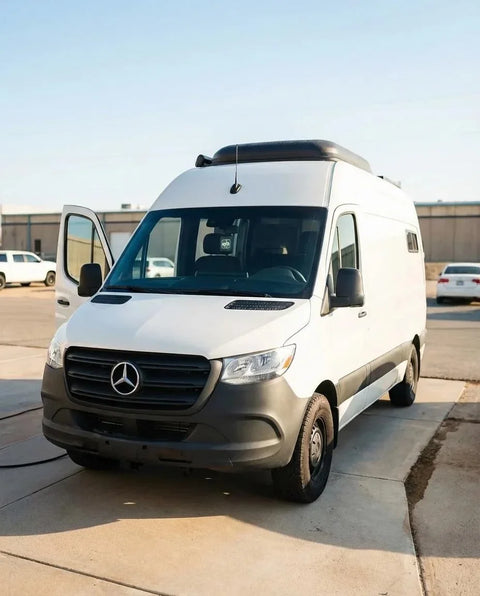
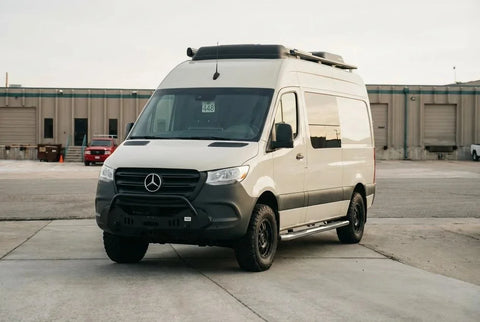
For travelers who want to explore remote campsites, mountain passes, forest roads, beaches, and off-grid destinations, two of the most popular options are a 4x4 camper van and a 4x4 truck camper. Both provide the freedom to leave paved roads behind, but they approach adventure travel very differently.
The choice ultimately comes down to a simple question: Do you prioritize integrated comfort and everyday usability, or maximum off-road capability and payload capacity?
Many buyers begin their search by exploring 4x4 RVs for sale because these adventure-ready vehicles combine off-road capability with the comforts of a self-contained camper. However, truck campers continue to attract serious overlanders who prioritize technical terrain and rugged backcountry travel.
This guide compares off-road performance, living space, comfort, costs, and long-term usability to help you decide which setup best fits your travel style.
Understanding the Difference
Before comparing capabilities, it's important to understand how these two platforms differ.
What Is a 4x4 Camper Van?
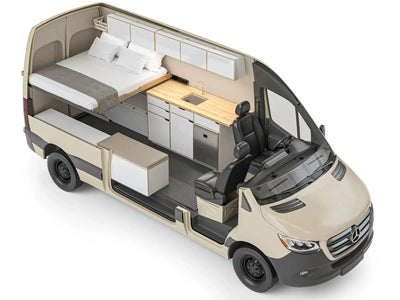
A 4x4 camper van combines the vehicle and living quarters into one integrated package.
Popular platforms include:
-
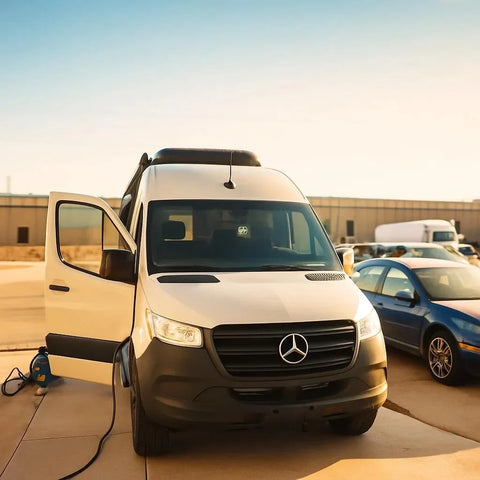
Mercedes-Benz Sprinter AWD
-
Ford Transit AWD
-
Custom off-road van conversions
-
Adventure-focused Class B camper vans
Many travelers researching class B camper vans choose these vehicles because they provide a complete living environment without requiring a separate tow vehicle.
Typical features include:
-
Kitchen
-
Sleeping area
-
Storage
-
Solar power systems
-
Bathroom facilities
-
Climate control
What Is a 4x4 Truck Camper?
A truck camper consists of a removable camper mounted in the bed of a pickup truck.
Common truck platforms include:
-
Ford F-250
-
Ford F-350
-
Ram 2500
-
Ram 3500
-
Chevrolet Silverado HD
-
GMC Sierra HD
Unlike a camper van, the truck and camper can be separated when needed.
Off-Road Capability Comparison
Winner: 4x4 Truck Camper
When it comes to extreme terrain, truck campers generally have the advantage.
Benefits include:
-
Higher ground clearance
-
Better approach angles
-
Better departure angles
-
Larger tire options
-
Locking differentials
-
Low-range gearing
-
Stronger suspension systems
Most truck-based platforms are engineered from the ground up for demanding terrain.
Why Truck Campers Excel Off-Road
Truck campers benefit from:
-
Body-on-frame construction
-
Heavy-duty drivetrains
-
Shorter wheelbases
-
Superior articulation
-
Greater payload capacity
A truck camper can confidently tackle:
-
Rocky trails
-
Deep washouts
-
Remote backcountry routes
-
Technical mountain tracks
-
Beach driving
Where 4x4 Camper Vans Shine
Modern camper vans are far more capable than many people realize.
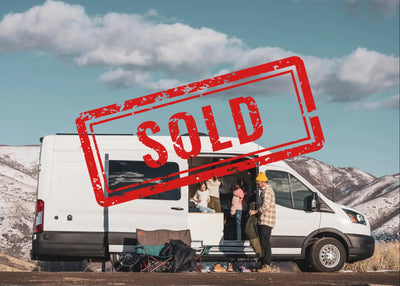
A lifted Sprinter van conversion or AWD Transit can comfortably handle:
-
Forest service roads
-
Snow-covered routes
-
Gravel roads
-
Mild desert trails
-
National forest access roads
-
Most dispersed camping routes
For the majority of travelers, this level of capability is more than enough.
Ground Clearance and Wheelbase
Ground clearance plays a major role in off-road performance.
|
Feature |
4x4 Camper Van |
4x4 Truck Camper |
|
Ground Clearance |
9–10 inches |
10–12 inches |
|
Wheelbase |
Longer |
Shorter |
|
Rampover Angle |
Moderate |
Better |
|
Turning Radius |
Larger |
Smaller |
Truck campers generally perform better because of their shorter wheelbase and superior breakover angles.
Long-wheelbase Sprinter 170 van conversions offer incredible interior space but sacrifice some trail maneuverability.
Living Space and Comfort
Winner: 4x4 Camper Van
This is where camper vans dominate.
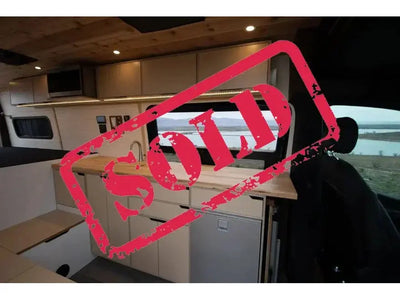
Luxury camper vans offer:
-
Integrated living spaces
-
Indoor kitchens
-
Bathrooms
-
Climate control
-
Larger storage areas
-
Better insulation
Many buyers comparing off-road platforms quickly realize that modern luxury camper vans for sale provide a significantly more comfortable living experience than most truck campers.
The Pass-Through Advantage
One of the biggest benefits of a camper van is interior accessibility.
When weather turns bad, you can move directly from the driver's seat to:
-
The bed
-
Kitchen
-
Bathroom
-
Dining area
Without stepping outside.
Truck campers generally require exiting the cab and climbing into the camper.
Storage Capacity
Winner: Camper Van
Storage is often overlooked until you begin traveling full-time.
Premium camper vans for couples frequently include:
-
Under-bed garages
-
Overhead cabinets
-
Hidden compartments
-
Gear storage systems
-
Dedicated equipment lockers
Truck campers typically have less interior storage despite offering impressive payload capacities.
Payload and Towing Capacity
Winner: Truck Camper
Heavy-duty trucks are designed to carry and tow substantial loads.
Benefits include:
-
Higher payload ratings
-
Larger freshwater tanks
-
Trailer towing capability
-
Ability to carry motorcycles
-
ATV transport capability
-
Boat towing
Travelers carrying significant equipment often prefer truck campers over camper vans for sale for this reason.
Four-Season Capability
Both platforms can be equipped for winter travel.
Modern winter camper vans commonly feature:
-
Diesel heaters
-
Heated water systems
-
Premium insulation
-
Thermal window coverings
-
Lithium battery systems
Truck campers often offer excellent durability in harsh environments, though many luxury camper vans provide superior insulation and climate control.
Off-Grid Capability
Tie
Today's premium adventure rigs can support extended off-grid travel.
Popular upgrades include:
-
Lithium battery banks
-
Solar panels
-
Inverters
-
Water filtration systems
-
Starlink internet
-
Advanced monitoring systems
Many eco-friendly van conversions focus specifically on maximizing off-grid performance through solar power and energy-efficient systems.
Stealth Camping and Urban Travel
Winner: Camper Van
If you plan to combine city travel with outdoor adventures, camper vans have a significant advantage.
Benefits include:
-
Easier parking
-
Better fuel economy
-
Less attention in urban areas
-
Simpler navigation through cities
Many travelers appreciate how Ford Transit camper vans for sale blend into everyday traffic compared to truck campers.
Driving Experience
Winner: Camper Van
Most people find camper vans easier to drive.
Advantages include:
-
Better visibility
-
More car-like handling
-
Lower driver fatigue
-
Smoother highway performance
Whether built on a Sprinter or Transit platform, modern camper vans deliver a more refined driving experience.
Buyers evaluating Ford Transit van conversions often cite drivability as a major purchasing factor.
Flexibility and Modularity
Winner: Truck Camper
The biggest advantage of truck campers is flexibility.
You can:
-
Remove the camper
-
Use the truck independently
-
Upgrade campers later
-
Keep the truck for work duties
Camper vans, by contrast, are permanent all-in-one vehicles.
Maintenance Considerations
Camper Van Ownership
Owners of premium Sprinter camper vans for sale may encounter:
-
Specialized conversion systems
-
Imported vehicle maintenance
-
Advanced electrical systems
-
Integrated plumbing systems
Truck Camper Ownership
Owners typically maintain:
-
The truck
-
The camper
-
Suspension upgrades
-
Tires
-
Separate systems
Both platforms have maintenance costs, but they differ significantly.
Cost Comparison
4x4 Camper Van Pricing
Typical ranges include:
|
Build Level |
Cost |
|
Entry-Level |
$80,000–$130,000 |
|
Mid-Range |
$130,000–$200,000 |
|
Luxury Off-Road Van |
$200,000–$350,000+ |
Buyers often compare all-series camper van models when evaluating different budget levels and feature sets.
4x4 Truck Camper Pricing
Typical combined truck and camper costs:
|
Setup |
Cost |
|
Basic Truck Camper |
$60,000–$120,000 |
|
Premium Setup |
$120,000–$250,000+ |
If you already own a truck, the truck camper route can be considerably more affordable.
Which Setup Is Better for Remote Work?
Camper Van Wins
Remote workers generally prefer camper vans because they offer:
-
Better internet integration
-
Larger workspaces
-
Improved climate control
-
Quieter interiors
-
More comfortable living arrangements
Many digital nomads exploring mobile work vans prioritize productivity alongside adventure travel.
Which Setup Is Better for Families?
Families often need:
-
More sleeping space
-
Additional storage
-
Better organization
For this reason, many travelers consider family van conversions when planning long-term adventures with children.
Quick Comparison Table
|
Feature |
4x4 Camper Van |
4x4 Truck Camper |
|
Off-Road Performance |
Good |
Excellent |
|
Highway Comfort |
Excellent |
Good |
|
Living Space |
Excellent |
Fair |
|
Payload Capacity |
Moderate |
Excellent |
|
Towing Capability |
Moderate |
Excellent |
|
Urban Driving |
Excellent |
Fair |
|
Stealth Camping |
Excellent |
Poor |
|
Remote Work |
Excellent |
Fair |
|
Flexibility |
Moderate |
Excellent |
|
Ease of Driving |
Excellent |
Good |
Final Verdict
Choose a 4x4 camper van if:
-
You prioritize comfort
-
You travel long distances regularly
-
You work remotely
-
You enjoy national parks and scenic routes
-
You want an all-in-one solution
-
You value better fuel economy and urban usability
Choose a 4x4 truck camper if:
-
You tackle difficult trails frequently
-
You need maximum payload capacity
-
You tow boats, trailers, or ATVs
-
You want a removable camper
-
You prioritize rugged terrain access above comfort
For most travelers, a modern off-road camper van strikes the ideal balance between adventure capability and everyday livability. While truck campers remain the kings of extreme terrain, camper vans deliver a more comfortable, versatile, and practical experience for long-term travel, remote work, and four-season exploration.
About the author

Eugene Smit
CEO
Eugene is the CEO of The Vansmith, based in Boulder, Colorado. He writes across topics related to van builds, ownership, and the camper van industry.
Read more about Eugene