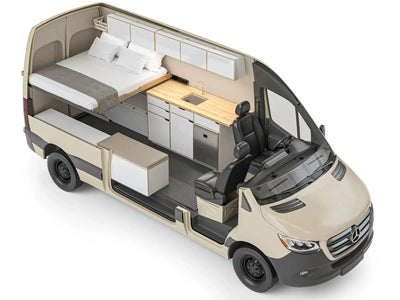
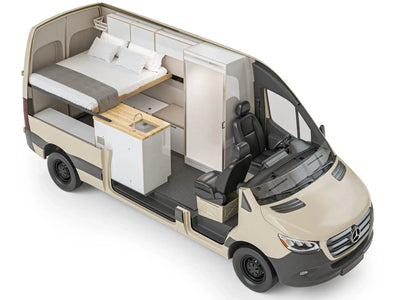
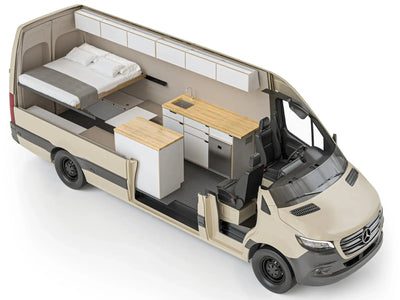
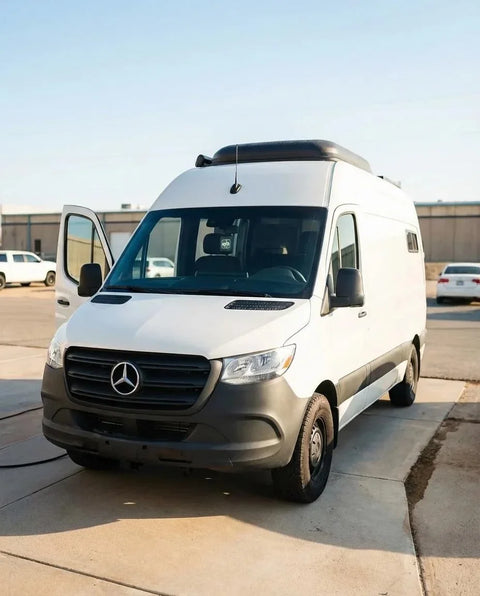
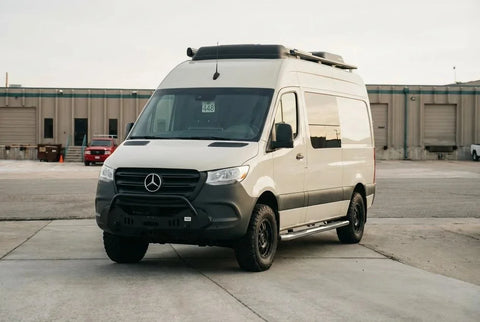
A white mercedes sprinter van is usually the safest all-around color choice because Arctic White is a current factory option, easy to customize later, and broadly easy to resell. That doesn't mean white is magic. It means you start with the most flexible baseline, then shape the van with film, glass upgrades, and the right build choices. For most camper buyers, that's a smart place to begin. It keeps your options open for years.
Why a white Mercedes Sprinter van is the default starting point
White isn't just popular by habit. On the current 2026 Sprinter Crew Van page from Mercedes-Benz Vans, Arctic White is listed right alongside darker and more styled factory colors. That matters because it shows white is an official OEM choice, not some aftermarket trend that took over the van world.
You can compare white against gray, black, blue, and silver-style tones at the same point in the order process. That's a true apples-to-apples choice. You're not comparing a stock van to a wrapped van. You're comparing factory paint to factory paint.
In real life, white works in more settings than most colors. It fits the work-van world, and it also fits the camper world. A bold color can look great, but it can also lock the van into one vibe fast. White tends to avoid that problem.
Mercedes also has a dedicated van trade-in value tool. That doesn't prove white is worth more by itself. It does show resale is part of the ownership cycle from day one, which is one more reason buyers lean toward a safe baseline.
If you're planning a build, white gives you room to grow. You can leave it clean and simple, or use it as the base for graphics, partial wraps, or full film later. That's a big reason many people start with a white van, then shape the look over time through custom camper van design.
At The Vansmith, we've found that white is neutral and functional. We also see many customers prefer pebble gray, blue gray, or graphite gray because those natural tones pair well with the natural materials we use inside. White still stays the most adaptable pick. For a van that may change over years of travel, upgrades, and maybe resale, that matters a lot.
What Mercedes officially offers today
Mercedes names Arctic White clearly on its current Sprinter page. That's the factory white buyers are really talking about in 2026. Using the current source matters because you're looking at the real model-year buying experience, not an old paint chart from a past run.
The factory swatches and images also help you see how white reads on a tall van. A Sprinter has big side panels, a high roof, and dark trim pieces. White shows those shapes in a clean, honest way. It gives you a realistic visual baseline before you start thinking about matte film or accent packages.
That's one reason official images beat random dealer photos. Dealer shots change a lot with lighting, editing, and added accessories. Mercedes' own presentation is more consistent, so it's a better place to judge how sprinter white really looks on the van's body.
Color choice also comes early. You pick paint before most conversion work starts. Unless you plan to wrap the van later, factory color is one of the first big choices you make. If you're still sorting out layouts like the DUO XL or a full Sprinter conversion, it's smart to keep the exterior flexible.
Why white stays popular with van buyers
White stays common because it stays easy to live with. According to the large used-vehicle data in iSeeCars' car color resale study, white is one of the market's mainstream colors. That supports its reputation as a safe, liquid choice, even if it isn't always the single top performer in every segment.
For a Sprinter, color is rarely the main value driver anyway. Mileage, condition, service history, and conversion quality usually matter more. That's also the practical message behind Mercedes' trade-in framework. Color sits on top of those bigger factors, not above them.
So why do buyers still like white? Because it lowers the odds that color becomes the objection later. If you trade it in, sell it private party, or shift it from camper use back to work use, white tends to stay broadly acceptable.
There's also the look. A white van can feel understated at a trailhead, but still clean enough for a premium build. It pairs well with black racks, ladders, awnings, and trim, which is one reason it works so well with upgrades and service work like the ones tied into Foundation builds and other exterior add-ons.
Heat: how much color matters on a Sprinter
Color does matter for heat, but it isn't the whole story. A Sprinter has a huge windshield, and many camper builds add side and rear glass too. On a big van like this, the comfort picture is larger than paint alone.
The strongest hard numbers in the source set come from glass treatment. 3M's post-factory automotive window film page says certain films can reject up to 66% of total solar energy. It also says some films reject up to 95% of heat-producing infrared rays. Those are big numbers.
That doesn't make white unhelpful. It just puts white in the right place. A white body may help at the margins, but paint alone won't fix a hot cabin if the glass is baking you all day.
A lot of color articles miss that point. They focus on sheet metal and skip glazing. On a high-roof camper van, that's backwards. In our experience, windows, fans, insulation, and roof choice shape comfort more than color by itself. And yes, about 90% of our customers choose high roof because standing room and long-term livability win out almost every time.
What body color can and cannot do
White reflects more visible light than dark paint. That's why many buyers see it as the cooler-running choice in direct sun. Still, the verified heat-control data here is much stronger on glass than on painted panels, so it's best not to overstate the paint effect.
A Sprinter's tall roof and broad sidewalls can warm up in the sun. That's real. But interior comfort still depends heavily on the whole thermal package, which includes insulation, ventilation, and how you manage the windows. A van built through The Vansmith's process is usually planned as a system, not a pile of separate parts.
It's also smart to avoid fake precision here. The sources do not give Sprinter-specific white-versus-black cabin tests. So the balanced claim is simple: white helps support a cooler baseline, but the biggest measurable heat-control gains in the source set come from window film.
That framing helps if you're cross-shopping white against black or dark gray. It replaces internet lore with a more useful answer. Once your van has windows, vent fans, and insulation, color becomes one variable inside a larger package.
Why window film may matter more than paint
3M talks about these films in direct terms that fit camper vans well: light, sun, and heat control after the factory. That's important because many converted vans already have finished glass layouts. You're not stuck with factory-only options.
The up-to-66% total solar energy rejection figure gives you a real benchmark. The up-to-95% infrared rejection figure helps explain why strong sun can feel brutal through glass, even when the body color seems reasonable. That radiant heat is what many people notice first when they sit inside a parked van.
For a white van owner, film is a logical next step. You keep the bright, flexible exterior and reduce heat where the source set shows the clearest gains. For a dark van owner, film can help offset one of the practical downsides of a darker shell without repainting anything.
This is also where the rest of the build starts to matter. Windows, coverings, vent fans, and insulation all shape real comfort. If you're exploring build ideas on the van build blog or thinking about service add-ons later, it's worth treating heat control as a full system, not just a paint choice.
Resale: is sprinter white the safer bet?
In broad terms, yes, sprinter white is the safer bet. Mercedes gives owners an official trade-in path for vans, which supports the idea that resale should be part of the plan from the start. That's a practical lens, not a speculative one.
Sprinters also have a strong retained-value reputation overall. On the Mercedes-Benz Vans awards page, the Sprinter is tied to Edmunds Highest Retained Value recognition for commercial vans. That doesn't tell us white is best by itself. It does support the larger point that the platform holds value well.
You can also look at live market framing through Kelley Blue Book's used Sprinter valuation page for a 2017 Sprinter 3500 Cargo High Roof Extended. KBB shows trade-in value, private-party value, and depreciation history, updated through June 23, 2026. That helps ground the resale talk in categories buyers already understand.
Here's the honest part. Mercedes and KBB do not break Sprinter resale out by paint color on those pages. So color-specific claims need to stay modest. The clean argument for white is not that it always sells for more. It's that white is a low-risk, broad-market color in a van class already known for solid retention.
What the resale data actually supports
The Mercedes trade-in page matters because it shows an official route to market value by VIN or license plate. That's useful for owners who want a clear baseline. Still, color isn't listed as its own line item there, so you shouldn't pretend the factory is ranking white over black.
The awards page helps in a different way. It supports Sprinter's reputation without forcing exact resale percentages the source doesn't provide. Then KBB adds the categories people care about most, like trade-in and private-party value, which makes the whole picture feel more real.
Put together, those sources support a nuanced point. Sprinter resale is strong enough that preserving condition may matter more than chasing a rare paint color. That's why protective choices, like film over exposed paint, can be relevant to future value.
One thing a lot of builders overlook is how quickly a van's finish becomes part of the ownership story. Highway miles, gravel roads, and trailhead parking all add up. If you want broad appeal later, protecting the van can matter more than trying to outsmart the market on color.
Why condition may matter more than rare paint
The KBB example makes one thing clear. Older Sprinters still draw real market attention. That raises the value of keeping paint and bodywork in good shape over time, no matter what color you started with.
A clean white van with protected paint can be a stronger resale play than a trendier color with chips, scratches, or sun wear. Buyers notice condition fast. They also like being able to picture their own use, and white makes that easier.
That's especially true if the van might shift roles later. White works for camper use, commercial use, or something in between. It doesn't force a narrow identity, which is why it stays versatile for couples, solo travelers, and even family van conversions.
At The Vansmith, we tend to see the best-aging builds as the ones that balance protection and restraint. A solid conversion with durable exterior choices usually ages better than a van that relied on paint color alone for impact. Optionality has value. White supports that.
Wrap and PPF ideas for a white Sprinter
This is where white gets really interesting. A white factory van is the easiest base for reversible style changes later. You can keep the OEM paint underneath and still change the look in a big way.
3M's Protection Wrap Film line is a strong example because it combines color-change styling with paint-protection benefits. 3M also highlights self-healing performance, protection from stone chips and scratches, and a 10-year warranty on its Protection Wrap Film Color Series. That's a concrete durability point, not just marketing mood.
XPEL's colored PPF overview makes a similar case. It frames colored paint protection film as a way to get wrap-like style with real protective function. For a white Sprinter owner, that's a strong fit because the original white paint stays protected below.
For resale-minded owners, removability is the big win. You can enjoy a custom look now, then return to factory white later if you want. That's one of the best arguments for buying white first and experimenting second. If you're planning a future build or refresh, this kind of thinking pairs well with talking through your van goals early.
Full color change vs protective film
Not all color-change products do the same job. 3M positions Protection Wrap Film as both a style and protection product, which sets it apart from a wrap that is mostly cosmetic. XPEL says much the same thing with colored PPF, which helps buyers avoid treating appearance and paint protection as two separate decisions.
For a white Sprinter, that opens up a lot of room. You can try matte white, satin gray, desert-tan style neutrals, or darker tones without repainting the van. If the film comes off later, you go back to a neutral OEM color that is still easy to market.
That flexibility is a big deal on premium camper vans. You may want a custom look right now, but still care about broad resale later. White gives you the best launch point for that balance.
It's also worth keeping the terms clear. Paint is permanent. A wrap changes the look. Colored PPF aims to change the look while also protecting the finish below. That's the distinction many buyers need before they choose a path.
Best visual directions for a white van
White is the easiest base for contrast. Black roof racks, ladders, awnings, fender trim, and window surrounds all read cleanly against it. You can see the shape of the van and the accessory choices at a glance, which gives the build a crisp look.
It also supports subtle graphics better than dark paint. Pinstripes, topo patterns, or muted branding stay visible without taking over the whole body. That's useful if you want personality but don't want the van to feel loud.
Matte or satin films can shift the feel of a white van without leaving the white family altogether. Partial-film moves can work well too. Hood protection, lower-body rock-chip zones, mirror caps, or accent panels add style while preserving most of the original finish.
In photos, white tends to show the Sprinter's shape, windows, and black trim clearly. Dark vans can look sleek, but they also hide details in shadow. If you're choosing a design platform for a future camper, white often gives you more visual room to work with, much like a clean base vehicle for a couples camper van build.
White vs gray, black, and silver in real ownership
If your top goals are broad resale appeal, easy customization, and a neutral factory look, white is usually the safest answer. That's the practical case, and it's the one most buyers come back to after comparing photos for a while.
Darker colors can look sleeker. No question. But the strongest measurable heat-control gains in the source set come from window films, not from choosing a dark paint color over a light one. So if comfort is the goal, your money may go farther in glass, ventilation, and insulation.
White also lowers the risk of color regret. You can always add colored PPF or protective wrap film later. Going the other way is harder if you start with a bold factory color and then wish you'd kept the van more neutral.
From a long-term value angle, protecting the paint and glass may matter more than trying to guess which non-white color will feel hottest in the market years from now. For most camper buyers, the practical winner is white plus thoughtful upgrades. That's usually a better ownership mix than chasing novelty.
Who should choose white
Choose white if you want the lowest-risk color for future resale, trade-in, or repurposing. That's the clearest reason. White stays broad, and broad usually helps.
Choose white if you expect to add accessories over time. Roof racks, ladders, awnings, trim, and graphics all sit easily on a neutral body. The same goes for future service work, upgrades, and even a later move into a pop-top build path, though most buyers still prefer high roof from the start.
Choose white if you like the idea of trying wraps or colored PPF later while keeping an OEM-friendly finish underneath. And choose it if heat management matters to you, but you also plan to invest in windows, insulation, and ventilation. White fits that bigger strategy well.
It also suits people who like an understated, expedition-ready look. Simple. Clean. Not too commercial, and not too flashy once the van is built out. This is the color for buyers who value flexibility over novelty.
When another Sprinter color may make sense
A darker factory color can make sense if you know you want that premium or stealthy look and don't plan to reverse it later. If that choice feels settled in your mind, it may be worth it to you. Just treat it as a style-first move, not a value-max move.
If the van will be fully wrapped soon after purchase, factory color matters less on the surface. Still, the condition of the paint under that film matters over time. That's one more reason a clean factory base remains useful, even if you won't see much of it day to day.
If you love satin or matte finishes, colored PPF can often get you there even on a white van. That reduces the need to start with a darker OEM color. And if resale matters less than self-expression, a non-white factory color can still be a fair choice.
The key trade-off is reversibility. Factory paint is a commitment. Film-based customization is more flexible. That's why so many practical buyers still begin with white, even when they don't plan to keep the van stock forever. If you're weighing those paths, the team at The Vansmith can help map the build around your long-term goals.
FAQ
Is a white Mercedes Sprinter van better for heat?
Usually, yes, but only in part. White is widely seen as the cooler-running choice, yet the strongest measurable heat-control data in the verified sources is for glass, not paint. 3M says certain automotive window films can reject up to 66% of total solar energy and up to 95% of heat-producing infrared rays. On a large van with lots of glass, that can matter as much as or more than body color.
Does white help Sprinter resale value?
White is best viewed as a safe resale color, not a guaranteed top-dollar color. iSeeCars supports the idea that white is a broadly acceptable mainstream choice, while Mercedes and KBB support the bigger point that Sprinters retain meaningful value overall. So the advantage of white is mostly low risk and broad appeal. That's often what helps a van move more easily later.
Can I wrap a white Sprinter without hurting the original paint?
Yes, that's one of the main benefits of starting with white. 3M's Protection Wrap Film combines color change with paint protection and carries a 10-year warranty on its Color Series, while XPEL positions colored PPF as a way to get wrap-like style with protective benefits. That means you can change the look now and still preserve the original white paint underneath. For many owners, that's the sweet spot.
What factory white color does Mercedes offer on the current Sprinter?
Mercedes-Benz lists Arctic White on the current 2026 Sprinter Crew Van page. That makes Arctic White the official OEM baseline for anyone comparing a white Sprinter against darker factory colors. It's the right reference point for current buyers because it comes from the live model-year source, not an old chart.
Is white the best color if I want a custom camper van later?
For many buyers, yes. White is the most flexible starting point because it works with black accessories, subtle graphics, partial wraps, and colored PPF. If those films come off later, the van returns to a neutral factory color that is usually easy to market. That said, many of our customers prefer pebble gray, blue gray, or graphite gray because those natural colors work well with the natural materials inside the van.
About the author

Eugene Smit
CEO
Eugene is the CEO of The Vansmith, based in Boulder, Colorado. He writes across topics related to van builds, ownership, and the camper van industry.
Read more about Eugene