A sprinter van with bathroom can absolutely fit a shower, toilet, and sink. The catch is that the bathroom changes far more than one corner of the van. It affects bed space, storage, tank size, airflow, and how often you need to deal with water and waste. If you're planning a build, the big question isn't just whether a bathroom fits, it's whether the whole layout still works for the way you travel.
What a sprinter van with bathroom really looks like
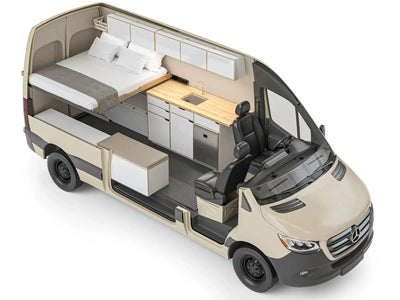
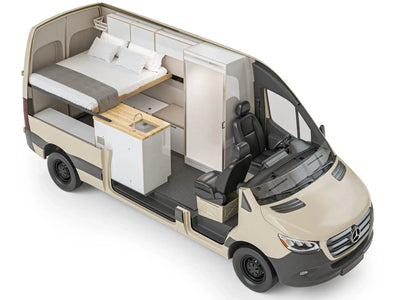
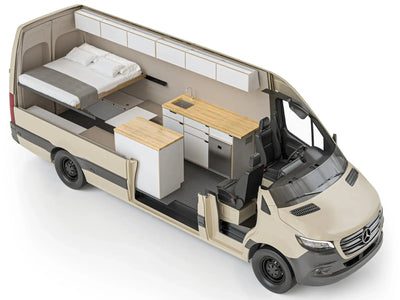
In real Sprinter-based Class B vans, the most common bathroom format is the wet bath. That's also the format we usually discuss first with custom clients because it uses space well in a compact van. The bigger point is that a bathroom shapes the whole floor plan, not just one corner.
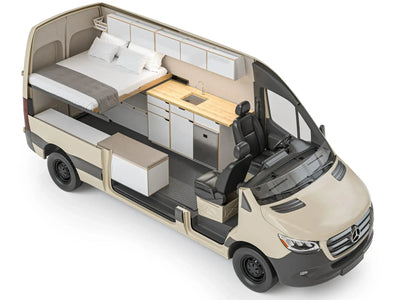
What stands out in layouts like this is how much the bathroom shapes the whole floor plan. It isn't a simple add-on. It changes the path from the cab to the galley, and from the galley to the rear lounge or bed area.
That tends to be the real trade. Most buyers aren't asking if a toilet can fit. They're asking what the bathroom pushes out, open floor space, storage, a bigger bed, or a roomier kitchen.
That's why real floor plans matter so much. Looking at a full layout tells you far more than a generic vanlife post, because you can see where the bath sits in relation to the kitchen and sleep zone. For custom work, that same lesson applies when you start exploring Sprinter conversions or mapping out a custom van layout.
Wet bath layout: the compact standard
A wet bath means the shower, toilet, and sink all live inside one small waterproof room. It's the most space-smart way to get full indoor bathroom use in a compact van. That's why it stays the default starting point in many custom bathroom conversations.
This setup works well in shorter Class B vans because it avoids giving separate square footage to a shower stall and a toilet room. You keep more of the van for the galley, seating, or bed. In a van, every inch matters.
The downside is easy to picture once you've used one. After a shower, the toilet and sink area are part of the wet zone too. So you need to wipe things down, air the space out, and wait for it to dry before it feels fully reset.
Ventilation is a core part of that design, not some nice extra. In our experience, people love wet baths when they value privacy, stealth, and all-weather comfort, but people who hate wiping down walls after every shower can tire of the routine fast.
You'll also notice where these baths sit. In small Sprinter layouts, they often land near the galley and between the front and rear living zones. That helps preserve the rear lounge or bed while still giving indoor bathroom access, which is a big reason these layouts stay popular.
Cassette-toilet layout: a different bathroom strategy
Not every Sprinter bathroom uses a fixed black tank. Some builds use a cassette toilet instead. That one detail changes both layout packaging and the service routine.
A cassette toilet is much smaller than a fixed waste tank, but it can reduce the packaging burden of a permanent black tank. In a tight van, that can open up more layout flexibility.
The tradeoff is service frequency. A cassette needs more regular emptying than a larger fixed waste tank. Some owners like that it can be removed and emptied without using a full RV dump setup, while others find the smaller capacity and hands-on handling less convenient.
This is one of the biggest choices in a sprinter camper van with bathroom. It affects how the van is built, but just as much, it affects what your trip routine feels like. If you're sorting through layout ideas, it helps to compare that bathroom choice with the rest of your build priorities through The Vansmith's process or browse related ideas on the van build blog.
Tank sizing sets the limits on real bathroom use
A bathroom-equipped van is usually limited less by the toilet itself and more by tank size. Fresh, gray, and waste capacity decide how long the setup stays comfortable off-grid. That's the part many buyers miss at first.
Tank numbers can vary a lot by build. The key point is that bathroom planning is really water-system planning too. That's why we like to talk through shower habits, trip length, and dump access early in the design process.
That contrast matters in real travel. One van may carry less fresh water but give you a fixed waste tank. Another may carry much more fresh water, but pair it with a smaller removable toilet reservoir.
Gray tank size matters just as much as toilet size. Every indoor shower and every sink use sends water into the gray system. If you picture daily indoor showers, you need to pay close attention to both fresh and gray numbers, because those tanks can become your first limit.
This is where travel style comes in. Weekend trips, campground hopping, shoulder-season use, and longer off-grid travel all put different pressure on the water system. It's one reason many people planning foundation builds or full custom vans start with tank planning before they pick finish details.
Fixed black tank vs cassette toilet capacity
A fixed waste tank gives you more onboard waste capacity than a cassette toilet. That difference alone can shape how often you need to service the system.
A fixed waste tank leans toward a more classic RV routine. You dump through the sewer outlet and valves, much like other motorhomes, and Go RVing's sewer guide lays out that process clearly. For some owners, that feels cleaner and more familiar.
A cassette toilet trades that larger onboard capacity for portability. You give up tank size, but you gain a service method that doesn't always depend on a full dump station. If you prefer smaller, more frequent service events, that can be a good fit.
So the better choice comes down to maintenance tolerance. Some people would rather have fewer, more formal dump events. Others don't mind more frequent handling if it gives them more flexibility.
Fresh and gray water are the real trip-length bottlenecks
The gap between bathroom builds is often even bigger on the water side. Fresh and gray capacity usually decide trip length faster than the toilet does.
That extra margin matters if you want to shower inside, wash dishes, and stretch your trip without hookups. A smaller gray tank leaves less room for frequent indoor showers. The same goes for fresh water, where lower capacity runs out much sooner.
THOR's overview of RV water systems explains that owners track these levels through interior controls, often with percentage readouts or indicator lights. In a compact bath van, that monitoring isn't background info. It's part of daily use.
If you mostly stay at campgrounds or use bathhouses, smaller capacities may be a fair trade for a shorter and more nimble layout. If you want true self-contained camping, tank numbers should sit near the top of your must-have list. That same thinking also shows up when couples compare layouts like the vans for couples collection, where comfort and self-containment often need to share the same footprint.
Ventilation is essential in a bathroom-equipped Sprinter
Small wet baths trap humidity fast. Since the shower, toilet, and sink all share one enclosed compartment, airflow becomes a core performance issue, not just a comfort extra. That's true in every compact bathroom van we've seen.
In custom builds, vent fan choice and placement should be part of the bathroom plan from the start. Good airflow isn't optional if you want the space to dry fast and stay pleasant to use.
Without good post-shower airflow, moisture lingers on walls, fixtures, and nearby soft goods. In a van, that damp air also reaches the bed and galley more easily than it would in a larger RV. So bathroom ventilation affects the whole cabin, not just the bath itself.
Placement matters too. If the wet bath sits close to the bed or kitchen, quick moisture removal becomes even more important. That's one reason vent fan choice and placement are such a big part of bathroom planning, and why many owners add or upgrade those systems through camper van installations.
Why wet baths need active airflow
A wet bath saves floor space because it's compact. The flip side is that steam builds in a much smaller air volume than it would in a house bathroom. So the room gets humid fast.
Since the toilet and sink share the same enclosure as the shower, those fixtures get hit with humidity every time you wash up. The faster you can vent the space, the faster it goes back to feeling like a usable toilet room instead of a damp shower box.
Active exhaust is part of normal wet bath use. Good airflow also cuts down on how much wiping and drying you need to do after each shower.
This matters even more in cool or wet climates. If your windows stay closed on cold mornings or rainy nights, the roof vent fan has to do more of the moisture removal work. One thing a lot of builders overlook is that a bathroom is only as livable as the venting behind it.
Cold-weather and system-monitoring considerations
A bathroom-equipped van needs a cold-weather plan. Cabin heat alone doesn't solve the problem. Water supply and holding systems need protection too.
Interior monitoring gets more important before freezing nights or long drives between service stops. Small tanks and cold weather don't leave much room for guesswork.
If you're planning ski trips or shoulder-season travel, tank heaters and system checks should be part of the bathroom talk from day one. A bathroom adds a lot of comfort in bad weather, but it also adds winterization and freeze-management chores that simpler vans mostly avoid.
This is where serviceable design pays off. Easy plumbing access, smart venting, and winter-ready support can make the difference between a bathroom you trust and one you avoid using. For buyers who need more headroom for all-season travel, about 90% of Vansmith customers choose high roof, and many mid-roof buyers later add a pop-top.
The maintenance chores that come with a Sprinter bathroom
A bathroom in a van brings a real comfort boost, but it also brings recurring chores. Most of them are simple. They just keep showing up on every trip.
THOR explains that owners monitor fresh, gray, and black tank levels through an interior control panel. That helps you catch issues before a gray tank fills or a waste tank reaches its limit. In a small van, that awareness matters more because the margins are tighter.
For fixed black-tank systems, Go RVing's black tank guide notes that regular flushing, when a flush system is equipped, helps prevent odor, buildup, and clogs. Go RVing also recommends using a dedicated non-freshwater hose for flushing so it stays separate from drinking-water gear. That's a small habit, but a very important one.
For many buyers, the real question isn't whether these chores are hard. It's whether they want these chores built into every weekend, road trip, and overnight stop. If you do, the comfort is worth it. If you don't, a simpler layout may feel better over time.
Dumping and sanitation basics
Go RVing recommends dumping the black tank first and then the gray tank. The reason is simple. Gray water helps rinse leftover waste from the hose.
They also advise keeping the black valve closed until it's time to dump. If you leave it open, liquid can drain away while solids stay behind, which raises the odds of clogs and buildup. That's one of those small habits that saves headaches later.
Sanitation gear needs its own lane too. Dedicated sewer gear should stay separate from fresh-water gear, and a non-freshwater hose should be used for tank flushing. If your van has a black tank flush system, periodic flushing helps keep odors and buildup in check.
These tasks are straightforward, but they repeat. That's why maintenance tolerance should shape bathroom design choices just as much as floor plan taste. Families looking at space tradeoffs often run into this same question when comparing layouts like the family van conversions collection or the Family XL layout.
Monitoring, cleaning, and routine ownership mindset
THOR breaks the water system into clear parts, fresh, gray, and black. Knowing which fixture feeds which tank is basic, but it helps avoid surprises on the road. The shower and sink feed gray water, while the toilet feeds black water in a fixed-tank setup.
That means you need to watch more than one limit at once. Interior tank monitoring lets you respond before the gray tank overfills or the waste system reaches capacity. In a compact van, that kind of tracking quickly becomes second nature.
A bathroom-equipped van adds another layer of system awareness compared with a simpler weekend van. Routine ownership also includes wiping down the wet bath after showers, venting it well, and keeping the plumbing area dry between uses.
Some travelers settle into those habits right away. Others realize they'd rather keep the van simpler and use outdoor showers or campground facilities more often. If you're still weighing that trade, the DIY blog and the option to talk with The Vansmith team can help frame what fits your actual travel rhythm.
Who should choose a sprinter camper van with bathroom
A bathroom makes the most sense for travelers who value self-contained camping, privacy, and all-weather comfort enough to accept less open space and more upkeep. That's the cleanest way to think about it. You're trading simplicity for independence.
For couples and solo travelers who camp away from facilities, an onboard toilet and shower can open up where and how comfortably they travel. Stormy nights, freezing mornings, and quiet overnight stops all feel easier when you don't need to leave the van. That's a real quality-of-life gain.
Families may value toilet access more than shower frequency. A bathroom can cut down on middle-of-the-night campground runs and make shoulder-season travel feel much easier, but it also competes with living room and storage. In some cases, preserving more shared space can matter more than having the biggest bath setup.
Buyers who mostly stay in developed campgrounds may find that a smaller interior shower setup is enough. Buyers focused on long off-grid stretches should look at tank sizes first, because self-containment depends on water and waste capacity as much as the bathroom enclosure itself.
In the end, the fixed-black-tank versus cassette choice often predicts owner happiness better than the word bathroom alone. For The Vansmith audience, the best answer is usually a layout-level decision, one that looks at the shower, toilet, venting package, and tank system together. That's also why many people start by exploring shower-ready concepts, Sprinter-specific layouts, and a custom design conversation instead of chasing a brochure feature list.
Best fit travel styles
A bathroom-equipped Sprinter is a strong fit for travelers who spend time in remote places where public restrooms and showers are unreliable or just not there. If your trips often end far from services, indoor bathroom access becomes much more than a luxury. It becomes part of how you use the van.
It's also a major comfort boost during storms, freezing mornings, and overnight stops. Couples often like the privacy even if they use the shower lightly. Families may care more about fast toilet access than daily indoor showers, which can point them toward a more compact bathroom strategy.
On the other hand, adventure travelers who already rely on outdoor showers or campground bathhouses may prefer more storage and living space. In that case, a bathroom can feel like too much system for the way they actually camp. A simple question helps: do you want the bathroom for emergencies, regular daily use, or true all-weather self-containment?
How The Vansmith can frame the decision
The best way to frame this topic is through real use, not luxury language. Interior showers, water tank planning, vent fan installs, winterization, and easy service access are the parts that decide whether a bathroom feels good to own. That's where good design earns its keep.
For readers who know they want shower capability, The Vansmith can point them toward shower-focused layouts, Sprinter-based conversions, and upgrades that support daily use. That can include vent fans, water tank work, and winterization under the installation side of the business. The point isn't to add features for the sake of it, it's to build a system that matches the way you travel.
That's the clearest takeaway here. A bathroom in a Sprinter is very doable, but it should be planned with the same care as the cabinetry, heat, and electrical system around it. If the service routine, tank sizes, and layout flow all line up with your habits, a bathroom can be one of the best comfort upgrades in the van.
FAQ
Can a sprinter van with bathroom really fit a shower, toilet, and sink?
Yes. The most common answer is a compact wet bath that combines the shower, toilet, and sink into one enclosure. That layout is common because it gives you full indoor bathroom use without needing separate rooms. In a compact Sprinter, that's usually the most efficient way to make a bathroom work.
How big are the tanks in a sprinter camper van with bathroom?
It varies a lot by layout strategy. Some builds prioritize a larger fixed waste tank, while others put more room into fresh and gray capacity. Those numbers show why tank size matters as much as the bathroom itself.
Is a cassette toilet better than a fixed black tank in a Sprinter bathroom?
Neither is better for everyone. A cassette can be easier to service without a full RV dump setup, while a fixed waste tank gives you more onboard waste capacity and a more traditional RV routine. The better pick depends on whether you prefer smaller, more frequent service or fewer, more formal dump events.
Why does ventilation matter so much in a van wet bath?
A wet bath is a very small enclosed room, so steam and humidity build fast after a shower. Active airflow is part of normal use. Good ventilation helps the room dry faster and cuts down on damp walls, fixtures, and nearby bedding.
What maintenance chores come with a bathroom in a Sprinter van?
The recurring chores are tank monitoring, dumping waste in the right order, flushing when equipped, and keeping sewer gear separate from fresh-water gear. Go RVing recommends dumping black first and then gray, and keeping the black valve closed until dump time to help prevent clogs. Wet bath ownership also means wiping down the enclosure and venting it well after showers.
About the author

Santiago Pere
Chief Design Engineer
Santiago is Chief Design Engineer at The Vansmith. He writes on topics spanning van design, builds, and life on the road.
Read more about Santiago