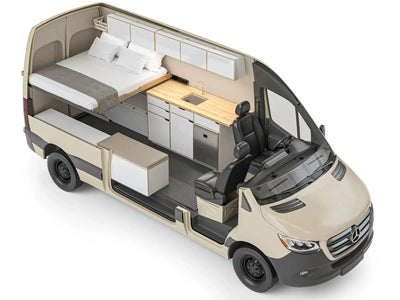
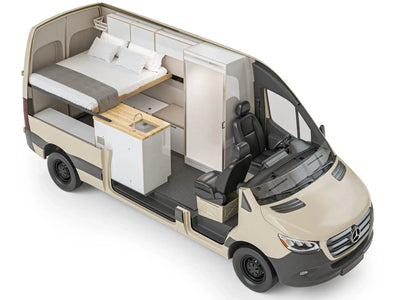
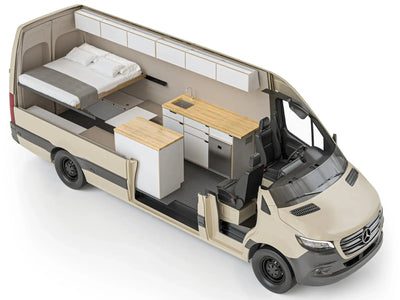
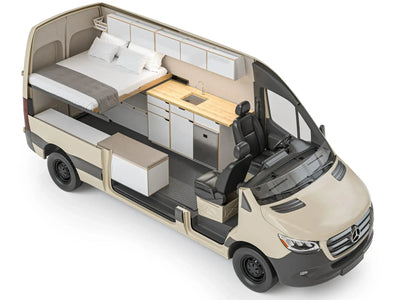
A ford transit conversion kit is most worth buying when it solves hard fitment jobs, especially floors, walls, ceilings, and insulation for 148-inch and 148 EXT vans. Those kits can cut out hours of templating, trimming, and second-guessing, which is a big deal early in a build. At The Vansmith, we offer full kits and separate components, so you can start with the base layer or build out more of the shell at once.
Why a ford transit conversion kit can be worth it
Ford openly presents the Transit as a platform for recreation-focused upfits and adventure van builds through the broader upfit ecosystem around vans like the Transit. That helps explain why there are now so many kit options for floors, insulation, beds, and liners. The market exists because builders keep running into the same shell-fit problems.
The best case for a transit conversion kit is simple. You pay to skip template work, trial-and-error fitting, and repeat cutting on parts that need to match the van body closely. That matters most in a Transit, where curved walls, wheel wells, and body contours can eat up a full weekend fast.
One thing a lot of builders overlook is that seller claims are stronger on fit, materials, and install speed than on independent criticism. So the honest way to judge a kit is by three things: fit accuracy, visible finish quality, and whether labor is really removed or just shifted to drilling, fastening, and alignment. That's a better filter than marketing words like professional or seamless.
Integrated systems are a good example. In the Legend Fleet catalogue, a complete kit can bundle a rigid floor, sill plates, insulated door liners, insulated wall liners, insulated ceiling liners, and wheel well covers. At The Vansmith, we take a similar approach with full kits and separate shell components, including walls, ceilings, and floors. That gives builders more control over how much they want to tackle at once.
Still, the best kits for many camper builders are not full interiors. They're foundational parts that create a clean start for later custom work. That's also why foundation builds make so much sense for Transit owners who want help with the hard base layers before the rest of the van takes shape.
What Transit kit buyers are really paying for
You are usually not paying for magical materials. You're paying for fit, time, and a smoother workflow. That is especially true with shell parts like floors, walls, and ceilings, where small fit errors can slow the whole build.
That same logic shows up in insulation. Pre-cut insulation pieces shaped for Transit cavities save time because you spend less effort trimming, placing, and double-checking each section. The same idea applies to wall and ceiling panels that are made for the van instead of cut from raw sheets.
Some kits are really packaged systems. A full kit can bundle floor, walls, ceiling, doors, and wheel well coverage in one coordinated order. That can simplify the early build phase, especially if you don't want to piece together five suppliers and hope the finishes play nicely together.
Bed systems work a little differently. They add value through model-specific brackets, rails, and panel sizing for the Transit, not just by sending generic bed parts. Wall and ceiling kits can do the same by removing layout and drilling prep from scratch.
Then there are durability-first products like finished floor systems. Their pitch is less about warm camper looks and more about a long-lasting finished floor that handles hard use. If your van sees wet boots, bikes, dogs, or muddy gear, that kind of value may matter more than a furniture-style floor.
Where kit value usually falls short
Here's the part buyers need to hear. There is very little independent third-party testing in this source set, so finish claims should be treated as brand positioning unless the seller backs them up with real material and install details. In our experience, that gap matters most on visible interior parts.
Install labor can also stay pretty real. Even with van-specific parts, you may still need drilling, fastening, and alignment work. So bolt-in does not always mean quick. Big difference.
Commercial liner systems can also miss the mark if you're chasing a warmer camper feel. They are useful for protection, insulation, and easy cleaning, but they do not always read like furniture-grade wall finish. The same goes for rugged floor surfaces built more for grip and durability than a softer interior look.
Bundled complete kits can simplify ordering, but they may also include parts a camper builder would later replace with custom cabinetry or finish panels. That's why the strongest value usually shows up in hidden or structural base-build tasks, while the living space you see and touch every day still depends on layout planning and craftsmanship. If you want that more refined side of the build, it's worth looking at custom van design instead of assuming a full kit will solve everything.
The Transit kit categories most worth buying
Among the current options, four categories stand out most clearly: floor kits, insulation kits, bed systems, and integrated liner packages. These are the categories with the strongest fit and install claims in the source set. They also map closely to the parts of a van that are hardest to shape from raw materials.
Floor kits are easy to defend because flooring is one of the most annoying early build jobs. You have to work around curves, wheel wells, and edges that don't forgive bad cuts. A pre-cut floor can save time and improve the odds of a cleaner result from day one.
Insulation kits are worth a look when labor time matters more than getting the lowest raw material price. Wall and ceiling kits deserve the same attention because they cover large, awkward surfaces that are slow to template well. Integrated wall and floor packages are best for rugged-use builds where easy cleaning and protection matter more than a custom living-room feel.
For a Vansmith-style build, the sweet spot is often a hybrid. Use kits for the foundation, then build the visible living space around them with more intention. That's the same thinking behind our Ford Transit conversions, where the shell work and the lived-in space need to support each other, not fight each other.
Pre-cut floor kits, the clearest time saver
Pre-cut floor kits matter because 148-inch and extended Transit vans are some of the most common long-wheelbase camper platforms. If you're building on one of those vans, you are right in the target zone for this type of product.
The value is clear. A pre-cut floor removes one of the most frustrating steps in a build, making your own floor template. That's a real pain point, and it's easy to get wrong. A CNC-cut floor also improves the odds of cleaner edge alignment around wheel wells and body contours, which helps the whole van feel more finished later on.
Some floor systems take a different path and focus on grip and durability. Those can make sense for harder-use vans. But for many camper builders, a clean floor foundation matters most because it supports everything that comes next.
So these floor approaches solve different problems. Some lean toward camper foundations and finish flexibility. Others lean harder toward utility, durability, and easy cleanup. If your van is hauling muddy gear or dogs, that trade can make a lot of sense.
Insulation kits, worth it when speed matters
Insulation kits make the most sense on high-roof 148-inch and 148 EXT vans. That high-roof detail matters. At The Vansmith, about 90 percent of customers choose high roof, and many mid-roof buyers later add a pop-top, so most builders shopping this category are already in that taller-van lane.
The kit uses pre-cut pieces meant to conform to the Transit's interior cavities. That's useful because insulation fit is hard to judge once the wall panels go on. If the pieces fit the cavities well from the start, the rest of the build tends to go more smoothly.
A placement diagram may sound small, but it reduces layout guesswork during install. The value here is not just the material itself. It is the time saved from not trimming bulk insulation by hand and not wondering what goes where.
Low weight and acoustic absorption also matter in a camper. Extra weight adds up, and road noise can wear on you after a long drive. Since insulation is mostly hidden, the finish question is really about how neatly it fits and how cleanly the next layers install over it.
Modular bed systems, cleaner look, moderate install effort
Modular bed systems still have a place in a Transit build. The main value is model-specific fit, not a universal platform made to sort of work. That is exactly what you want in a kit like this.
Purpose-built metal panels and brackets can give a cleaner, more finished look than a plywood platform screwed onto cleats. That visual upgrade is real. It can make the whole van feel more intentional.
Bed height also matters more than people think. It affects garage space, mattress thickness, and seated headroom. If you've ever tried to sit up in bed and bumped the ceiling, you know how fast that becomes annoying.
But labor savings can be mixed. Some installs go quickly, while others still need drilling and rivet work. So the finish boost looks reliable, but the labor savings are more moderate.
Fit, finish, and install time, how the leading kits compare
Fit is easiest to trust when a product is clearly model-specific and pre-cut. That is especially true for floors, walls, ceilings, and insulation kits made for the Transit shell. That's stronger than a generic product that asks you to adapt everything on the fly.
Finish quality tends to rise when visible parts use finished panels or pre-cut rigid surfaces instead of raw DIY materials. You can usually see that difference right away. A wall panel, ceiling panel, or bed platform that looks purpose-built changes how the whole van reads.
Install-time savings are most believable when the seller says exactly what work is removed. Templating, trimming, pre-drilling, and cavity matching are solid examples. Broad claims about easy installation mean less if the product still asks for drilling, riveting, and careful bracket alignment.
Some commercial upfit products may beat camper-specific products on durability and easy cleaning, but they also create a more work-van visual language. So there is no single winner here. The right choice depends on whether you care most about speed, ruggedness, or a refined camper base before moving into layouts like the DUO XL.
Best fit and finish for visible interior surfaces
Purpose-built wall, ceiling, and bed components make one of the strongest fit-and-finish cases in this group. They are made for the Transit, not adapted from generic stock. That usually shows up in cleaner lines and fewer rough edges.
Finished wall panels make a different kind of finish case. They create a durable, wipeable surface that installs faster than raw panel work. That can be a smart move if you want a clean shell without building every finish layer from scratch.
Still, the look can range from practical to warm depending on the product. Some surfaces are great for wear resistance, but they do not mimic warm cabinetry. Pre-cut floor kits help finish quality in a quieter way by improving perimeter accuracy and reducing the rough-edge problems common with hand-cut floor panels.
Durability-first floors also land on the utility side of the scale. Depending on your use, that can be a plus or a minus. Families and gear-heavy owners may love it, while a couple planning a cozy interior may want a softer visual base, like the kind seen in our vans for couples.
Best install efficiency for DIY-minded owners
Insulation kits are one of the strongest install-efficiency plays because the pre-cut cavity pieces remove repetitive trimming from a hidden but slow stage of the build. You are paying to speed up a task that usually drags. That tends to be worth it for DIY owners who want momentum.
Floor kits are close behind. Replacing custom templating with a pre-cut floor can save real time and lower the chance of ugly edge mistakes. For many first-time builders, that is one of the biggest early hurdles.
Wall and ceiling kits also make a strong case for DIY builders. Pre-cut and pre-drilled panels can speed up a large part of the shell build. Full kits can simplify logistics too because buyers can source coordinated floor, wall, ceiling, and door parts together.
Bed systems sit in the middle. The final result looks polished, but drilling and rivet setting can still make the install fairly hands-on. In practice, the most install-efficient kits tend to be flat, cavity-based, or panelized products, while bracketed structural kits still ask more from you. If you want help blending DIY with pro support, our DIY blog and build process page are good next steps.
How Transit kits compare with sprinter conversion kits
This source set is Transit-specific, so it would be a stretch to claim Transit kits are better or worse than sprinter conversion kits across the board. The safer comparison is by category and buying logic. In both markets, the best kits tend to solve platform-specific geometry and workflow problems.
Ford's upfit framing helps here because it confirms the Transit is an established adventure and recreation platform. That helps explain why Transit owners can now find mature kit categories similar to what buyers often expect from sprinter conversion kits. The category depth is real, even if the exact products differ by van.
Fit precision is the key point. The best kits are tied to specific Transit configurations, with clear focus on 148WB and 148 EXT applications. So if you're comparing a transit conversion kit to sprinter conversion kits, compare the logic first, not unsupported one-to-one product claims.
That same rule shows up in custom work too. A kit is worth it when it solves that van's shell shape and build sequence. If you're still deciding between platforms, you can also look at our Sprinter conversions and Transit pages side by side, then think about which base vehicle fits your travel style better.
What Transit owners should verify before ordering
Start with wheelbase. Many shell kits are built around 148-inch and extended Transit vans, so they should not be treated as universal Transit parts. That sounds obvious, but plenty of kit mistakes start right there.
Next, check body style and roof setup on insulation, wall, and ceiling kits. High roof is the dominant choice for a reason. Most people want standing room, and many who buy mid-roof later add height with a pop-top anyway.
Floor kits also need a close look. Make sure the product is for standard 148WB or extended length as needed. Wall and ceiling products deserve the same care, but for a different reason. Some are optimized around protection and easy cleaning, while others fit better with a polished camper interior.
One more thing, check what a complete kit actually includes and how it installs. Some bundled systems include parts you may not want, and some products still rely on drilling, rivets, or bracket mounting. If you'd rather talk through those choices with a builder, you can always contact us before buying a stack of parts you may outgrow.
Where custom work still beats kits
The current source set is strongest on foundational components, not on fully solved living spaces. That tells you a lot. Kits work best as building blocks, not as complete design answers.
Visible living areas still benefit from custom cabinetry, layout tuning, and systems planning. A modular bed can look excellent, but it does not solve storage access, galley flow, or family sleeping flexibility. Those are design problems, not just parts problems.
Pre-cut floors, walls, ceilings, and insulation make excellent foundation pieces for that kind of build. Then custom work can take over where feel, flow, and finish matter most.
For many people, the best path is a hybrid. Use proven kits where precision matters, then custom-build the parts you touch and see all the time. That approach lines up well with our van build resources and with family-focused layouts like the Family XL.
The honest verdict on what’s worth it
The most defensible buys in today's Transit kit market are pre-cut floor kits, wall and ceiling kits, and insulation kits. They directly remove high-friction fabrication tasks, and that is where kits earn their keep. If your goal is to save time and reduce mistakes early, those are the first places to look.
At The Vansmith, that is why we offer both full kits and separate components. You can buy a more complete shell package or just the pieces you need, including walls, ceilings, and floors. That flexibility makes a lot more sense than forcing every builder into one path.
That lines up with how we think about Transit builds at The Vansmith. Use proven components where they make sense, then bring custom craftsmanship to the layout, finish, and systems that shape daily life in the van. If you want either a strong starting point or a more complete path, our Transit conversions and foundation work are built for exactly that mix.
Best use cases by buyer type
Solo travelers and couples who want to get on the road fast will usually see the most value in pre-cut floors, walls, ceilings, and insulation. Those kits speed up the hidden groundwork and help you move into the fun parts sooner. If the goal is a clean, simple build without months of delay, that stack makes sense.
Buyers who care most about garage storage and a cleaner sleeping platform may find a modular bed system worth the extra install effort. The visual upgrade is real, and the structure tends to feel more thought-out than a basic plywood deck. For many couples, that cleaner look is worth the added work.
Families, dog owners, and muddy-gear users may lean toward durability-first floors and easy-clean wall systems. On the other hand, owners planning a refined custom interior should look carefully at complete liner packages, since some commercial-finish parts may end up feeling temporary or redundant.
For a lot of builders, the most cost-effective path is not one giant all-in-one kit. It is a selective stack of foundation products that cuts down mistakes before custom finish work begins. That's often the smartest middle ground.
FAQ
What is the most worthwhile ford transit conversion kit to buy first?
A pre-cut floor kit is the easiest first pick. It removes one of the most time-consuming parts of the build, templating and trial-and-error fitting. If you want to go further, wall, ceiling, and insulation kits are the next best shell components to add.
Do Transit conversion kits actually save installation time?
Some do, especially cavity-based and panelized products. Pre-cut insulation, wall, and ceiling kits reduce measuring, trimming, and layout time. That is where a lot of DIY hours disappear.
Are modular bed kits for the Ford Transit easy to install?
Not always. Some go in fairly quickly, but others still need drilling and rivet work. So the install looks moderate rather than truly plug-and-play.
How do Transit conversion kits compare with sprinter conversion kits?
The safest comparison is by category, not by unsupported product-to-product claims. This source set shows the Transit has a mature upfit ecosystem for floors, insulation, bed systems, and liner packages. The same buying logic applies in both markets, the best kits solve platform-specific fit and workflow problems.
Are commercial liner kits good for camper vans?
They can be, depending on your goals. They are strong for durability, insulation, noise control, grip, and easy cleaning. That makes them useful for rugged-use vans, but more utilitarian in appearance than a warmer, custom camper interior.
About the author

Santiago Pere
Chief Design Engineer
Santiago is Chief Design Engineer at The Vansmith. He writes on topics spanning van design, builds, and life on the road.
Read more about Santiago