TL;DR: Built-to-Roam is our design standard: flexibility, strength, uniqueness, and comfort. None of those values matter unless they show up as real durability, comfort, and serviceability on an actual trip, in wiring you can trace, furniture that stays secured, a chassis matched to its load, and a layout built around how you travel. We test builds for environmental, UV, extreme-temperature, and shaker-table (vibration) durability, and we document electrical systems with wiring diagrams and labeled circuits so owners and service techs can trace them years later. Off-grid capability means enough onboard power to run appliances and climate control away from campgrounds, not just a number on a spec sheet. Safe weight distribution and NHTSA-aligned tire pressure and load practices are part of the build itself, not an afterthought, and we build with earth-friendly materials like bamboo, birch, and wool. Philosophy is only useful if it changes how the van performs in the field.
Camper van philosophy only matters if it makes your van safer, more durable, more comfortable, and easier to live with on real trips. We call ours Built-to-Roam, a design standard built around flexibility, strength, uniqueness, and comfort. In plain terms, a van should look good, drive well, hold up over time, and support the way you actually travel.
What camper van philosophy should actually mean
For us, a camper van is more than a vehicle. It's a home on wheels shaped around your life, your travel goals, and the way you use space day to day. Our Built-to-Roam approach comes down to four values, flexibility, strength, uniqueness, and comfort, judged by how they show up in the layout, the systems, the materials, and how the van feels after years of use.
That long view is deliberate. We put real weight on craftsmanship, tough parts, and precise build methods meant for repeated road use, not one clean showroom reveal. In our experience, that's what "premium" should actually mean: something that keeps working.
Beauty still matters, but roam-readiness isn't beauty instead of function, it's both. A camper van philosophy only means something if it changes how the van performs in the field, not just how it looks in a parking lot.
Why philosophy matters to real buyers
For a buyer, philosophy is really a filter. If a builder says the van is shaped around owner lifestyle, the layout should reflect how you sleep, store gear, cook, work, and move through the van every day. A ski-focused van and a long-haul travel van may start with the same shell, but they shouldn't end up the same.
Picture a couple chasing winter weekends. They may care most about heat, wet gear access, and a simple place to crash after dark. A family planning longer trips may need denser storage, a more flexible bed setup, and easy movement inside the cabin, which is why many shoppers start by looking at family van conversions or vans for couples.
Roam can also mean easier access, not just remote camps. Off-grid ability can mean staying closer to the activity, since, in our experience, plenty of buyers want compact drivability and low-friction travel as much as they want rugged looks.
Modern adventure travel is flexible and aimed at less traditional destinations. Good design should remove barriers, not add chores or confusion. It's why our mission is built around exploring in comfort, with confidence, and with care.
The difference between marketing language and a real design standard
The difference shows up in the specifics. We define a quality camper van as one where the vehicle systems and living systems are built, documented, and tested for real driving and camping, not just described that way in marketing copy.
In practice, that means wiring diagrams, gas plans, labeled circuits, secured furniture, and written inspection or handover checklists. These details turn abstract philosophy into proof: if a builder can't explain the van in those terms, the philosophy is probably all surface. This is also the kind of documentation the RV industry's own NFPA 1192 construction standard, an ANSI-consensus benchmark covering RV electrical, plumbing, and fire safety systems, treats as the baseline for a properly built vehicle.
Testing is part of the same standard. Environmental, UV, extreme-temperature, and shaker-table durability testing, along with revision and retesting after each round, separate a real travel-ready build from marketing language you can't verify.
Built-to-Roam starts with durable camper vans
Durability drives roam-readiness more than any other single factor. We connect it directly to craftsmanship, tough parts, and precise build methods meant for real road use, the kind of build that feels calmer over time: less rattle, less flex, fewer surprises.
The starting point is the van itself. We look for a solid donor chassis, load-appropriate suspension, braking integrity, structural soundness, and rust-free mounting areas as core factors. If the base platform isn't right, no interior finish will fix it.
For people exploring Sprinter conversions or Transit conversions, that platform-aware thinking matters early. The van has to support the weight, systems, and travel style you have in mind, and stay predictable once it's loaded with water, gear, passengers, and accessories. Controlled movement between the vehicle and the house structure, without damage to either, is part of getting that right.
Rugged design comes from purpose-driven engineering and all-season durability that reduce failure points over thousands of miles, not just stronger materials.
How real-world durability shows up in the build
Shortcuts tend to show up fast on the road. We watch for glue-only mounts, poor sealing, weak plumbing fittings, undersized wiring, and weak ventilation or CO detection, the kind of issues that can stay hidden on day one, then turn into noise, leaks, or system trouble once the miles stack up.
Secured furniture is a simple but telling marker. Cabinets, benches, and storage units need to stay put and stay tight. If the living space shifts or loosens, the whole van starts to feel less trustworthy.

Written inspection and handover checklists matter for the same reason: durability is easier to maintain when you know how the systems were installed and checked. It's one reason we build around a clear, documented build process instead of a black-box approach.
Climate ages a van too. Heat, sun, and temperature swings wear on a build almost as much as washboard roads, which is part of why we test for it rather than assume a good-looking build will hold up.
All-season and rough-road thinking
Roam-ready design can't stop at fair-weather camping. A van that only feels good on mild weekends isn't much help once your trips stretch into shoulder season or high-country weather.
Advanced insulation and humidity management are core field-living features, not just comfort perks. They help protect the interior environment over time, which is part of durability too.
Heated tanks and heated floors are good examples of four-season usability and resilience in cold conditions. Comfort is one of our core values for exactly this reason: durability and livability aren't separate buckets, they work together.
Suspension plays a role too. Load-appropriate suspension is a key quality factor, since a van poorly matched to its weight and use case will drive worse and wear harder. Rough-road ability starts with how the whole van is engineered and assembled, not with tires or lift kits.
Roof choice fits that same practical lens. About 90% of our customers choose high roof, and in our experience that's because it makes daily living far easier. We've also seen most mid-roof buyers add a pop-top later, once they've spent real time in the van.
Adventure vans need autonomy without sacrificing comfort
People travel farther when the van feels calm and usable, which is why comfort sits inside our philosophy rather than off to the side as a luxury extra. Adventure vans work best when they support sleep, meals, power, airflow, and climate control with less dependence on hookups, and better systems planning is usually what turns that into a lower-stress trip.
Off-grid capability is best understood as practical independence: enough onboard power to run appliances, climate control, and living systems away from campgrounds. It's about what your day actually feels like, not a number on a spec sheet.
For custom builds, this is where layout and systems have to work together. A clean floorplan helps, but so does smart power design, good ventilation, insulation, and easy access to the controls you use every day. If you're starting from scratch, our foundation builds page shows how those choices come together in Sprinter and Transit platforms.
Off-grid power as a quality-of-life system
Power is easy to reduce to a spec sheet, but the more useful frame is an integrated system for how people actually live and travel. The point isn't the number, it's what the system lets you do away from hookups.

Autonomy also depends on substantial battery and inverter capacity: extended independence takes a full electrical strategy, not one big component dropped into the van.
If you're judging a travel-ready build, ask how usable and understandable the system is. Can you trace the circuits? Can a tech service it later? Many owners keep learning through resources like our van build blog or DIY blog even if they aren't doing the install themselves.
Comfort that makes longer travel realistic
Comfort is what keeps a short trip from feeling like work. We treat it as a defining value because a van that feels tense, cramped, or fussy tends to stay parked more often, and a calm interior invites repeat use.

That balance matters when you want a van that's easy to move through cities, trailheads, and fuel stops, and still pleasant to live in at day's end.
Being closer to the action is a practical benefit. A comfortable van cuts setup friction and lowers campground dependence, which opens more trip options.
Humidity management, advanced insulation, modular sleeping, and accessible systems management all support comfort. These aren't just finish details, they shape how easy the van is to live in day to day.
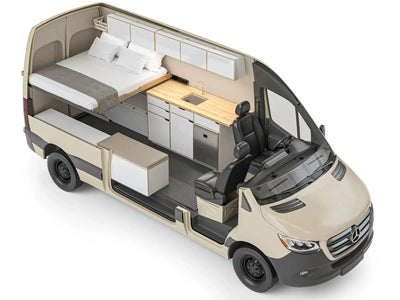
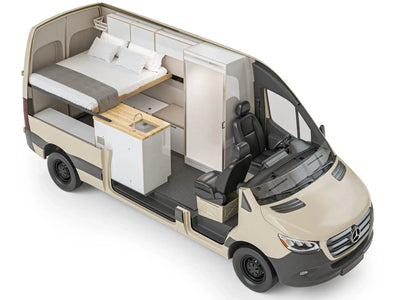
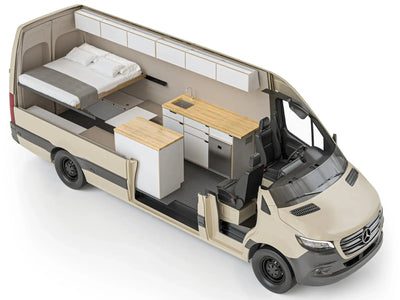
Layout choices make this concrete. A couple may lean toward a setup like the DUO XL layout, while a crew with kids may need the flexibility of the Family XL layout. Different use case, same goal: make longer travel feel realistic and repeatable.
A travel ready build is safety-anchored and serviceable
That same standard applies directly to safety, and it matters even more on long trips and remote roads, where documentation and testing are exactly what let you trust a system you can't easily double-check in person.
Safety, easy service, and dependable long-trip performance go together. Serviceability is part of safety: a labeled system is easier to inspect, diagnose, and fix before a small issue becomes a trip-ending one.
Day-to-day loading matters too. NHTSA's tire guidance says tire pressure should follow the vehicle's tire and loading label or owner's manual, not the tire sidewall maximum. NHTSA also stresses respecting load limits and securing cargo correctly, which makes payload awareness part of camper van philosophy, not just a driving habit.
Why documentation and access matter on the road
Documentation matters most when the van is far from the builder. Both owners and service techs benefit from having clear records in hand, not just a memory of how something was installed.
Easy access matters just as much. Accessible systems management is part of adventure readiness. If routine diagnosis means tearing half the van apart, the build wasn't planned well enough.
A van should be understandable as well as functional. In our experience, it's something buyers often don't think about until after delivery.
Shoppers often focus on finishes first, but we've found serviceability tends to show its value later, often on the first long trip. If you want to talk through how a build is documented and supported, reach out through our contact page.
Weight, tires, and load security are part of the philosophy
Weight is not a side issue in a finished van. We connect good design to safe weight distribution, payload awareness, and platform-specific limits on Sprinter and Transit builds, since a loaded van, with water, gear, passengers, batteries, and accessories, behaves very differently than an empty cargo shell.
Tire maintenance carries real stakes here too, which is part of why NHTSA treats tire condition as a core vehicle-safety issue, not just a maintenance footnote.
Interior design and driving safety are connected, not separate concerns. A travel-ready build should stay safe and predictable when it's fully packed and headed out on a real trip.
The Vansmith philosophy: personalized, responsible, and built to last
Our philosophy starts with the owner. Each van is shaped around lifestyle and goals, which makes personalization central, not cosmetic, though it stays paired with strength and comfort so the design never feels trend-driven or over-optioned.
We add a stewardship layer through earth-friendly materials like bamboo, birch, and wool, along with energy-efficient systems, materials and systems that reduce waste while still supporting long-term travel.
Responsible design, done well, is about independence with less friction and more confidence, which is exactly where our custom work in Sprinters and Transits comes in.
Personalization with purpose
Real personalization means every cabinet, bed, storage zone, and system earns its place. We tailor layouts to actual use: a solo explorer, a couple, and a family can share the same base vehicle and still need very different solutions.
Design should start with how people really travel. Good design often comes from eliminating the compromises travelers feel every day.
The strongest personalization isn't endless choice, it's purpose-built design shaped around a clear travel rhythm. Our Sprinter, Transit, and foundation options are meant to give that a real-world path instead of a generic floorplan.
Sustainability and stewardship in the build
Those material and system choices connect directly to daily function: lower power demand and more efficient off-grid living, not just a values statement.
We think a lot of adventure-van marketing leans hard on rugged imagery, with less attention on material responsibility and system efficiency. The simpler view: explore comfortably while reducing avoidable waste and unnecessary system strain.
There's a durability link too. Responsible material and system choices tend to support better long-term ownership, since they're chosen for repeated use rather than quick visual impact, which fits our Colorado-rooted, craftsman approach.
FAQ
What does camper van philosophy mean in practice?
In practice, camper van philosophy means the design rules behind the build: how it balances durability, comfort, personalization, and serviceability. We define Built-to-Roam around flexibility, strength, uniqueness, and comfort, then tie those values to real issues like payload awareness, tough materials, and documented systems.
What makes a camper van truly built to roam?
A van is truly built to roam when its vehicle systems and living systems are documented and tested for real driving and camping. We look for markers like wiring diagrams, labeled circuits, secured furniture, and inspection checklists.
Are adventure vans supposed to prioritize ruggedness or comfort?
The best ones are built for both. A roam-ready van should feel capable on the move and calm once you stop.
Why do weight distribution and tire pressure matter so much in a camper van?
A finished camper van carries far more weight than an empty cargo van, so safe loading becomes part of the build itself. We connect good design to payload awareness and safe weight distribution, and NHTSA says tire pressure should follow the vehicle's tire and loading label or owner's manual, not the tire sidewall maximum. NHTSA also stresses respecting load limits and securing cargo correctly, which helps keep a fully built van safe and predictable on the road.
How do durable camper vans reduce travel friction?
Durable camper vans reduce friction by preventing the failures that interrupt trips. Loose furniture, poor seals, weak plumbing fittings, inaccessible systems, and electrical shortcuts all make travel harder. We build against those issues, and testing, revision, and all-season engineering support extended independence and easier travel over time.
About the author

Eugene Smit
CEO
Eugene is the CEO of The Vansmith, based in Boulder, Colorado. He writes across topics related to van builds, ownership, and the camper van industry.
Read more about Eugene