Where to buy a camper van in Colorado comes down to three real paths: dealer inventory, direct-from-builder vans, or private-party sales. Which one fits you depends on how much risk, paperwork, and cold-weather planning you want to take on yourself. In Colorado, that choice matters more than it does in milder places because heat, plumbing protection, battery size, and tire setup can make or break winter use. A van that looks great on listing day can feel very different after one freezing night near a ski lot.
Where to buy a camper van in Colorado: the 3 real paths
Most Colorado buyers land in one of three lanes: a dealer, a builder, or a private seller. That lines up with the buying lens shared by RVIA, which points shoppers back to budget, travel style, sleeping needs, and ownership goals. Those are still the right questions here, but Colorado adds one more. You need to ask if the van will really work in the cold.
That last part matters a lot. Advice from GearJunkie and Outside makes the same point in different ways: winter capability is expensive to fake after the fact. Heating, plumbing, insulation, and traction all get harder to sort out once you already own the wrong van. Colorado-ready matters.
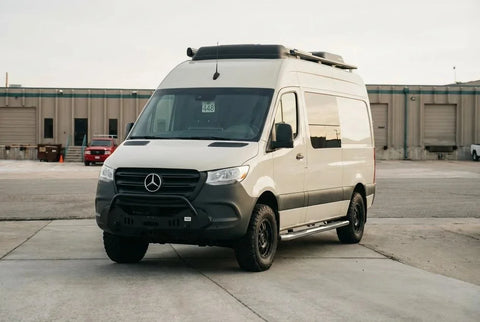
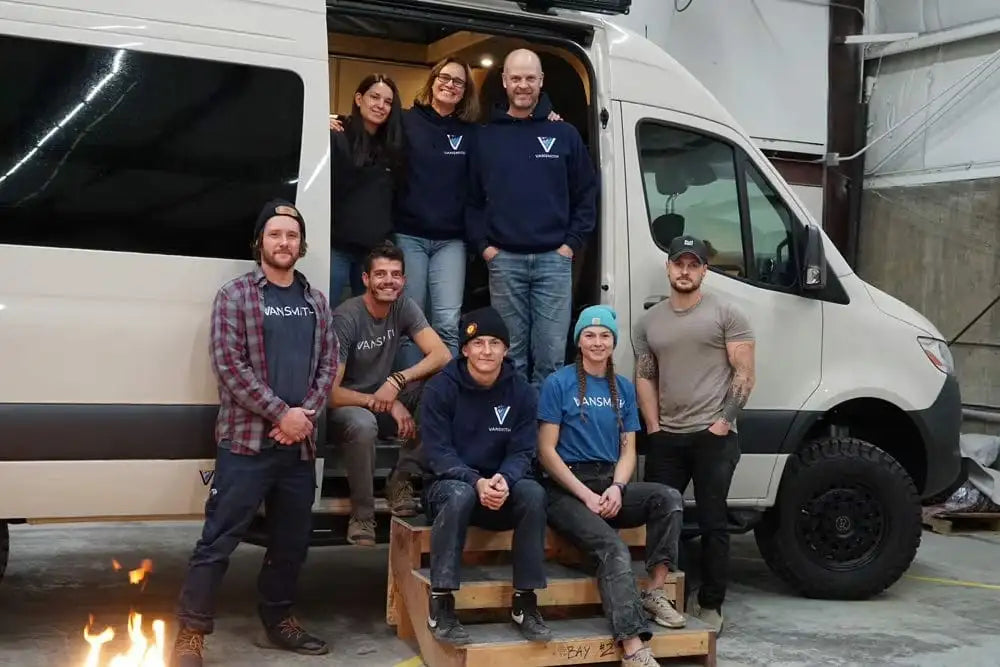
Here in Boulder, we see buyers bounce between all three paths. Some want a van they can drive home now. Others want a layout that fits ski weekends, dogs, remote work, or kids. The Vansmith sits in that middle ground with ready-to-drive inventory and semi-custom options, so you can look at Sprinter conversions, compare Transit conversions, and still make meaningful choices without starting from scratch.
That middle ground is a big reason local buyers search terms like camper vans for sale Denver or buy camper van Boulder in the first place. A ready-to-drive Bivy van gives you immediate use, while a semi-custom build usually takes 8-10 weeks. That's a lot different from an open-ended custom project that keeps sliding out by season.
Buying from a dealer in Colorado
The biggest dealer advantage is simple: paperwork tends to be easier. Colorado's EVTR title and registration service lets participating businesses handle title and registration at the point of sale. The state also says those providers can process transactions no matter which county you live in, which cuts down one of the biggest local headaches.
For many first-time buyers, that's enough to tip the scale. Dealer purchases are usually the easiest route for financing, temp tags, and a more turnkey handoff. If your main goal is speed and less admin work, the dealership path makes sense.
Still, dealer stock can be pretty standard. A van can be shiny, clean, and easy to buy, yet still miss key Colorado details. RVIA's winter guidance is a good reminder to check seals, cold protection, and winter systems instead of assuming the van is mountain-ready.
That's the real trade-off. You gain convenience, but you still need to verify heat, insulation, tire choice, and plumbing design. If you're weighing dealer stock against a local builder, ask one blunt question: was this van built for freezing nights, or just fair-weather road trips?
Buying direct from a builder or brand
Buying direct makes the most sense when you already know how you'll use the van. Maybe it's remote work during the week and ski weekends after that. Maybe it's couple travel with long stays off-grid. RVIA's buying framework fits this route well because layout and system choices can be matched to real use, not guessed from lot inventory.
This path tends to be stronger when cold-weather details matter. Heating, insulation, battery sizing, and water design are easiest to get right before the build is done, not after your first rough winter trip. Colorado-ready matters. Worth saying twice.
Buyers in Colorado should ask if the builder has real hands-on experience with winterization, heater installs, suspension work, and battery upgrades. Those are common pressure points once you start using the van around mountain towns and trailheads. In our Boulder shop, those are normal conversations, not edge cases.
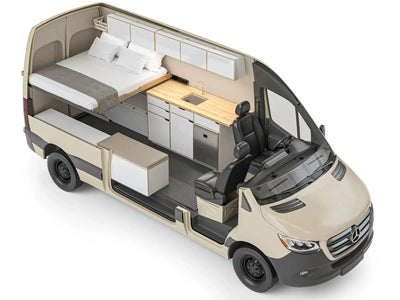
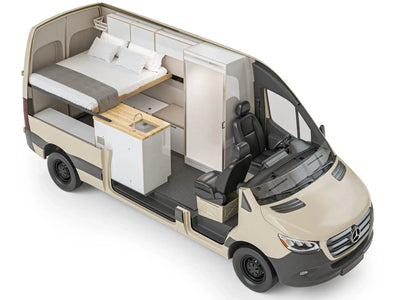
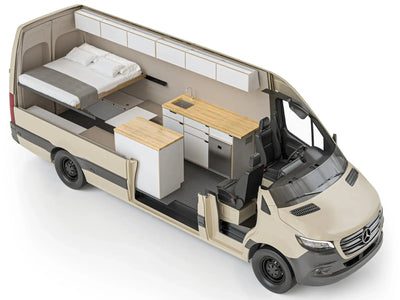
The Vansmith focuses mainly on Mercedes Sprinter and Ford Transit builds. If you want to start with a finished layout, you can look at our vans for couples or our family van conversions. As of 2026, ready-priced models start at $112,450 for the Transit Duo and $114,450 for the Sprinter Duo, while family layouts start at $117,450 for the Transit Family and $119,450 for the Sprinter Family.
That gives local buyers a real Boulder option with a place to see vans in person. You can talk through layouts, compare systems, and move from research to purchase without buying sight unseen. If you want to shape the van around your use, customize your van is the clearest next step.
Buying from a private seller
Private-party sales usually have the widest price spread. That's the draw. You might find a bargain, or at least what looks like one, but more of the risk lands on you.
Colorado makes that pretty clear on the tax side. The state's page on consumer use tax notes that use tax may apply when sales tax was not collected. That matters for private sales and some out-of-state deals, so the low list price isn't always the full story.
There's more legwork, too. Colorado says most personal vehicle title and registration services are handled by county motor vehicle offices, so private buyers should expect more steps after the sale. That's manageable, but it isn't nothing.
The bigger risk is hidden build quality. A cheap van can get expensive fast if it needs heater service, battery work, winterization, tire upgrades, or plumbing changes. In our shop, the private-sale regrets are pretty consistent: underbuilt electrical systems, weak cold-weather planning, and no clear service history. Colorado-ready matters.
How Colorado weather should change what you buy
 Colorado buyers should shop differently than buyers in mild coastal climates. Snow, overnight freezes, and long shoulder seasons expose weak spots fast. RVIA and GearJunkie both point back to the same basics: insulation, heat, and cold protection are core buying issues.
A van that feels perfect for summer can still be the wrong buy here. Exposed plumbing, weak tires, or a marginal heat setup may not show up on a sunny test drive near Denver. They show up later, often when you're parked somewhere cold and tired.
We see this a lot in Boulder. Buyers often come in focused on layout, wood tones, and finish details. Then the conversation shifts to heater output, battery resilience, and how often they'll actually use the van from November through April. That's the real use test.
So the search phrase where to buy a camper van in Colorado is really asking two questions at once. Where can I buy one, and where can I buy one that's built for mountain use? Those are not always the same answer.
Winter-ready systems to prioritize
If winter use is part of the plan, ask about systems first. RVIA's winter checklist points to seals, weather stripping, winterization, and cold protection. That's less of a maintenance note in Colorado and more of a buying checklist.
GearJunkie's winter van guide puts heating, insulation, and water planning right at the center. Outside makes the same point about interior plumbing. If water lines and tanks aren't protected, they can become the weak link in freezing weather.
Ask how fresh water, gray water, and lines are protected. Ask how easy the van is to winterize if you won't use water in deep cold. Most builders want a fixed bed. Or they think they do, until they see what it costs them in garage space. The same kind of trade-off shows up with winter systems. Features sound great until they clash with how you really camp.
In our service work, the systems Colorado buyers care about most are pretty consistent: heater install and service, battery upgrades, AC install, water tank work, winterization, and secondary alternator upgrades. Those are all easier to integrate cleanly from the start. If you're planning a build path, our process page helps show how those choices get sorted early.
Traction, tires, and mountain-road realism
Tires matter more than the badge on the back door. Outside's winter overlanding guide is blunt on that point, and we agree. AWD helps, but it doesn't erase the need for snow-capable tires.
Colorado buyers should look at the whole setup: tires, suspension, wheel fitment, and the roads they actually plan to drive. A van built for social media photos can still feel sketchy on a slushy pass road or a rutted trailhead lot. Real winter travel asks more from the van than the marketing copy does.
In shop conversations, traction confidence is often the line between a summer-only purchase and a van people use all year. Suspension upgrades and wheel-and-tire upgrades can help tune a van for local conditions, and those are both services we handle. If you already own a van and need that kind of work, our foundation builds and upgrade path can be a smart place to start.
Think of a Colorado-ready van as a systems decision. Tires, suspension, heat, and water protection all work together. Miss one, and the others can't fully make up for it.
Cost comparison: dealer vs builder vs private sale
 If you're shopping seriously, price context matters. You're not just choosing who sells the van. You're choosing how much risk, convenience, and post-purchase work comes with it.
Dealer and builder purchases usually cost more upfront than a private sale. Still, that higher price can reduce spending on paperwork help, corrections, or winter upgrades right after you buy. Colorado's fee structure also adds a wrinkle, since registration fees and Specific Ownership Tax vary based on things like vehicle class, model year, and taxable value.
That means the cheapest van to register isn't always the best buy. An older van may cost less on paper, but if it needs major heater, battery, or plumbing work, the first-year cost can swing the other way fast. For Colorado buyers, the better lens is purchase price plus Colorado readiness plus paperwork burden.
| Buying path | Typical upfront cost | What you gain | Main trade-off |
|---|---|---|---|
| Dealer | Varies by stock | Easier financing, temp tags, EVTR paperwork help | More standard layouts and systems |
| Local builder | $112,450-$119,450 | Colorado-ready design, local support, clear pricing | Higher upfront spend than many private deals |
| Private seller | Wide price spread | Lower entry price in some cases | More risk, more legwork, more upgrade uncertainty |
What a ready-to-drive local builder costs
As of 2026, The Vansmith lists the Transit Duo at $112,450 and the Sprinter Duo at $114,450. For families, the Transit Family is $117,450 and the Sprinter Family is $119,450. Those numbers give you a direct local benchmark instead of vague starting points.
That price gap between Transit and Sprinter is pretty small. What changes more is the layout and how many people need to sleep inside. If you're comparing couple-focused options, the DUO XL layout is a useful reference, while families can look at the Family XL layout to get a feel for what more sleep space looks like.
Bivy models are sold ready-to-drive, which matters if you want a finished van now. Semi-custom builds usually take 8-10 weeks, so you can still steer layout and system choices without waiting through an undefined timeline. For a decision-stage buyer, that's a very practical middle path.
It also helps that you can do this locally in Boulder. You can see vans, compare storage logic, and ask direct questions before you commit. That's a very different feel from wiring money to someone you've only met through listing photos.
The hidden costs buyers overlook
Tax is one of the first hidden costs. If sales tax wasn't collected, Colorado may still require consumer use tax. Private-party and remote buyers shouldn't assume the deal is tax-free just because it started that way.
Paperwork time is another one. Most personal-vehicle title and registration transactions go through county offices, while dealers in EVTR can simplify part of that process at the point of sale. That convenience has real value, especially if you want the smoothest path from purchase to first trip.
The biggest hidden cost, though, is winter correction work. Better tires, heater repairs, battery upgrades, and plumbing changes can eat up a price advantage fast. In our experience, buyers who chase the lowest entry price often spend their first season fixing electrical, heating, or storage decisions they wish had been solved before purchase.
Short version: the cheapest buying channel isn't always the lowest-cost first year. That's the number that tends to sting. If you want more context on upgrade paths and system trade-offs, our van build blog and DIY blog cover many of the issues buyers run into after the sale.
How to evaluate a Colorado camper van before you buy
RVIA recommends matching the RV to how you really travel. For camper vans, that means sleeping space, trip length, storage, and whether the layout fits solo use, couple travel, or family trips. In Colorado, you also need to think about ski gear, wet boots, dogs, and cold overnight parking.
Cold-weather guidance from Outside and GearJunkie backs up that mindset. Insulation, condensation control, battery performance, and water-system design are not side notes. They are core purchase criteria.
Try to inspect the van with use in mind, not just finish in mind. Open cabinets. Think about wet jackets. Ask where dirty gear goes. A pretty galley means less if the van gets clammy, cold, or crowded on a two-night winter trip.
That's one reason a local showroom helps. In Boulder, buyers can physically compare layouts and storage logic instead of guessing from photos. If you're narrowing down options, contact us and set up a walkthrough.
Questions to ask any seller
Start with winter use. Ask what heat source the van has, how it's insulated, and whether water lines or tanks are protected from freezing. Those answers tell you more than a finish list will.
Then ask about tires. What is on the van right now, and is that setup really suited to snow travel? Traction depends heavily on tire choice, and that's true whether the van is AWD or not.
Ask how the seller expects the van to be winterized or stored in cold months. Also ask who handles title and registration paperwork, especially if this is a private sale instead of a dealer using EVTR. If sales tax wasn't collected, ask what documents you'll need for county registration and tax follow-up.
In our shop, the most revealing buyer questions are usually about February, not July. That's when the weak spots show up. Colorado-ready matters.
Common mistakes Colorado buyers regret
The first mistake is buying for looks first. A nice interior can hide a weak heating setup or plumbing design that limits winter use. That's a rough thing to learn after you've already committed.
Another common miss is assuming AWD alone makes a van snow-ready. It helps, sure, but tire choice and road conditions matter just as much. Moisture management gets overlooked, too, and condensation becomes much more obvious during cold-weather camping.
Private-party buyers also tend to underestimate the admin side. County registration steps, tax questions, and missing paperwork can drag out what looked like a simple deal. It isn't hard, but it does take time and follow-through.
The biggest regret we see is simpler than all of that. People buy a van that technically sleeps them, but doesn't support how they actually travel. Ski gear, dogs, kids, work gear, and cold nights all need space and system support. That's why a local walkthrough often beats another hour of scrolling listings.
The best local option for Boulder and Denver buyers
If you're searching camper van dealers Colorado, camper vans for sale Denver, or buy camper van Boulder, being close to the seller helps. Seeing the van in person cuts down surprises around layout, storage, and build quality. It also makes the whole process feel more real, fast.
For Front Range buyers, Boulder is an easy base. The Vansmith offers ready-to-drive Bivy vans plus semi-custom Sprinter and Transit builds, so you can choose immediate purchase or a short lead-time path. Pricing in 2026 runs from $112,450 to $119,450 across Duo and Family Transit and Sprinter models.
Our semi-custom timeline is usually 8-10 weeks, which works well for buyers trying to line up a ski season, summer trip, or family travel window. We also back our cabinetry with a lifetime warranty, and we hold a 4.8-star Google rating across 85-plus reviews. That trust matters when you're choosing between a local builder and a one-off private deal.
Support after the sale matters, too. We also handle heater installs, suspension upgrades, battery work, winterization, windows, awnings, and more, so buyers have a local service path instead of being on their own. If high roof is on your list, you're in good company. About 90% of our customers choose high roof, and many mid-roof buyers later add one of our pop-tops.
Who this route is best for
A local builder and showroom route fits buyers who want confidence that the layout and systems were chosen on purpose. That's especially true if Colorado use is part of the plan and you don't want to sort winter issues out after buying. Couples can use the Duo line as a clear benchmark, and families can do the same with the Family line.
It also fits buyers who value a guided process over bargain hunting. If title steps, registration questions, and winter planning all feel a bit murky, having one local team walk through it with you makes the decision easier. Simple helps.
This route isn't only for full builds, either. If you already own a van and need heaters, suspension, batteries, windows, awnings, or other service work, The Vansmith can help there too. That's useful if you found a van you like but need to tune it for Colorado use.
If you want a van that is ready for Colorado, not just available in Colorado, this is usually the cleanest path. You can start with local inventory, a short semi-custom timeline, and support that continues after the sale.
Keep the tax and registration advice practical
Colorado says taxes and registration fees vary, and Specific Ownership Tax depends on factors like vehicle class, model year, and taxable value. So yes, annual cost can differ quite a bit by van. Newer and higher-value camper vans generally cost more to register than older ones.
Most title and registration work for personal vehicles is handled by county motor vehicle offices. If sales tax wasn't collected, consumer use tax may still apply. Dealer transactions can feel easier because participating businesses may handle title and registration through EVTR.
You don't need a tax seminar before you buy. You just need to know that the paperwork path changes by buying channel, and that local support can save time on the front end. It can also save you from a rough first winter.
FAQ
Where is the best place to buy a camper van in Colorado?
The best place depends on what you value most. A dealer is usually the easiest for financing and paperwork because participating businesses can handle title and registration through EVTR. A builder is often the better fit if you want the layout and systems matched to Colorado use, especially for cold weather and mountain travel.
Is buying a camper van from a private seller in Colorado cheaper?
It can be cheaper upfront, but not always cheaper overall. If sales tax wasn't collected, Colorado may still require consumer use tax, and private buyers usually handle more of the title and county registration process themselves. Add in possible heater, battery, tire, or plumbing work, and the savings can shrink fast.
What should I look for in a camper van for Colorado winters?
Focus on heating, insulation, protected plumbing, and snow-capable tires. Winter guides from RVIA and GearJunkie both stress that cold-weather use depends on system design, not just a rugged look. Ask direct questions about water lines, tank protection, condensation control, and how the van is meant to be winterized.
Do camper van registration costs vary in Colorado?
Yes. Colorado says registration fees and Specific Ownership Tax vary based on factors like vehicle class, model year, and taxable value. In plain terms, a newer and higher-value camper van will usually cost more to register than an older one.
Are there camper vans for sale near Denver or Boulder that are ready to drive?
Yes. The Vansmith in Boulder sells ready-to-drive Bivy vans and also offers semi-custom Sprinter and Transit builds. As of 2026, listed pricing runs from $112,450 to $119,450 depending on platform and layout, which gives Front Range buyers a clear local option.
About the author

Eugene Smit
CEO
Eugene is the CEO of The Vansmith, based in Boulder, Colorado. He writes across topics related to van builds, ownership, and the camper van industry.
Read more about Eugene