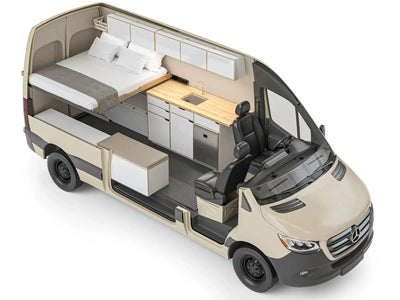
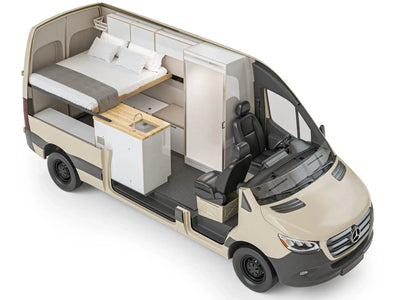
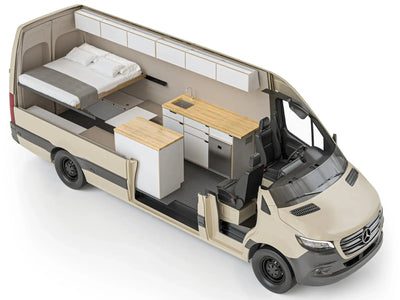
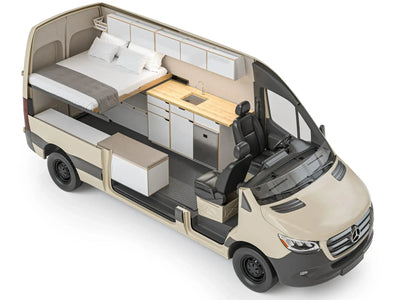
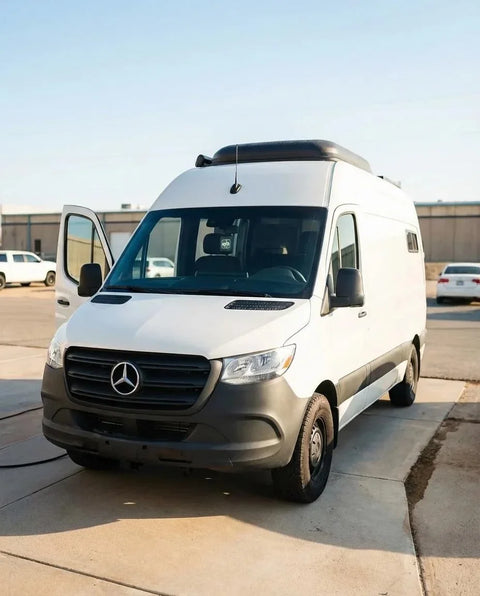
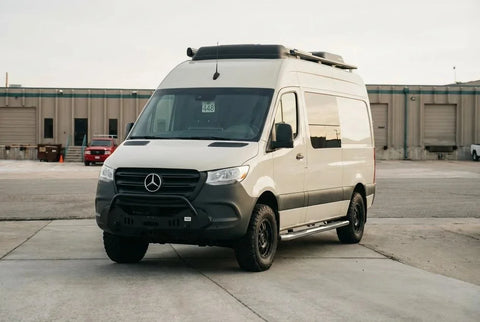
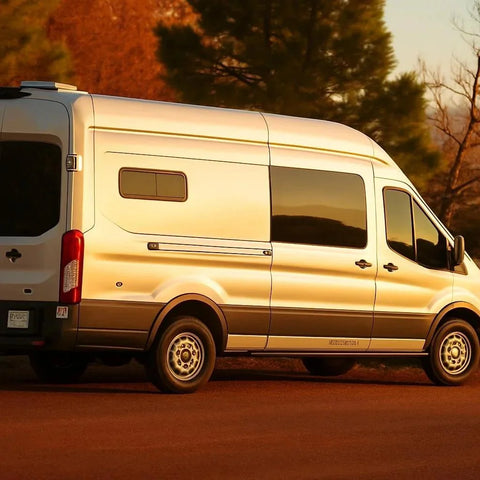
Conversion van vs camper van really comes down to one basic split: a camper van is built for overnight living, while a conversion van is usually built for comfortable transport. Which one fits you depends on how often you need to sleep, cook, charge gear, and stay comfortable while parked without outside help. That one choice changes cost, daily use, resale, and who fixes what later. In our shop, this is the fork in the road that shapes almost every build conversation.
What “conversion van” vs camper van actually means
 The clearest line comes from the RV Industry Association definition of an RV. It describes an RV as a vehicle designed as temporary living quarters for recreation, camping, or seasonal use. That's a simple test, and it helps fast.
In plain terms, a camper van is usually part of the RV world. Consumer Reports puts camper vans in the Class B motorhome category, which means they're RVs built inside a van body. That separates them from a comfort-first passenger van with nicer seats and trim.
A conversion van can still be highly customized. It might have upgraded seating, lighting, sound, and road-trip comfort, but if it lacks core living functions like sleeping space, cooking, ventilation, and self-contained travel systems, it usually does not cross into camper-van territory. In our Boulder shop, plenty of people start by asking for a “conversion van,” then realize they're really trying to choose between a lighter travel van and a true overnight setup.
That use case matters more than the label. Airport runs, kid hauling, and lounge-style road trips usually point toward a conversion van. Multi-day travel and regular overnight stays usually point toward a camper van. If you need the van to work while parked, the answer gets clear in a hurry.
If you already know you want a van with real overnight function, our custom camper van page shows what that path looks like on Sprinter and Transit platforms. If you're still sorting out how much build you really need, our Foundation builds are a useful middle ground.
How the RV industry defines a camper van
The RV world treats camper vans as a distinct category for a reason. RVIA says RVs are built for temporary living quarters, and that's the practical basis for treating camper vans differently from simple passenger upfits. Once a van is sold and understood as an RV, buyer expectations change.
RVIA also has a standards framework for RV manufacturing. We are not getting into rules here, but the key point is that a camper van sits in a different ownership ecosystem than a non-RV conversion van. That affects how people think about warranty, value, and repairs.
Winnebago and Roadtrek both reinforce this category line. They position camper vans as motorhome products, not luxury passenger vans. That matters because buyers are not just shopping upholstery and lighting. They're shopping a living system on wheels.
We see the effect of that distinction all the time. A buyer may think two vans look close from the outside, yet one is valued and serviced like an RV while the other is basically a dressed-up passenger van. Same shell, very different ownership story.
Where the gray area confuses buyers
This is where the market gets muddy. A van can have premium seats, trim, mood lighting, and entertainment gear and still not be a camper van. Nice finishes do not create living function by themselves.
MotorTrend frames camper-van shopping around layout, sleeping, galley, power, and off-grid use. Those are the features that change how you travel. They also change what you'll need to maintain.
In our shop, the regret pattern is pretty steady. People who plan to sleep in the van more than a few nights a year often outgrow lounge-only builds fast. The reverse happens too. Some buyers only take day trips, buy a fully equipped camper van, and then carry systems they barely use.
A simple test helps. Ask yourself if the van needs to function for a night while parked without outside infrastructure. If the answer is yes, you're usually in camper-van territory. If the answer is no, a conversion van may be the smarter and simpler fit.
If you want to read more about layout choices and build tradeoffs, our van build blog goes deeper on how these choices play out in real use.
Feature differences that change daily use
 The main gap is simple. Conversion vans focus on passenger comfort, while camper vans add living tools like a bed, galley, ventilation, battery power, and sometimes water systems. That sounds obvious, but the daily feel is completely different.
Class B camper vans are built around tradeoffs. Every added system takes up room, adds weight, and creates one more thing to service. That's why layout quality matters so much more than a long feature list.
In real use, ventilation and power are usually the first big dividing line. If you want to work from the road, cook simple meals, charge devices, or sleep well in mixed weather, those systems stop feeling optional. They become the whole point.
Families and couples feel this squeeze fast. Seats, beds, and storage all fight for the same footprint. A van can look loaded on paper and still feel awkward if the batteries, tanks, or bed placement eat up the wrong space.
If you're comparing platforms, our Sprinter conversions and Transit conversions show how the same idea can be packaged on two different chassis.
What a conversion van usually includes
A conversion van usually centers on plush seating, passenger room, lighting, entertainment, and road-trip ease. It's built to make miles more pleasant, not to act like a tiny apartment. For a lot of families, that's enough.
Because it may skip plumbing, fixed cooking, and a dedicated bed, it can stay simpler to own. It also stays easier to use as a normal passenger van. That matters if the van has to cover sports weekends, airport runs, and long drives all in the same month.
The tradeoff shows up once the day ends. A comfort-first conversion often leans on hotels, campgrounds with facilities, or day-use travel. You can still bring gear, but loose bins and bags tend to pile up fast when there is less integrated storage.
For buyers in the middle, a phased build can make a lot of sense. We often point people toward basics like windows, a vent fan, electrical, or seating before they jump into a full RV-style interior. That's exactly why our Foundation package exists.
What a camper van usually includes
A camper van is built around overnight travel. MotorTrend points to the usual checklist: sleeping space, a galley, power, and a layout that works when you're parked. That's a very different brief from adding nicer trim to a passenger van.
Consumer Reports describes Class B motorhomes as compact RVs that package camping ability into a van body. That mix is what draws so many buyers in. You keep a more drivable footprint, but you gain real overnight function.
A true camper van often adds a vent fan, battery power, charging integration, and sometimes water storage or a toilet. Those systems raise capability, but they also bring more upkeep. In owner feedback, the most-used items are rarely flashy. It's usually the vent fan, heater, battery size, and bed comfort.
Here is our plain opinion: we'd skip the second battery for a lot of first-time buyers unless their travel pattern clearly needs it. Most people get more day-to-day value from good ventilation and a comfortable bed. For couples or solo travelers, a smart camper layout can replace a lot of hotel stays. For bigger groups, sleeping layout becomes the make-or-break factor.
If you travel as a pair, our couples van collection is the cleanest reference point. If kids are in the picture, the family van collection shows how quickly sleeping and seating tradeoffs become real.
Conversion van vs camper van cost and resale
Cost is where many buyers realize they are not choosing between two trim levels. They're choosing between two ownership categories. One is mostly about comfort and transport. The other adds a full layer of living systems.
J.D. Power RV values separate Van Motor Home, or Class B, as its own category. That gives mainstream camper vans a clearer resale framework than many one-off upfits. Buyers, lenders, and sellers all benefit from having a known bucket.
Big RV names like Winnebago and Roadtrek also help used buyers understand what they're looking at. A custom camper van can still hold value well, but it tends to be more buyer-specific unless the van, systems, and workmanship are documented clearly. That paper trail matters more than people think.
As of 2026, our ready-to-drive pricing starts at $112,450 for the Transit Duo and $114,450 for the Sprinter Duo. Family layouts start at $117,450 for the Transit Family and $119,450 for the Sprinter Family. Semi-custom builds take about 8-10 weeks, which gives buyers a real benchmark against piecemeal upgrades or a lighter conversion path.
| Layout | Platform | Starting price |
|---|---|---|
| Duo | Ford Transit | $112,450 |
| Duo | Mercedes Sprinter | $114,450 |
| Family | Ford Transit | $117,450 |
| Family | Mercedes Sprinter | $119,450 |
The gap in price buys real things. You're paying for batteries, ventilation, sleeping systems, wiring, charging, and the labor to fit all of that into a tight shell. If you do not need those systems, a simpler conversion can be a much cleaner spend.
Why camper vans usually have stronger resale visibility
Class B camper vans have a more visible resale lane because the market already recognizes the category. J.D. Power gives buyers a place to start with values, which is harder to do with a one-off interior build. That does not guarantee price, but it gives the market a shared reference.
Roadtrek is a good example of why labels matter. Buyers know what segment they're shopping, and that lowers some of the guesswork. Winnebago plays a similar role because mainstream shoppers already understand the brand and the product type.
Custom and semi-custom vans can still resell strongly. In our experience, resale confidence rises when the build has a clear component list, electrical notes, and service records instead of a mystery mix of aftermarket parts. That's the fork in the road for used buyers too.
What buyers are really paying for
With a camper van, you're paying for more than the base van and nice finishes. You're paying for integrated living systems and the labor needed to package them in a small footprint. That work adds up fast because every inch has to do more than one job.
A simpler conversion van can cost less because it skips plumbing, fixed sleeping, battery storage, and other house systems. The hidden cost gap is not just purchase price. It's also time, maintenance, and troubleshooting over the years.
This is why a phased plan can be smart. If you do not need a full RV now, upgrades like windows, a vent fan, swivel seats, solar, or a heater can be a better use of money. Our build process page helps show how that kind of decision gets mapped out before parts start going in.
Serviceability: who fixes what after you buy
Serviceability is one of the biggest real-world differences between these two van types. A conversion van may stay close to the base chassis. A camper van adds a second layer of systems on top of it.
Ram’s ProMaster upfit resources make it clear that vans are built to support aftermarket changes. But upfit-friendly does not mean every dealer will fix every aftermarket part. That's where owners often get surprised.
A simpler conversion van is usually easier to keep on the road because there are fewer failure points beyond the van itself. Once you add batteries, inverters, fans, heaters, plumbing, roof gear, and other accessories, service often splits between the chassis side and the house-system side. That split is normal, but you want to go in with eyes open.
At our shop, a lot of service work is not full rebuilds. It's heater service, battery upgrades, solar troubleshooting, windows, vent fans, awnings, seat installs, and winterization. If that kind of ongoing support matters to you, our contact page is the best place to start the conversation.
Chassis service vs house-system service
One nice thing about van-based RVs is that the chassis itself is familiar. Consumer Reports notes that van-based motorhomes use mainstream automotive underpinnings, which makes drivetrains and base components easier to understand than on larger RVs. That part is a real advantage.
The split starts once house systems are added. Batteries, inverters, heaters, fans, plumbing, and roof accessories may fall outside normal dealer service lanes even when the base van is common. That's why documentation matters so much.
In practice, the easiest camper vans to service use recognizable parts and clean install paths. We always prefer systems that are easy to trace and reach later. A conversion van that stays close to stock can still win here if your top goal is simple national service access.
How builder support changes ownership
Mainstream RV brands offer an established support structure, but owners still often bounce between vehicle service and RV service. Custom vans are no different in that sense. The big question is whether the builder is still useful after delivery.
For long-term ownership, support can matter as much as the original build. As of 2026, we back our cabinetry with a lifetime warranty, and that's a concrete example of how builder support can reduce friction later. We also handle upgrades because most vans do not stay frozen in their first version.
That matters even more for adventure use. Owners add suspension work, heaters, solar, Starlink, window packages, and battery replacements over time. As of 2026, we also carry a 4.8-star Google rating across 85-plus reviews, which gives some real-world context for support expectations without turning this into a pitch.
Which one is right for you?
A conversion van is usually the better fit if your main goal is passenger comfort, day trips, kid hauling, or long drives that still lean on hotels and established facilities. A camper van is usually the better fit if you want to sleep in the van often, cook simple meals, manage your own power, and stay comfortable while parked. That's the fork in the road.
Class B motorhomes appeal to people who want RV ability in a smaller and more drivable package than a big motorhome. The tradeoff is simple too. Every step toward self-contained travel adds systems, cost, and maintenance.
For many buyers, the most honest filter is frequency. If you expect more than occasional overnight use, build around sleeping, ventilation, and power from the start. If your trips are mostly ski days, trailheads, youth sports, or long drives with passengers, a lighter conversion may be the lower-friction choice.
If you already know you want a true camper van, our lineup gives a clear next step. Duo layouts fit couples well, and family layouts are the better reference for parents traveling with kids. You can also browse the DUO XL layout or the Family XL layout to see how those use cases diverge.
Best fit by travel style
Solo travelers and couples who care about overnight mobility, remote work, and off-grid flexibility usually get more value from a camper van than a lounge-style conversion. Those use cases depend on sleeping, power, and climate comfort. Cosmetic upgrades do not solve that need.
Families face a tougher puzzle. Seating room and sleeping room both matter, but they compete hard inside a van footprint. That's why family layouts need very intentional tradeoffs, especially once gear, food, and kid stuff start filling the floor.
Consumer Reports points out the appeal of van-based motorhomes for people who want easier drivability than larger RVs. We see that same draw with our Duo and Family layouts. Buyers who expect to spend real time parked in mixed weather should put heater, ventilation, and electrical capacity ahead of cosmetic upgrades every time.
If you mainly need a comfortable people-mover, you can often skip those systems and enjoy simpler ownership. That choice is not less adventurous. It's just more honest about how you travel.
A simple decision checklist
Choose a conversion van if you do not need dedicated sleeping, onboard cooking, or independent power for regular overnight travel. Choose a camper van if you want the vehicle to act as temporary living quarters. That's still the cleanest category test.
Think about resale if you plan to sell in a few years. Recognized Class B products have a clearer valuation path through J.D. Power’s RV categories. Think about service simplicity too, especially if you travel often and want the fewest systems possible.
If you're still unsure, a phased approach can be the smartest move. Start with foundational upgrades, then add systems only when your travel pattern proves you need them. For buyers ready now, we offer ready-to-drive Bivy inventory and semi-custom camper van builds with an 8-10 week timeline as of 2026.
FAQ
Is a conversion van the same as a camper van?
Not usually. A camper van is typically a Class B motorhome or RV built for temporary living quarters, while a conversion van may just be upgraded for passenger comfort. If it lacks core living systems like a bed, galley, ventilation, and onboard power, it usually stays in the conversion-van lane.
What makes a van a true camper van?
The key difference is living function. RVIA defines an RV around temporary living quarters, and camper-van guides focus on sleeping, galley space, ventilation, and power rather than nicer seating or trim. If the van is meant to support overnight living, it's usually a camper van.
Which has better resale: a conversion van or a camper van?
Mainstream camper vans often have clearer resale visibility because J.D. Power tracks Van Motor Home, or Class B, as a distinct RV category. One-off or lightly documented custom conversions can still resell well, but buyers usually need stronger records and clearer build details. The less guesswork in the paperwork, the easier the resale conversation tends to be.
Is a camper van harder to service than a conversion van?
Usually, yes. Both may use common van chassis, but a camper van adds house systems like batteries, fans, heaters, plumbing, and roof accessories. That often means one service lane for the van itself and another for the upfit systems.
How much does a custom camper van cost compared with a simpler conversion van?
A full camper van costs more because you're paying for integrated living systems, not just comfort upgrades. As of 2026, our ready-to-drive pricing starts at $112,450 for the Transit Duo and $114,450 for the Sprinter Duo. Family layouts start at $117,450 for the Transit Family and $119,450 for the Sprinter Family.
Who should choose a conversion van vs camper van?
Choose a conversion van if you mainly want comfortable passenger travel, day trips, or long drives that still rely on hotels and outside facilities. Choose a camper van if you want regular overnight use, onboard power, and the ability to stay comfortable while parked without outside help. If you need the van to work while parked, you're usually looking for a camper van.
About the author

Eugene Smit
CEO
Eugene is the CEO of The Vansmith, based in Boulder, Colorado. He writes across topics related to van builds, ownership, and the camper van industry.
Read more about Eugene