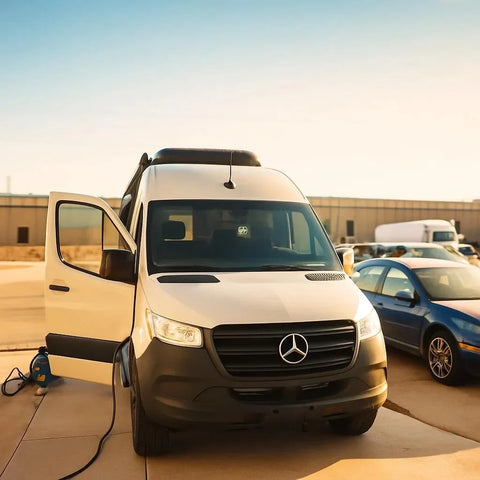
The Mercedes Sprinter MPG for 2026 models typically ranges from 17 to 22 miles per gallon in actual US driving, thanks to its efficient diesel engine and a 24.5-gallon fuel tank. That means you can expect 400-500 miles between fill-ups on most adventures. Your real fuel economy will depend on how your van is built, how much it weighs, and how you drive. Understanding these numbers helps you budget for trips and make smarter decisions about your camper van build.
Understanding Mercedes Sprinter MPG: Facts and Myths
The 2026 Mercedes-Benz Sprinter doesn’t have an official EPA MPG rating. That’s because it’s classified as a commercial vehicle, so the EPA skips window-sticker fuel economy tests for this type of van. Instead, we have to rely on real-world testing and owner reports to know what kind of Sprinter fuel efficiency to expect. According to Edmunds, the Sprinter comes with a 24.5-gallon diesel tank, which sets the stage for long trips between stops.
When MotorTrend put the AWD 2026 Sprinter to the test, they found it delivered just over 20 mpg on a mix of highways, city streets, and even some mountain driving. That lines up with the everyday numbers TrueCar shares, where most US Sprinter models fall between 17 and 22 mpg depending on things like weight and driving habits. Over in Europe, official numbers are higher-anywhere from 22.2 to 32.1 mpg-because those vans are usually lighter and tested under different rules. Some European drivers even report up to 35 mpg on light-load vans, but that’s pretty rare for the heavier, fully built-out US conversions.
So, it’s clear there’s no one-size-fits-all answer. Your Sprinter’s real-world MPG will change with your build, your load, and how you drive. But knowing the range helps you plan your routes, stops, and budget for fuel costs on the road. Most van owners learn quickly that every pound and every road choice matters.
Why No Official EPA MPG for the Sprinter?
If you’re used to shopping for cars with big, bold EPA MPG stickers, the Sprinter’s lack of official ratings can be confusing. The EPA doesn’t rate commercial vans like the Sprinter, so you won’t find government-backed numbers on the window. Instead, buyers have to lean on numbers from TrueCar, MotorTrend, and other independent testers to get a sense of real-world sprinter fuel economy. Comparing Sprinter MPG to a standard sedan or SUV isn’t apples to apples, either-the weight, shape, and use case of a van make a huge difference.
How Diesel Efficiency Shapes the Sprinter's Reputation
The 2026 Sprinter relies on a diesel engine, which is a big deal for fuel-conscious travelers. Diesel engines typically deliver more torque and better MPG when carrying heavy loads, compared to gas engines. MotorTrend even calls the Sprinter a 'diesel-sipping work machine,' which says a lot about its reputation for going the distance without gulping fuel. Diesel’s higher energy density means you get more miles per gallon, especially when your van is loaded with gear, friends, or a full conversion.
For those tackling long highway stretches or hauling up mountain passes, the diesel Sprinter stays efficient where some gas vans start to struggle. That’s why so many van builders and road trippers in the US stick with diesel Sprinters-they perform well under load, keep trips going longer between stops, and keep total fuel bills in check.
2026 Sprinter MPG by Model: Cargo vs. Passenger vs. AWD
 Not all Sprinters are created equal when it comes to fuel economy. MotorTrend’s testing found AWD models got just over 20 mpg, even when tackling mountain roads and city traffic. For Cargo Vans, TrueCar reports a range of 17-22 mpg in real-world use, with the lower end typical for high-roof, long-wheelbase versions or heavily loaded builds. If you’re looking at a Passenger Van, owner feedback (and more detailed analysis) shows you can expect low- to mid-20s MPG, especially on flat highways.
European 2026 Sprinters officially post between 22.2 and 32.1 mpg, but those lighter, short-roof models don’t match the weight or setup of a US camper build. AWD, high-roof, and long-wheelbase Sprinters will end up on the lower edge of the spectrum, thanks to extra weight and more wind resistance. Almost all US Sprinters run on diesel, while European versions sometimes offer other engine options, so keep that in mind if you’re comparing numbers from across the pond.
One of the best perks of the Sprinter’s diesel setup is range. With a 24.5-gallon tank, most US drivers see between 400 and 500 miles per fill-up. That makes it possible to cross entire states or spend days off-grid without worrying about the next fuel stop-a big win for anyone planning long adventures.
Real-World Owner Reports: What Drivers Experience
What do actual Sprinter owners say about their MPG? According to MotorTrend and TrueCar, most drivers see their Cargo Vans deliver 17-22 mpg, which matches the lab tests. Passenger Van owners are more likely to report numbers in the low 20s, especially if they avoid mountain climbs or heavy city driving. Long-term owners also point out that adding big roof racks, chunky off-road tires, or extra gear outside the van can drop MPG by 2-4 points. Every choice you make-from tires to racks-shows up at the pump.
How MPG Compares: US vs. Europe
It’s tempting to look at European Sprinter MPG figures and hope for 30+ mpg, but the truth is more nuanced. UK and European models do post higher official numbers, thanks to lighter builds, stricter emissions standards, and different test cycles. Some European owners have squeezed out 35 mpg in light-load scenarios, but that’s not typical for US conversions, which usually weigh 800-1,500 pounds more than base models. The upshot: If you’re building a full camper, expect to be at the lower end of the MPG range, and focus on smart build choices to keep efficiency as high as possible.
Factors Affecting Sprinter Fuel Economy
 The biggest thing that shapes your Sprinter’s MPG is weight. A fully converted camper van usually tips the scales at 8,000-9,000 pounds, compared to around 6,800 for an empty Sprinter. All that extra cabinetry, water, and off-grid gear can lower your fuel economy by 5-15%. Choosing lightweight materials and modular furniture can help offset some of that penalty. Roof height and wheelbase also come into play-high-roof and long-wheelbase vans have more wind drag, so they burn more fuel at highway speeds. Drivetrain matters too. AWD models average 1-2 mpg less than their RWD siblings, mostly due to added mechanical drag.
Driving habits count for a lot. Steady highway speeds are your friend, while stop-and-go city driving or aggressive acceleration will drop your numbers fast. Tires make a difference as well-off-road or winter treads can cost you 1-3 mpg. Even adding a roof rack, ladder, or extra gear outside the van increases drag and chips away at your efficiency. Maintenance is the final piece: a clean air filter and a properly serviced fuel system will help you stay close to factory MPG, even after years on the road.
Conversion Weight and Upfit Choices
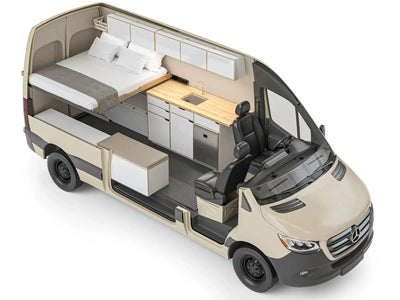
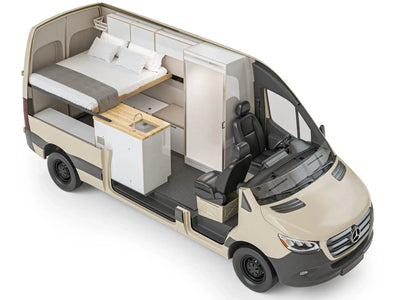
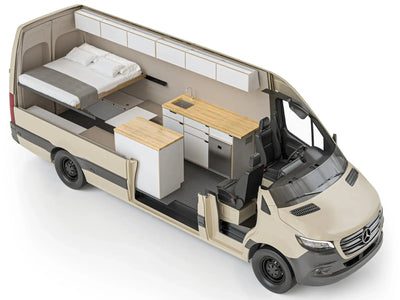
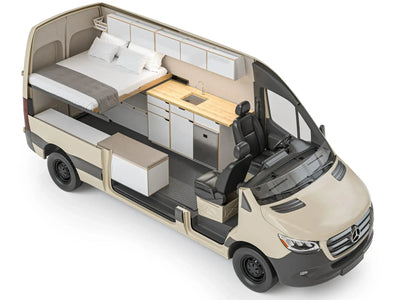
If you go all-in on a camper build, expect your van’s weight to rise fast. Heavy cabinetry, big water tanks, and full off-grid systems can push your Sprinter’s weight up by 1,500 pounds or more. That’s why a lot of builders-ourselves included-prioritize lightweight, modular designs that keep your van nimble. At The Vansmith, we focus on efficient layouts and weight-conscious materials, so you get a comfortable home on wheels without sacrificing fuel economy. Every pound saved in your build is a mile earned out on the road.
Terrain, Altitude, and Climate Effects
Your route and local climate matter, too. Mountain driving and steep grades can drop your MPG by 3-5 points compared to flat highways. Cold weather takes its toll as well-diesel engines run less efficiently until they’re fully warmed up, and denser air means more drag. At higher altitudes (like around Boulder, Colorado), you might see a slight bump in highway MPG due to thinner air, although you could notice a small dip in power. If you plan to explore a mix of climates and elevations, expect your MPG to swing a bit from trip to trip.
Improving Sprinter Fuel Efficiency: Practical Tips
There are plenty of ways to get the best MPG from your Sprinter, no matter how you use it. Start by keeping your tires at their recommended pressure to cut rolling resistance. If you’re not using your roof rack or exterior storage, take it off to improve aerodynamics. On the highway, driving at moderate speeds (ideally 55-65 mph) will keep your MPG higher-once you break 70 mph, fuel use climbs fast. Using cruise control on long stretches helps smooth out your speed and saves fuel, too.
Routine maintenance is key: clean air filters, regular oil changes, and fuel system service will all keep your van running at peak efficiency. When planning a conversion, keep weight front of mind. Opt for lightweight cabinetry, efficient systems, and a modular design to keep your van agile and fuel-conscious. If you want expert help, The Vansmith team can walk you through layout and upfit strategies that balance comfort and efficiency for your adventure style.
What About Fuel Costs and Range?
Most Sprinter owners love that a single 24.5-gallon tank takes them 400-500 miles between fill-ups. At today’s national average diesel price of $4.25 per gallon, a full tank costs about $104. Your cost per mile for fuel lands between $0.19 and $0.25, depending on your real-world MPG and what you pay at the pump. Planning your route with range in mind means fewer stops and more time exploring wild places-a huge plus for long road trips or off-grid stays.
Upgrades and Services That Help Maintain MPG
Swapping to low-rolling-resistance all-season tires can nudge your MPG a bit higher compared to chunky off-road tires. The Vansmith offers suspension upgrades and weight-conscious installs that help you keep the van’s factory efficiency, even after a full build. Keeping your heater and fuel system maintained is just as important-routine service at The Vansmith will keep your diesel engine running clean, so you stay on the road and out of the shop.
Mercedes Sprinter MPG in Context: What It Means for Adventure
The Sprinter’s real-world MPG is right in the mix with other big diesel vans, and usually beats gasoline full-size vans. For long-haul travelers, that 400-500 mile range means fewer fuel stops and more freedom to chase the next mountain view or remote campsite. Every gallon saved is a bit more cash for gear or another night on the road. If you’re planning big adventures or off-grid escapes, your van’s efficiency is a big part of what makes those dreams possible.
Choosing the right layout and features can help you balance comfort with operational efficiency. The Vansmith offers several weight-optimized Sprinter layouts that keep the spirit of adventure alive without loading your van down with unnecessary bulk. Our team’s deep experience with Sprinter builds means you get a van that’s tuned for both comfort and real-world MPG, so every trip is as smooth as it is efficient. Knowing what to expect from your van’s fuel economy helps you set a realistic budget, plan your travel, and go further on every tank.
How The Vansmith Maximizes Real-World Efficiency
We put a lot of thought into each build, prioritizing modular, weight-conscious cabinetry and systems. That means you get a van that’s ready for adventure but doesn’t carry extra pounds you don’t need. Each project is tailored to the owner’s goals, finding the right balance between comfort, capability, and cost. Our team installs efficient heating, electrical, and water systems, so you aren’t dragging around unnecessary weight or running short on power in the wild. It’s all about making sure your van fits your life and your adventures-without burning through fuel faster than you have to.
Sprinter vs. Transit and Other Platforms: MPG Comparison
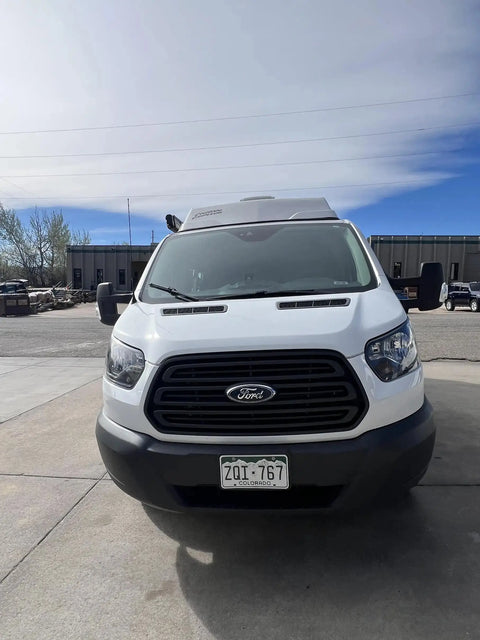
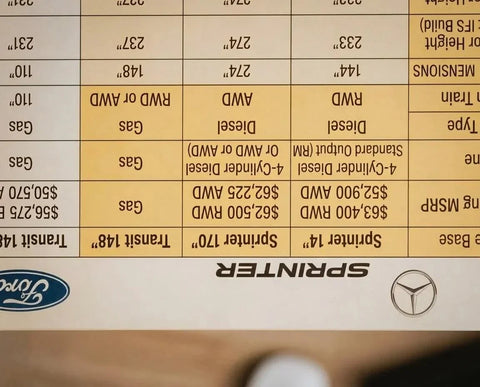
Wondering how the Sprinter stacks up against the Ford Transit? In most real-world conversion builds, the Sprinter’s diesel MPG (17-22 mpg) edges out the gasoline Transit, which averages 14-17 mpg according to TrueCar. Diesel engines just handle load more efficiently, keeping fuel costs lower for long trips or heavy builds. That’s a big reason why so many long-range, off-grid travelers pick the Sprinter-it’s built for big miles and serious adventures.
If you want to learn more about choosing the right van for your needs, check out our Transit conversions or get inspired by our van build blog. And if you’re ready to talk about your own dream build, reach out to The Vansmith. We’re always happy to help you go further-literally-on your next adventure.
FAQ
What is the real-world MPG for the 2026 Mercedes Sprinter?
Most 2026 Sprinter Cargo Vans see between 17 and 22 mpg in real-world use, while Passenger Vans average in the low to mid-20s, depending on load, driving, and configuration. These numbers come from owner reports and independent testing, since there’s no official EPA number for Sprinters. Your own results may vary a bit, but these figures are a good starting point for planning your travel and fuel budget.
Why doesn't the Mercedes Sprinter have an EPA MPG rating?
The Mercedes Sprinter is considered a commercial vehicle, so the EPA doesn’t test or publish official MPG ratings for it. That means you need to rely on real-world data from owners and sources like Edmunds or MotorTrend to get a sense of its actual fuel economy. It’s a different ballgame than buying a standard car.
How does load and conversion affect Sprinter fuel economy?
Every pound you add to your Sprinter-from cabinetry to water tanks-can reduce your MPG. A full camper conversion may add 800-1,500 pounds, which can lower efficiency by up to 15%. Choosing lightweight build materials and smart layouts, like those offered by The Vansmith, can help you keep your MPG higher while still enjoying all the comforts of home.
How far can a Sprinter van go on a full tank?
With a 24.5-gallon fuel tank and a typical real-world average of 20 mpg, Sprinter vans can often travel 400-500 miles between fill-ups. This makes them a great choice for long-distance travel and remote adventures, reducing the number of stops and letting you enjoy the journey.
What can I do to improve my Mercedes Sprinter MPG?
To boost your Mercedes Sprinter MPG, keep your tires properly inflated, remove unused roof racks or exterior gear, drive at moderate highway speeds, and stay on top of scheduled maintenance. For big efficiency gains, work with van conversion experts like The Vansmith to create a lightweight, aerodynamic build that keeps your van fuel-conscious and road-ready.
About the author

Eugene Smit
CEO
Eugene is the CEO of The Vansmith, based in Boulder, Colorado. He writes across topics related to van builds, ownership, and the camper van industry.
Read more about Eugene