By Santiago Pere, March 16, 2026
Van power safety depends on correct wiring, proper fusing, and approved parts (RVIA) to prevent fires and maintain steady power. A safe system pairs correctly sized copper wiring, clear circuit safety, and a battery control plan matched to your battery type.
Follow simple checks and testing steps. Respect shore power and alternator hookup limits.
Hire a skilled pro for shore AC, high-power lithium installs, or any work that affects your van’s approval or insurance cover. A few small checks now can save a lot of trouble on the road.
Introduction, why electrical safety matters in camper vans

Brief statistics and impacts of electrical failures in vehicles (fires, damage)
Electrical faults are a leading cause of vehicle fires in converted vans (NHTSA). According to the National Highway Traffic Safety Administration, electrical system failures are a significant contributor to vehicle fire incidents each year, which is why careful design and protection matter so much in camper builds. Small errors, a wire that is too small with a fuse that is too large, or a poorly crimped joint, can create heat, melt wire coating, and ignite nearby parts.
Beyond fire risk, bad installs void guarantees, create insurance risk, and leave you stranded when systems fail in remote places. I once checked a van where a single bad crimp caused on-and-off heating; it took a close visual check to find and fix it before it got worse.
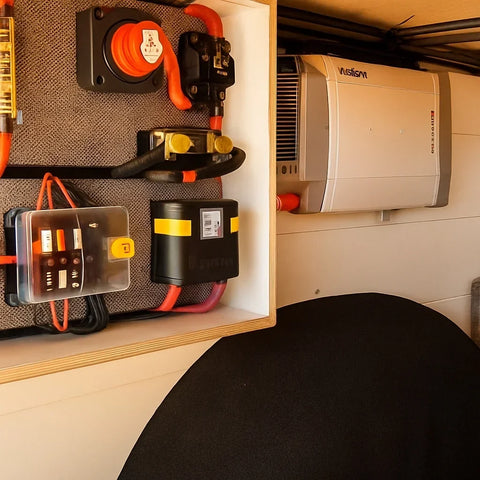
- Size every wire for both current and length to limit voltage drop and overheating in mobile runs.
- Protect each positive conductor at its source with a correctly rated fuse or breaker mounted close to the battery.
- Use quality stranded copper wire and marine/RV-grade insulation rated for the temperatures your van will see.
- Make all terminations with proper crimp tools, matching lugs, and heat-shrink to prevent loose, high-resistance connections.
- Keep DC negatives on a dedicated bus, bond to chassis at a single, well-prepared point, and avoid random sheet-metal grounds.
- Follow manufacturer instructions for batteries, inverters, and chargers, especially for lithium charging voltages and BMS needs.
- Install shore-power and any 120V AC work to NEC-informed practices and use transfer switches or inlets designed for RV use.
- Inspect your system regularly for discoloration, melted insulation, loose hardware, and unusual smells or heat at connections.
Who this guide is for (DIY converters, buyers, expert installers)
This guide is aimed at DIY builders who want to grasp safe practices, buyers evaluating a build, and installers who need to share standards with clients. If you’re deciding between a DIY route or hiring experts, use the guidance below to judge scope and risk. In short, do the low-voltage learning yourself if you enjoy it, but get pros in for anything that affects AC mains, certification, or insurance.
Key standards and authorities to know

National Electrical Code (NEC) relevance and limitations for vehicles
The NEC governs building wiring and isn’t written for cars or vans (Wikipedia). Many of its main rules, wire current limits, wire heat ratings, and circuit safety, are used in practice where shore power and fixed wiring meet. Expect installers and insurers to point to NEC rules for AC shore power work even though extra mobile-specific guidance is needed.
RV industry standards and ISO guidance applicable to mobile electrical systems
RV-specific standards and select ISO vehicle power standards address mobile setups the NEC doesn’t cover, secure mounting, shake resistance, and mobile-specific plugs and connectors. Manufacturers’ instructions and RV-industry best practices bridge gaps between building codes and vehicle realities.
Manufacturer guidance (battery, inverter, and component manuals) and insurer expectations
Part makers provide wire rating charts, suggested fusing, and mounting guidance that you must follow. Insurance companies and warranty providers often expect written proof of compliance with maker specs and may require pro install for high-power or permanently mounted systems.
Core components of a safe camper van wiring system

Wiring types and sizing: copper, insulation ratings, ampacity in mobile applications
Use stranded copper wire sized for steady current plus margin. Choose wire coating rated for higher heat found near engines or heat sources. Follow wire rating tables for mobile circuits and always think about wire length, the longer the run, the larger the wire needed to limit voltage drop. Many RV technicians refer to AAA’s basic guidance on automotive fuses and wiring protection as a starting point when explaining these concepts to new builders.
Circuit protection: fuses, circuit breakers, fuse placement, and proper rating
Protect each wire at its source with a correctly rated fuse or breaker placed as close to the battery or supply as possible. Never use a wire that is too small with a larger fuse. Select slow-blow or quick types to match device inrush where needed and size protection to be below the wire’s current rating.
Grounding and bonding: chassis grounding, isolation switches, and negative bus setups
Set a strong chassis ground and a clear split plan between the vehicle chassis and add-on systems. For 12V power safety in a van, treat grounding, fusing, and wire routing as core items on your van electrical safety checklist. Where shore power is used, follow transfer-switch best rules and make sure there is GFCI protection for AC circuits in damp or outside spots to maintain full campervan electrics safety. The National Electrical Code (NFPA 70) requires GFCI protection in wet and outdoor locations, and those same principles apply when you bring household-style AC into a camper van.
Battery systems: AGM/LiFePO4 considerations, BMS role, ventilation, and secure mounting
Battery type sets safety steps. AGM and flooded lead-acid need other charge settings and airflow than lithium.
A correctly sized BMS is key for LiFePO4 to control charge and discharge limits, cell balance, and fault shutoff. Firmly mount batteries on shake-resistant brackets and give them solid guarding from impacts.
Charging systems: shore power, alternator charging, DC-DC chargers, and solar charge controllers
Shore power AC installs need proper transfer gear and using proven AC wiring rules. These are a core part of campervan electrical safety and overall RV power safety. Alternator-based charging needs correct split and wiring sized for planned current to protect 12v van electrics safety over the long term.
When charging from the alternator into modern battery banks, DC-DC chargers are suggested to ensure correct voltage and charging plans. They also support lithium battery safety for campervans matched to your set battery chemistry.
Inverters and AC distribution: safe inverter placement, transfer switches, and GFCI/AFCI where applicable
Mount inverters in vented, easy-to-get-to spots with short DC runs and enough fusing at the battery. Use a transfer switch for safe shore-to-inverter swap and GFCI protection for outside outlets and wet-area circuits. AFCI protection is increasingly suggested where branch circuits are comparable to building wiring.
Connectors, cable management, and fire-resistant routing
Use shake-rated ring terminals, good crimp tools, and sealed connectors where exposure to moisture is possible. Route cables away from heat and moving parts and secure them with proper clamps. Where cables pass bulkheads or inside materials, protect them with grommets or conduit to prevent chafing.
Common wiring mistakes and how to avoid them
Undersized wire and oversized fuse scenarios
Match fuse ratings to wire amp rating, not device maximums. A fuse that is too large on a thin wire removes the wire’s safety and creates a major fire risk.
Poor connections: ring terminals, crimp quality, and soldering pitfalls
Crimps must be made with the correct die, checked by eye, and heat-shrink sealed where possible. Soldering is not a stand-in for a proper mechanical crimp in mobile setups due to shake fatigue.
Improper routing near heat sources or moving parts
Avoid routing add-on wiring near exhaust, engine parts, or suspension links. If you can’t avoid it, protect with heat-safe sleeving and secure with clamps to stop movement and wear.
Mixing component specs (e.g., BMS/inverter mismatches)
Ensure all parts—BMS, inverter, charger—are set to work together. A BMS that cuts a battery during a fault must be lined up with chargers and inverters to avoid unsafe reconnection attempts.
Testing, inspection, and maintenance checklist
Basic tools and tests (voltmeter, clamp meter, continuity, load testing)
Carry a good voltmeter, clamp meter, and continuity tester. Use a clamp meter to check charging currents and a load test to confirm circuit behavior under planned demand.
Pre-trip checklist and periodic inspection schedule
Perform visual checks monthly: look for color changes, loose terminals, rust, and solid mounts. Check fuses, battery voltages, and alternator charging behavior before long trips. A quick pre-trip check can spot problems early and avoid roadside repairs.
How to interpret test results and when to take action
Voltage sag under load, higher resistance at terminals, or too-high charging currents are signs to stop and inspect. Any sign of heat damage or melted insulation needs fast repair by a skilled technician.
Documentation: wiring diagrams, component labels, and service records
Keep a clean wiring diagram, label both ends of major runs, and record service actions. This record helps installers, insurers, and future owners see what was done.
When to hire a expert, and what to expect
Work that should be done by certified electricians or RV technicians
Hire pros for shore-power/AC mains, fixed high-power lithium installs, alternator hookups beyond simple isolators, and any work that affects vehicle certification or insurance. Professionals handle permits, correct AC wiring, transfer switches, and certified testing. For example, if you’re integrating a modern van alternator with a large house battery bank, reviewing the manufacturer’s towing and electrical guidelines—such as the Ford Transit technical and towing resources—can help you and your installer stay within factory limits.
Credentials and questions to ask an installer (insurance, references, warranty, schematic delivery)
Ask for proof of business insurance, references from similar installs, warranty terms, and a delivered wiring diagram. Confirm they will use parts rated for mobile use and provide a sign-off you can share with your insurer.
Cost vs. risk tradeoffs and insurance/permit considerations
Professional installs cost more upfront but reduce long-term risk and insurance risk. For high-value lithium systems, the cost of a certified install is small compared to the risk of fire or denied claims from bad installs.
Real-world examples and short case studies
Averted fire due to correct fuse placement
In one tracked case, a correct inline fuse at the battery stopped a hot add-on cable from reaching ignition heat; the fuse blew before nearby insulation was damaged. That prevented a costly and risky outcome.
Failure caused by poor crimping and how it was fixed
Poor crimping created a high-resistance joint that heated until the terminal rusted. The repair replaced the terminal, ran a larger wire, and added a fused guard at the source. After the fix, the circuit tested clean under load.
Conclusion, practical next steps and resources
Quick safety checklist download prompt
Use a short checklist: record your system, verify fuse placement at sources, size wires to amp rating, protect AC circuits with GFCI, and perform monthly visual checks. Combine DIY learning with at least one expert review for shore-power and lithium battery systems.
Encouragement to combine DIY education with expert review
Skilled DIY work is useful, but high-risk systems gain from a pro. If you want a deeper system plan, see our Complete DIY Van Power Guide for comprehensive camper van electrical safety planning. You can also check our posts on Solar, Batteries & Electrical System for real-world examples and service options from The Vansmith. For broader vehicle safety context, it’s worth browsing NHTSA’s road safety resources so you can see how electrical reliability fits into the bigger picture of safe travel.
FAQ
What electrical standards apply to camper vans?
While the NEC governs house wiring and isn’t directly written for vehicles, many NEC rules are used where shore power and fixed wiring meet. RV industry standards, ISO vehicle electrical standards, and manufacturer instructions fill gaps. Insurers and installers often expect compliance with recognized best practices and component manufacturers' specs.
Can I wire my camper van myself or do I need a expert?
DIY is fair for owners with electrical time for low-voltage (12V) circuits if they follow best practices, use correct parts, and record work. Hire a expert for shore power/AC systems, major alternator integration, high-capacity battery installs, lithium battery systems that require certified BMS work, or when local permit/insurance rules require a licensed electrician. When in doubt, treat your rig’s power system like a small RV electrical system and get a safety-focused review.
What are the most common wiring mistakes that cause fires?
Top causes include wire that is too small with fuses that are too large and poor connections or crimps that overheat. Other issues are bad routing near heat or moving parts, weak circuit protection, and failing to use a proper BMS with lithium batteries.
How should I size wires and fuses in a camper van?
Size wires to safely carry planned steady current with a margin, and use the right insulation heat rating for the area. Protect each conductor with a fuse or breaker rated slightly above planned load but below the conductor’s amp rating. Follow manufacturer amp rating charts and best-practice tables for mobile circuits.
What routine checks should I perform to keep my van electrical system safe?
Monthly visual checks for heat discoloration, tight connections, rust, and correctly mounted components; test battery voltages and charging functions; verify fuses/breakers; and perform a full inspection before long trips. Keep wiring diagrams and service records up to date so your camper electrical system safety stays high over the life of the build.
About the author

Santiago Pere
Chief Design Engineer
Santiago is Chief Design Engineer at The Vansmith. He writes on topics spanning van design, builds, and life on the road.
Read more about Santiago