Every year we meet people who feel sure driving a van across mountain passes but pause when it comes to the power panel. That is easy to get. A clear rv wiring guide or basic camper electrical overview helps make it easier to see how power moves through a van and how to keep those systems steady.
Knowing rv wiring is very key when fixing issues on the road. Whether you are dealing with inside lighting, charging battery power, or shore power at a campground, knowing how these systems work makes travel easier and safer. Guidance from groups like the Recreation Vehicle Industry Association (RVIA) supports many of the safety standards used in modern RV electrical systems.
12V DC System for Safety and Interior Power

The 12-volt DC system powers the main parts of a camper. This covers inside lights, water pumps, fans, and many safety systems. Learning the basics of how to wire a camper starts with knowing these circuits.
White Wire
The white wire is the ground connection.
It returns power current to the power pack and steadies the system. A poor ground link is one of the most common causes of RV power problems.
Brown Wire
The brown wire typically powers tail lights and marker lights.
These circuits are important for road safety and trailer visibility.
Yellow and Green Wires
These wires control turn signals and brake lights.
-
Yellow usually represents the left turn signal
-
Green represents the right turn signal
They are essential parts of standard r v electrical connections between a tow vehicle and trailer. The National Highway Traffic Safety Administration (NHTSA) highlights proper lighting and signaling as key factors in trailer visibility and road safety.
Blue Wire
The blue wire usually connects to electric trailer brakes.
Proper install is important when towing heavier trailers.
Red Wire
The red wire commonly supplies 12-volt auxiliary power.
This power may charge a trailer battery while driving.
Black Wire
The black wire is often used as the primary power line from the battery.
When learning how to wire a rv, this wire typically feeds the fuse panel.
Wiring RV Batteries

Power wiring shows how long your power systems can run without outside power. Many vans use two or more power packs to increase power storage.
Understanding wiring rv batteries helps you extend battery life and improve system stability.
6V Battery Wiring (Series)
Two 6-volt batteries are often wired together to create a 12-volt system.
Goal
Create a stable 12-volt power supply with increased storage capacity.
Method
Series wiring connects:
-
Positive terminal of battery one
-
Negative terminal of battery two
The remaining terminals feed the RV system.
This method is common when wiring rv battery banks for extended off-grid travel.
RV Connection
The final positive and negative leads connect to the van's 12-volt system through the fuse panel.
120V AC System and Shore Power
The second electrical system inside a van is the 120-volt AC system.
This system powers appliances, outlets, and larger devices when connected to external electricity.
Understanding wiring for RV plug connections helps prevent overloads and electrical faults.
30-Amp Service
30-amp service is the most common connection at campgrounds, and industry resources such as RVIA campground guidelines note that many RVs are designed around this standard hookup.
It supplies 3,600 watts of power.
Typical appliances supported:
-
Microwave
-
Coffee maker
-
Air conditioner
-
Battery charger
50-Amp Service
50-amp service provides much more electricity.
It delivers up to 12,000 watts across two power legs.
Large motorhomes often require this capacity.
30 Amp vs 50 Amp
The main differences include:
Feature |
30 Amp |
50 Amp |
|
Voltage |
120V |
Two 120V legs |
|
Power |
3,600 watts |
Up to 12,000 watts |
|
Typical Use |
Travel trailers |
Larger motorhomes |
Understanding these differences is important when planning electricity when camping.
Essential Electrical Components
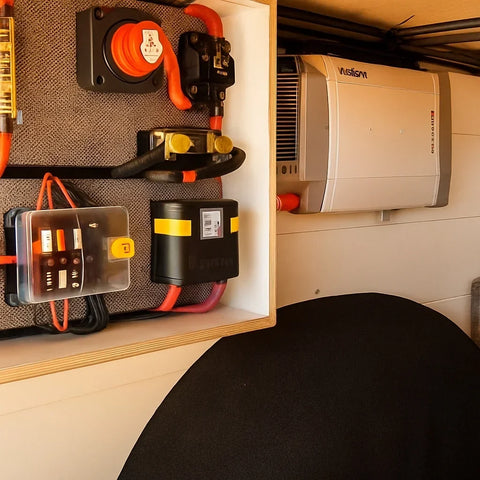
Several components manage how electricity flows through a van.
Converter
The converter changes 120V AC power into 12V DC power.
This allows shore power to run interior systems and charge batteries.
Inverter
An inverter performs the opposite task.
It converts battery power into 120V electricity so appliances can run off batteries.
Charge Controller
Charge controllers regulate power from solar panels.
They prevent battery overcharging and extend battery life.
Overcurrent Protection
Every electrical system needs protection.
Fuses and breakers protect wiring and appliances from overload. The NHTSA’s general vehicle safety guidance stresses the importance of properly sized fuses and breakers to reduce fire risk.
These devices are essential parts of any rv wiring guide or motorhome electrical tutorial.
Wiring Best Practices
Proper wiring practices prevent electrical failures and improve reliability.
Wire Gauge
Wire thickness must match electrical load.
Undersized wires cause heat and voltage drops.
Grounding
Grounding is essential for electrical safety.
Every major system must connect properly to the chassis ground.
Color Coding
Consistent color coding simplifies repairs and troubleshooting.
It also reduces install mistakes when wiring rv batteries or adding new circuits.
Common Motorhome Electrical Problems
Power issues happen to most RV owners over time. Many of them are simple to diagnose once you know the system.
Battery Issues
Dead batteries are the most frequent issue.
Common causes include:
-
poor charging
-
long storage periods
-
damaged wiring
Tripped Circuit Breakers or Blown Fuses
These occur when circuits draw more power than they can handle.
Replacing the fuse or resetting the breaker usually restores power.
Converter or Inverter Failures
If appliances stop working when plugged into shore power, the converter may be faulty.
Loose or Corroded Wiring
Vibration from travel can loosen electrical connections over time.
This is a frequent cause of motorhome electrical problems.
Shore Power or Generator Failure
Sometimes the issue is external.
Damaged campground outlets or faulty adapters can interrupt power.
GFCI Tripping
Ground fault outlets protect against electrical shock.
Moisture or faulty appliances can trigger them.
Troubleshooting RV Electrical Systems
When problems occur, follow a step-by-step process.
Check Battery Voltage
Start with the battery bank.
Low voltage can affect multiple systems.
Check Shore Power
Verify campground connections and inspect the r v electrical connections at the power pedestal. Many RVers also use surge protectors that meet AAA-recommended RV safety practices to protect against bad power.
Inspect Fuses and Breakers
Many electrical failures are caused by blown fuses.
Reset GFCI
Look for GFCI outlets inside the van and press the reset button.
Check Converter Output
A multimeter helps confirm whether the converter is charging the battery.
Key Aspects of Electricity When Camping
Electric systems change depending on where you travel.
Portable Power
Portable power stations provide temporary energy storage.
They are useful for short trips or backup systems.
Campground Hookups
Campgrounds provide stable electricity when camping.
Common hookups include:
-
20 amp
-
30 amp
-
50 amp
Electric Cooking and Comfort
Many travelers run small appliances, induction cooktops, or fans from battery systems.
EV Camping
Electric vehicle charging is slowly appearing at campgrounds.
However, most vans still rely on traditional hookups.
Solar Solutions
Solar panels are common for extended off-grid travel.
They charge batteries during daylight hours and reduce generator use. According to U.S. Department of Energy solar energy basics, solar systems can significantly cut down on fuel use and generator run time when sized correctly.
Essential Gear
Helpful electrical gear includes:
-
surge protectors
-
power adapters
-
extension cords
-
voltage meters
Standard 7-Way Trailer Plug Color Code
The standard trailer plug uses consistent wiring colors.
Color |
Function |
|
White |
Ground |
|
Blue |
Electric brakes |
|
Green |
Right turn signal |
|
Yellow |
Left turn signal |
|
Brown |
Tail lights |
|
Red or Black |
Auxiliary power |
Understanding this plug is part of learning how to wire a camper safely.
Final Thoughts
Power systems can seem hard at first. But a clear rv wiring guide or step-by-step rv electrical tutorial helps make sense of how power flows through a van.
At The Vansmith, many people ask about power systems while checking out our Class B Camper Vans for Sale or exploring our Mercedes Sprinter camper van builds. Knowing rv wiring early helps owners travel with more trust and fix issues quickly.
If you are planning a new van layout, our Design your camper van tool helps show power system spot and storage before hitting the road, and you can browse real-world inspiration in our custom camper van gallery.
And when systems need pro help, our Camper Van Repairs & Installation Service supports long-term trust so you can stay fixed on the road ahead. If you are just starting and want a ready-to-roll rig with a dialed electrical system, you can also look at our current turnkey camper vans for sale.
Travel becomes easier when the electrical system is well understood and properly maintained.
Frequently Asked Questions
How do you wire RV batteries correctly?
Most systems connect power packs in series or side by side based on voltage and power needs. Correct wiring rv power packs makes sure even charging and steady output.
Can RV batteries be wired in parallel?
Yes. Parallel wiring increases total battery capacity while maintaining the same voltage.
What size wire is needed for RV battery wiring?
Wire size depends on current load and distance. Larger systems often require thicker cables to prevent voltage loss.
What is the difference between series and parallel RV battery wiring?
Series wiring increases voltage. Parallel wiring increases capacity.
How does electricity work in an RV when camping?
Electricity comes from batteries, solar panels, generators, or campground hookups.
Do RV batteries charge when the RV is plugged into shore power?
Yes. The converter charges batteries when connected to shore power.
How do RVs get electricity when camping off-grid?
Off-grid systems rely on batteries, solar panels, or generators.
What causes common motorhome electrical problems?
Loose wiring, dead batteries, blown fuses, and converter failures cause most electrical issues.
What type of batteries are best for RVs and camper vans?
Lithium power packs are getting more common because they charge faster and last longer than standard lead-acid power packs, and many owners upgrade to professional van service upgrades when making the switch.
About the author

Eugene Smit
CEO
Eugene is the CEO of The Vansmith, based in Boulder, Colorado. He writes across topics related to van builds, ownership, and the camper van industry.
Read more about Eugene