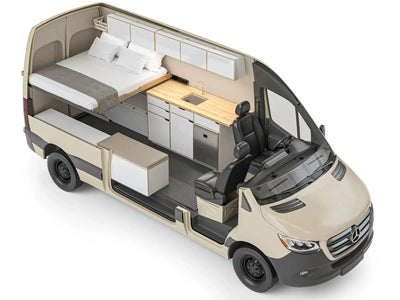
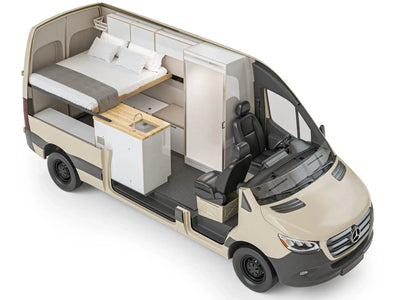
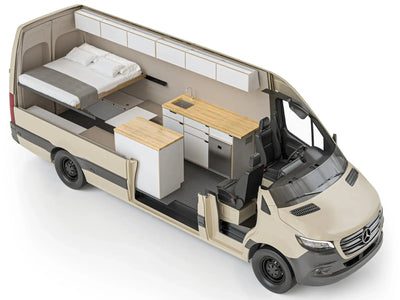
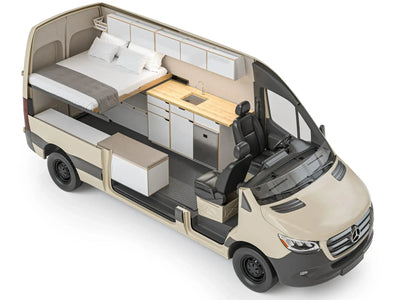
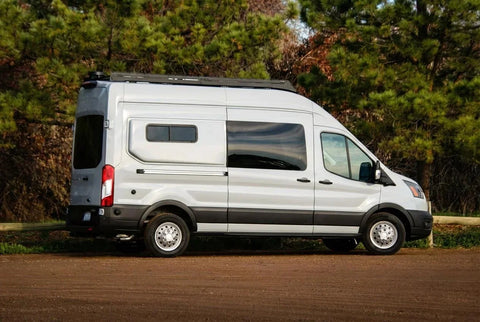
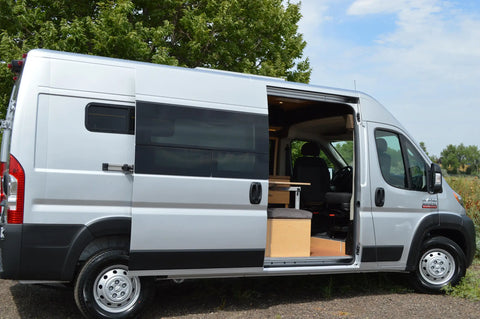
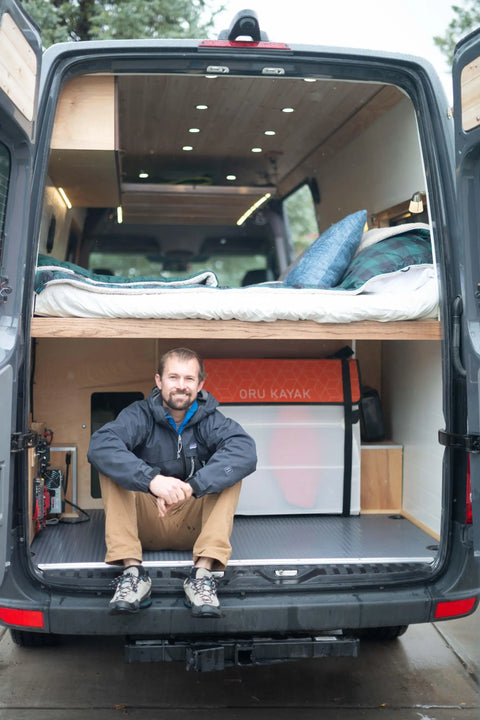
A small camper sleeps 4 most often by using a pop-top bunk above and a convertible lower bed below. That two-level setup is how current Class B vans keep a short footprint while still giving a family real sleeping space. It also explains why “sleeps four” does not always mean four belted seats, or six travel seats, or an easy bedtime routine. The layout matters more than the headline claim, especially once kids, gear, and rainy mornings enter the picture.
What “small camper sleeps 4” really means in a Class B
In this part of the market, four permanent beds rarely fit inside the main cabin. Brands usually solve the problem with a lower bed that converts from the living area, plus a second bed in the roof. That same idea also works well in a custom family van with an optional pop-top.
A compact van that sleeps four needs to stay easy to park, drive, and use day to day. That matters even more for families. If you want that compact goal built around real family use, The Vansmith’s family van conversions are a strong place to start.
One detail trips up a lot of buyers. Sleeping for four is not the same as four belted seats, or six travel seats. Those numbers should never be treated as the same thing when you compare vans.
For families, dedicated travel seats matter more than a broad passenger claim. You need safe places to ride, not just extra places to crash at night. That is why layout details matter so much in a four-person van.
Some factory vans stretch past the usual four-person mark, but that does not make them true six-sleeper rigs. The real question is how the van works for your family at bedtime, on travel day, and in bad weather. That is where a family-first custom layout can pull ahead.
For buyers comparing options, production standards can offer a baseline for build quality. That still does not tell you if a layout fits your family. Beds, belts, and floorplan flow still matter most.
Sleeping capacity vs. belted seating capacity
A van can sleep four, yet the seating layout can change based on the lower bed setup. That means two vans with the same sleep claim may work very differently on travel day.
Some lower bed systems can add belted seating. For parents, that is a big deal. Extra passengers need dedicated travel seats, not just a mattress or bench that looks flexible in photos.
In our experience, one thing a lot of builders overlook is how those seats work once camp is set up. A seat that helps on the drive may change the whole lower living area at night.
That may suit a family with one extra rider, but it still needs the same close look at where each person rides and what happens when the lower bed is open.
So check three numbers on every van. Look at sleeping capacity, belted seating capacity, and whether those belted seats stay usable once the lower bed is deployed. Because the pop-top bed sits above the main cabin, these vans usually keep more daytime room than a four-person setup built only from lower cushions and benches.
That is why the real choice is often not just four sleepers. It is whether the van is set up for four sleepers, extra riders, or a mixed-use plan that changes with the lower seating module. If you are sketching out your own priorities, The Vansmith’s customize your van page is a good place to start.
Why pop-tops matter for family-sized sleeping
The big win with a pop-top is vertical separation. One pair can sleep upstairs while the lower cabin stays open for another bed, late-night gear grabs, or an early coffee without waking everyone. That is the core reason pop-tops show up again and again in family Class B layouts.
In family vans, the pop-top is not a side feature. It is often the main way the van reaches four-person sleeping without getting bigger. That is why many families ask for it.
That extra bunk adds a second sleep zone without forcing a longer body or fixed over-cab bunk. In a shorter van, that matters a lot. It gives families more flexibility in a compact shell.
For families with young kids, that usually means less nightly setup. One pair heads upstairs, and the lower cabin can stay useful a bit longer. The tradeoff is simple, though. A pop-top adds another system to manage, so you need to think about weather use, ladder access, bedtime flow, and who will actually sleep up there. Most Vansmith clients lean high roof first, and about 90% choose it. Mid-roof buyers often end up adding one of our pop-top options later for this exact reason.
The best current layouts that sleep four
In the current source set, the clearest fit for a family-first custom build is The Vansmith Family XL with an optional pop-top and VersaBed. That setup gives you the key pieces families actually need. It also gives mom and dad a near-king sleeping experience on the lower bed.
The Family XL follows the same broad formula that works in compact four-sleeper vans. You get an upper bunk option and a lower bed that supports real nightly comfort. The difference is that the layout is built around family use from the start.
Compact vans usually top out at four or five sleepers, not six. That is why a smart four-person layout matters more than a big headline number. If those tradeoffs feel familiar, The Vansmith’s Family XL layout and build process show how a custom route can solve the same issues more cleanly.
The Vansmith Family XL with optional pop-top
The Family XL is the clearest Vansmith answer for families who want a small camper that sleeps four well. It has the core features families actually use, not just a sleep claim on paper. With the optional pop-top, it adds a second sleep zone without giving up the compact feel.
The lower layout matters just as much. With the VersaBed, mom and dad get a near-king sleeping experience below. That makes the Family XL a much stronger real-world family setup than many factory four-sleeper claims.
It also keeps the focus on what matters most. You need enough belted seats, a kid-friendly upper bunk option, and a lower bed that does not feel like a compromise. For buyers focused on a small camper sleeps 4, that is the right mix.
How lower beds and upper bunks shape daily family use
The lower bed type changes daily life more than most listings admit. It affects where you sit, how you reach gear, and how much setup happens each night. In a short van, those little frictions add up fast.
Family layouts usually center on either a folding bed or a sofa-bed strategy. That gives two different ways to balance sleeping with daytime use. A bed that clears more floor space during the day matters when four people are moving around in wet jackets and muddy shoes.
An optional sofa-bed with more belted seating can improve passenger flexibility. But it also changes how the lower living area works once you stop for the night. That is why convertible lower furniture is standard practice in this segment.
The best family layouts are not always the ones with the highest claimed capacity. They are the ones where kids can head upstairs without forcing the whole van into sleep mode right away. That is one place where a custom build can really shine, and The Vansmith’s Foundation builds give a good sense of how smart planning starts with the basics.
Murphy beds, sofa beds, and convertible rear lounges
A named lower bed system helps because the lower bed is one of the biggest practical differences between layouts. It tells you more about daytime function than a vague line about sleeping capacity.
Because the lower bed converts, the same space usually serves as lounge seating by day and sleeping space by night. That is normal in family Class B vans, but the details matter.
Across layouts, the pattern holds. Families should compare whether the lower bed blocks aisle access, kitchen use, or simple gear retrieval once it is open.
A folding lower bed can make a short van feel much more livable during the day. The cabin is not always occupied by a mattress. For many families of four, the lower bed works best for adults while the pop-top becomes the kid zone, though ladder access and bedtime habits can change that split.
Who should sleep upstairs and what to check
Manufacturers treat the pop-top as a true sleeping area, not overflow space. That is why it sits at the center of family Class B design. A separate upper sleeping area can help kids or early sleepers settle in without taking over the whole lower cabin.
That is a good reminder that upper bunk comfort depends on more than just having a pop-top. One family may love it, while another may find ladder trips and bedtime swaps a hassle.
So check the simple stuff. Look at ladder access, nighttime airflow, and whether the upper bunk is realistic for younger kids, older kids, or adults. A separate upper bunk can lower the nightly teardown pressure because one pair can head upstairs while the lower cabin still functions for a while.
That practical question matters more than the ad copy. Can four people sleep without turning bedtime into a full-cabin reset every night? For custom family vans, pop-top planning also needs to tie into heating, window placement, and storage so the upper bunk stays useful beyond perfect summer weather. You can see more family-use ideas on The Vansmith’s van build blog.
What families should verify before buying a pop-top Class B
A sleep-capacity headline is only the start. You still need to check the exact floorplan because seating count, lower-bed type, and cargo flexibility can vary a lot. That is especially true in family vans.
Similar family-friendly language can still hide different tradeoffs in travel seating and bed layout. If your goal is more than four people, some vans may stretch to five, but that still does not turn a compact van into a true six-sleeper.
That is the key reality check for anyone searching pop up camper sleeps 6. The most credible compact Class B examples cluster around four sleepers, with five as the upper edge. If you want a compact van that works better for your exact crew, a custom route often makes more sense than chasing a headline number.
That is where The Vansmith can help. Their family-focused layouts, seat-install work, roof systems, and pop-top planning on Sprinter and Transit platforms are a natural next step once you move past simple sleeper counts. If you are ready to talk through your own use case, the contact page is the easiest next move.
Standards, safety, and production quality signals
Production standards can give you a useful baseline when comparing vans. That helps on the build-quality side. It still does not replace checking the exact floorplan, seat layout, and sleeping plan for your family.
For family use, though, the review should include both the RV build side and the travel-seat side. A generic passenger-capacity claim is not enough because real family travel needs are more specific. A family van has to work as both a motor vehicle and a living space.
So before you focus on sleeping claims or add-on bed ideas, confirm that every intended passenger has a designated belted seat. That comes first. For custom work or upgrades, properly tying seats, roof systems, and family layouts together is one reason many buyers move from factory comparison into builder-guided design.
When a custom family layout makes more sense
Factory pop-top vans prove the concept well. They also reveal the usual pain points, such as limited storage, shared seating and bed zones, and tight movement once the lower bed is made. For some families, that is fine for weekends. For longer trips, it can feel cramped fast.
Families who like the idea of a small camper sleeps 4 often find that the real need is balance, not max capacity. They want enough belted seats, a kid-friendly upper bunk, and storage that does not vanish at bedtime. That systems view tends to matter more than one extra claimed sleeping spot.
Because The Vansmith focuses on Sprinter and Transit family layouts, buyers can chase the same pop-top-plus-lower-bed concept on platforms that fit the brand’s core build strengths. A custom route can also fold in seat installs, roof racks, heaters, windows, awnings, and electrical upgrades around the sleeping plan instead of treating them as afterthoughts.
That is the real takeaway. Think in systems: where people ride, where they sleep, where gear lives, and how the van works before and after bedtime. If you want to keep exploring ideas, The Vansmith’s DIY blog and DUO XL layout can help you see how layout choices shape daily life.
FAQ
What is the best small camper sleeps 4 layout for a family?
A strong answer is The Vansmith Family XL with the optional pop-top and VersaBed. It gives you two sleep zones and a lower bed that feels much better for adults. With the VersaBed, mom and dad get a near-king sleeping experience below.
Does sleeping for four mean a van has four seat belts?
No. Sleeping capacity and belted travel capacity are separate specs. Families need to confirm both numbers before they buy. The seat layout can also change based on the lower bed module.
Can a pop up camper sleeps 6 in a Class B van?
Six-person sleeping is not the norm for compact Class B vans. The most credible examples cluster around four sleepers, with five as the upper edge. So if you are searching for six, expect a reality check in a true compact van.
Which current Class B vans are most family-friendly with a pop-top?
For a family-first custom option, The Vansmith Family XL stands out, especially with the optional pop-top. It is built around the features families actually need, not just a headline sleep count. The VersaBed also gives adults a near-king sleeping experience on the lower bed.
How do I know a factory-built family camper van meets industry standards?
Production standards can give you a useful baseline when comparing factory Class B vans. That helps, but it still does not replace checking the exact floorplan, seat layout, and sleeping plan for your family. Real family use always comes down to the details.