Van conversion beds work well when they match how you travel. The smart choice is not just about what folds. It is about sleep comfort, setup speed, storage, and how much living space you keep during the day. In most custom builds, those details matter more than the sales name on the product page.
Why van conversion beds need to be treated as part of the full layout
A lot of van bed systems look similar at first glance. In real use, though, there is a big gap between a bed that saves space on paper and one that works every day. The best choice depends on how much floor space you want to recover, how much garage storage you need, and how comfortable you want the mattress to feel night after night.
That point matters for couples, families, and anyone using the van for longer trips. A bed is not just a place to sleep. It shapes storage, seating, aisle width, and how open the van feels during the day.
For custom van buyers, that usually means thinking in systems. The bed platform, mattress, nearby cabinetry, and storage all need to work together. That's the same kind of integrated planning we use when shaping a layout through Customize Your Van or mapping a build path through Our process.
Common van bed options and how they differ
Most custom vans land on one of four bed types: fixed beds, sliding beds, Murphy beds, or folding beds that convert from a bench. Each one solves a different problem. None of them fits every build equally well.
Fixed beds are simple and fast. They are always ready, and they usually leave a large garage below. The tradeoff is that they take up living space all day.
Murphy beds free up floor space when stowed. They can work well in some layouts, but they often ask more from the wall structure and nearby cabinets. They also tend to limit what can stay in place when the bed comes down.
Folding beds that convert from a bench can add flexibility in shorter vans. They can combine seating and sleeping in one footprint. The downside is that comfort and setup ease depend heavily on the mechanism and mattress design.
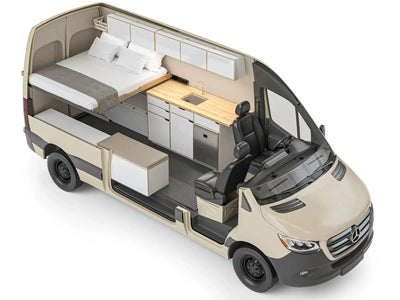
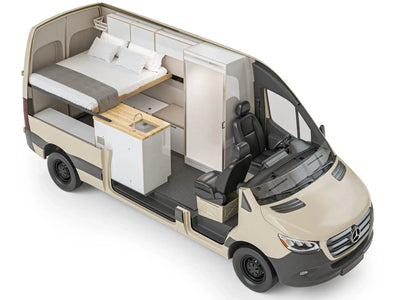
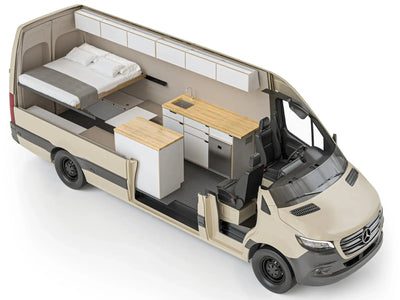
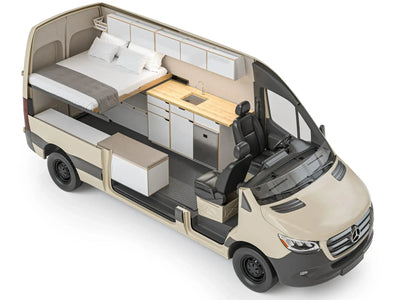
Sliding beds sit in a sweet spot for many custom builds. They preserve garage storage, recover living space during the day, and can still deliver a much better sleep surface than many folding systems.
Why bed choice matters more than clever furniture
Purpose-built bed systems show why this category is different from simple cabinetry. A van bed affects sleep, storage, and daily flow at the same time. That makes the mechanism and mattress just as important as the finish details around them.
The lesson is pretty simple. A van bed should be chosen as part of the full layout, not as a standalone feature. That is even more important in shorter-wheelbase layouts, where one bed choice can shape the whole van.
If you are planning a people-friendly layout, a builder with real bed-system experience matters as much as the bed itself. Good planning up front usually saves more frustration than any clever add-on later.
How the main van bed types actually work
Most purpose-built van conversion beds fall into a few clear categories. Some stay in place full time. Some slide. Some fold up. Some convert from a bench. The right pick depends on what you want the van to feel like by day and by night.
For a sprinter van bed, the key question is not just whether it stows. You want to know if the system keeps good sleep comfort, decent aisle flow, and enough storage in one compact footprint. That's why layout planning on a Sprinter conversion or Transit conversion usually starts with the bed footprint first.
Sliding beds
Sliding beds are our preferred option in many custom builds. They are quick to deploy, quick to stow, and they recover living space during the day. They also preserve garage storage space below, which is a huge win for travel gear.
The biggest advantage is comfort. A sliding bed can carry a full 6-inch memory foam mattress, which gets much closer to a king-bed sleep experience than many folding systems. That matters a lot if the van is your main travel home, not just a weekend toy.
At The Vansmith, our custom-designed Vesabed is built around that idea. It gives you a fast, simple setup without giving up real mattress comfort. For many clients, that balance is hard to beat.
The main downside is cost. Sliding beds are usually more custom and more involved than a simple fixed platform. But for buyers who want comfort, storage, and daytime flexibility together, they are often the best answer.
Fixed beds
Fixed beds are the simplest option. They are always ready, and there is no nightly setup. They also work well for large garage storage underneath.
The tradeoff is obvious. A fixed bed takes up a big chunk of the van all day. In shorter vans, that can make the interior feel tighter and less flexible.
Fixed beds are often a strong fit for people who want the fastest camp setup possible. They also work well if you do not need to recover that rear space for daytime living. Price can be lower than more complex moving systems, depending on the build.
Murphy beds
Murphy beds fold up against the wall when not in use. That can open up floor space during the day. In the right layout, that extra room can feel useful.
They do have tradeoffs. Wall-mounted bed systems can complicate surrounding cabinetry and storage. They can also limit what stays accessible when the bed is down.
Murphy beds can make sense for some specialty layouts. But they are usually not our first choice for everyday van use. Many buyers want easier access to storage and a simpler setup.
Folding beds that convert from a bench
Bench-to-bed systems combine seating and sleeping in one footprint. That can be helpful in shorter vans or family layouts. They can create a more open lounge area during the day.
The tradeoff is usually sleep comfort and complexity. Many folding systems rely on segmented cushions or thinner foam. Some work well, but many do not match the comfort of a thicker one-piece mattress.
They can still be the right answer if you need that dual-use zone. But we do not see them as the default best option. For most buyers, sleep quality and easy daily use matter more.
The real pros and cons of each van bed option
If you are comparing bed types, it helps to look at the tradeoffs clearly. No bed wins every category. The best one is the one that fits your travel style.
Sliding beds offer the best mix of comfort, storage, and daytime flexibility in many custom vans. Their main con is price, since they are usually more custom and more engineered. For many buyers, that extra cost pays off every day.
Fixed beds win on simplicity. They are easy to live with and often cost less than moving systems. Their downside is that they permanently give up living space.
Murphy beds win on open floor space when stowed. Their downside is layout complexity and storage tradeoffs. Folding bench beds win on multi-use flexibility, but they often give up mattress comfort and can ask more from your nightly routine.
Quick price and tradeoff guide
Fixed beds are often the most straightforward to build. That can make them one of the lower-cost options in a custom van. They are best for buyers who value simplicity over flexible floor space.
Folding bench beds usually land in the middle, depending on the mechanism and surrounding layout. They can add value if you need both seating and sleeping in one zone. But the comfort range is wide, so details matter.
Murphy beds are often more specialized. Cost depends on the wall structure, hardware, and cabinet design around them. They can work well, but they are rarely the simplest path.
Sliding beds are often a premium option. That said, they solve several problems at once: sleep comfort, garage storage, and daytime room. For many Vansmith clients, that makes them worth it.
Daily livability: what makes a van bed easy to use
Daily livability decides whether you still love the van six months later. Setup speed matters a lot here. A bed that is easy to stow and deploy tends to get used without frustration.
Mattress comfort matters too. This is one reason we prefer sliding beds in many builds. A full 6-inch memory foam mattress simply feels better than many folding cushion systems.
The floor around the bed matters more than many people expect. The bed often opens into the aisle or lounge zone, so the surface underfoot sees a lot of traffic. Altro highlights lightweight, durable, easy-clean flooring made for vehicle interiors, along with stain resistance and standards-aware material options.
That's a real-world issue in muddy, wet, dog-heavy, or kid-heavy vans. A bed can be technically smart and still feel annoying if it is hard to clean, awkward to unfold, or cramped in sleep mode. Good layouts treat the bed as part of a usable room, not as an isolated feature, which is why many readers end up browsing both the Van build blog and the DIY blog while sorting out priorities.
Setup speed, bed size, and sleeping comfort
A low-step conversion makes a big difference in real travel use. If you need to move bags, shift cushions, and rebuild the bed each night, the process gets old fast. Fast deployment is one of the biggest reasons sliding beds stand out.
Published bed size is a key comfort metric, but mattress thickness matters too. A thicker memory foam mattress usually gives a much better sleep experience than segmented cushions. That is a big reason our sliding-bed layouts feel closer to home.
This matters even more if you will convert the bed every day. Families and couples often do. In that case, the best systems usually avoid awkward extra steps.
Flooring, cleaning, and wear around the bed area
Flooring is easy to overlook during early design talks. Then the first ski trip or beach weekend happens, and the aisle turns into the messiest part of the van. Since the bed often opens over the highest-traffic floor zone, cleanability and stain resistance matter a lot.
Altro markets flooring for vanlife and transport interiors with an emphasis on light weight, easy cleaning, and slip resistance. Those points sound small on paper, but they show up every day. People set up beds in socks, bare feet, or wet shoes all the time.
In family vans, durable flooring cuts the maintenance burden. Kids, dogs, sand, and mud all end up around the bed base. A great bed system can still feel frustrating if the floor scuffs fast, traps dirt, or gets slick when wet.
That's why livability is really an ecosystem issue. The bed, the nearby floor, the lighting, and the storage access all work together. If you're planning a shared travel van, it can help to look at layouts built for that kind of use, like vans for couples or more open lounge-focused designs.
Who should choose each type of van conversion bed
Sliding beds shine when you want one van to do several jobs well. They make a lot of sense for buyers who want strong sleep comfort, open living space by day, and preserved garage storage. That is why they are often our favorite solution.
Fixed beds are a smart fit for people who want the simplest setup. Murphy beds can work for buyers who care most about open floor space when the bed is stowed. Folding bench beds can help in layouts where daytime seating has to share the same footprint as the bed.
The honest answer comes down to how you travel. How much comfort you want. How often you will stow the bed. And how much living space you want back during the day. Those questions usually lead the design more than style choices do.
Best-fit use cases for couples, families, and flexible layouts
Sliding beds are a natural fit for couples and longer trips. During the day, the interior can feel open and social. At night, you still get a much better mattress than many convertible systems offer.
Families often need every inch to work harder. In some cases, a folding bench bed can help combine seating and sleeping. But if sleep comfort is the top goal, a sliding bed is usually the stronger answer.
Fixed beds still make sense for buyers who want zero setup and do not mind giving up floor space. Murphy beds can help in niche layouts, but they are usually less universal. In shorter vans, the best floorplan often comes from balancing comfort with daytime openness.
Where The Vansmith fits in
Because these systems mix comfort, layout, and daily use, they work best when planned early. A sprinter van bed is rarely a standalone product choice. It affects cabinet depth, aisle width, storage access, and the whole feel of the van around it.
The same is true in Transit builds. The bed system and the surrounding interior need to be designed as one package. That's why The Vansmith's mix of custom design-build work and foundation installs fits this topic so well.
A thoughtful builder can also pair the bed with durable flooring, good lighting, and storage that stays easy to reach after the bed is down. If you are sorting out next steps, Customize Your Van is the best place to start, and contact us is the right move if you already know your passenger count and rough layout goals.
The short version is this. The best van conversion beds are not gimmicks. For most Vansmith builds, the sliding bed is our favorite because it gives you near-king comfort, fast setup, garage storage, and more living space by day.
FAQ
What are the main types of van conversion beds?
The main options are fixed beds, sliding beds, Murphy beds, and folding beds that convert from a bench. Fixed beds are simplest. Sliding beds offer the best mix of comfort and flexibility for many custom builds.
What is The Vansmith's preferred van bed option?
In many custom builds, we prefer a sliding bed. It gives you the comfort of a full 6-inch memory foam mattress, fast stow and deploy, preserved garage storage, and more open living space during the day. Our custom-designed Vesabed is built around that approach.
Are fixed beds better than folding beds in a van?
It depends on your priorities. Fixed beds are simpler and always ready. Folding beds can recover living space, but they often give up some mattress comfort and ask for more setup.
Is a sliding bed worth the extra cost in a camper van?
For many buyers, yes. A sliding bed solves several problems at once by improving sleep comfort, preserving storage below, and giving you more usable room during the day. If those benefits matter to you, the higher price can be worth it.
What makes a van conversion bed easy to live with every day?
Fast conversion, a comfortable mattress, and good use of surrounding space matter most. That is why sliding beds work so well in real travel use. The best setups also leave enough open floor and storage access that bedtime does not mean rebuilding the whole van.