An inexpensive camper van is usually a used cargo van with a simple phased build, not a fully finished Class B motorhome. That lower entry price can be a smart move, but it only works if the van itself is solid, well documented, and easy to build on later. For most buyers, the best savings come from skipping extra finish work first, not from gambling on a sketchy title, hidden flood damage, or poor maintenance. Get the shell right, start with a Foundation build, and you'll have a much better shot at a van that stays affordable.
The cheapest path to an inexpensive camper van
A lot of budget shoppers mix up a factory Class B with a cargo van that has a bed and some panels. According to the RV Industry Association, a Type B motorhome is an RV built on a van chassis. That's a different product category than a used cargo van with a DIY or partial build.
That gap matters because RVIA also notes that RVs are built to industry standards such as NFPA 1192. So if you're shopping for a cheaper van, it's best to be clear about what you're buying. A low-cost DIY van may still be a great fit, but it shouldn't be treated as equal to a factory-made RV just because both have a bed inside.
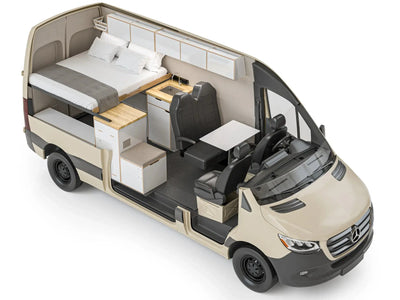
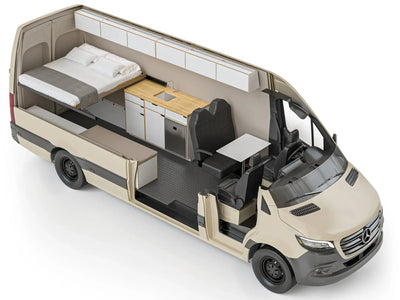
For most buyers, the used cargo van route is the cheaper way in. You pay less up front, and you can add only what you need. A Foundation build fits that path well because it gives you the basics first and leaves room to grow later.
That's why the used-vehicle process matters more than a pretty interior. Consumer Reports says buyers shouldn't skip the test drive, title check, recall check, vehicle history report, or mechanic's inspection. If you're thinking about a phased build later, pages like Foundation builds and Our process show what it looks like to start with solid basics instead of trying to do everything at once.
Used cargo van vs. used factory Class B
A used factory Class B gives you finished systems from day one. That's convenient, and for some buyers it's worth the higher buy-in. Still, it's a Type B RV, not just a van, and that usually means a bigger purchase price than a bare cargo shell.
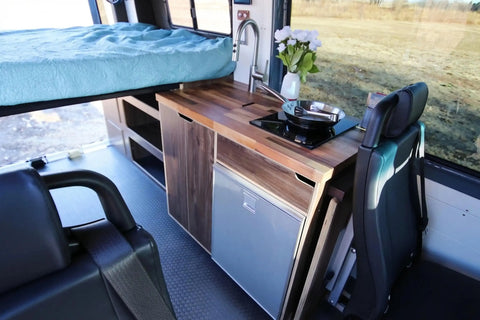
A used cargo van gives you room to phase things in. You can start with sleeping, storage, and airflow, then add more later. For a lot of people, that's the most realistic budget path because it spreads cost over time instead of forcing a full build on day one.
There is a real trade-off, though. A DIY or partial conversion doesn't automatically meet the same manufacturing standards tied to factory RVs. That's one reason we tend to like a measured plan, where you keep the layout simple and make sure each upgrade still serves the van long term.
Condition still beats sales pitch. Consumer Reports' used-car inspection advice makes the same point, a clean-looking conversion can still hide deferred maintenance. If a seller talks big, the FTC's dealer buying guidance says the terms that matter should be in writing, including whether the van is sold as-is or with a warranty.
For a budget-minded buyer, the takeaway is pretty plain. Spend more on a sound van and less on decorative finish. If you want a path that can grow over time, start with a Foundation build and customize your van later, once the platform proves itself.
Why the van itself matters more than the build-out
Maintenance records tell a story. Consumer Reports says service history is a key part of used-vehicle evaluation because it shows whether the van was cared for or just cleaned up for sale. We've seen this a lot, fresh wall panels can distract from a rough mechanical past.
You also can't rely on the listing alone. Consumer Reports recommends a full inspection of the vehicle's condition, not just the posted dealer info or the seller's description. A nice sink or a new mattress won't help much if the van needs major work right after you buy it.
The FTC makes another useful point here. A vehicle history report can reveal accidents or flood damage, but it often won't reveal mechanical problems. That's why a history report and an independent mechanic's inspection work best together, not as substitutes for each other.
Older work vans deserve even more care. Consumer Reports advises checking for recalls before purchase, and that's smart when a van may have had hard commercial use. If the title history is unclear, the records are missing, or the condition feels neglected, treat that van as expensive risk, not cheap opportunity.
Flood and mileage issues can wreck a budget fast. NHTSA warns about flood-damaged vehicles re-entering the market after storms, and it also warns that odometer fraud remains a major issue, with more than 450,000 vehicles sold each year with false readings. That kind of bargain can get costly in a hurry.
Best used van platforms for a cheaper build
If you want a cheaper build, the shell has to work with a simple plan. That's why official specs matter more than seller blurbs. You want a van that can handle a bed, storage, ventilation, and basic power without forcing expensive structural changes.
The 2026 Ford Transit is one of the strongest benchmarks for used-platform shopping because Ford offers multiple wheelbases, roof heights, and cargo-body setups. That gives you more ways to match the shell to your budget first, then refine the inside later. If you're comparing future layouts, Transit conversions are a good place to see how flexible that platform can be.
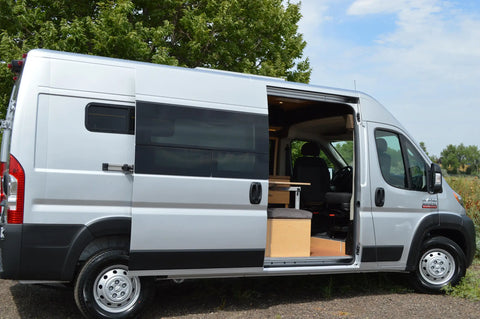
The 2026 Ram ProMaster also belongs in the budget talk. Ram highlights its front-wheel-drive layout, low load floor, and wide cargo area. Those traits can make a simple interior easier to package, especially if your goal is a practical weekender instead of a complex full-time rig.
In The Vansmith world, Transit is the more natural long-term platform focus, while ProMaster works better as a serviceable budget comparison. Either way, the right van is usually the one that lets you keep the first build simple. That's the whole game.
2026 Ford Transit: why it works for budget-minded conversions
Ford offers the 2026 Transit cargo van in low, medium, and high roof forms, depending on body style. That gives buyers real choice. You can chase a lower purchase price, or you can pay for more standing room from the start.
At The Vansmith, about 90% of customers choose high roof. That's not by chance. Most people who buy mid-roof later wish they had more headroom, and many end up adding one of our pop-tops to get it back.
Ford's current Transit cargo setups can exceed 400 cubic feet in larger configurations. That kind of volume helps a sparse layout feel usable without fancy expansion tricks. You don't have to fill every inch with cabinetry for the van to work well.
Transit also makes phased upgrades easier. Because it's such a common conversion platform, it supports later add-ons like vent fans, windows, heaters, batteries, and suspension work without forcing a rebuild. If you want ideas for how people stage those upgrades, the van build blog is a helpful next step.
One thing a lot of buyers overlook is sizing. A used Transit with the right roof and length can be a better buy than a cheaper van with the wrong shape. Bed direction, storage depth, and insulation all depend on those hard dimensions, so using Ford's official spec sheet as your geometry reference is just smart shopping.
2026 Ram ProMaster: where it can save money
The ProMaster earns attention for a few practical reasons. Ram says the 2026 ProMaster uses front-wheel drive, which helps create its low load floor. That can make entry and loading easier, and it can simplify bed-platform design too.
Ram also puts a lot of focus on the van's wide cargo area. For a simple camper layout, that width can be a real plus. A broad interior footprint can support straightforward sleeping and storage plans without pushing you into complex cabinetry.
That lower floor helps in daily use. Fewer risers and fewer custom steps usually mean less labor and fewer materials. If your goal is a lean weekender, that can be a nice fit.
Still, lower upfront cost doesn't excuse a weak buying process. Title checks, maintenance review, and a mechanic's inspection matter just as much on a used ProMaster as on any other van. In our experience, ProMaster makes the most sense here as a comparison point or service-work candidate, while Transit and Sprinter conversions remain the stronger long-term focus.
What to skip if you want the cheapest campervans without costly regrets
If you want the cheapest campervans that still make sense, start with what to avoid. Skip any van you can't have independently inspected. The FTC specifically recommends an independent mechanic's inspection before purchase, and that's one shortcut that tends to backfire fast.
Skip unclear title history too. Consumer Reports lists title checks as a core step, and that's for good reason. A van with title problems, missing records, or odd ownership gaps can turn a low sticker price into a long headache.
Be careful with suspiciously cheap vans that show unusually low mileage. NHTSA says odometer fraud affects more than 450,000 vehicles sold each year. Pair that with flood exposure risk after major storms, and a bargain listing can start to look a lot less charming.
It's also smart to skip verbal promises. The FTC says dealer promises should be in writing, and the Buyer's Guide explains whether a dealer vehicle is sold as-is or with a warranty. Before spending money on looks, make sure the mechanical condition, recall status, and paperwork all check out. If you're still early in the learning stage, The Vansmith's DIY blog can help you sort the nice-to-have items from the must-have ones.
Red flags in the listing, title, and vehicle history
The Buyer's Guide matters more than many shoppers think. On dealer-sold used vehicles, the FTC says it tells you whether the van is sold as-is or with a warranty. That's basic info, but it changes how much risk you're taking on.
Consumer Reports also recommends checking the title and pulling a vehicle history report before you commit. Those reports can reveal prior accidents or flood damage, but the FTC is clear that they're incomplete tools. They help, but they don't replace a real inspection.
Out-of-state bargain listings deserve extra care after severe weather events. NHTSA warns that flood-damaged vehicles can show up in the used market after storms. A fresh interior or new conversion materials don't erase title branding, flood exposure, or mileage manipulation.
Mileage claims need context too. NHTSA says odometer fraud can be hard to detect, so mileage alone is a weak basis for value. If a seller resists documents, inspection, or recall research, that's usually your cue to walk away.
Cheap upgrades to skip at first
Early money should go toward function, not decoration. A minimal build stays useful longer when the first dollars go to ventilation, electrical basics, and weather protection. Fancy wall finish and complex cabinetry can wait.
Large cargo vans already give you a lot of enclosed space. That means you don't need built-ins on every wall to make the van work. If the shell already fits your bed and storage plan, expensive reshaping becomes much less necessary.
The most expensive budget mistake is often building out a bad van. That's worse than living with a simple interior for a while. It's usually smarter to hold part of your build budget back for inspection findings and early maintenance than to burn it all on finish materials.
Consumer Reports is right to stress the test drive and full inspection before layout dreams take over. For buyers who plan to upgrade over time, a Foundation build tends to be safer than paying for a full cheap build all at once on an unknown shell.
How to inspect a cheap used van before you build
This part deserves more time than picking finishes. The FTC recommends an independent mechanic's inspection before buying any used van, even from a dealer. That's often the moment when a cheap van stops looking cheap.
Consumer Reports says buyers should review maintenance records, inspect the vehicle carefully, and avoid relying on dealer descriptions alone. That advice fits vans perfectly. Work vans can look tidy in photos and still have a hard past.
Don't skip the test drive either. Driving behavior can reveal issues that photos and walkarounds miss. Strange shifting, odd braking feel, or steering that seems off can tell you a lot before you ever think about cabinets.
History reports still matter, but only as one tool. The FTC notes they may identify accidents or flood damage, while NHTSA warns buyers to watch for flood signs, title irregularities, and mileage that doesn't match condition. A cheap van becomes expensive fast when those pieces don't line up.
The non-negotiable pre-purchase checklist
Start with the title. Consumer Reports includes title verification as a core step in avoiding costly regrets. If the title is messy, stop there and sort that out before you get attached.
Next, pull a vehicle history report. The FTC says it may flag accidents or flood damage, but it may not show mechanical issues. That's why the next move should be an independent mechanic's inspection, not a friend's quick once-over or the seller's shop.
Then review maintenance records for consistency. Consumer Reports treats service history as one of the best clues to future repair risk. Long gaps in care can matter more than a shiny interior ever will.
After that, run a recall check and take a real test drive, not a tiny parking-lot loop. If you're buying from a dealer, read the Buyer's Guide so you know whether the van is sold as-is or with warranty coverage. Simple steps, big difference.
Flood and odometer fraud checks
Flood-damaged vehicles are some of the worst bargains in the used market. NHTSA warns that they can be cleaned up and resold, which makes them especially risky for camper builds. Once you install camper systems over a damaged base, the cost of fixing the root problem only gets worse.
Flood exposure can affect electrical systems, corrosion points, and long-term reliability. That's a rough combo in a camper van, where you're already adding more wiring and more hidden areas. A van from a flood-prone region or one with sudden title transfers should trigger more questions, not fewer.
Odometer fraud is another big one. NHTSA says more than 450,000 vehicles are sold each year with false odometer readings. So if a van looks oddly fresh for the miles, or oddly worn for the miles, pause and dig deeper.
Cross-check mileage against maintenance records, title history, and overall wear. If the seller can't explain inconsistencies clearly, walking away is usually the safer budget move. Avoiding one bad van can save more money than any shortcut you could take during the build.
A smarter budget build: start simple and upgrade in phases
A phased build is usually the smartest budget path because it separates the van purchase from the full dream-build budget. That lowers the odds of overspending on a platform you haven't fully vetted yet. It also gives you time to learn how you actually use the van.
Official Transit and ProMaster dimensions help here. If the shell already works with a minimal layout, you can keep phase one lean and still stay comfortable. Enough height and cargo volume often matter more than a long list of built-ins.
That's why the lower-cost path is usually simplification, not compromise on condition. Save money by trimming layout complexity first. Don't save money by accepting weak title clarity, poor inspection quality, or a van with obvious neglect.
For buyers who want help later, a good used platform can evolve through targeted installs like windows, vent fans, heaters, batteries, awnings, and suspension upgrades. That's the strongest Vansmith angle in this whole topic. Build in stages, not on wishful thinking.
What to prioritize in phase one
Phase one should begin only after the van passes title, history, recall, and independent inspection checks. That's the floor, not the ceiling. Once those boxes are checked, shell dimensions become the next big decision.
Roof height, cargo volume, and floor shape affect every later choice. A Transit with enough interior volume, or a ProMaster with a wide cargo body, can support a simpler starter plan with fewer custom parts. If you need inspiration for how that scales for different travel styles, take a look at vans for couples or family van conversions.
Budget buyers should also keep cash in reserve for early maintenance and corrections found after inspection. That's a much wiser use of money than blowing the whole budget on finish materials. A minimal but well-planned foundation is easier to service and expand later.
If you'll use the van year-round, future-ready items like heater prep, electrical planning, and ventilation strategy usually beat nonessential decor. In practice, the best inexpensive camper van is often the one that stays healthy and upgradeable, not the one with the longest feature sheet on day one.
When professional help saves money
Professional help is most useful when it protects the van's long-term usefulness. That's the point. A sound used Transit can take targeted upgrades later, which is usually cheaper than paying to undo a rushed bargain build.
Selective service work tends to be a better budget move than a full low-cost conversion all at once. It keeps your money focused on the systems that affect comfort, durability, and day-to-day use. Things like windows, heaters, batteries, and suspension upgrades do more for real travel than decorative trim.
This staged path also helps you avoid a common trap. Buyers get excited about a van, then overlook weak records or hidden condition issues because the layout looks fun. That's exactly why a measured process matters so much.
A well-chosen used platform keeps more options open for future work. If you want to talk through a phased plan or a targeted install, contact us. The cheapest campervans are rarely the cheapest to own, but a clean platform and a restrained first build usually deliver the best value over time.
FAQ
What is the cheapest way into an inexpensive camper van?
For most buyers, the cheapest entry path is a used cargo van with a simple phased build rather than a factory-built Class B. A Foundation build is a strong fit for that approach because it covers the basics first and leaves room for later upgrades. RVIA defines a Type B as an RV built on a van chassis, and it notes that RVs are built to standards such as NFPA 1192.
Should I buy a used cargo van or a used Class B motorhome?
A used cargo van is usually the lower-cost starting point, while a used Class B gives you a finished RV product at a higher buy-in. The main trade-off is product type. RVIA classifies a Type B as a motorhome built on a van chassis to RV industry standards, while a DIY or partial conversion is not the same category.
What should I skip when shopping for the cheapest campervans?
Skip any van with unclear title history, no independent mechanic's inspection, suspiciously low mileage, or possible flood exposure. The FTC recommends an independent inspection and a vehicle history report, while NHTSA warns that more than 450,000 vehicles are sold each year with false odometer readings. If a seller can't support the story with records, it's usually best to move on.
Is a Ford Transit a good cheap camper van platform?
Yes, especially if you find a used high-roof or larger-body example that fits your budget. Ford's 2026 Transit specs show multiple roof heights and cargo configurations, with cargo volume exceeding 400 cubic feet in some setups. That makes it easier to live with a simple build first, then add more systems later.
Why do cheap used vans become expensive so fast?
The biggest hidden costs are usually tied to condition and history, not the interior. The FTC notes that history reports may show accidents or flood damage but often won't reveal mechanical problems, and Consumer Reports says even a model with a good reputation can be a bad buy if maintenance was poor. That's why a cheap listing can turn into a very expensive van once the real issues show up.