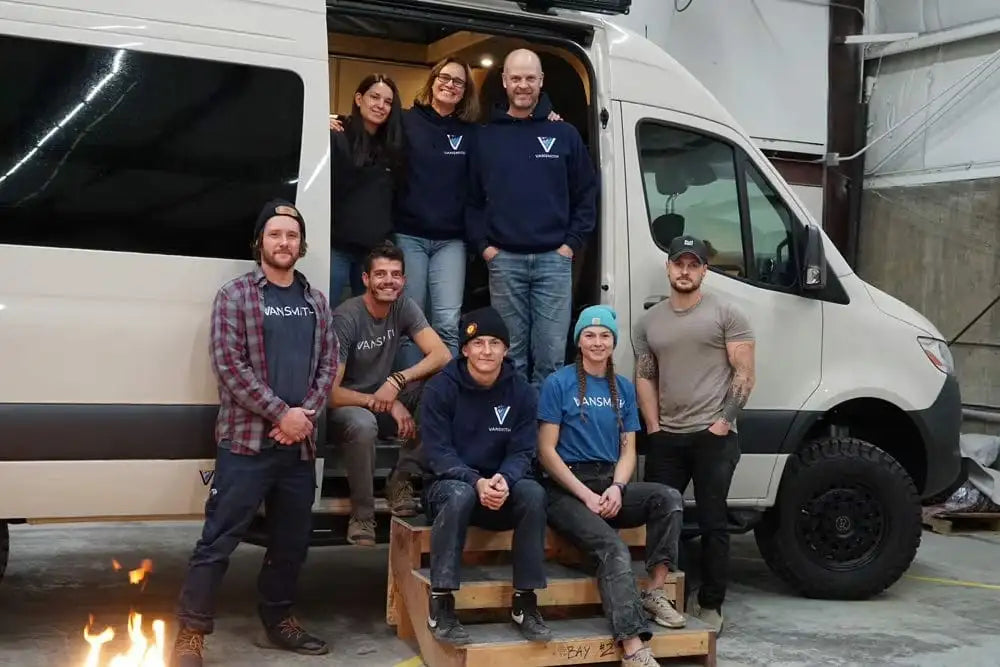
When customers ask us about Starlink for RV use, the question usually comes down to one thing: will it give them reliable internet when they are far from a campground or cell tower? After years of working around adventure vans in Colorado, we know the answer depends on more than the dish. Hardware, power, sky visibility, service plans, and how you travel all matter.
Starlink for RV: What You Need to Know in 2026
Starlink uses a network of low-Earth-orbit satellites to provide internet where traditional cellular service may be limited. For van travelers, that makes Starlink internet for RV use particularly useful at remote campsites, trailheads, and dispersed camping areas.
Starlink currently positions Roam as its service for RVs, nomads, campers, and people working on the road. Current U.S. plans include Roam 100GB, Roam 300GB, and Roam Unlimited.
The important point is that good satellite service still needs a clear view of the sky. A dense forest, canyon wall, or nearby structure can interrupt the connection even when the service itself is available.
For vans that spend time climbing, skiing, biking, and hiking around Colorado, that distinction matters. A campsite may feel remote without being a good location for a satellite dish.
Hardware Options
Starlink Standard Kit (Gen 3)
The Standard Kit is the larger option and makes sense for travelers who want a dedicated internet system at their campsite. It includes a separate router and offers a larger setup than the Mini.
For a van that spends several days in one location, the Standard Kit can be a practical choice. It also gives you more flexibility in how the router and dish are positioned around the vehicle.
Starlink Mini
The Mini is much smaller and has a built-in router. Starlink lists the Mini at roughly 11.75 by 10.2 inches and about 2.4 pounds before additional accessories. Its average power use is listed at 25 to 40 watts.
That lower weight and simpler setup are useful when space and electrical demand matter. For short trips, the Mini can be easier to carry and store.
Service Plans: Starlink Roam
Starlink Roam is designed specifically around travel. Current U.S. pricing lists the following options.
Roam 100GB
Roam 100GB starts at $55 per month. It includes 100GB of high-speed data, followed by unlimited low-speed data for the rest of the billing period.
This plan suits occasional travelers who mainly need navigation, email, messaging, light work, and basic browsing.
Roam 300GB
Roam 300GB starts at $80 per month and provides 300GB of high-speed data.
For people working from a van several days each month, this gives more room for video calls, larger downloads, and regular internet use.
Roam Unlimited
Roam Unlimited currently starts at $175 per month in the U.S. It provides unlimited high-speed data and includes international travel features, subject to Starlink's current travel rules.
For full-time travelers or people who work remotely from their vans, the additional monthly cost can make sense.
Standby Mode
Starlink also offers Standby Mode, which lets users pause and reactivate service for a small monthly fee. This is useful for seasonal travelers who do not need full service throughout the year.
Key Considerations
Line of Sight
This is the biggest practical consideration with Starlink satellite internet for RV use.
The dish needs a reasonably open view of the sky. Trees, cliffs, buildings, and other obstructions can cause interruptions. In Colorado, we see this most often when a beautiful campsite sits beneath thick trees or close to a steep mountain wall.
Before settling in, check the sky around the van rather than assuming a remote location will provide a strong connection.
No Long-Term Contract
Roam plans are billed in monthly increments, and Starlink allows users to pause and restart service through Standby Mode.
That flexibility makes Roam more practical for seasonal van travel than a fixed residential-style internet arrangement.
In-Motion Use
Starlink currently supports in-motion use on eligible Roam plans in authorized locations. However, the rules vary by region and hardware, so travelers should check the current Starlink requirements before planning a moving-vehicle installation.
For most van travelers, we recommend thinking about Starlink for RV use as a campsite internet solution rather than assuming it should operate continuously while driving.
Plug & Play
The basic setup is straightforward, but the van's electrical system still matters.
A clean power source, sensible cable routing, protected storage, and a practical place for the router can make the difference between a system you enjoy using and one that becomes another item to manage.
At The Vansmith, electrical planning is part of how we approach long-term adventure van use. If you are upgrading a van, our Electrical System work can help keep satellite internet, lighting, refrigeration, and other loads working together.
Starlink Mini vs. Gen 3 Standard for RVs
|
Feature |
Starlink Mini |
Gen 3 Standard Kit |
|
Best For |
Lightweight travel and occasional use |
Longer stays and heavier internet use |
|
Size & Portability |
Small and easy to store |
Larger and less portable |
|
Power Consumption |
Average 25 to 40W |
Higher overall system demand |
|
Router Setup |
Built-in router |
Separate router |
Starlink Mini
Advantages:
- Small footprint
- Lower average power use
- Built-in router
- Easy to store
- Good fit for compact vans
Drawback:
The smaller format is less suited to travelers who want a more permanent campsite setup with greater separation between the dish and router.
Gen 3 Standard Kit
Advantages:
- Larger dedicated dish
- Separate router
- Better suited to a fixed campsite setup
- More flexibility for equipment placement
Drawback:
It takes more storage space and requires more equipment to manage.
When asking which Starlink is best for an RV, start with how you travel. A weekend traveler may value the Mini's size. Someone living in a van for months may prefer the Standard Kit's larger setup.
Tips from RV Users
One of the most common lessons from Starlink for RV reviews is that expectations matter.
The service can be excellent in an open location and frustrating under heavy obstruction. Users also tend to notice power consumption more when they spend several days away from hookups.
We recommend considering:
- Where the dish will be stored
- How it will receive power
- Whether your campsite has an open sky
- How much video and cloud-based work you do
- How often you travel
- Whether you need internet only while parked
These questions usually matter more than simply choosing the newest hardware.
Travlfi vs. Starlink
The travlfi vs starlink question comes up often because both can help travelers stay connected. They work differently, though.
TravlFi relies on available cellular networks. Starlink uses satellites. That means a cellular-based system can be excellent when you have strong carrier coverage, while starlink internet for rvs can be valuable in places where cellular coverage is weak or unavailable.
Coverage and Performance
Starlink has a major advantage when you are outside reliable cellular coverage. Still, it needs an open sky.
TravlFi can be simpler in areas with strong cellular service. The right choice depends on where you travel and what kind of connection you need.
Equipment and Setup
A cellular hotspot is generally simple to power and store. Starlink requires a satellite dish, cables, and appropriate power.
For a well-equipped adventure van, that additional equipment can be integrated into the overall electrical and storage plan.
Cost and Plans
The monthly cost depends on the plan and your data needs. Rather than choosing based on price alone, compare the locations where you actually travel.
For many The Vansmith customers, cellular internet and satellite internet serve different purposes. Having one does not necessarily make the other unnecessary.
How Much Is Starlink for RV?
The cost of Starlink for RV service has two parts: hardware and the monthly plan.
Current hardware pricing can vary by market and promotions, so check the official Starlink store before purchasing. Your planned setup may also require mounts, cables, power equipment, or other accessories.
The pricing supplied for the current U.S. options is:
- Starlink Mini Kit: $199
- Starlink Standard Gen 3 Kit: $349
- Flat High-Performance Dish: $1,999
The Flat High-Performance option is a much larger investment and is generally aimed at more demanding installations.
Monthly Service Plans
|
Plan Tier |
Monthly Cost |
Best For |
Data Policy |
|
Roam 100GB |
$55/mo |
Occasional trips |
100GB high-speed, then unlimited low-speed |
|
Roam 300GB |
$80/mo |
Regular travelers |
300GB high-speed, then unlimited low-speed |
|
Roam Unlimited |
$175/mo |
Full-time or heavy users |
Unlimited high-speed data |
Starlink states that advertised speeds can reach up to 300+ Mbps on Roam plans, but actual performance varies with network conditions and congestion.
Pausing the Service in the Off-Season
If your van spends part of the year parked, Standby Mode can reduce unnecessary service costs.
This is particularly useful for seasonal travelers. Instead of paying for full service while the van sits unused, you can pause and reactivate the service as needed.
Our Honest Review of Starlink for RV Use
After looking at the system from the perspective of real van travel, we see starlink for rv use as one of the stronger options for staying connected away from reliable cellular coverage.
It is not perfect. The dish needs an open sky, the system uses meaningful electrical power, and the monthly cost can be significant for light users.
For remote work, navigation, emergency communication, and longer stays away from towns, however, satellite internet can be a valuable part of a well-planned van electrical system.
Performance and Speeds
Starlink advertises speeds of up to 300+ Mbps on current Roam plans, but those figures are maximum available speeds rather than a guarantee. Congestion and local conditions can reduce performance.
For normal van use, the more useful question is whether the connection is stable enough for your work. Email, browsing, navigation, streaming, and video calls can all be demanding in different ways.
Hardware Options: Standard vs. Mini
The Mini wins on size and simplicity. The Standard Kit makes more sense when the van has enough storage and electrical capacity for a larger system.
Neither is automatically the right answer for every traveler.
Service Plans and Costs
Roam 100GB is a sensible starting point for occasional use. Roam 300GB gives regular travelers more room. Unlimited is the better fit when internet is part of daily life on the road.
How It Works
Stationary Use
Set the dish where it has a clear view of the sky, connect the system to power, and allow it to establish a connection.
Changing Addresses
Roam is designed for travel, so it is better suited to moving between campsites than a residential plan.
In-Motion Use
Current Roam plans support in-motion use in eligible circumstances and locations, but requirements and restrictions apply. Check Starlink's current guidance before relying on it while driving.
Can I Use Starlink Residential in My RV?
The question Can I use Starlink Residential in my rv has a simple, practical answer: Residential is intended for a fixed home location, while Roam is the service Starlink specifically positions for RVs, campers, nomads, and travel.
If your primary goal is moving between campsites, Roam is the more appropriate starting point.
A residential plan can make sense for a fixed property, but it should not be treated as a direct substitute for a travel-focused service.
Limitations vs. Roam Plans
Deprioritization
Network congestion can affect speeds. Starlink states that speeds may be slower during periods of congestion, so advertised maximum speeds should not be treated as a daily guarantee.
No Pausing
Residential and Roam services have different policies. Roam includes Standby Mode, which is one reason it works well for seasonal van travelers.
The Alternative
Cellular internet remains useful when you have strong coverage. For many travelers, the best approach is not choosing between cellular and satellite internet, but understanding where each works best.
Setup Basics
A basic Starlink satellite internet for RV setup can be completed in a few steps:
- Check coverage and select a suitable plan through the official Starlink site.
- Place the dish in an open area with a clear view of the sky.
- Connect the dish cable to the router or Mini system.
- Connect the system to a reliable AC or DC power source.
- Allow the system a few minutes to boot, orient, and establish a connection.
Starlink describes its Roam service as a plug-and-play option that can connect within minutes.
For a permanent van installation, the process deserves more planning. Cable protection, storage, electrical load, and access for maintenance all matter.
The Vansmith has spent more than a decade working with adventure vans in real Colorado conditions. That includes long days in the mountains, winter travel, summer trail trips, and the small practical problems that only become obvious after months of use.
If you are starting with a van or improving an existing one, our 4x4 RVs for sale, Camper Vans for Sale, and RV for Sale inventory can provide a useful starting point.
We also support ongoing work through Installations & Repairs, Heater Installation, and Suspension Upgrade services.
Our approach is simple: technology should support the trip rather than complicate it. A well-planned electrical system, sensible storage, and thoughtful placement can make satellite internet far easier to live with.
FAQs
What is the best satellite internet service for RVs?
For most RV travelers who need internet in remote areas, Starlink Roam is one of the strongest satellite options. It is specifically designed for travel, including RV use, and provides connectivity in areas where cellular service may be limited.
What is the cheapest way to get internet in an RV?
A cellular hotspot or phone hotspot is usually the cheapest option when you already have a suitable mobile data plan. Satellite internet costs more, but Starlink for RV can be more useful when traveling beyond reliable cellular coverage.
Is Starlink worth it for RVs?
For travelers who regularly work remotely, stream, or camp in areas with weak cellular coverage, Starlink can be worth the cost. It is less compelling for occasional travelers who usually stay within strong cellular coverage.
How much does Starlink cost for an RV?
The total cost includes the Starlink hardware and the monthly Roam service. Hardware prices can vary by location and promotions, so check the current Starlink store before purchasing. Roam plans are specifically positioned for RVs, nomads, and campers.
Is Starlink internet good for an RV?
Yes, particularly when the RV is parked somewhere with a clear view of the sky. Trees, buildings, mountains, and other obstructions can affect the connection. Power use and equipment storage are also important considerations in a van.
Which satellite internet provider is best for RV travelers?
Starlink is currently the most practical choice for many RV travelers because its Roam service is designed specifically for people traveling with RVs, cars, and boats.
Is there a difference between Starlink Residential and RV?
Yes. Residential is intended primarily for a fixed home location, while Starlink Roam is designed for people who travel, including RV users. Starlink identifies Roam as its travel-focused service.
How much does Starlink cost per month for RV?
The monthly price depends on the Roam plan available in your market and the amount of high-speed data included. Starlink's service-plan pricing changes by country and can change over time, so the current Starlink pricing page is the best source for the exact monthly cost.
About the author

Eugene Smit
CEO
Eugene is the CEO of The Vansmith, based in Boulder, Colorado. He writes across topics related to van builds, ownership, and the camper van industry.
Read more about Eugene