A hybrid recreational vehicle can mean different things depending on the design. Some hybrids are towable campers with expandable sleeping areas, while newer motorized concepts combine gasoline and electric power. After years of working with adventure vans in Colorado, we have found that the right choice comes down to weight, space, power, and how you actually travel.
What Is a Hybrid RV?
So, what is a hybrid RV? The term generally describes an RV that combines two approaches in one package.
In the towable market, that often means a hard-sided trailer with fabric-sided expandable sleeping areas. In the motorized market, it can mean a vehicle that combines an internal-combustion engine with electric drive.
That distinction matters when comparing hybrid RV campers with a hybrid RV van. They solve different problems.
A towable hybrid focuses on getting more sleeping and living space from a compact trailer. A motorized hybrid focuses more on fuel use, electric power, and driving range.
For shoppers, the first question should be simple: what does the RV need to do for your trips?
Key Features
Common hybrid RV features can include:
- Expandable beds at the front or rear
- Compact kitchens
- Dinette seating that becomes a bed
- Refrigerators and cooking appliances
- Bathrooms in larger layouts
- Solar and battery systems
- Lightweight materials
- Electric or hybrid drivetrain technology in motorized models
Expandable Beds
Expandable beds are one of the defining features of many towable hybrids.
The sleeping areas extend outward when parked. This creates more sleeping space without requiring the entire trailer to be large.
The tradeoff is that fabric sleeping areas have different insulation, weather, and setup considerations than fully enclosed sleeping quarters.
Full Amenities
Larger hybrid recreational vehicles can include kitchens, bathrooms, heating, air conditioning, refrigerators, and multiple sleeping areas.
At The Vansmith, we approach RV planning from the same practical angle we use with adventure vans. Every system needs to earn its space.
A large refrigerator may be useful for a family trip. A compact electrical system may make more sense for a weekend skier.
Lightweight Design
Weight affects nearly everything that happens on the road.
A lighter RV can place less demand on the tow vehicle and may be easier to maneuver. However, advertised unloaded weight does not tell the whole story.
Water, food, batteries, propane, camping equipment, and personal gear all add weight.
Hybrid Travel Trailers and Campers
Hybrid RV campers sit between traditional travel trailers and tent-style camping.
Their hard-sided sections provide enclosed living space. Expandable sections create additional sleeping room when parked.
The design offers a useful space-to-weight balance for some families.
For example, Forest River's Rockwood Roo line uses expandable sleeping areas and offers layouts with multiple beds. The current 233S floor plan includes three expandable queen beds, along with additional sleeping space from the dinette and sofa.
The category is useful to compare, but the right choice still depends on tow rating, payload, climate, storage, and intended use.
Design and Weight Benefits
The main advantage is usable space.
You can have a relatively compact trailer while still getting several sleeping areas once parked. This can work well for families who spend most of their time at established campgrounds.
The drawback is that weight savings are relative. A trailer that feels light at the dealership can become considerably heavier once fully equipped.
Examples
The Rockwood Roo and Flagstaff Shamrock are established examples of expandable hybrid travel trailers.
Both product lines use expandable sleeping areas as a central part of their layouts. These examples help show how the category works, but a good comparison should go beyond brand and model names.
Look at the tow vehicle, loaded weight, storage needs, sleeping arrangements, and expected travel conditions.
Key Features and Benefits of a Hybrid Recreational Vehicle
Space-to-Weight Ratio
A major reason people consider hybrid recreational vehicles is the amount of sleeping space available relative to the closed trailer size.
Expandable areas let manufacturers provide more sleeping capacity without making the entire trailer as large as the interior living area suggests.
Sleeping Capacity
Families can benefit from separate sleeping areas, especially when a dinette or sofa can serve as an additional bed.
This is one area where floor plan matters more than a simple length or weight comparison.
If you are also comparing Class B layouts, our guide to Popular Class B RV Floor Plans Explained covers common layouts and how they support different travel needs.
Outdoor Feel
Expandable sleeping areas can make a campsite feel more open.
That can be appealing in warm-weather camping when the goal is to spend most of the day outside.
For Colorado travel, however, we pay close attention to weather. Mountain temperatures can change quickly, so insulation, heating, ventilation, and sleeping arrangements deserve careful consideration.
Hybrid RV Drivetrains
A different category uses hybrid drivetrain technology.
A motorized hybrid recreational vehicle may combine gasoline power with an electric motor and battery system.
Some newer concepts use plug-in hybrid or extended-range electric designs to reduce engine use during certain parts of a trip.
Potential advantages include:
- Reduced fuel use in suitable driving conditions
- Electric operation for shorter trips
- Regenerative braking
- Flexible onboard energy management
- Lower emissions during some driving conditions
However, these systems can be more complex than conventional drivetrains.
Buyers should look closely at battery capacity, charging access, warranty coverage, service availability, payload, and real-world range.
Pros and Cons of Hybrid RVs
Pros
Better Fuel Economy
Hybrid drivetrain technology can reduce fuel consumption when operating conditions favor electric assistance.
More Off-Grid Power
A larger electrical system can support refrigeration, lighting, electronics, and other equipment without relying entirely on shore power.
Quiet Camping
Electric systems can reduce the need to run an engine or generator for certain loads.
Reduced Emissions
Using electric power for suitable driving or campsite loads can reduce fuel consumption and related emissions.
Efficient Use of Space
Towable hybrids can provide considerable sleeping space without requiring a large enclosed trailer.
Cons
Higher Price Tag
Hybrid technology can add cost. Compare the purchase price with expected fuel savings and how often you expect to use the vehicle.
Heavier Weight
Batteries, electrical equipment, and additional systems can add weight. That matters for both towing and payload.
Limited Electric Range
Electric operation depends on battery size, driving conditions, temperature, speed, and how much energy the vehicle uses.
Maintenance Costs
A hybrid drivetrain can require conventional vehicle service as well as specialized electrical system support.
For anyone comparing hybrid RVs, the important question is not whether hybrid technology sounds efficient. It is whether the system matches the way you travel.
How Hybrid House Systems Work
The word hybrid can also describe an RV's house power system rather than its drivetrain.
Dual Power Sources
An RV electrical system may use shore power, solar, batteries, an alternator, or a generator.
A well-planned system allows those sources to work together without wasting energy.
Off-Grid Capabilities
For off-grid travel, battery capacity and energy management matter more than simply adding more electrical equipment.
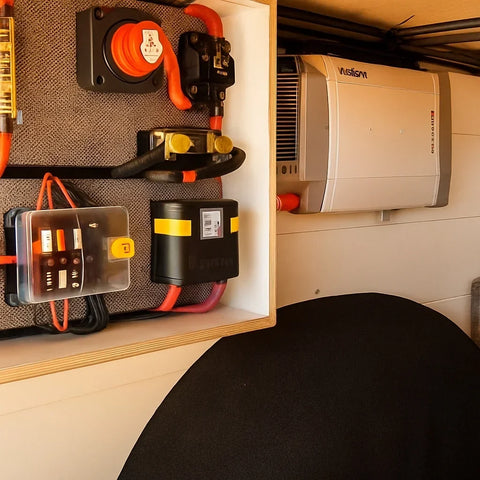
The Vansmith has spent years working with adventure van electrical systems where power needs must be balanced against available space, weight, and daily use.
A properly planned Electrical System should account for refrigeration, heating, cooking, lighting, water pumps, communication equipment, and personal electronics.
Multiple Charging Ways
A practical system can use several charging sources.
Solar may help during extended stays, while vehicle charging can replenish batteries during travel.
The best setup depends on how long you stay away from hookups and which appliances you use most.
Popular Hybrid Class B Models
The phrase hybrid RV Class B is sometimes used loosely online.
It may describe a Class B motorhome with advanced electrical technology rather than a true hybrid drivetrain.
Coachmen's Beyond is one example of a Class B motorhome offered on a Ford Transit chassis. Its 22RB layout includes twin beds, a galley, and a rear wet bath.
Chassis Options
Two common chassis names shoppers encounter in the Class B market are:
- Ford Transit
- Mercedes-Benz Sprinter
The chassis affects payload, dimensions, drivetrain options, service access, ride quality, and how much equipment can reasonably be carried.
For shoppers focused on adventure travel, a 4x4 RV for sale can make sense when traction and ground clearance are more important than maximizing interior volume.
Motorized Hybrid RVs: PHEVs and EREVs
Plug-in hybrid electric vehicles, or PHEVs, can use an engine and electric motor while allowing external charging.
Extended-range electric vehicles, or EREVs, take the idea further by using electric drive as the primary means of propulsion while another power source helps maintain battery energy.
For RV use, the concept is attractive because the same vehicle needs to drive long distances and support people at camp.
Still, range is only one part of the equation.
Battery weight, charging infrastructure, climate, terrain, and onboard energy use all affect practical performance.
Towable Hybrid Travel Trailers
Expandable travel trailers remain one of the clearest forms of a hybrid RV.
Design
A hard-sided central cabin provides kitchen, seating, storage, and other amenities.
Expandable ends create additional sleeping areas when parked.
Advantages
- More sleeping capacity
- Compact closed profile
- Outdoor-oriented design
- Useful family layouts
- Potentially lower towing demands than larger trailers
Trade-Offs
- Fabric sections require more weather awareness
- Setup takes additional time
- Insulation can differ from fully enclosed trailers
- Weight increases with equipment and supplies
- Storage and maintenance require regular attention
Hybrid RV Floor Plans and Layout Options
Floor plans should be judged by how people actually move through the space.
Common features include:
- Front and rear expandable beds
- Convertible dinette sleeping areas
- Compact kitchens with stovetops and refrigerators
- Small bathrooms with shower and toilet
- Seating areas that convert into extra beds
For a family, sleeping capacity may be the priority.
For two travelers, an open living area and larger kitchen may matter more.
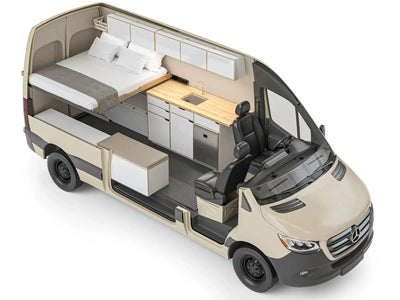
The same principle applies to adventure vans. At The Vansmith, we spend significant time considering how seats, beds, storage, electrical equipment, and daily gear interact inside a limited footprint.
For travelers who need additional seating, Seat Installation can be an important part of planning an adventure van interior.
For compact sleeping arrangements, a Sliding Van Bed can create more flexibility between daytime living and nighttime use.
Fuel Efficiency and Hybrid RV MPG
Hybrid RV MPG is difficult to predict with one number.
Fuel economy depends on vehicle weight, speed, terrain, weather, tire pressure, cargo, towing conditions, and driving style.
Colorado mountain roads are a good example. A vehicle may use considerably more fuel while climbing than it does on a level highway.
For a broader comparison of fuel-efficient RV options, see our guide to Best Gas Mileage RV: Top Fuel-Efficient RVs for Road Trips.
Real operating conditions are more useful than relying only on a manufacturer's best-case figure.
Hybrid Electric RV Concepts
Electric RV systems are also changing how travelers think about energy.
A large battery can run many house loads quietly. Solar can add energy during the day. Vehicle charging can replenish the battery while driving.
For adventure travel, the goal is balance.
More battery capacity can improve autonomy, but it also adds weight, cost, and space requirements.
Costs Compared With Traditional RVs
A hybrid recreational vehicle can cost more upfront when it includes advanced drivetrain or electrical technology.
The financial calculation should include more than the purchase price:
- Fuel consumption
- Insurance
- Battery replacement considerations
- Maintenance
- Generator use
- Charging equipment
- Tire and suspension wear
- Storage
- Expected annual mileage
The cheapest RV on paper may not be the least expensive RV to own.
Added equipment also affects an adventure van's ride and handling. When additional batteries, water, recovery gear, or camping equipment increase the load, a Suspension Upgrade may be worth considering.
Who Should Consider a Hybrid RV?
A hybrid recreational vehicle can make sense for:
- Families who need extra sleeping space
- First-time RV buyers comparing different travel styles
- Campers who want manageable towing weight
- Travelers who prefer compact storage when the RV is closed
- Owners interested in more efficient electrical systems
- Travelers who spend time away from campground hookups
For people who want a vehicle that works equally well for commuting, mountain trips, skiing, biking, and camping, a Class B adventure van may be a better fit.
That is where The Vansmith's experience matters.
We have spent more than a decade working around the realities of adventure travel in Colorado and across the West. Our focus remains practical: quality vans, in-stock options, installations, repairs, DIY kits, and support after the vehicle is on the road.
If you are comparing alternatives, our camper vans for sale provide another way to approach compact adventure travel.
The Vansmith follows a simple design principle: innovative designs that bring comfort to your journey should also work well after months and years on the road.
Support After the Purchase
An RV is a long-term piece of equipment.
Systems wear. Travel needs change. Owners add gear. A vehicle that worked perfectly on the first trip may need attention after years of use.
That is why ongoing support matters.
From Installations & Repairs to electrical work and heating systems, The Vansmith stays involved beyond the initial vehicle purchase.
For cold-weather travel, a proper Heater Installation can be especially important in Colorado and other mountain environments.
Are Hybrid RVs Worth It?
For the right traveler, yes.
A hybrid RV can offer an effective balance of space, efficiency, and versatility. But the word "hybrid" alone does not make an RV better.
The right choice depends on where you drive, how many people travel with you, how much gear you carry, whether you tow, and how often you camp without hookups.
If your priorities lean toward a compact adventure vehicle, four-season usability, thoughtful storage, and long-term support, The Vansmith is a practical place to start the comparison.
You can also compare available options through our RV for sale inventory.
Final Thoughts
Hybrid RVs cover a broad range of designs, from expandable travel trailers to motorized vehicles with advanced electric systems.
The useful question is not simply, "What is a hybrid RV?" It is, "Which hybrid approach fits the way I travel?"
After years of working with adventure vehicles in real Colorado conditions, we have found that thoughtful layouts, reliable systems, sensible weight, and long-term support matter more than a label.
For travelers who want a premium adventure van with practical systems and attention to detail, The Vansmith brings that experience to every vehicle and project we support.
Frequently Asked Questions
Are hybrid campers worth it?
They can be. Hybrid campers make the most sense for travelers who value sleeping capacity and compact towing dimensions.
Buyers should still compare weight, weather protection, setup time, and long-term maintenance.
Is there a hybrid camper van with a bathroom?
Some Class B RVs have bathrooms, including wet-bath layouts.
However, the term "hybrid camper van" can refer to different technologies, so check the exact floor plan and drivetrain rather than relying on the label.
What is the best hybrid camper to buy?
There is no single best option.
Families may prefer expandable sleeping areas, while couples may prefer a compact Class B layout with a bathroom and efficient electrical system.
What's the lightest hybrid camper?
Weight varies significantly by floor plan and equipment.
Always compare the unloaded vehicle weight with the expected loaded weight, including water, batteries, food, propane, and personal gear.
What RV brands should I stay away from?
We would not choose an RV based only on brand reputation.
Look closely at construction quality, service access, warranty support, floor plan function, component availability, and owner feedback.
What should I not do when buying an RV?
Do not buy based only on appearance or advertised sleeping capacity.
Sit in every seat, test the storage, inspect the bathroom, check the payload, understand the electrical system, and consider how the RV will perform in the conditions where you actually travel.
Do hybrid campers have AC?
Many hybrid campers can be equipped with air conditioning.
Availability and capacity vary by model and floor plan. Check the electrical requirements if you plan to run AC while off-grid.
About the author

Eugene Smit
CEO
Eugene is the CEO of The Vansmith, based in Boulder, Colorado. He writes across topics related to van builds, ownership, and the camper van industry.
Read more about Eugene