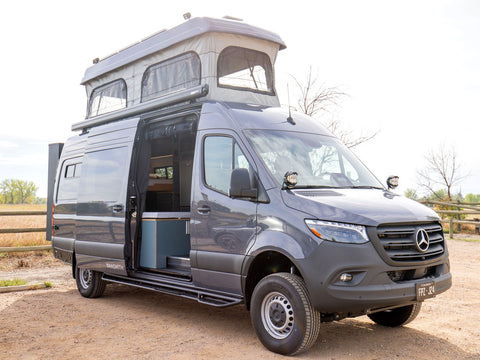
Yes, solar panels can be installed on a 4x4 camper van with a roof rack, and for many off-grid travelers, it's one of the best upgrades available. A properly designed solar setup allows you to recharge batteries, power appliances, run ventilation systems, and stay off-grid for extended periods.
However, simply mounting panels to a roof rack isn't enough. Placement, panel orientation, shading management, and wiring configuration all play a major role in determining how much energy your system actually produces.
Whether you're building a rugged overlanding rig or a premium luxury camper van, understanding solar optimization can help you get the most from every watt on your roof.
Why Solar Power Is Essential for Modern Camper Vans
Today's camper vans rely on electricity more than ever.
Common Power Demands Include
- Refrigerators
- Roof fans
- Water pumps
- Interior lighting
- Starlink and internet equipment
- Laptops and mobile workstations
- Diesel heaters
- Charging devices
For travelers exploring remote locations, combining solar with a properly designed battery system creates true off-grid capability.
This is especially important for owners of mobile work vans and adventure-focused 4x4 RVs who spend extended periods away from hookups.
The Best Solar Panel Placement on a Roof Rack
Position Panels Along the Roof Centerline
The most effective placement is typically along the centerline of the roof.
Benefits Include
- Maximum exposure to sunlight
- Reduced shading from the roof rack rails
- Better airflow beneath panels
- Improved overall efficiency
By keeping panels centered, you reduce the risk of shadows from side rails and accessories affecting output.
Mount Panels Flat Against Roof Rack Crossbars
For most camper vans, mounting panels flat against the roof rack crossbars offers the best balance between performance and practicality.
Advantages Include
Improved Aerodynamics
Lower profile installations create less wind resistance.
Reduced Damage Risk
Panels mounted too high are more vulnerable to tree branches and off-road obstacles.
Better Stability
Flat-mounted panels experience less vibration and movement on rough terrain.
For vans built on Ford Transit camper van platforms or Sprinter camper van platforms, flush roof-rack mounting remains the preferred solution.
Roof Accessories That Can Reduce Solar Performance
Roof Vents
Ventilation systems are critical for comfort, but they can also cast shadows across solar panels.
If your van includes a roof vent installation, position panels far enough away to avoid shading during peak sunlight hours.
Air Conditioners
Air conditioning units create some of the largest shadows found on camper van roofs.
Even a small amount of shading can dramatically reduce solar production.
Antennas and Satellite Equipment
Starlink systems, cellular antennas, and communication equipment should be positioned carefully to avoid casting shadows over active solar cells.
Storage Boxes and Recovery Gear
Popular overlanding accessories such as:
- Recovery boards
- Cargo boxes
- Spare tires
can significantly impact solar performance if placed incorrectly.
When designing your roof layout, prioritize solar exposure first.
Why Shading Is the Biggest Threat to Solar Production
Small Shadows Create Big Problems
Many people assume only large shadows matter.
In reality, a shadow covering a small section of a solar panel can dramatically reduce output.
Minor Shading
10–25% power reduction.
Moderate Shading
Up to 40% power loss.
Severe Shading
Losses of 75% or more.
This is why roof planning is often more important than adding additional solar capacity.
Common Sources of Shading
Avoid placing panels where they may be affected by:
- Roof rack rails
- Roof vents
- Air conditioners
- Antennas
- Tree branches
- Snow accumulation
- Dirt and debris
The cleaner and more exposed your panels remain, the more energy they'll produce.
Fixed Solar Panels vs Tilting Solar Panels
Flat-Mounted Solar Panels
Most camper van owners choose flat-mounted panels.
Benefits
- No setup required
- Produce power while driving
- Lower profile
- Better aerodynamics
- Less maintenance
Drawbacks
- Slightly lower efficiency when parked
- Reduced winter performance
Despite these limitations, flat mounting remains the most practical option for full-time travel.
Tilting Solar Panels
Tilting brackets allow panels to face the sun directly when parked.
Advantages
- Increased winter production
- Better performance at northern latitudes
- Improved efficiency during stationary camping
Many travelers see 10–25% higher output when panels are tilted toward the midday sun.
Disadvantages
- Additional cost
- More setup time
- Increased mechanical complexity
What Is the Best Solar Panel Angle?
While Driving
For travel days, the ideal angle is simple:
0 Degrees (Flat)
Flat-mounted panels capture sunlight from multiple directions while maintaining safe vehicle height.
While Parked
When camping for multiple days, tilting panels toward the sun can improve energy production.
Generally:
- Winter camping benefits most from tilt adjustments
- Higher latitudes see larger gains
- Summer travelers often see minimal differences
For most van owners, flat panels combined with occasional tilting offer the best compromise.
Rigid vs Flexible Solar Panels
Rigid Solar Panels
Rigid panels remain the preferred choice for most 4x4 camper vans.
Advantages
- Higher efficiency
- Longer lifespan
- Better heat management
- Greater durability
They work exceptionally well on:
- Sprinter van conversions
- Ford Transit van conversions
- Roof rack-equipped overlanding vans
Flexible Solar Panels
Flexible panels are useful when:
- Weight reduction is critical
- Roofs have complex curves
- Low-profile installations are required
However, they generally produce less power and have shorter service lives than rigid alternatives.
Solar Wiring: Series vs Parallel
Series Wiring
In a series configuration:
- Voltage increases
- Current remains the same
Advantages
- Efficient for long cable runs
- Reduced voltage drop
Drawbacks
- Shading one panel impacts the entire string
Parallel Wiring
In a parallel configuration:
- Voltage remains constant
- Current increases
Advantages
- Better shade tolerance
- Improved reliability when one panel is partially blocked
Drawbacks
- Larger wire sizes may be required
For most camper van roof layouts with multiple roof accessories, parallel wiring often performs better.
How to Improve Solar Performance
Use an MPPT Charge Controller
A high-quality MPPT controller helps extract the maximum amount of energy from your solar array.
Compared to basic controllers, MPPT systems provide:
- Better charging efficiency
- Improved battery performance
- Faster energy recovery
Professional solar installation services often incorporate MPPT technology as a standard component.
Install Panels With Adequate Airflow
Solar panels become less efficient as temperatures rise.
Leave a small air gap beneath panels to improve cooling and performance.
Keep Panels Clean
Dust, mud, pollen, and snow can reduce output significantly.
Regular cleaning helps maintain consistent energy production.
Designing a Complete Off-Grid Power System
Solar panels work best when integrated into a larger energy system.
Many modern camper vans combine solar power with:
Lithium Battery Banks
Store energy for nighttime use and cloudy days.
Alternator Charging
Recharge batteries while driving.
Diesel Heating Systems
Efficient heating reduces overall electrical demand.
Many winter travelers pair solar systems with professional camper van heater installations for year-round comfort.
To ensure reliable operation in cold climates, routine camper van heater service and repair is also recommended.
How Much Solar Do You Need?
Weekend Travelers
Recommended Capacity
200–300 watts is often sufficient.
Suitable For
- Lighting
- Fans
- Device charging
- Refrigeration
Full-Time Van Life
Recommended Capacity
400–600 watts is common.
Supports
- Remote work
- Starlink
- Larger battery banks
- Extended off-grid travel
Expedition and Overlanding Builds
Recommended Capacity
600+ watts may be appropriate for:
- All-electric systems
- High energy consumption
- Long off-grid stays
This is especially common in premium Class B camper vans and custom adventure builds.
Choosing the Right Camper Van for Solar Power
The amount of solar capacity you can install depends heavily on roof size and layout.
Popular Solar-Friendly Platforms
Larger Roof Configurations
Compact Adventure Builds
Eco-Conscious Off-Grid Builds
Travelers focused on sustainability may also appreciate eco-friendly van conversions that maximize solar energy and energy-efficient appliances.
Frequently Asked Questions
Can solar panels be mounted directly to a roof rack?
Yes. Roof rack crossbars provide a secure and durable mounting surface for rigid solar panels.
Do roof racks reduce solar efficiency?
Not necessarily. Proper panel placement can minimize shading from rack components.
Are tilting solar panels worth it?
They can improve output by 10–25% when parked, particularly during winter and at northern latitudes.
Should I wire solar panels in series or parallel?
Parallel wiring typically performs better on camper vans where partial shading is unavoidable.
How many solar panels fit on a camper van roof?
The answer depends on roof size, vents, air conditioners, and other accessories. Most vans can accommodate between 200 and 600 watts of solar capacity.
Final Thoughts
Installing solar panels on a 4x4 camper van roof rack is one of the most effective ways to increase off-grid capability. The key to success isn't simply adding more panels—it's optimizing placement, minimizing shading, maintaining airflow, and selecting the right wiring configuration.
For most van owners, rigid panels mounted flat against roof rack crossbars provide the ideal balance of durability, efficiency, and practicality. Adding tilting brackets, MPPT charging technology, and a properly sized battery bank can further improve performance during extended adventures.
Whether you're building a weekend explorer, a remote-work setup, or a fully equipped overlanding rig, a well-designed solar system helps ensure your camper van remains powered wherever the road—or trail—takes you.
Ready to build an adventure-ready camper van? Explore camper vans for sale or browse van conversions for sale in Colorado to find a platform designed for life off the grid. You can also explore RVs for sale for additional off-grid travel options.
About the author

Eugene Smit
CEO
Eugene is the CEO of The Vansmith, based in Boulder, Colorado. He writes across topics related to van builds, ownership, and the camper van industry.
Read more about Eugene