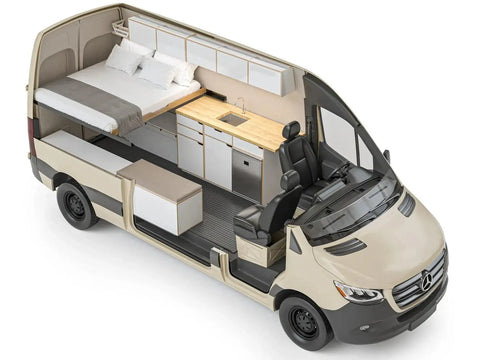
Finding the best fuel mileage RV is about going farther, staying flexible, and spending more time outdoors instead of at the pump. For van folks and road trippers, fuel use shapes where you go and how long you stay. At The Vansmith, we’ve spent years looking at what makes an RV with good MPG useful, cozy, and ready for real adventures.
Which RVs Get the Best Fuel Mileage?

Fuel use varies widely across RV types. Size, weight, and drive system all matter. Smaller platforms often beat large RVs when it comes to MPG (RVIA), mainly on long highway routes through the Rockies or the desert Southwest.
If fuel efficiency is a priority, camper vans and compact motorhomes are the clear leaders.
Class B RVs (Camper Vans) - Best Overall Fuel Efficiency

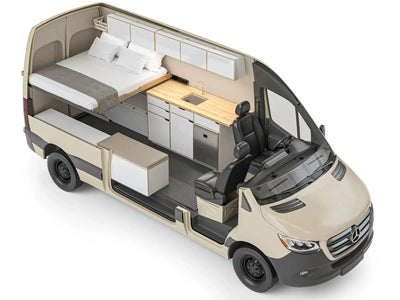
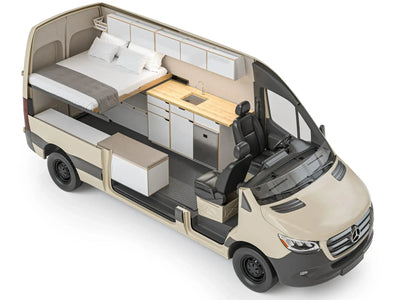
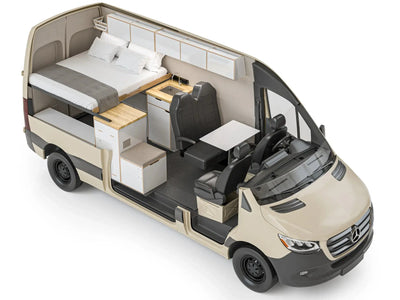
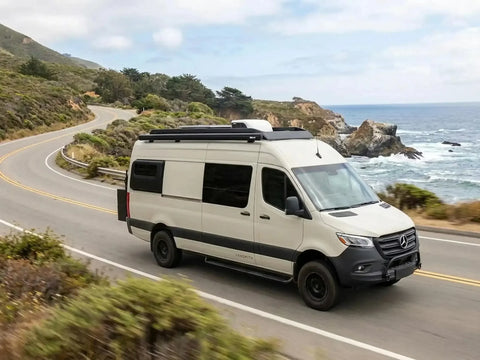
Class B RVs are widely seen as the RV with the best gas mileage (Go RVing). Built on van platforms, they are lighter, more streamlined, and easier to drive than larger RVs. Most get about 13–22 MPG, based on engine type and driving conditions.
These vans balance fuel use with everyday comfort, making them ideal for long road trips, weekend getaways, and longer travel.
Top Fuel-Efficient Class B Models
- Winnebago Travato 59G
- Roadtrek Sprinter RS Adventurous
- Airstream Interstate Grand Tour
- Winnebago Rialta
- Roadtrek CS
Each of these models is known for steady highway MPG and compact layouts that support daily travel.
Why Choose Class B?
Class B vans reflect two Vansmith core ideas: smart design and strong build quality. Thoughtful layouts cut wasted space, while lighter parts improve fuel use without giving up comfort.
Benefits include:
- Easier city and mountain driving
- Better fuel range per tank
- Lower operating costs over time
- More access to campgrounds and trailheads
For people who value being on the move and staying flexible, this is often the best fuel mileage RV group as a whole.
Class C RVs - Mid-Range Fuel Economy

Class C RVs sit between camper vans and large RVs. They offer more inside space, but that added weight impacts MPG. Most achieve 14–18 MPG, based on length and engine choice.
Popular fuel-conscious Class C options include:
- Itasca Navion
- Winnebago View
- Fleetwood Pulse
These rigs suit people who want more room but still need an RV with good gas mileage for longer routes.
Class A RVs - Spacious but Fuel-Heavy
Class A RVs put inside space and onboard features first. But their size and weight reduce fuel use. Most U.S. gas RVs in this class get about 6–10 MPG (Consumer Reports).
While cozy for long stays, they are not ideal if fuel savings and easy handling are top concerns.
Diesel vs. Gas Engines
Diesel Engines
Diesel platforms often give better highway MPG and stronger torque. They perform well on long climbs and loaded travel days, mainly in mountain regions.
Gasoline Engines
Gas motors often cost less upfront and are easier to service. But they often offer lower MPG than diesel options in the same RV classes.
Understanding MPG Camper Ratings: What Really Impacts Fuel Efficiency
When customers ask us which camper van delivers the best fuel economy, we always start with the platform. In our experience at The Vansmith, Class B camper vans offer the best balance of efficiency, drivability, and everyday comfort. Most models based on the Mercedes-Benz Sprinter, Ford Transit, or Ram ProMaster average 18 to 25 MPG, significantly outperforming most Class C (14 to 18 MPG) and Class A motorhomes, which often average below 13 MPG.
Among full-size vans, the Mercedes-Benz Sprinter diesel typically delivers 18 to 24 MPG, making it a popular choice for long-distance travel. The Ram ProMaster averages 17 to 20 MPG when kept lightweight, while the Ford Transit generally returns 14 to 18 MPG depending on the roof height and overall setup. Hybrid campers like the Toyota Sienna Hybrid can reach 36 MPG, although that efficiency comes with less interior space and reduced capability for extended adventures.
Weight plays a major role in fuel economy. Cabinets, water tanks, gear, and exterior accessories can reduce MPG by as much as 20 percent compared with an empty cargo van. That's why we prioritize lightweight materials and practical layouts that support both comfort and efficiency.
Factors Influencing Fuel Efficiency
Several elements affect how efficiently an RV performs on the road.
Driving habits also play a big role in how close you get to the stated MPG on any rig. Even the best gas mileage RV will burn more fuel with hard throttle, high cruising speeds, or constant stop‑and‑go traffic. Keeping highway speeds around 60–65 mph, using cruise control on open stretches, and planning routes that avoid heavy traffic can all add a few extra miles to each gallon.
Simple habits make a big change. Check tire pressure before long drives, and travel with only the water and gear you really need. Avoid long idles at trailheads or viewpoints to help your RV perform closer to its true best.
Care and upkeep is a big factor when people compare RVs with good MPG. A well‑set engine, clean air filter, and correctly lined‑up wheels can make a clear change over thousands of miles. If you’re shopping for the best gas mileage RV, look at service records just as closely as floor plans.
For diesel platforms, staying on top of fuel filter changes and DEF levels keeps fuel use and power where they should be. For gas engines, steady oil changes with the right weight and keeping an eye on spark plugs and ignition parts will help keep steady fuel use on long road trips.
Last, think about how you’ll really use your rig. Someone chasing powder days in the Rockies has other needs than a couple checking out small coastal towns. A compact Class B might be the best gas mileage RV for weaving into tight trailhead parking and older campgrounds with size limits.
A smaller Class C might make more sense if you’re on the road with kids and need extra sleeping space, without jumping to a gas‑heavy Class A. Matching the platform to your travel style makes sure you’re not hauling around unused space and weight. That’s one of the simplest ways to keep fuel costs down while still being cozy on the road.
Size and Weight
Heavier rigs consume more fuel. Compact vans consistently outperform larger motorhomes.
Engine Type
Diesel motors tend to provide better fuel use under load, while gas motors suit lighter platforms.
Chassis
Modern van chassis are designed for efficiency and stability, improving MPG across long distances.
Ready to turn a fuel-efficient van into your home on wheels? Reach out to The Vansmith to get a quote on a custom camper van build that fits how you actually travel.
Driving Style
Smooth acceleration, steady speeds, and lighter loads can significantly improve fuel use.
How Interior Choices Affect Fuel Economy
The decisions you make inside your van directly affect fuel efficiency. Lightweight cabinetry, modular furniture, and carefully selected materials help reduce unnecessary weight without sacrificing durability.
At The Vansmith, we also consider exterior accessories. Roof racks, awnings, and other additions can lower fuel economy by 5 to 10 percent, while oversized tires or lift kits may reduce MPG by another 1 to 3 MPG. Every design decision influences long-term operating costs. Learn more about our custom van design process to see how we balance efficiency, functionality, and comfort.
Best MPG Campers and Vans in 2026
Choosing the right platform has the greatest impact on fuel economy. The 2026 Mercedes-Benz Sprinter diesel (2WD) remains one of the most efficient full-size camper vans at 18 to 24 MPG. The Ford Transit averages 14 to 18 MPG, while the Ram ProMaster delivers 17 to 20 MPG when equipped with a lighter interior.
Factory-built Class B models like the Winnebago Travato 59G and Roadtrek Zion typically achieve 17 to 20 MPG, while the Airstream Interstate 19 averages 18 to 19 MPG. Hybrid campers such as the Toyota Sienna Hybrid can reach 36 MPG, although they are better suited for minimalist travel. Larger diesel-powered Class C models, including the Tiffin Wayfarer 25 TW and Winnebago Porto 24F, generally return 14 to 18 MPG.
Comparing Sprinter, Transit, and ProMaster
Each platform offers different advantages. The Sprinter diesel leads with 18 to 24 MPG and maintains excellent efficiency on long trips. The Ford Transit offers available all-wheel drive and a broad service network, making it a practical choice for varied terrain. The Ram ProMaster provides competitive fuel economy but does not offer diesel or all-wheel drive.
Explore our Sprinter conversions and Transit van builds to compare the strengths of each platform.
Real-World MPG Expectations
Actual fuel economy is usually 10 to 20 percent lower than manufacturer estimates once a camper is fully equipped. High-roof and long-wheelbase vans typically lose another 1 to 2 MPG because of added weight and wind resistance.
From our experience supporting adventure vans across Colorado, diesel-powered Sprinters tend to maintain fuel economy more consistently when carrying gear or climbing mountain passes. During our planning process, we help customers understand how layout choices and equipment affect real-world efficiency.
Weight and Packing Tips
Packing lighter remains one of the easiest ways to improve fuel economy. Carry only the gear you need, empty water tanks between trips when possible, and choose lightweight storage solutions.
At The Vansmith, we use durable, lightweight materials that help maximize efficiency without compromising comfort, making every mile more rewarding.
Driving and Maintenance Habits That Save Fuel
Driving habits have a measurable impact on MPG. Smooth acceleration, gradual braking, and routine maintenance can improve fuel economy by up to 10 percent. Proper tire pressure, timely servicing, and low rolling resistance tires also contribute to better long-term performance.
For additional maintenance advice, explore our DIY blog.
Sustainable Materials and Emerging Technology
We continue to see more camper vans using FSC-certified plywood, recycled insulation, and low-VOC finishes that improve both sustainability and interior air quality. Hybrid platforms offer excellent fuel economy, while fully electric camper vans are still limited by driving range for extended travel.
For now, diesel-powered vans remain one of the most practical options for travelers seeking long-range efficiency, although new technologies continue to evolve.
Tips to Improve Your RV Fuel Mileage
Small adjustments can make a noticeable difference over time.
- Maintain steady highway speeds
- Keep tires properly inflated
- Reduce unnecessary gear weight
- Stay current on engine servicing
- Plan routes with fewer steep climbs when possible
These habits help any RV with good MPG perform at its best.
Designed for Efficient Adventure
At The Vansmith, fuel use lines up well with going lighter on the planet and one‑on‑one support. Our vans use carefully sourced woods like birch and bamboo, paired with smart layouts that cut weight and improve daily use. Every detail is shaped by real‑world travel experience across Colorado and beyond.
Efficient vans don’t limit adventure. They extend it.
Choosing the Right Camper for Your Travel Style
For solo travelers and couples, the Sprinter 144 provides an excellent balance of interior space and 20 to 24 MPG real-world fuel economy. Families often prefer larger platforms like the Sprinter 170 or Ford Transit Extended, accepting a small reduction in MPG for additional living space.
Our Family and Couples layouts are designed to balance comfort, storage, and efficiency through thoughtful planning and lightweight materials.
Why The Vansmith Makes a Difference
After more than a decade of designing adventure vans, we've learned that fuel efficiency starts with thoughtful engineering. Material selection, insulation, climate control, and overall weight all influence how efficiently a van performs over thousands of miles.
At The Vansmith, we focus on practical layouts that support long-term travel while helping reduce fuel consumption, maintenance costs, and overall ownership expenses. If you're exploring your options, browse our eco-friendly van builds to see how efficient design supports every adventure.
Final Takeaway
If fuel use matters, Class B camper vans remain the best fuel mileage RV choice for most people. They combine smart design, steady power, and real‑world use. For those seeking balance between comfort and fuel use, they continue to set the standard for modern van travel.
Frequently Asked Questions
What is the best fuel mileage RV available today?
The best fuel mileage RV is usually a Class B camper van. These vans are lighter and more streamlined than larger RVs and often get around 13–22 MPG, based on driving conditions and engine type.
Which RV has the best gas mileage for long road trips?
A Class B camper van is seen as the RV with the best gas mileage for long trips. Its compact size helps cut fuel use while still giving key living basics for longer trips.
Is a Class B or Class C RV more fuel efficient?
A Class B RV uses less fuel than a Class C. Class B vans often give better MPG, while Class C RVs get about 14–18 MPG due to their larger size and added weight.
Are diesel RVs more fuel-efficient than gas RVs?
In many cases, yes. Diesel RVs often get slightly better highway MPG and perform better under load. But fuel use still depends a lot on the RV’s size, weight, and driving style.
What MPG is considered good for an RV?
An RV with good MPG typically achieves:
- 13+ MPG for Class B camper vans
- 14–18 MPG for efficient Class C motorhomes
- 6–10 MPG for most American petrol motorhomes
Smaller RVs generally fall on the higher end of this range.
About the author

Eugene Smit
CEO
Eugene is the CEO of The Vansmith, based in Boulder, Colorado. He writes across topics related to van builds, ownership, and the camper van industry.
Read more about Eugene