Overland camping usually starts with a simple question: how far can you travel while carrying what you need to stay comfortable and safe? After more than a decade working with adventure vans and traveling through Colorado, we have found that good preparation matters more than having the most equipment. A reliable vehicle, sensible systems, and a realistic route make the biggest difference.
What Is Overlanding?
Overlanding is vehicle-based travel through remote or lightly developed areas where the journey matters as much as the destination. Instead of driving to one campground and staying there, an overlander may travel across several roads and campsites during one trip.
Your vehicle becomes an important part of the travel system. It carries your food, water, shelter, cooking equipment, power, navigation tools, and recovery gear.
The Journey Is the Goal
The goal of overlanding is not simply reaching a campsite.
The route itself is part of the experience. You may spend several days traveling through forest roads, mountain passes, desert tracks, or rural highways before reaching your final destination.
That changes how you evaluate a vehicle. Comfort, range, storage, reliability, and weather protection become important because the vehicle supports the entire trip.
Self-Sufficiency
Self-sufficiency means having enough supplies and equipment to handle the conditions you expect.
That usually includes food, water, power, shelter, navigation, recovery equipment, and emergency supplies.
It does not mean carrying every piece of equipment available. A lighter, well-organized setup is often easier to manage than a vehicle filled with equipment you rarely use.
Remote Terrain
Overland routes can range from maintained gravel roads to rough forest roads and rocky mountain trails.
Colorado is a good example of why conditions matter. A road can be dry and easy in the afternoon and become muddy, snowy, or difficult after a weather change.
Always check current road conditions, seasonal closures, weather, and land-management rules before leaving.
Constantly Moving Camp
Overland camping often means changing campsites frequently.
Your vehicle may serve as transportation, sleeping space, storage, kitchen, and shelter. That makes organization especially important.
Frequently used items should be easy to reach. Heavy equipment should be stored securely and low in the vehicle.
Overlanding vs. Traditional Camping
The biggest difference between overlanding and traditional camping is the role of the vehicle.
Traditional camping often centers on a destination. You drive to a campsite, set up, stay for a period, and return home.
Overlanding places more emphasis on the journey between destinations. Your vehicle supports the entire trip rather than simply getting you to camp.
Core Purpose
Traditional camping is generally about spending time at a campsite.
Overlanding is about traveling through an area while remaining reasonably self-sufficient along the way.
Neither approach is better for everyone. The right choice depends on how you want to spend your time outside.
Off-Roading
Off-roading generally focuses on driving challenging terrain.
The vehicle's traction, clearance, suspension, tires, and recovery equipment can become major priorities.
An off-road trip may involve spending hours working through one difficult section of trail.
Overlanding
Overlanding focuses more on distance and self-sufficiency.
An overland route may include paved roads, gravel roads, forest roads, and occasional technical sections.
The vehicle needs enough capability for the route, but extreme trail performance is not always the priority.
Vehicle Setup and Priorities
An off-road vehicle may prioritize:
- Ground clearance
- Suspension travel
- Tire performance
- Traction
- Recovery equipment
An overland vehicle has additional priorities:
- Sleeping space
- Storage
- Water
- Food
- Power
- Cooking
- Navigation
- Weather protection
- Recovery equipment
This is why the best vehicle for overlanding is not necessarily the vehicle that performs best on the hardest trail.
Off-Road Rigs
Off-road rigs are typically designed around challenging terrain.
They may have equipment focused on clearance, traction, suspension, recovery, and protection underneath the vehicle.
They can be excellent for technical trails but may sacrifice some interior comfort and storage.
Overland Rigs
Overland rigs need to balance driving capability with living requirements.
The vehicle needs to travel reliably while carrying everything required for several days away from developed services.
For many travelers, that balance makes an adventure van a practical choice.
Overlanding vs. Car Camping vs. Van Life
These travel styles overlap, but their priorities differ.
|
Travel style |
Main focus |
Typical setup |
|
Car camping |
Reaching a campsite |
Vehicle plus tent or sleeping equipment |
|
Van life |
Living comfortably on the road |
Sleeping, storage, cooking, power, and water |
|
Overlanding |
Travel and self-sufficiency |
Capable vehicle with camping and recovery systems |
An adventure van can combine several of these benefits. It can provide a comfortable interior while still allowing you to travel between remote locations.
Essential Gear
The right gear depends on your route, season, vehicle, and number of travelers.
Start with equipment that solves a specific problem. Add equipment as your experience grows.
Capability
Know what your vehicle can safely handle.
Understand its ground clearance, payload, tire limitations, traction system, recovery points, and approach and departure angles.
Capability should match your intended terrain rather than the most difficult route you might encounter.
Shelter
Your shelter should match your climate and travel style.
Options include:
- Ground tents
- Rooftop tents
- Interior sleeping platforms
- Awnings
- Enclosed adventure van interiors
An interior sleeping area can be particularly useful during cold, wet, or windy weather.
Recovery
Recovery equipment is important whenever you travel away from regular services.
Consider carrying:
- Recovery straps
- Rated shackles
- Traction boards
- Shovel
- Gloves
- Suitable jack
- Tire repair equipment
Practice using your equipment before you need it. Recovery equipment is only useful when you understand how to use it safely.
Utilities
Utilities support the basic functions of an extended trip.
Common systems include:
- Auxiliary power
- Solar charging
- Lighting
- Water storage
- Refrigeration
- Heating
- Ventilation
A properly planned system should meet your actual needs without adding unnecessary weight or complexity.
First Aid
Carry a first-aid kit that matches the number of people traveling and the distance from medical services.
Keep it accessible and check it before every major trip.
Emergency Communication Device
Cell service cannot be assumed in remote areas.
A satellite communicator or another emergency communication device can provide an important backup.
Before leaving, tell someone where you are going and when you expect to return.
Portable Air Compressor
A portable air compressor is useful when adjusting tire pressure for different surfaces.
If you air down for rough terrain, make sure you can restore tire pressure before returning to higher-speed pavement.
Water Storage and Filtration
Water is one of the most important resources for remote travel.
Carry enough for drinking, cooking, cleaning, and unexpected delays.
A filtration system can provide another option where a reliable water source exists, but never assume untreated water is safe.
Cooking Equipment
Keep cooking equipment simple and easy to access.
A compact stove, cookware, utensils, food storage, and a cooler or refrigerator can cover most trips.
For longer routes, refrigeration can make food planning easier. Our guide to Best Overlanding Fridges & Freezers in 2026 covers the main considerations.
Planning Your Trip
Good overlanding starts before you leave your driveway.
Navigation
Download maps before leaving cellular coverage.
Carry a backup navigation method as well. Digital tools are useful, but batteries fail and coverage disappears.
Mark fuel stops, possible campsites, difficult sections, and alternate routes before departure.
Campsites
Dispersed camping can provide more privacy than developed campgrounds, but rules vary by location.
Check whether overnight camping is permitted and follow local requirements for fires, waste, parking, and access.
Safety
Share your route with someone who is not traveling with you.
Include your expected return time and what to do if they cannot reach you.
A simple trip plan becomes especially useful when weather, road closures, or mechanical problems change your schedule.
Overlanding Vehicle Basics
Your vehicle is the foundation of an overlanding setup.
Before a long trip, inspect the tires, brakes, fluids, battery, suspension, spare tire, recovery points, and electrical systems.
Also consider your vehicle's payload. Food, water, passengers, tools, and camping equipment can add significant weight.
Overlanding Safety Tips
A few simple habits can prevent many common problems:
- Check weather before and during the trip.
- Keep fuel and water reserves appropriate for the route.
- Inspect tires before departure.
- Secure heavy equipment.
- Keep recovery gear accessible.
- Avoid driving beyond your experience.
- Carry backup navigation.
- Respect fire restrictions.
- Follow land-use rules.
- Tell someone your travel plans.
In Colorado, weather deserves particular attention. Mountain conditions can change quickly, and elevation can make a simple route much more demanding than expected.
What Kind of Vehicle Do You Need?
There is no single best overlanding vehicle.
The right choice depends on terrain, trip length, number of travelers, storage needs, and how much comfort you want at camp.
4WD or AWD
Four-wheel drive can provide an advantage on steep, loose, rocky, or snowy terrain.
AWD can also perform well on gravel, wet roads, snow, and moderate off-pavement routes.
Choose the drivetrain according to the terrain you actually expect to drive.
Reliability
Reliability matters more when you are far from services.
Look at:
- Service history
- Mechanical condition
- Tire availability
- Parts availability
- Battery condition
- Recovery options
- Service access along your route
We often see travelers focus heavily on equipment while overlooking basic vehicle maintenance. A dependable vehicle is more valuable than an impressive accessory list.
Cargo Capacity
Overlanding equipment takes up space quickly.
Food, water, clothing, recovery equipment, tools, bedding, and outdoor gear all compete for storage.
Consider both total cargo capacity and payload. A vehicle that feels spacious on a weekend can feel much smaller after several days away.
Best Vehicles for Overlanding
The best vehicle depends on how you travel.
A compact truck can work well for travelers who spend most nights outside. An adventure van can be better for people who want an enclosed living area and more storage.
Best Overlanding Trucks
Ford F-150
The Ford F-150 offers strong cargo flexibility and multiple configurations.
It can suit travelers who want a truck bed for outdoor equipment and a separate sleeping setup.
Rivian R1T
The Rivian R1T offers strong traction and useful storage.
Charging access should be a major consideration when planning longer remote routes.
Toyota Tacoma
The Toyota Tacoma provides a smaller footprint than a full-size truck.
It can suit travelers who prioritize maneuverability while maintaining useful cargo capacity.
Best Overlanding SUVs and Camper Vans
Ford Transit
The Ford Transit offers substantial interior volume.
That makes it useful for travelers who want sleeping space, storage, cooking, and electrical systems inside the vehicle.
The Vansmith works extensively with adventure vans because interior organization and system integration can have a major effect on long-term usability. For travelers considering a Ford van conversion, The Vansmith focuses on practical layouts and reliable systems suited to extended travel.
Mercedes Sprinter
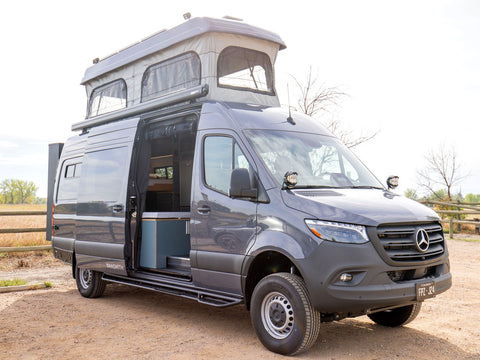
The Mercedes Sprinter provides substantial interior space for travelers who want more room for sleeping, storage, and daily living.
For those considering a Sprinter van conversion, The Vansmith can help with layouts, installations, repairs, and long-term support.
Jeep Wrangler Rubicon
The Jeep Wrangler Rubicon is well suited to travelers who prioritize trail capability.
Its compact footprint and four-wheel-drive system make it useful for more technical terrain, although interior living space is limited compared with an adventure van.
Land Rover Defender 110 SE
The Defender 110 SE combines road comfort with off-pavement capability.
It can suit travelers who want an SUV-based setup without the interior volume of a full-size adventure van.
How to Start Overlanding
If you are wondering how to start overlanding, start with a manageable trip.
You do not need to purchase everything before your first night away.
Use What You Have
Start with a vehicle you already understand.
Choose a route close enough to home that you can return if something does not work.
A short trip will quickly show you what you actually need.
Pack the Essentials
Bring food, water, shelter, navigation equipment, first aid, basic tools, and recovery equipment.
Avoid filling the vehicle with equipment simply because it appears on someone else's gear list.
Master Safety and Recovery Gear
Practice changing a tire.
Learn how your jack works. Know where your recovery points are. Test your air compressor.
These tasks are easier to learn at home than beside a remote trail.
Plan a Shake-Down Run
Take a one-night trip before committing to a longer journey.
Pay attention to sleeping comfort, storage, cooking, power, water, and equipment access.
Then make adjustments before the next trip.
Prioritize Navigation
Download your maps.
Mark fuel stations, water sources, possible campsites, difficult sections, and alternate routes.
Good navigation planning gives you options when conditions change.
Overlanding Tips and Tricks for Beginners
A few habits make overland camping easier:
- Keep frequently used equipment accessible.
- Store heavy equipment low and secure.
- Carry enough water for unexpected delays.
- Check tire pressure before major trips.
- Test equipment before remote travel.
- Leave extra time for difficult terrain.
- Check weather more than once.
- Keep emergency equipment accessible.
- Follow local land-use requirements.
- Review your gear after every trip.
That last step is valuable. After several trips, you will know which items earn their space and which do not.
Apps and Resources for Planning an Overlanding Trip
Planning apps can make route research easier, especially when offline maps are available.
Navigation and Mapping Apps
onX Offroad
onX Offroad can provide trail information, property boundaries, and route-planning tools.
Use it as one source of information and verify important conditions before departure.
Gaia GPS
Gaia GPS provides detailed maps and offline navigation.
Offline access is particularly useful when traveling beyond cellular coverage.
Trails Off-Road
Trails Off-Road can provide additional trail information and difficulty context.
Trail conditions can change, so recent information is always preferable.
Campsite and Resource Finders
iOverlander
iOverlander can help identify campsites and useful travel resources.
Community reports can be helpful, but conditions may change after a report is posted.
Hipcamp
Hipcamp provides access to private camping locations.
It can be useful when dispersed camping is unavailable or when you want a more established overnight option.
The Dyrt
The Dyrt provides campground information and user reviews.
Use reviews as supporting information rather than a guarantee of current conditions.
Weather and Utilities
Windy
Windy can help you monitor wind, precipitation, and broader weather conditions.
This can be especially useful before traveling into mountain areas.
GasBuddy
GasBuddy can help with fuel planning.
For long routes, identify fuel stops before leaving service.
Best Places for Overlanding in the U.S.
The U.S. offers a wide range of terrain for overlanding.
Popular regions include:
- Colorado
- Utah
- Arizona
- Wyoming
- Montana
- Idaho
- New Mexico
- Nevada
- Oregon
- California
Colorado is particularly useful for developing experience because the terrain varies significantly.
You can start with accessible forest roads and gradually move toward more demanding mountain routes as your driving and planning skills improve.
How to Find and Reach Overlanding Campsites
Finding a campsite is only part of the process. You also need to confirm that the route and access are appropriate for your vehicle.
Step 1: Figure Out Where You Want to Go
Start with a region rather than a specific campsite.
Consider season, distance, road conditions, fuel availability, water access, and the number of nights you plan to stay.
Step 2: Identify the Land Managers
Determine whether the area is managed by the U.S. Forest Service, Bureau of Land Management, National Park Service, state agencies, or another organization.
Camping rules can differ significantly.
Step 3: Tap Into Online Communities
Local communities can provide useful information about road conditions and seasonal changes.
Still, verify important details with the relevant land manager.
Step 4: Map Out Your Adventure
Create a primary route and at least one alternative.
Mark fuel stops, water sources, difficult sections, possible campsites, and exit routes.
How to Keep Warm While Winter Camping
Cold-weather overlanding requires more planning than simply adding another blanket.
Consider insulation, ventilation, heating, bedding, condensation, water storage, and battery performance.
Cold temperatures can also affect batteries and other equipment.
For more preparation guidance, see Camper Van Winterization: How to Prepare for Cold-Weather Travel.
Colorado travel has taught us that winter conditions deserve respect. A mild afternoon can turn into a freezing night, particularly at elevation.
Why an Adventure Van Is an Excellent Overlanding Vehicle
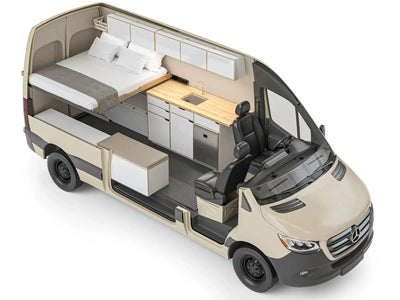
An adventure van can combine transportation, sleeping space, storage, cooking, and basic utilities in one vehicle.
For travelers who want to spend several days away from developed campgrounds, that combination can make the trip more comfortable and easier to manage.
Ready-to-Use Living Space
An organized interior provides a place to sleep, store equipment, prepare food, and take shelter from poor weather.
That can be particularly valuable when arriving at camp late or dealing with rain and snow.
Off-Grid Power and Water
Power and water systems can reduce dependence on developed campgrounds.
The important part is matching the system to your actual use.
More capacity is not always better if it adds unnecessary weight and complexity.
All-Weather Capability
An enclosed interior provides a major advantage in cold, rain, snow, and wind.
Insulation, heating, ventilation, and thoughtful storage all contribute to comfort during extended travel.
Compact Footprint
An adventure van can carry substantial living equipment while remaining easier to drive and park than a large RV.
That balance is useful when a trip includes both remote roads and time in towns.
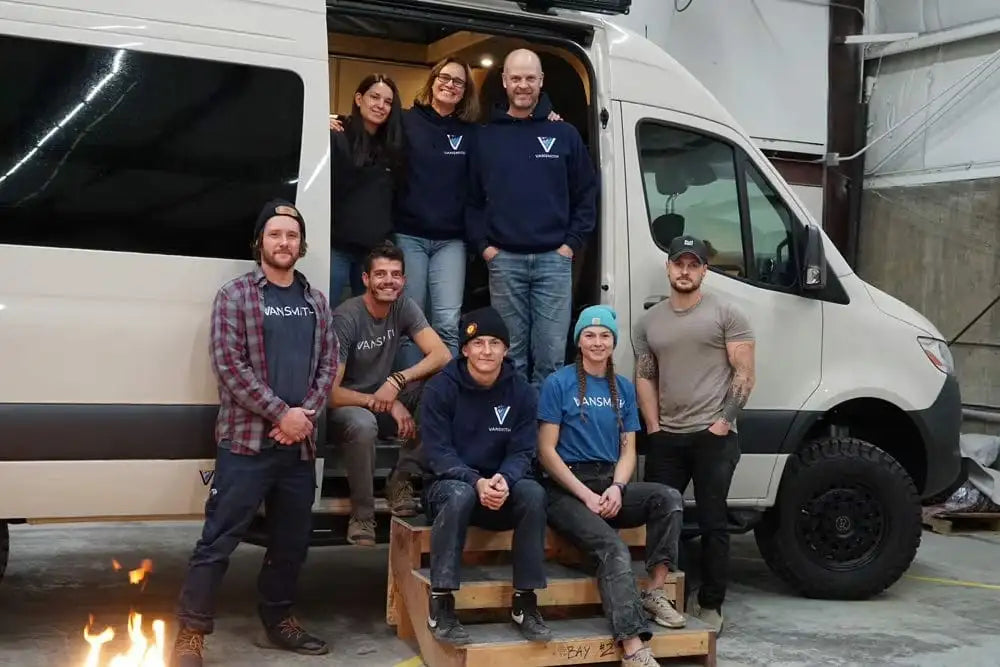
The Vansmith has more than a decade of experience working with adventure vans in real Colorado conditions.
Our work spans in-stock vans, installations, repairs, DIY kits, and long-term support. We also work with travelers who use their vans for climbing, biking, skiing, hiking, and extended road travel.
For travelers considering an adventure van, see our Camper Van for Sale options.
If the Ford platform fits your needs, review our Ford Transit for Sale options.
For Mercedes-based travel, see our Sprinter Camper for Sale options.
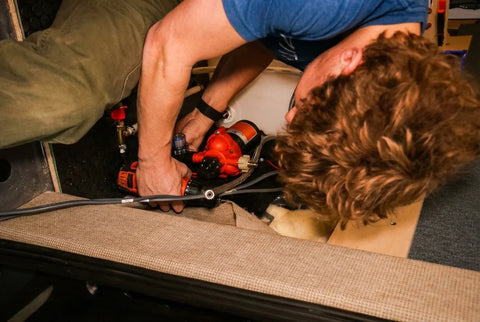
The Vansmith also provides Installations & Repairs for travelers who need to maintain or improve their existing setup.
Families considering longer trips can also read Overlanding with a Family: Is a 4x4 Camper Van Practical with Kids?.
Our approach centers on personalized attention and ongoing support. The goal is a vehicle that works well on the road and remains practical after years of use.
Final Thoughts
Overland camping does not require the most expensive vehicle or the largest collection of equipment.
It requires a reliable vehicle, sensible preparation, good navigation, and enough self-sufficiency for the route ahead.
After more than a decade working with adventure vans across Colorado and the West, we have seen that the most useful setups are the ones people can live with comfortably and maintain over time.
That is the approach we take at The Vansmith. Purpose-driven design, careful craftsmanship, and ongoing support matter because an overlanding vehicle needs to work long after the first trip.
FAQs
Do You Need 4×4 for Overlanding?
No.
You need a vehicle suited to the terrain you plan to travel.
AWD can handle many gravel, snow, dirt, and moderate off-pavement routes. Four-wheel drive becomes more useful as terrain becomes steeper, looser, or more technical.
How Much Does Overlanding Cost?
There is no fixed cost.
A basic weekend trip may require little beyond equipment you already own.
Longer trips can involve additional costs for tires, recovery equipment, navigation, power, water, refrigeration, heating, and vehicle upgrades.
Start with your route and actual needs rather than buying everything at once.
What's the Difference Between Camping and Overlanding?
Camping usually centers on staying at a campsite.
Overlanding combines travel and camping. The vehicle carries the resources needed to travel between locations while remaining reasonably self-sufficient.
Is Overlanding the Same as Off-Roading?
No.
Off-roading focuses primarily on driving difficult terrain.
Overlanding focuses on traveling across longer distances while carrying the equipment needed for the journey.
An overland route may include off-road sections, but extreme terrain is not required.
About the author

Eugene Smit
CEO
Eugene is the CEO of The Vansmith, based in Boulder, Colorado. He writes across topics related to van builds, ownership, and the camper van industry.
Read more about Eugene