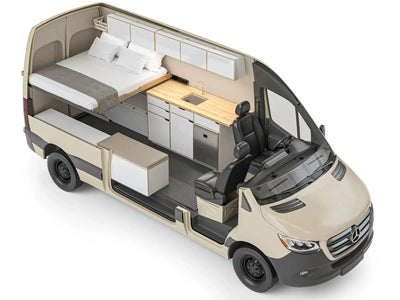
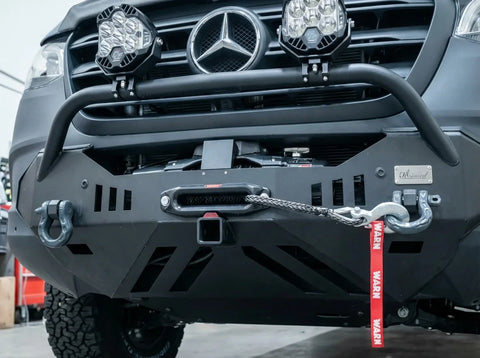
The safest and most efficient way to charge lithium batteries while driving off-road is by using a DC-DC charger, also known as a battery-to-battery (B2B) charger. These devices regulate power from your vehicle's alternator and deliver the proper charging profile to your lithium battery bank while protecting both the batteries and the alternator.
For modern 4x4 camper vans, DC-DC charging has become the industry standard because lithium batteries charge differently than traditional lead-acid batteries.
If your goal is extended off-grid travel, understanding how alternator charging works can help you build a more reliable electrical system and maximize your time away from hookups.
Whether you're exploring remote public lands or living full-time in a luxury camper van, proper charging infrastructure is essential for powering refrigerators, lights, laptops, water pumps, and other daily necessities.
Why Lithium Batteries Need Special Charging Systems
The Problem With Direct Alternator Charging
Years ago, many camper van electrical systems relied on a simple battery isolator.
The concept was straightforward:
- Start the engine
- Connect the starter battery and house battery
- Allow the alternator to charge both
While this worked reasonably well for lead-acid batteries, lithium batteries introduce new challenges.
Lithium Batteries Charge Differently
Lithium batteries:
- Accepts charge very quickly
- Draw high amounts of current
- Require precise charging voltages
- Maintain low internal resistance
Because of these characteristics, directly connecting a lithium battery bank to a vehicle alternator can create problems.
Risks of Direct Alternator Charging
Alternator Overload
Lithium batteries can draw more current than the alternator was designed to provide continuously.
This can lead to:
- Excessive heat
- Premature alternator wear
- Reduced reliability
Incomplete Charging
Many modern vehicles use smart alternators that lower the voltage to improve fuel efficiency.
As a result, lithium batteries may never receive the voltage required for a complete charge.
Poor Battery Health
Without proper charging control, battery performance and lifespan can suffer.
For modern van conversions, direct alternator charging is generally no longer considered best practice.
Option 1: Traditional Alternator Charging With an Isolator
How Traditional Isolators Work
A battery isolator or relay connects the starter battery and house battery when the engine is running.
The alternator then charges both batteries simultaneously.
Advantages
- Simple installation
- Lower cost
- Fewer components
Disadvantages
- Limited charging control
- Not optimized for lithium batteries
- Potential alternator stress
- Poor compatibility with smart alternators
When Does an Isolator Still Make Sense?
Older Vehicles
Vehicles equipped with conventional alternators.
Lead-Acid Battery Systems
Traditional house batteries are more forgiving and draw current differently than lithium batteries.
For most modern camper van builds, however, better options exist.
Option 2: DC-DC Chargers
What Is a DC-DC Charger?
A DC-DC charger acts as an intelligent charging bridge between your vehicle's electrical system and your house battery bank.
Instead of allowing unrestricted current flow, the charger regulates voltage and amperage before delivering power to the batteries.
How a DC-DC Charger Works
Step 1
The alternator charges the starter battery.
Step 2
The DC-DC charger draws controlled power from the charging system.
Step 3
The charger converts and regulates that power.
Step 4
The lithium battery bank receives the proper charging profile.
The result is safer, more efficient charging.
Why DC-DC Chargers Have Become the Modern Standard
Lithium-Compatible Charging Profiles
Lithium batteries require specific charging stages.
DC-DC chargers provide:
Bulk Charging
Rapid energy transfer.
Absorption Charging
Controlled charging as the battery nears full capacity.
Maintenance Charging
Proper battery management once charging is complete.
This improves battery performance and longevity.
Smart Alternator Compatibility
Many modern vans utilize smart alternators.
Examples include many:
- Ford Transit platforms
- Mercedes-Benz Sprinter platforms
- Modern adventure vans
DC-DC chargers compensate for fluctuating alternator output and ensure the battery bank receives consistent charging.
For owners considering Ford Transit camper vans or Sprinter camper vans, this compatibility is especially important.
Alternator Protection
One of the biggest advantages of a DC-DC charger is current limiting.
Rather than allowing unlimited power draw, the charger restricts current to a safe level.
This reduces:
- Alternator stress
- Heat buildup
- Long-term wear
Option 3: B2B Chargers
What Is a B2B Charger?
B2B stands for:
Battery-to-Battery Charger
In the camper van industry, B2B chargers are essentially a type of DC-DC charger.
The terms are often used interchangeably.
How B2B Chargers Work
A B2B charger:
- Draws power from the starter battery
- Regulates voltage and current
- Charges the house battery independently
Functionally, the result is nearly identical to a DC-DC charger.
The difference is usually marketing terminology rather than technology.
Why Off-Road Travel Makes Alternator Charging More Important
Real-World Overlanding Conditions
Unlike campground travelers, overlanders frequently encounter:
- Long driving days
- Frequent campsite changes
- Forested environments
- Limited shore power access
- Variable solar production
In these situations, alternator charging becomes one of the most valuable energy sources available.
Travel Days Become Charging Days
Every mile driven contributes to battery replenishment.
A properly designed charging system allows travelers to arrive at camp with a fully charged battery bank ready for:
- Refrigeration
- Cooking
- Workstations
- Lighting
- Heating systems
This is particularly useful for owners of mobile work vans who rely on laptops, internet connectivity, and charging equipment throughout the day.
How Much Energy Can a DC-DC Charger Recover?
Example: 40A Charger
Assuming a charging voltage of approximately 14V:
Power Output
14V × 40A = 560 Watts
Four Hours of Driving
560W × 4 Hours = 2.24 kWh
That's enough energy to support:
- A compressor refrigerator for several days
- LED lighting
- Roof fans
- Water pumps
- Device charging
- Internet equipment
For many travelers, a single driving day can recover a substantial portion of daily power consumption.
Choosing the Right DC-DC Charger Size
100–200Ah Lithium Battery Banks
Recommended Charger
20A–30A
Best For
- Weekend travel
- Occasional off-grid use
- Moderate electrical demands
200–400Ah Lithium Battery Banks
Recommended Charger
30A–50A
Best For
- Full-time van life
- Remote work setups
- Extended travel
Many camper vans for couples fit comfortably within this category.
400Ah+ Lithium Systems
Recommended Charging Capacity
50A–100A+
Best For
- All-electric builds
- Air conditioning
- Induction cooking
- Large battery banks
Always verify that your alternator can support the intended charging load.
Solar vs Alternator Charging
Which Is Better?
The truth is that most premium camper vans benefit from both.
| Feature | Solar Power | Alternator Charging |
|---|---|---|
| Works While Parked | Yes | No |
| Works While Driving | Limited | Yes |
| Weather Dependent | Yes | No |
| Silent Operation | Yes | Yes |
| Consistent Output | No | Yes |
The Ideal Combination
Solar collects energy throughout the day while parked.
Alternator charging quickly replenishes batteries during travel.
For maximum off-grid capability, many travelers combine DC-DC charging with professional solar installation systems.
Building a Reliable Off-Grid Electrical System
Charging is only one piece of the puzzle.
A truly capable camper van integrates multiple systems working together.
Heating Systems
Cold-weather travelers often rely on camper van heater installations to stay comfortable without excessive electrical consumption.
For year-round reliability, routine camper van heater service and repair help ensure your heating system is ready for remote travel.
Ventilation
Proper airflow improves comfort and reduces moisture buildup.
A professionally installed roof vent system can dramatically improve overall livability.
Suspension Upgrades
If your build includes larger battery banks, solar equipment, and water systems, suspension improvements may help maintain handling and ride quality.
Learn more about Sprinter and Transit suspension upgrades for heavy-duty adventure builds.
Choosing the Right Camper Van Platform
The best charging system starts with the right van platform.
Popular Choices for Off-Grid Electrical Builds
Sprinter-Based Builds
Transit-Based Builds
- Ford Transit camper vans
- Ford Transit van conversions
- Transit long wheelbase vans
- Transit short wheelbase vans
Premium Off-Grid Options
Frequently Asked Questions
Can I connect lithium batteries directly to my alternator?
Direct connection is generally not recommended because lithium batteries can draw excessive current and potentially overload the alternator.
Are DC-DC chargers and B2B chargers the same thing?
In most camper van applications, yes. B2B chargers are essentially a type of DC-DC charger.
Do I need a DC-DC charger if I already have solar panels?
Yes. Solar and alternator charging complement each other and provide power under different conditions.
What size DC-DC charger should I choose?
The correct size depends on your battery capacity, electrical loads, and alternator output.
Is alternator charging worth it for off-road travel?
Absolutely. For many overlanders, alternator charging becomes one of the most important energy sources during travel days.
Final Thoughts
For modern 4x4 camper vans, the days of directly connecting lithium batteries to the alternator are largely behind us. While traditional isolators still have a place in older lead-acid systems, today's lithium battery banks benefit enormously from intelligent charging solutions.
A quality DC-DC or B2B charger protects your alternator, delivers the correct charging profile, improves battery performance, and maximizes energy recovery while driving. When combined with solar power and a properly sized lithium battery bank, it creates a reliable foundation for extended off-grid adventures.
Whether you're exploring remote trails, working from the road, or living full-time in a camper van, investing in the right charging system helps ensure your electrical setup is ready for wherever the journey leads.
Ready to build an adventure-ready van with a professionally designed electrical system? Explore The Vansmith's camper vans for sale in Colorado or browse camper vans available across the USA. If you're evaluating financing options, use the RV loan calculator to start planning your next off-grid adventure.