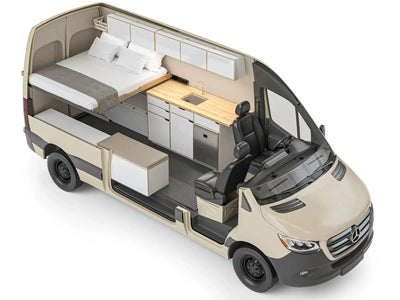
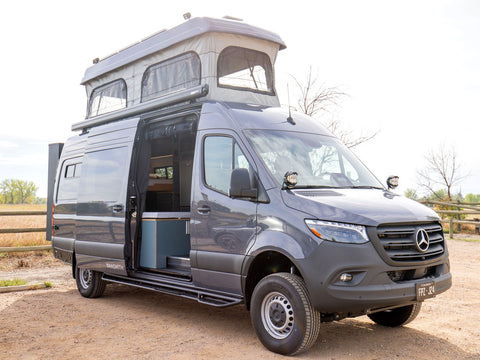
Choosing between a 4x4 RV and a standard RV comes down to one important question: Where do you want your adventures to take you? If your trips primarily involve paved campgrounds and RV resorts, a standard RV may provide everything you need. However, if you dream of accessing remote campsites, forest service roads, snowy mountain passes, and dispersed camping areas, a 4x4 RV for sale could be worth the extra investment.
As off-grid travel and boondocking continue to grow in popularity, more travelers are researching 4x4 camper vans for off-road adventure, adventure vans, overland rigs, rugged camper builds, and off-road-ready vehicle platforms designed to reach destinations that traditional RVs simply can't access. For buyers comparing RV categories and standards, the RV Industry Association is a useful reference for industry information.
In this guide, we'll compare 4x4 RVs and standard RVs across cost, capability, comfort, fuel economy, maintenance, and long-term value to help determine whether the off-road upgrade is truly worth it.
What Is the Difference Between a 4x4 RV and a Standard RV?
The primary difference lies in how power is delivered to the wheels.
A standard RV typically operates as a two-wheel-drive vehicle, sending power to either the rear or front wheels. A 4WD camper van or off-road camper can distribute power to all four wheels when additional traction is needed.
This improves performance on:
-
Dirt roads
-
Muddy campsites
-
Snow-covered roads
-
Sand
-
Rocky trails
-
Steep grades
Many modern Class B camper vans now offer factory AWD or 4WD systems that make remote travel significantly easier than traditional RVs.
4x4 RV vs. Standard RV: Quick Comparison
|
Factor |
4x4 RV |
Standard RV |
|
Off-Road Capability |
Excellent |
Limited |
|
Traction |
Power to all wheels |
Two-wheel drive |
|
Ground Clearance |
Higher |
Lower |
|
Tires |
All-terrain |
Highway tires |
|
Purchase Price |
Higher |
Lower |
|
Fuel Economy |
Slightly lower |
Better |
|
Maintenance Costs |
Higher |
Lower |
|
Snow Performance |
Excellent |
Moderate |
|
Remote Campsite Access |
Outstanding |
Limited |
AWD vs. 4WD: Understanding the Difference
Before comparing RVs, it's important to understand the difference between AWD and 4WD.
AWD (All-Wheel Drive)
AWD systems automatically monitor wheel slip and distribute power where needed.
Benefits include:
-
Better rain performance
-
Improved snow traction
-
Enhanced stability
-
Easier operation
Many buyers researching a Sprinter camper van for sale discover that AWD provides all the capability they need for year-round adventure travel. According to Mercedes-Benz Sprinter specifications, AWD is available from the factory on select Sprinter configurations.
4WD (Four-Wheel Drive)
Traditional 4WD systems allow drivers to manually engage four-wheel drive and often include low-range gearing.
Benefits include:
-
Maximum traction
-
Better climbing ability
-
Improved performance in deep mud
-
Greater capability on technical terrain
If you're still evaluating your options, this guide on how to choose the best 4x4 camper van explains how different drivetrains affect real-world travel.
Why Choose a 4x4 RV?
The biggest reason travelers invest in a 4x4 RV is freedom.
Rather than being restricted to paved campgrounds, you can access:
-
National forest roads
-
BLM land
-
Remote mountain campsites
-
Desert boondocking locations
-
Snow-covered trailheads
-
Backcountry camping areas
Many of today's best off-road RVs and 4x4 campers are designed specifically for travelers who want to escape crowded campgrounds.
Better Traction in Difficult Conditions
A 4x4 system provides added confidence when conditions deteriorate.
This includes:
-
Muddy roads
-
Snowy highways
-
Loose gravel
-
Wet grass
-
Sandy access roads
For travelers who regularly encounter changing weather conditions, the extra traction can be invaluable. The NHTSA recommends winter driving precautions that are especially relevant when traveling in snow, ice, and reduced-traction conditions.
Ground Clearance: Why It Matters
Most standard RVs prioritize highway comfort and stability, resulting in lower ride heights.
However, low clearance can create problems when navigating:
-
Washouts
-
Deep ruts
-
Rocks
-
Uneven terrain
Many off-road-ready Sprinter van conversions combine:
-
Lift kits
-
Larger tires
-
Skid plates
-
Reinforced suspension
Adding the right tire setup can dramatically improve off-road performance. Before modifying your rig, consider these essential 4x4 camper van accessories that help maximize capability and safety.
The Cost of Going 4x4
Capability comes with a premium.
Most 4x4 systems add between:
$8,000–$25,000+
depending on the platform.
Additional costs often include:
-
Larger tires
-
Suspension upgrades
-
Higher maintenance expenses
-
Increased repair costs
Many buyers considering luxury camper vans for sale find that factory AWD systems offer excellent capability without requiring expensive aftermarket modifications.
Fuel Economy Differences
A 4x4 system inevitably adds weight and complexity.
As a result, fuel economy is usually slightly lower.
Typical Fuel Economy
4x4 Camper Vans
-
14–18 MPG
Standard Camper Vans
-
15–20 MPG
4x4 Motorhomes
-
8–12 MPG
Standard Motorhomes
-
9–14 MPG
Although the difference is often only 1–2 MPG, it can become noticeable on extended road trips. EPA fuel economy resources at FuelEconomy.gov show how drivetrain, weight, and vehicle configuration can affect MPG.
Many Ford Transit camper vans are popular because they balance fuel economy and AWD capability exceptionally well. According to Ford Transit specs, available AWD has made the platform especially appealing for all-season travel.
4x4 Camper Van vs. 4x4 Motorhome
Not all off-road RVs are built the same.
4x4 Camper Vans
Benefits include:
-
Easier parking
-
Better fuel economy
-
Lower insurance costs
-
Simpler maintenance
-
Better maneuverability
Travelers comparing options often read reviews like Is the Winnebago Revel Worth It? to understand how modern adventure vans perform in real-world conditions.
4x4 Motorhomes
Benefits include:
-
Larger interiors
-
Greater storage
-
Larger water capacities
-
Residential amenities
However, larger motorhomes sacrifice agility and often struggle in tighter off-road environments.
When Is a 4x4 RV Worth the Extra Cost?
A 4x4 RV is often worth the investment if you:
Frequently Camp Off Grid
Remote camping locations often require navigating dirt roads, gravel routes, or rough access roads.
Many travelers exploring Mercedes 4x4 camper vans prioritize capability specifically for boondocking and dispersed camping.
Travel During Winter
Snow and ice can quickly challenge a standard RV.
A 4x4 system provides:
-
Better traction
-
Improved stability
-
Enhanced confidence
Travelers who regularly visit ski resorts or mountain destinations often choose winter camper vans designed for cold-weather adventures. For added trip planning and road-condition awareness, AAA offers seasonal driving resources and travel guidance.
Explore Remote Destinations
Whether you're exploring deserts, forests, beaches, or mountain passes, 4x4 capability can open up entirely new travel opportunities for your camper build, off-road van, or overland vehicle.
Enjoy Overlanding
Overlanding and adventure travel are among the biggest reasons buyers upgrade to 4x4 platforms.
This collection of off-road camper van options showcases just how capable modern rigs have become.
When a Standard RV Makes More Sense
A standard RV remains the better choice if:
You Stay Primarily at RV Parks
Most developed campgrounds require little more than paved-road access.
Highway Travel Dominates Your Trips
If more than 85% of your driving occurs on pavement, a 4x4 system may offer limited value.
Budget Is Your Top Priority
Skipping 4x4 can save:
-
Thousands upfront
-
Fuel expenses
-
Maintenance costs
Payload Capacity Matters
Because 4x4 components add weight, standard RVs often offer slightly higher payload capacities.
Hidden Costs of 4x4 Ownership
Before purchasing a 4x4 RV, consider the long-term ownership costs:
-
More drivetrain components to maintain
-
Higher tire replacement costs
-
Increased suspension wear
-
More expensive repairs
-
Slightly lower fuel economy
These expenses aren't necessarily deal-breakers, but they should factor into your purchasing decision.
Which RV Fits Your Travel Style?
Choose a 4x4 RV If You:
-
Boondock regularly
-
Travel on forest roads
-
Camp in snow and ice
-
Visit remote locations
-
Enjoy overlanding
-
Value adventure over maximum interior space
Many travelers searching for camper vans for sale ultimately choose AWD or 4WD models because they offer greater flexibility and freedom.
Choose a Standard RV If You:
-
Stay in RV parks
-
Travel primarily on highways
-
Want lower ownership costs
-
Prioritize interior space
-
Rarely leave paved roads
Families seeking comfort and practicality may also prefer family van conversions that focus more on livability than extreme off-road performance.
Final Verdict: Is the Off-Road Upgrade Worth It?
For travelers who frequently seek remote campsites, dispersed camping opportunities, snowy destinations, and backcountry adventures, a 4x4 RV is often worth every dollar. The added traction, clearance, and confidence can unlock destinations that standard RVs simply can't reach.
However, if your travels revolve around paved campgrounds, RV resorts, and highway road trips, a standard RV offers better value, lower ownership costs, improved fuel economy, and more interior space.
For many modern travelers, especially those interested in off-grid camping and year-round adventure, a well-equipped AWD or 4WD camper, adventure van, overland rig, or 4x4 camper conversion strikes the perfect balance between capability and comfort—making the off-road upgrade a worthwhile investment.
About the author

Eugene Smit
CEO
Eugene is the CEO of The Vansmith, based in Boulder, Colorado. He writes across topics related to van builds, ownership, and the camper van industry.
Read more about Eugene