A well-built custom camper van is one you can verify, not just admire. Before you buy, ask about five things: standards, inspections, OEM guidance, accountability, and post-sale support. The RV Industry Association holds member manufacturers to more than 500 safety-related requirements and inspects member facilities on an unannounced basis every 6 to 8 weeks. Mercedes-Benz and Ford both publish upfitter guidance so a conversion respects the base vehicle's engineering, and Ford's own materials describe the upfitter, the company that finishes the RV, as the final-stage manufacturer responsible for it. We back that framework with our own process: we weld our own bedframes, back our cabinetry with a lifetime warranty, and walk every customer through a clear, staged build timeline with fixed payment milestones. Ask these questions before you sign, and you will know exactly what you are buying.
A great-looking van is not always a well-built one. Photos show finishes; they do not show whether the wiring was planned around the chassis maker's own guidance, whether the shop is inspected by anyone besides itself, or who you call if something needs fixing two years from now. The fastest way to judge a builder is to ask for proof, not polish.
Written by Eugene Smit, the Vansmith's CEO, in Boulder, Colorado. Reviewed for accuracy by Eugene, September 2026. You can read more about our shop's history on our about us page.
Key takeaways:
- Ask about five things before you buy: standards, inspections, OEM guidance, accountability, and post-sale support.
- RVIA member facilities are inspected on an unannounced basis every 6 to 8 weeks against more than 500 safety-related requirements.
- Mercedes-Benz and Ford both publish upfitter guidance, and Ford's own materials name the upfitter as the final-stage manufacturer of the finished van.
- We weld our own bedframes, back our cabinetry with a lifetime warranty, and run a staged build timeline with fixed payment milestones.
Jump to a section: What real craftsmanship looks like, Standards and inspections, OEM guidance, Who is accountable, What we bring firsthand, How to evaluate a builder, FAQ.
What does real craftsmanship in a camper van actually look like?
Craftsmanship in a camper van should mean more than nice wood, clean seams, or upscale fabrics. A camper van packs a vehicle, a living space, and a full set of house systems into one small shell, so a pretty interior can hide weak planning behind the walls. The RV Industry Association's standards program measures professional RV products against more than 500 safety-related requirements, including NFPA 1192 and related ANSI and NEC references. That gives you a real benchmark instead of a vague promise, and it is worth asking any builder whether they work from that framework or from improvised methods.

Fit and finish still matters, but it is only one input. Judge workmanship by safety, durability, serviceability, and whether the builder can explain the process behind it, not just by what the photos show.
What standards and inspections should a camper van builder meet?
Good builders reduce your risk by combining standards, inspections, and OEM guidance instead of asking you to trust a brochure. Standards and inspections matter together, not on their own. RVIA membership points to a documented set of requirements. The association also says member manufacturing facilities receive unannounced inspections every 6 to 8 weeks to audit compliance with those standards, so a builder is checked on an ongoing basis rather than judged once at signup. That recurring third-party review is a stronger signal than a builder simply saying they build to a high standard, because it means someone keeps checking after the sales conversation ends. If a builder cannot explain what standards they build to or point to any outside inspection, ask about that directly before you look at anything else.
Why does OEM guidance from Mercedes-Benz and Ford matter?
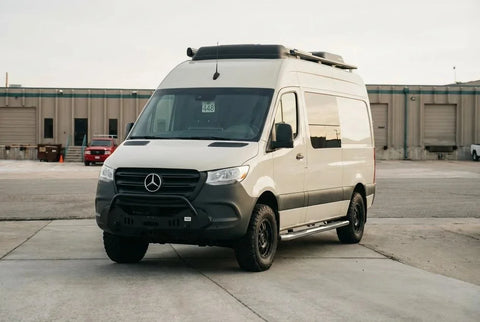
Factory guidance matters because a camper van is still a vehicle first, and Mercedes-Benz puts real engineering resources behind that idea. Its upfitting resources and its quality of workmanship guidance treat van modification as an engineering task, and its Upfitter Portal gives builders drawings, equipment bulletins, and handbooks to work from before anything gets cut, drilled, or mounted. For Sprinter shoppers, that means asking whether a Sprinter conversion was planned around Mercedes-Benz's own technical resources.
About 90% of our own customers choose a high-roof Sprinter for the stand-up room, and most mid-roof buyers add a pop-top later once they start living with the van day to day.
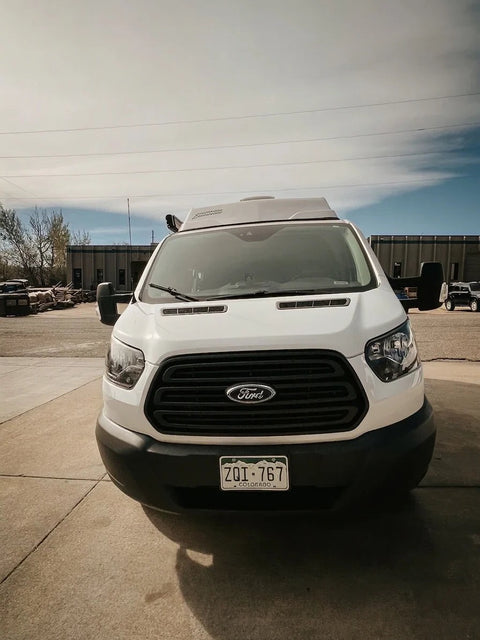
Ford backs the same idea with its own upfitter structure. Its RV upfitting page states that more motorhomes are built on Ford chassis than any other brand, and Ford's own Motorhome Guide frames the upfitter, the company that completes the conversion, as the final-stage manufacturer of the finished vehicle. For Transit conversions, ask how the builder fits into Ford's upfitter network and who is responsible as the final-stage manufacturer.

Who is accountable for your camper van after the sale?
The final-stage manufacturer concept matters because it clarifies who stands behind the finished camper van, separate from whoever built the base chassis. That question should have a simple, direct answer. If it feels vague, confidence usually drops with it. We think transparency about process is part of that answer. Our own build process runs about 12 weeks from start to finish across three named stages: a $2,500 deposit secures your build slot and starts design, 50% is due at design approval to order parts, and the remaining 25% is due at van drop off, with the balance due at pickup. Naming the stages and the money up front is a form of accountability you can check before you ever sign anything.
Our builder comparison page makes the same point from a different angle: what is harder to see from a spec sheet is who answers the phone after delivery, and whether the shop that quoted you is the same shop that builds and later services your van.
What do we bring firsthand?
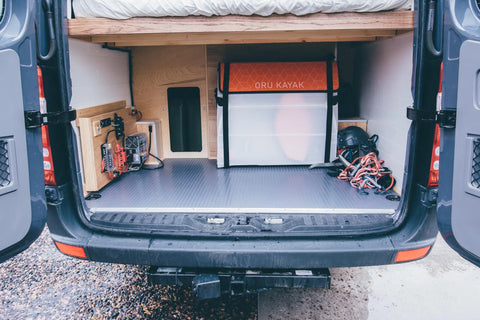
Most of the trust signals above come from RVIA, Mercedes-Benz, or Ford rather than from any one builder's own practices, so here is what we can speak to directly. We weld our own bedframes and bolt them directly to the van as an anchor for the cabinetry above, so the wood you see stays solid over years of real use. Every van we build carries a lifetime cabinet warranty for the original owner, covering our custom cabinetry and woodwork.

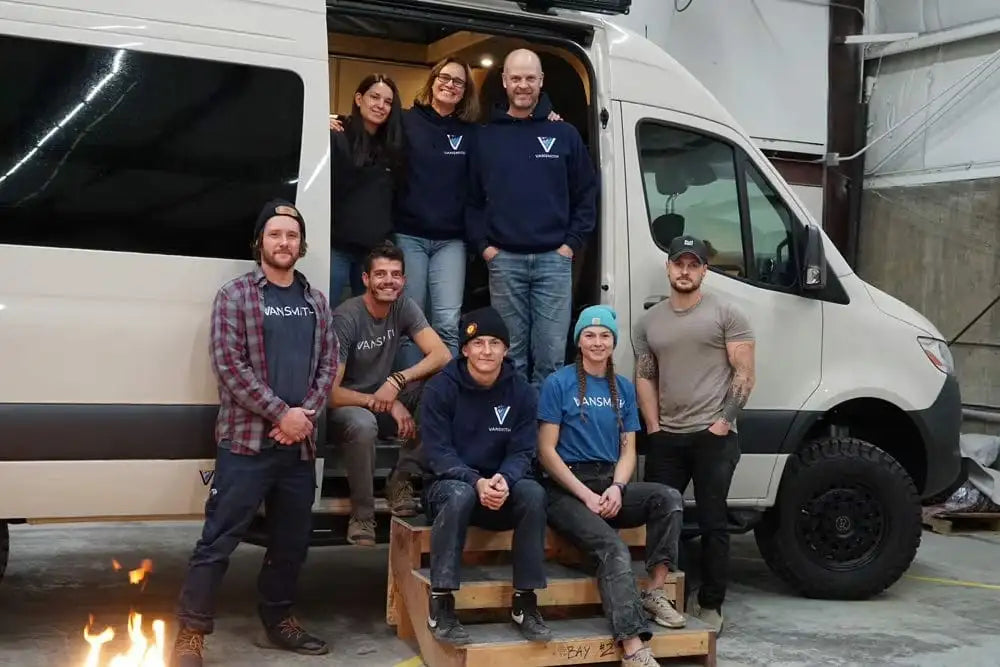
We were founded in 2016 by two cousins, a master mechanic who had built himself a tiny home and a marketing entrepreneur, and we have since built more than 300 vans from our shop in Boulder, Colorado. You can read more about that history on our about us page, and see how it shapes specific builds through pages like our design-build process or our foundation builds.
How do you evaluate a custom camper van before you buy?
Keep the framework simple. These are the five things worth checking before you commit to any builder.
| What to check | Why it matters | Where to verify it |
|---|---|---|
| Standards | Sets a real benchmark for safety and construction instead of marketing language | RVIA's adopted standards, including NFPA 1192 |
| Inspections | Confirms someone outside the shop is checking compliance, not just the shop itself | RVIA member facility inspections, every 6 to 8 weeks |
| OEM guidance | Keeps modifications inside the base vehicle's real engineering limits | Mercedes-Benz Upfitter Portal, Ford RV upfitting resources |
| Accountability | Clarifies who is responsible for the finished van, not just the chassis | Ford's final-stage manufacturer language, the builder's own written process |
| Post-sale support | Determines who you call if something needs fixing after delivery | Warranty terms, whether the builder still services what it sold |
Questions to ask before you buy
- Does the builder work within a standards framework recognized by RVIA, including NFPA 1192 and related ANSI and NEC references?
- Is the facility inspected by a third party on a recurring basis, and can they name the schedule?
- Were OEM technical resources used in planning the build, especially for a Sprinter or Transit conversion?
- Who is the final-stage manufacturer, and is that answer clear and direct?
- How is service handled after delivery, and is it the same shop that built the van?
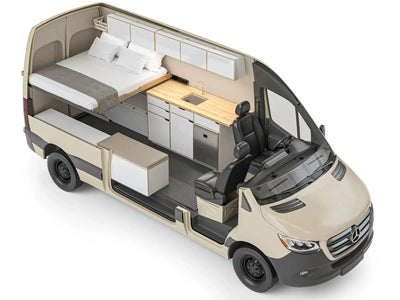
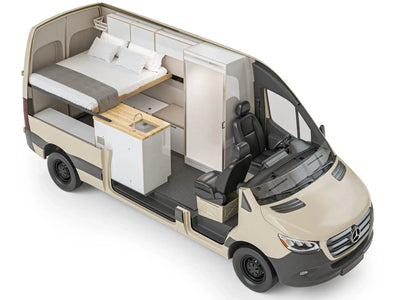
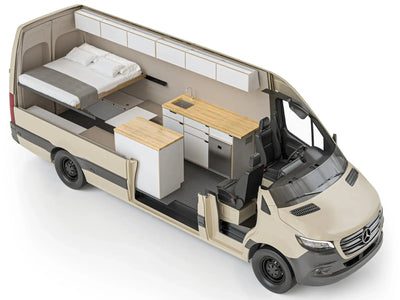
If you want more background before talking with a builder, our van build blog covers the language of a conversion without the jargon, and layouts like the DUO XL or the Family XL show how these standards translate into an actual finished van.
Red flags premium finishes can hide
- A builder who cannot explain standards, inspections, or accountability in plain language, and instead points back to how the van looks
- A Sprinter or Transit builder who seems disconnected from the OEM's own upfitter guidance
- Vague answers about who services the van after delivery, or a seller who is not the same company that built it
- Long lists of add-ons with little documentation behind how the base build itself was planned
If you are weighing layouts for shared travel, our vans for couples and family van conversions pages are a good place to see how design and support connect, and our DIY blog is useful if you are comparing owner upgrades against professional work.
FAQ
What should we look for in a custom camper van if we care about craftsmanship?
Start with proof of process, not appearance. RVIA's standards program includes more than 500 safety-related requirements, and member facilities are inspected on an unannounced basis every 6 to 8 weeks, so standards compliance and recurring inspection are stronger trust signals than finishes alone.
Does RVIA membership matter when buying a quality camper van?
Yes, because it points to outside verification. RVIA says member manufacturing facilities receive unannounced inspections every 6 to 8 weeks to audit compliance with adopted standards, which is a lot more useful than a one-time promise from the builder itself.
Why does OEM upfitter guidance matter on a Sprinter or Transit build?
It matters because Mercedes-Benz and Ford both maintain upfitter resources meant to keep conversions inside the vehicle's real engineering limits. Mercedes-Benz's portal includes drawings, bulletins, and handbooks, and Ford frames RV upfitting through its own dealer and builder network, so a build planned around either resource is less likely to fight the platform underneath it.
Who is responsible for the finished camper van conversion?
The upfitter is responsible, according to Ford's own Motorhome Guide, which identifies the company that completes the RV conversion as the final-stage manufacturer of the finished vehicle. That is a useful way to separate the base chassis maker's role from the company that actually finished and stands behind your van.
Are custom vans with luxury interiors automatically better built?
Not necessarily. RVIA's standards framework and Mercedes-Benz's workmanship guidance both point to compliant construction and documented process as the real measure of quality, and premium materials do not by themselves prove the work behind the walls was done well.
About the author

Eugene Smit
CEO
Eugene is the CEO of The Vansmith, based in Boulder, Colorado. He writes across topics related to van builds, ownership, and the camper van industry.
Read more about Eugene