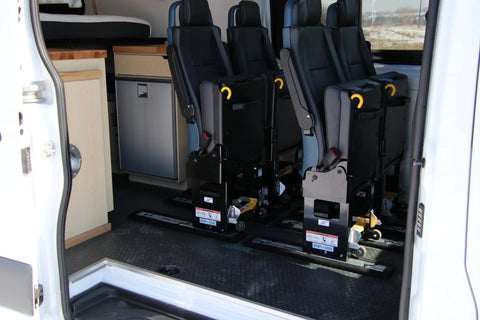
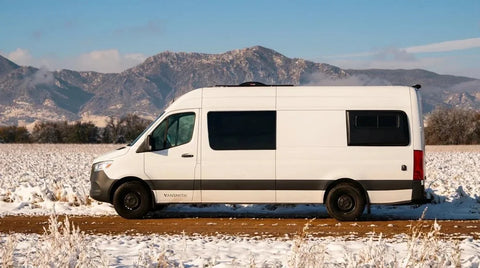
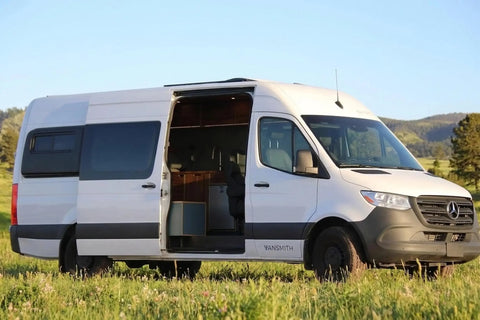
Small RVs usually fit better when you want more room, more storage, and easier family sleeping in one compact motorhome. Which side of that answer fits you comes down to how often you'll stay parked and live inside the rig versus using it as a mobile basecamp. A compact Class C or B+ tends to win on indoor comfort, while a van tends to win on parking, driving feel, and day-to-day ease. That split matters more than the badge on the side. In our shop, that's the question that sorts things fastest.
What counts as a small RV vs a camper van?
The clearest line comes from RVIA's motorhome categories. Type B means van camper. Type C means a cab or chassis with an attached coach body. That sounds dry, but it changes a lot in real use.
Once you move from a van shell to a wider coach body, you usually gain more storage, a larger bath, and more sleeping layout choices. You also change the driving feel and the overall footprint. Big difference.
Go RVing treats Class B as the smallest motorized RV type and Class C as the next step up in room and amenities. Winnebago's RV basics guide says much the same thing, with Class B as the shortest motorhome option and Class C as a mid-size choice often picked for family travel and more beds.
Then you get the gray area. Airstream's touring coach lineup shows how the market uses "B+" for rigs that start on a van chassis but add more body width or a roomier, more upscale interior than a classic van camper. That label helps marketing, but it doesn't always help the buyer.
For this article, the useful frame is simple. A small RV means a compact Class C or B+ that leans toward more living space. A van means a Class B or custom camper van that leans toward mobility and a smaller footprint. If you're still sorting layouts, our van build blog can help you see how those trade-offs play out inside a real floorplan.
In our Boulder shop, the confusion is rarely about the names. It's usually about whether you'll use the extra room enough to justify a larger body and a more RV-like driving feel. That's the real fork in the road.
Industry definitions that matter
Those industry terms matter because they point to what changes once the body gets wider. A true van camper keeps the narrow van shell, which helps with parking and road feel. A coach body usually opens up the bath, storage, and bed options, but it asks more of you every time you drive it.
Go RVing is helpful here because it explains the difference in plain buyer terms, not just category labels. You can see the split fast: Class B for mobility, Class C for more room and more classic RV living. That's a better lens than memorizing alphabet soup.
Winnebago also notes that Class B models are often favored by people who want a smaller footprint and easier use in tighter spaces. On the other side, Class C units are framed as a better fit for buyers who want more sleeping capacity and a more traditional RV interior. Those are very different ownership experiences.
Airstream's use of B+ is a reminder that the badge isn't the whole story. Focus on body width, layout, and feature set first. In practice, narrow-body van shell versus wider coach body is the distinction that tells you the most.
Why the category overlap confuses shoppers
Airstream is a good example of why shoppers get turned around. It sells traditional touring coaches and also the Atlas in a broader touring coach family, even though the Atlas uses a wide body and slide-out that make it function more like a compact RV than a conventional van. The name sounds close. The use case isn't.
The Atlas brochure leans on a Murphy-suite layout, a larger bathroom, and a slide-out living area. Those features show how much extra interior ease a wider-body design can create. If you've ever tried to get dressed in a tight aisle while someone else makes coffee, you already know why that matters.
Winnebago also points out that newer compact motorhomes can still feel approachable to drive, which narrows the mental gap for first-time buyers. So someone starts by searching small RVs, sees compact rigs that don't look huge, and wonders if a van is still enough. Fair question.
In the Boulder shop, buyers who cross-shop this category usually land on one question: do they want to live in the vehicle for longer stretches, or mainly use it as a mobile basecamp? That basecamp-versus-living-space split predicts satisfaction better than the label on the brochure. It comes up a lot.
When small RVs beat vans
 Winnebago's compact Class C vs Class B comparison says compact Class C models generally offer more living space and storage than camper vans. That's the strongest reason to choose a small RV. If indoor comfort comes first, the extra body volume pays you back every day.
Go RVing frames Class C models as a better fit for travelers who want more room to spread out and more traditional RV features. Camping World adds that Class C rigs often give you more space and features for the money than Class B vans. For some buyers, that's the whole ballgame.
Winnebago's basics guide also notes that Class C models are often picked by families because they can support more sleeping capacity than Class B vans. That matters if you need kid beds without tearing down your main bed every night. Rainy-day sanity counts too.
In practice, the happiest small RV owners tend to be the people who care more about indoor comfort on longer trips than trailhead parking or city maneuvering. If you already know you want an indoor shower, a larger bath, or an easier family sleep setup, a compact RV usually solves that with fewer compromises. That's hard to ignore.
If your trip style leans more outdoors but you still want a polished van interior, it's worth looking at our vans for couples and family van layouts before assuming you need to size up.
More room, storage, and family sleeping
Winnebago says compact Class C motorhomes give you more room to move around than Class B camper vans. You feel that in the aisle, in the lounge, and around the bed. A few extra inches of width can change the whole mood of a rig.
Storage is another big reason people move toward a compact RV. Winnebago highlights greater storage capacity in Class C layouts, which matters for bulky gear, longer trips, and family travel. Ski boots, camp chairs, kid stuff, dog gear, extra food, it all adds up fast.
Family sleeping is where the gap often gets obvious. Winnebago's RV basics guide points to Class C flexibility as a major family advantage, and Go RVing supports the same pattern. If you need permanent or semi-permanent beds for kids, a compact RV often gets there more easily than a van without a nightly shuffle.
In our experience, families who expect lots of bad-weather indoor time notice the extra width more than they notice the parking penalty. One thing a lot of builders overlook is how much smoother mornings feel when each person has a defined spot. That changes everything.
Bathrooms and kitchens are often the deciding factor
The Airstream Atlas is a clear example of what a compact RV-style package can do. Its larger bathroom and more residential interior show how a wider body can improve daily comfort in ways a narrow van shell often can't match. You don't need to imagine it. It's right there in the floorplan.
A wider body and slide-out create enough room for a more spacious bath and lounge than most van layouts can pull off. Winnebago's Class C versus Class B comparison backs up the broader point: buyers who choose the compact RV route usually gain a more feature-rich interior. Kitchens tend to grow too.
Camping World makes the same point from the value side, noting that Class C RVs generally provide more amenities than Class B vans, especially in kitchen and bath design. If your ideal morning includes a bigger galley and a less cramped bathroom routine, a small RV starts to make a lot of sense. Those things get used every day.
Inside a van, a true indoor shower and roomy toilet area eat up a large share of the floorplan. We see one regret come up again and again: buyers chase every residential feature in a van and end up with a layout that feels crowded all the time. Not always worth it.
When a van beats small RVs
Vans win when movement matters more than indoor square footage. Winnebago says Class B camper vans are easier to maneuver and park than compact Class C models, and its basics guide calls Class B the shortest motorhome category. That's the core case for a van.
Go RVing frames Class B models as the pick for people who care most about mobility and a smaller footprint. Airstream's touring coach lineup shows that plenty of buyers still want van-based proportions even at premium price points, because drivability is part of the value. You feel that every travel day.
For frequent one-night stops, city errands, ski-lot parking, or narrow-road travel, the van format tends to create less friction. In our shop, most buyers choose a van because they want a mobile basecamp first and a tiny apartment second. That phrase comes up a lot. Mobile basecamp first.
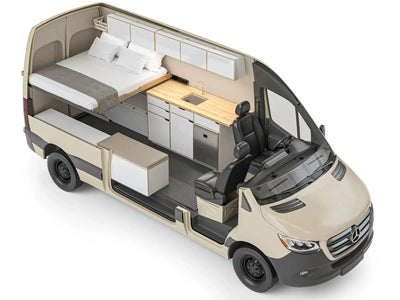
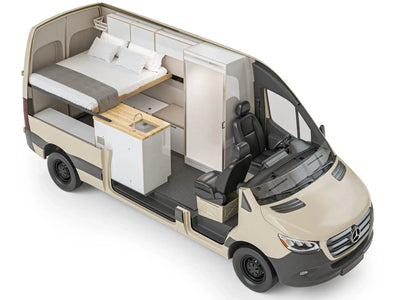
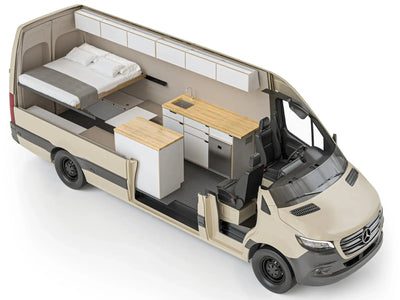
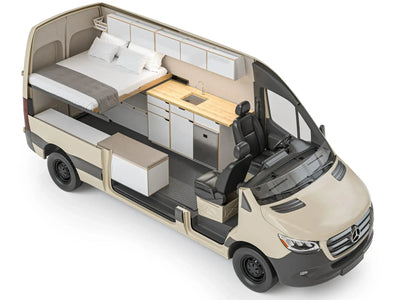
A well-designed van can still cover the basics for two or even a small family while staying closer to a vehicle people are comfortable driving often. If you're exploring layouts, our DUO XL layout and Family XL layout show how that trade can work without jumping to a wider coach body.
Driving, parking, and road-trip flexibility
Winnebago says the Class B edge is easier driving and parking, especially for buyers who feel nervous about a larger motorhome. Because a van stays closer to the original body size, it usually feels less intimidating at fuel stops, grocery stores, and urban intersections. That confidence matters.
Go RVing supports that use case by tying Class B rigs to easier mobility and smaller-space travel. Winnebago's basics guide points the same way, with Class B framed for tighter spaces and more agile movement. If you move camp often, this advantage never really turns off.
Airstream's continued investment in van-based touring coaches says a lot about buyer priorities. Many people are willing to pay for a premium interior and still keep the van-sized driving feel. That tells you the road feel is not a side issue. It's central.
In real use, the van edge shows up every time you pull into a downtown lot, a trailhead, or a neighborhood street. In one winter rush at the Boulder shop, a buyer summed it up in five words: "I just want easy parking." Hard to argue with that.
Why a van can feel more versatile than a compact RV
A van-based camper often fits buyers who want one vehicle to cover travel, gear hauling, and shorter everyday trips. Because the footprint stays closer to a normal vehicle, more routes and parking options stay open to you. That can change where you go, not just how you camp.
Go RVing supports the basic trade: Class B units give up some interior volume for easier mobility and simpler use. Winnebago adds that the smaller size can open more parking and route options. If your routine is built around moving, those options have real value.
For outdoor-focused travelers, the smaller shell often matches the way they actually use the rig. You're outside most of the day, then back inside to cook, sleep, and reset. Mobile basecamp first. That's usually the happier mindset.
In our Boulder builds, couple layouts work best when the owner accepts that a van is a very capable camp setup, not a downsized suburban house. If you want to see how that starts, our Foundation builds and Customize Your Van page are good next steps.
Cost and value: where small RVs or vans make more sense
Cost gets tricky because the cheapest option on paper is not always the best value in real life. Camping World says Class B vans often cost more per square foot, while Class C RVs usually offer more room and amenities for the money. So if your goal is max space per dollar, a compact RV often looks stronger.
Airstream's lineup shows the premium end clearly, where van-based touring coaches and B+ models can both carry luxury pricing even though they make very different space trades. Winnebago's comparison helps frame the better question: are you paying for more room, or for easier mobility? That's the value test.
On the van side, The Vansmith's semi-custom builds start in the premium custom-van range. As of 2026, a Transit Duo starts at $112,450, a Sprinter Duo at $114,450, a Transit Family at $117,450, and a Sprinter Family at $119,450. Semi-custom builds usually take 8 to 10 weeks, which gives you a useful benchmark against buying a finished small RV off the lot.
Most of our customers are choosing a van on purpose, not settling for one. They know the smaller footprint is part of the product. If you want to talk through timing or layout fit, our process page and contact page make that easy.
| Vansmith build | Platform | Starting price |
|---|---|---|
| Duo | Ford Transit | $112,450 |
| Duo | Mercedes Sprinter | $114,450 |
| Family | Ford Transit | $117,450 |
| Family | Mercedes Sprinter | $119,450 |
Why Class C often wins on value per square foot
Camping World says it plainly: Class C models tend to deliver more space and more amenities for the money than Class B vans. Winnebago supports that by pointing to the larger living and storage areas in compact Class C designs. If you plan to spend long stretches indoors, that can be very good value.
Go RVing also supports the idea that more room and more classic RV livability matter for some travelers. A bigger lounge, more storage, and a stronger family sleep setup can easily outweigh the hassle of a larger body. That depends on your trip style.
Still, more square footage does not automatically mean a better ownership feel. If you dislike driving or storing a larger vehicle, the value math changes fast. This is why the best value calculation includes how you travel, not just what fits on the spec sheet.
We've found that weekend movers often overestimate how much interior volume they need. They picture rainy days, but spend most trips outside. Then the bigger rig starts to feel like extra mass they drag around.
Where a premium van still makes financial sense
Airstream's touring coaches show that many buyers will pay premium pricing for van-based travel because the smaller footprint and easier driving are part of the product, not a compromise. That same logic applies to custom vans. You're buying use, not just square footage.
The Vansmith's Duo layouts are aimed at couples who want a refined, ready-to-travel van without moving into a larger RV class. The Family layouts are for buyers who need more sleeping capacity but still want to stay in a van platform. That's a real middle path.
Those 2026 starting prices give you a concrete budget range, from $112,450 for a Transit Duo to $119,450 for a Sprinter Family. Buyers also weigh long-term ownership details. The Vansmith offers a lifetime cabinet warranty, and as of 2026 the shop holds a 4.8-star Google rating across 85-plus reviews. Worth noting.
If you're leaning van, you can compare platforms directly through our Sprinter conversions and Transit conversions pages. Most of our customers pick high roof, and about 90 percent go that route. Many of the mid-roof buyers later add one of our pop-tops.
How to choose between small RVs and a van for your travel style
Winnebago's comparison gives the best simple lens: choose more room if you stay parked longer, and choose the van if you move often and care about easier driving. Go RVing supports the same split by putting Class B on the mobility side and Class C on the comfort side. That's the cleanest way to think about it.
Winnebago's basics guide adds one more useful point. Class C is often the family-oriented choice, while Class B is the smallest and most maneuverable motorhome type. Airstream's B and B+ lineup also shows there is a middle ground for buyers who want van-like drivability but are starting to want more comfort.
For couples, the choice usually comes down to cozy basecamp versus roomier indoor living. For families, the pivot is usually sleeping setup, rainy-day livability, and comfort with a wider, more RV-like vehicle. Those are the questions that tend to sort things out fastest.
If you're already leaning toward a van, the next step is usually not van versus RV anymore. It's couple-focused versus family-focused layout. That's where The Vansmith fits best, with a clear focus on Sprinter and Transit high-roof conversions rather than trying to cover every RV category.
Best fit for couples, solo travelers, and families
Solo travelers and couples who value mobility, frequent relocation, and simpler parking usually line up better with a van setup. Go RVing supports that pattern, and it matches what we hear every week. If the trip is about moving, a van keeps the friction low.
Couples planning longer stays or more indoor time may prefer the added lounge, bath, and kitchen room in a compact RV. That doesn't make the van wrong. It just means comfort inside the rig ranks higher than mobility outside it.
Families often benefit from Class C-style sleeping flexibility, which Winnebago points to as a major strength of that class. But a family that camps more like outdoor adventurers than indoor RV users may still prefer a van if the layout is built around gear, durability, and flexible sleeping. That's a different kind of family travel.
The Vansmith's Duo and Family split mirrors that real divide. Couples usually start with Duo. Parents with kids usually start with Family. Travel pattern beats label every time.
A simple decision framework the writer can use
Choose a small RV if your top needs are interior space, storage, a larger bath, and more sleeping flexibility. Choose a van if your top needs are maneuverability, easier parking, and a vehicle that feels closer to a daily driver. That's the short version.
If you want something in between, look at B+ style rigs that keep some van-chassis drivability while adding more room inside. If budget is tight and square footage matters most, compact Class C options usually bring stronger value than Class B vans. Those are fair trade-offs.
If you already know you want a van, the next choice is usually layout, not category. Couples can start with the couples collection. Families can start with the family van collection. If you want a custom path, head to Customize Your Van.
FAQ
Are small RVs better than camper vans?
It depends on what you care about most. Small RVs like compact Class C models usually give you more living space, more storage, and easier family sleeping layouts. Camper vans usually win on maneuverability, parking ease, and a smaller footprint, which is why they work so well as a mobile basecamp.
What is the difference between a small RV and a Class B van?
A Class B is the smallest motorhome category and uses a van body, while a compact Class C uses a cab or chassis with a larger attached coach body. In real use, that usually means the Class C gives you more interior room and sleeping capacity. The Class B is usually easier to drive and park.
Do small RVs cost less than vans?
Not always. Compact Class C RVs generally offer more space and amenities for the money than Class B vans, which often cost more per square foot. Premium custom vans also sit in a higher budget tier, and as of 2026 The Vansmith's Duo and Family builds start from $112,450 to $119,450 depending on platform and layout.
When should I choose small RVs over a van for family travel?
Choose a small RV when you need more sleeping flexibility, more indoor room on bad-weather days, or a larger bathroom and kitchen. Winnebago specifically positions Class C motorhomes as a popular family choice because they can support more sleeping capacity than Class B vans. If nightly bed setup sounds tiring, a compact RV often makes life easier.
Is a camper van better for couples than a compact RV?
For many couples, yes, especially if the goal is frequent movement, simpler parking, and a basecamp for outdoor travel rather than a larger indoor lounge. But couples planning longer stays or wanting a bigger bath may prefer the extra comfort of a compact RV or B+ layout. The better fit comes down to how much time you'll spend driving versus living inside.
About the author

Eugene Smit
CEO
Eugene is the CEO of The Vansmith, based in Boulder, Colorado. He writes across topics related to van builds, ownership, and the camper van industry.
Read more about Eugene