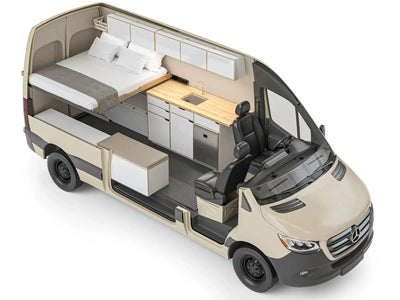
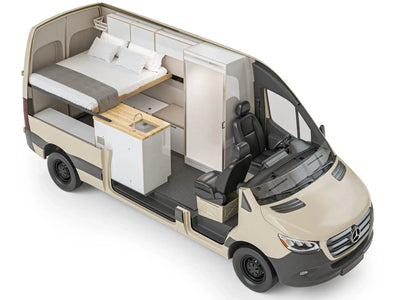
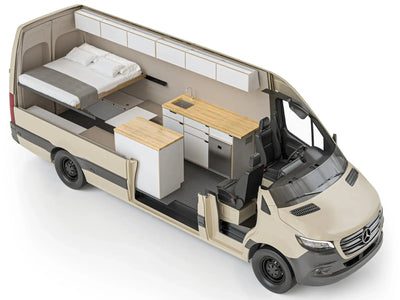
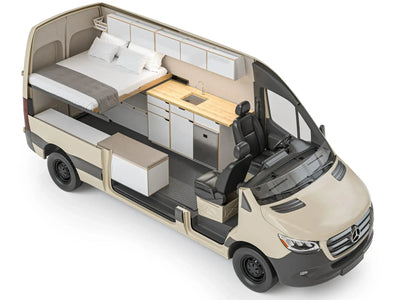
An rv for 6 people is rarely a true six-bed Class-B-style van. The key variable is whether all six people need to sleep inside every night, or if your real use is four inside with one or two overflow sleepers. That split changes everything. In most van layouts, the honest ceiling is four comfortable sleepers, with a fifth sometimes added by a cab insert and a sixth usually pushed to a tent or annex. If you want van size and van drivability, that trade-off is usually the whole decision.
The hard truth about an RV for 6 people in a Class-B-style van
 If you search for a family van that sleeps six, the market sounds bigger than it is. In current mainstream Class B vans, published sleeping capacity rarely goes past four. You can see that in the Winnebago Solis line, which is listed at up to four sleepers depending on floorplan.
That detail matters because the Solis is one of the best known family-friendly pop-top vans on the market. Even the Solis 59P and 59PX, both built around that family idea, still top out at four published sleepers. The roof bed helps a lot, but it doesn't turn a van into a bunkhouse.
Other brands show the same pattern. The Roadtrek Play+ Slumber brochure is a good example of how makers stretch the count. It sleeps four, or four plus one with an optional cab cushion. That's still not six true berths.
Then you get a reality check from the Airstream Interstate 24GL. Depending on layout, it can seat up to seven or nine people, yet its sleeping capacity is only up to two. That's why published floorplans and spec sheets matter more than loose marketing language, and why checking official claims through sources like RVIA is a smart habit.
For most families, the real choice is simpler than the search term. You either sleep four well in the van, sleep four inside plus one or two outside, or move up to another RV type for true six-person indoor sleeping. In our Boulder shop, the happiest family buyers decide that early. Trying to force both usually leads to layout regret.
If you're weighing actual van options, it helps to look at purpose-built family layouts like family vans and realistic roof-bed setups in The Vansmith's pop-top collection. Big difference.
Why seating capacity and sleeping capacity are not the same
This is where a lot of family buyers get tripped up. The Airstream Interstate 24GL can carry a lot of people in travel seats, but it still only sleeps up to two. A van can be a great road-trip people mover and still be a poor six-sleeper.
Published sleeping capacity is tied to actual bed layouts. Passenger capacity is tied to seatbelted travel positions. If you shop by "how many it holds," it's easy to overestimate what bedtime will feel like.
That matters even more for buyers using terms like rv to sleep 6 or motorhomes that sleep 6. Those searches sound like one spec, but they're really two different questions. One is about driving. The other is about sleeping.
Even family-focused Class B vans keep the sleep count modest. Winnebago's Solis line, which leans hard on the pop-top family idea, still stays capped at four. Roadtrek's optional cab cushion for a fifth sleeper shows how extra capacity often comes from improvised sleeping spots, not dedicated mattresses.
In our experience, families often come in counting travel seats first. Then they start thinking about who has to climb up, who needs bathroom access at night, and who ends up squeezed into the least comfortable berth. That's the real math.
As you compare layouts, check both numbers separately on the spec sheet. Then compare them to your real trip pattern. If you want to map that out with a builder, Customize Your Van is the right place to start.
What six sleepers usually means in practice
In a van, six sleepers usually means a stack of compromises. Think pop-top for two, rear bed for two, then a converted dinette, cab insert, or tent for one or two more. That's very different from six equal indoor beds.
The Roadtrek Play+ Slumber's "4 + 1" layout shows the pattern clearly. The extra spot comes from an optional cab cushion, which is useful for occasional overflow. It isn't the same as a full-time, dedicated bed zone.
Winnebago's Solis layouts tell the same story. The pop-top adds upper sleeping space in an efficient way, but the lower interior still has limited square footage. That's why the total remains four, even in a van built with families in mind.
Industry coverage also puts pop-top Class B vans in the small-family lane. Camping World's 2026 family RV guide treats them as a fit for smaller groups, not as true large-family six-sleeper rigs. If six people need to sleep under one hard roof every night, sources like RV.com's bunkhouse overview point buyers toward larger RV categories for a reason.
We'd skip the fantasy of six equal beds in a standard van. Most families are happier with four strong berths and honest overflow. In first-hand build talks, that's what tends to hold up after the honeymoon trip.
The three realistic ways to sleep six in a van-like RV
 Once you strip away the marketing haze, there are really three paths. First, you can use a pop-top plus rear bed plus some kind of convertible lower berth. Second, you can sleep four inside and add a tent or annex for one or two more. Third, you can admit six indoor sleepers is the main goal and move up to a bunkhouse-style motorhome.
The first path is the closest thing to a six-person van formula, but factory examples still usually land at four official sleepers. The second path is often the sweet spot because it keeps the van usable by day. The third path gives you the bed count, but you give up a lot of the van feel.
That trade-off is the whole decision. If you want a true van footprint, you usually have to accept flexible sleeping. If you want six equal indoor beds every night, a van is usually the wrong tool.
For families who still want a van platform, it helps to compare layouts built around that reality. The Vansmith's Family XL layout and build process are useful reference points because the conversation starts with use, not inflated occupancy claims.
Option 1: Pop-top plus interior beds
The pop-top strategy is the most efficient way to add sleeping room in a van. The Solis is the clearest mainstream example. The roof bed adds space for about two people without making the body much longer.
Winnebago's own comparison of Solis models shows how this works in practice. The 59PX sleeps four by pairing the pop-top with a Murphy+ bed arrangement, so the lower furniture has to do more than one job. That's smart packaging, but it also means more setup each night.
Roadtrek uses the same basic idea. You get upper sleeping in the pop-top, a lower bed, and maybe a cab insert for one more. Every extra sleeper beyond the main lower bed usually comes from converting lounge or cab space.
The upside is drivability. Pop-tops add a second bed zone without asking you to drive a much bigger rig. The limit is comfort. For most families, this strategy tops out at four comfortable sleepers unless everyone is small or very tolerant of tight quarters.
One thing a lot of builders overlook is kid size over time. Two small kids can share space in ways two teens can't. So the same "sleeps 4" claim can feel roomy one year and cramped three summers later.
Option 2: Pop-top van plus tent or annex
This is often the most realistic path to six total sleepers while keeping a van-sized RV. Mainstream pop-top vans commonly publish sleeping capacity of four, so adding a tent or annex is the cleanest way to reach six without wrecking the daytime layout.
It works best for occasional guests, older kids who want some privacy, or fair-weather trips. Camping World's 2026 family guide supports that view. Outside sleeping is much easier to live with when the weather is mild and the extra sleepers aren't there every single trip.
You also keep more of the van's interior function. Instead of turning every bench and walkway into a micro-berth, you preserve room to sit, cook, and move around. After a long drive, that matters.
The trade-off is obvious. Exterior sleepers are more exposed to weather and add setup time. That sounds like a lot of money for a bed. It is. But if you only need six sleeping spots a few weekends a year, it can still be a better fit than buying a larger RV you don't want to drive the other 90% of the time.
In Boulder-area family use, this is often the sweet spot. Keep four comfortable berths in the van. Treat the extra one or two spots as seasonal overflow. If that sounds like your use case, take a look at Vans with pop-tops and Sprinter conversions.
Option 3: Move up if six must sleep inside
If six indoor sleepers are non-negotiable, larger bunkhouse motorhomes exist for exactly that reason. RV.com's bunkhouse coverage makes the point well. Dedicated bunks are the standard family answer once bed count becomes the top priority.
That matters because bunks are uncommon in true Class B vans. They're common in larger motorhomes designed around family occupancy. If six people need indoor beds every night, dedicated berths beat nightly furniture conversions.
Camping World's 2026 family guide lands in the same place. Larger RV categories are usually the natural fit for larger families, while pop-top vans fit smaller groups better. You lose compact size, easier parking, and simpler drivability, but you gain sleep count and fewer bedtime gymnastics.
We try to be plain about this. If your real need is six indoor beds every night, we'd rather say a van isn't the right answer than force one. Families who decide they value van agility more than six indoor beds are usually much happier once they own the thing.
Costs and value: what you pay for each sleeping strategy
 Families searching for an rv to sleep 6 are usually comparing compromises, not just floorplans. So cost has to be part of the talk. A higher price inside the Class B world does not automatically buy more beds.
The Airstream Interstate 24GL is the clearest example. It's a premium touring coach, but published sleeping capacity is still only up to two. That means the value question is not "how expensive is it?" It's "how well does this layout turn a small footprint into usable sleep?"
In our shop, that value talk usually comes down to this. Do you want a van that works brilliantly for four and occasionally for six, or do you want a larger RV whose main edge is permanent indoor bed count? That's a very different kind of purchase.
| Option | Starting point | Sleep reality |
|---|---|---|
| Vansmith Sprinter Family | $119,450 | Family-focused van layout, best for 4 inside with flexible overflow |
| Vansmith Transit Family | $117,450 | Family-focused van layout, best for 4 inside with flexible overflow |
| Vansmith semi-custom build time | 8 to 10 weeks | Good fit if you can plan ahead for a travel season |
| Vansmith Bivy models | Ready-to-drive | Faster path if you want a completed van now |
That table is the practical lens. A family van can be a very smart buy if your normal crew is four and your extra sleepers are occasional. If six indoor beds are the main thing you are paying for, a van usually isn't the most direct use of your money.
Why premium vans still may not solve six-person sleeping
The Airstream Interstate 24GL is a caution flag here. You can spend premium money, get multiple travel seats and a polished touring setup, and still only have room for two sleepers. Budget and bed count do not move in lockstep.
Sleeping capacity depends more on floorplan architecture, roof setup, and convertible furniture than on luxury branding. Pop-top designs usually give better family sleep value because they create a second bed zone overhead. Lounge-focused touring coaches often spend that space on travel comfort instead.
Roadtrek's optional cab cushion makes the same point from the other side. Some extra capacity comes from simple add-ons, not from full dedicated bed systems. So for this keyword, the better metric is value per sleeper and quality of sleep, not sticker shock alone.
If you're comparing platform choices, it's worth browsing both Transit conversions and Sprinter conversions. The right answer often starts with how your family sleeps, not which badge is on the grille.
A concrete Vansmith reference point for family buyers
As of 2026, The Vansmith's Sprinter Family starts at $119,450 and the Transit Family starts at $117,450. Those are concrete benchmarks for a family-oriented van build. They give you a real number to work from instead of vague custom-build language.
Semi-custom builds typically take about 8 to 10 weeks. That's short enough to matter if you're planning around summer travel or a school break. If you want a completed van instead of a build queue, Bivy models are sold ready-to-drive.
The Boulder location also matters for Front Range families who want in-person design talks and follow-up support. As of 2026, the company carries a 4.8-star Google rating across 85-plus reviews, and there's a lifetime cabinet warranty. For family use, that warranty is practical because kids, gear, and repeated bed conversions put cabinets to work.
If your plan is a realistic four-inside family van with honest overflow, these are the pages to see next: family van conversions, pop-top vans, and contact The Vansmith. That's a better next step than chasing a six-inside promise that most vans can't keep.
Trade-offs families actually feel after the purchase
Every path to six sleepers in a van-like RV comes with trade-offs. The big ones are drivability, nightly setup, weather, privacy, and daytime living space. None of those show up well in a headline sleep count.
Pop-tops add sleeping room in a very efficient way, but they usually add space for only two people. Convertible lower beds make a van more flexible, but they also eat lounge space and add setup each night. Cab-bed inserts can help on paper, yet they're often the least comfortable spots in the whole van.
Tent or annex overflow is more honest than pretending every walkway is a bed. Still, it adds weather dependence and campsite setup. If your family travels often in rough weather with six people every night, the trade-offs usually point away from a Class-B-style van.
Our role in this kind of decision is simple. Help you choose the right compromise, not pretend there isn't one. That's the whole decision.
Setup, comfort, and weather trade-offs
Winnebago's Solis comparison content shows how lower furniture can do double duty through Murphy-style beds. That's clever use of space, but it means someone has to set it up and tear it down. Night after night, that routine starts to matter.
Roadtrek's optional cab cushion is useful for occasional overflow, but it also shows that not all sleeping spots are equal. Some are easier to access. Some are more comfortable. Some are fine for one weekend and annoying by the third rainy night.
Outside sleeping is easiest to justify in mild weather. Once rain, wind, cold, or a packed campground show up, the gap between inside and outside sleepers gets pretty obvious. Larger hard-roof bunkhouse layouts avoid most of those nightly decisions because the beds stay made.
Families should think about bedtime logistics, not just body count. Who climbs into the pop-top. Who needs bathroom access. Who can handle the least convenient berth. In our shop, the smoothest outcomes happen when the worst bed is saved for occasional guests, not the same family member every night.
Who should choose a van anyway
A van still makes a lot of sense for the right family. If your top goals are compact size, easier driving, and flexible adventure travel, a van can be a great fit. That's especially true if your usual crew is three or four people.
Pop-top family vans are strongest when the fifth or sixth sleeper is occasional. They are a weaker fit when six people will travel together in poor weather or on long trips and all expect equal indoor comfort every night. That's where the van shape starts fighting the mission.
The Airstream Interstate 24GL also reminds us that some buyers really want a touring-coach setup, not a family sleeper. More travel seats and road comfort can matter more than bed count for some trips. That's fine, as long as you know which problem you're solving.
The right answer is not the van with the biggest claim. It's the layout whose compromises match how your family actually travels. If that points you toward a van, pages like DUO XL and Your Van Build can help you picture how daily use really works.
How to choose the right family layout instead of chasing a 'sleeps 6' label
Start with one question. Do six people need beds every night, or only on a few trips each year? That answer usually tells you if a van is realistic.
If six indoor sleepers are non-negotiable, current RV coverage points toward bunkhouse motorhomes. If your goal is van drivability with occasional extra capacity, a pop-top van with four interior berths and a tent or annex for one or two more is the most realistic strategy. Buying around your normal crew usually leads to a better layout than buying around your largest possible group.
Also, verify both sleeping capacity and travel seating on official spec sheets before you buy. That's the safest habit in this whole category. Search terms can blur those numbers, but the floorplan won't.
For readers who want a custom family van grounded in real trade-offs, The Vansmith is a concrete next step. The conversation starts with how you camp, who sleeps where, and how often those extra sleepers show up.
Questions to answer before buying
How many people usually travel, and how many only join now and then? That one filter separates most good van fits from bad ones. A family of four with two occasional guests shops very differently than a family of six that travels together every month.
Next, think about who those extra sleepers are. Children, teens, and adults fit very differently in pop-tops, converted dinettes, and cab cushions. Body size changes what a published sleep count feels like in real life.
Then look at weather and setup tolerance. Fair-weather campers can make outside overflow work much more easily. Families who hate nightly bed conversions usually feel that fast, especially on longer trips.
Last, decide which matters more: drivability or bed count. That is the central trade-off between a van and a bunkhouse motorhome. In our layout talks, these are the exact questions that lead to the best outcomes.
Where The Vansmith fits for family buyers
The Vansmith's family-focused layouts and pop-top options make the most sense for buyers who want a van platform first. Flexible sleeping comes second. That's the honest fit.
As of 2026, the Sprinter Family starts at $119,450 and the Transit Family starts at $117,450. Semi-custom builds take 8 to 10 weeks, and the lifetime cabinet warranty matters in family use because storage and bed platforms see more wear. The 4.8-star Google rating across 85-plus reviews gives you a real trust marker without the fluff.
If you're deciding between a true family van and a larger RV class, the best next move is to talk through your real sleeping pattern. Start with Vans with Poptops, Vans for Families, or Customize Your Van. That's where the use case gets clear fast.
FAQ
Can an rv for 6 people really be a Class-B-style van?
Usually not if you mean six true indoor sleepers. Current mainstream pop-top vans like the Winnebago Solis top out at four sleepers, while Roadtrek's Play+ Slumber reaches four plus one with an optional cab cushion. That shows how rare a real six-sleeper van is in this segment.
What is the most realistic way for a van to sleep 6?
The most realistic setup is four sleeping inside the van and one or two more in a tent or annex. That matches current manufacturer realities much better than expecting a standard Class B floorplan to provide six equal indoor beds. For many families, it's the cleanest compromise.
Does seating for 6 or 7 mean a van sleeps 6?
No. The Airstream Interstate 24GL can seat up to seven or nine depending on layout, but its sleeping capacity is only up to two. That's why you need to check travel seating and sleeping capacity as separate specs.
Are pop-top vans the best rv to sleep 6 for a family?
They're the best van-based compromise, not the best true six-sleeper. A pop-top usually adds sleeping room for two, and current examples like the Solis still publish a total sleeping capacity of four rather than six. They work best when your normal crew is smaller and the extra sleepers are occasional.
When should a family skip the van and buy a larger motorhome that sleeps 6?
If six people need to sleep inside every night, especially in bad weather, a bunkhouse-style motorhome is usually the better fit. Dedicated bunks solve the problem more directly than nightly conversions or outside overflow. You give up some van ease, but you gain a much better bedtime setup.
What does The Vansmith offer for families who want a van anyway?
As of 2026, The Vansmith's Sprinter Family starts at $119,450 and the Transit Family starts at $117,450, with semi-custom builds typically taking 8 to 10 weeks. That makes The Vansmith a concrete option for families who want a realistic four-inside family van with flexible overflow sleeping. It's a better fit for van-first buyers than for families chasing an unrealistic six-inside claim.
About the author

Santiago Pere
Chief Design Engineer
Santiago is Chief Design Engineer at The Vansmith. He writes on topics spanning van design, builds, and life on the road.
Read more about Santiago