Campfire games work best when you match them to your group size, your kids' ages, and how quiet your campsite needs to be. Which game fits you comes down to three things: how many people are in the circle, how long their attention will last, and whether you need low-noise play after dark. In most camps, the winners are simple, seated, no-equipment games that start fast and end before kids melt down. That's even more true on van trips, where people are already settled in by the fire with snacks, cocoa, or a mug in hand.
How to choose campfire games that fit your campsite
Campfire games don't need to feel like an extra event. In Girl Scouts camp guidance, games sit right alongside songs as part of normal campfire time. That matters because it shifts the goal from filling an hour to keeping the evening moving well.
The same guide makes two points that a lot of parents learn the hard way. Make sure everyone gets the directions before you start, and don't let a game run too long. Around a fire, especially with younger kids, a short good round beats a dragged-out one every time.
Low-noise play is a real category, not a compromise. Scouting America has a section called Quiet Games Without Equipment, which tells you camps have needed this forever. KOA takes a wider view in its camping games roundup, mixing active games, table games, and talk-based games, so it makes sense to sort by energy level first.
That same idea shows up in a YMCA verbal game example and in Hardie Grant's family camping games book, both of which lean toward simple seated play with little or no gear. Small van camps replay the same few games for one reason: they need no props, start in under a minute, and still work after dark. If you're already parked in a tight site, that's the whole game.
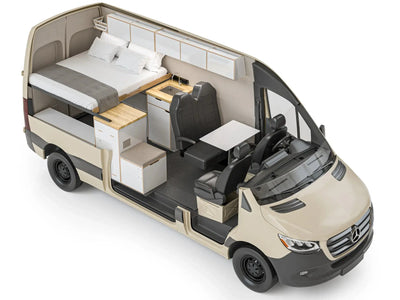
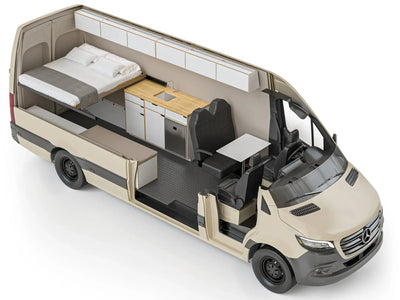
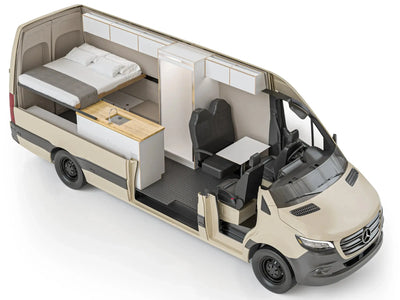
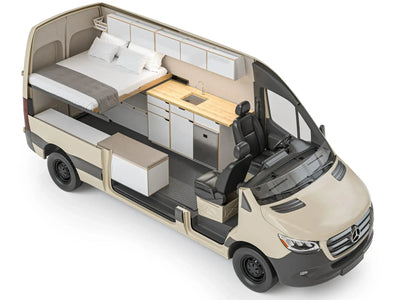
If your evenings tend to center on a family-oriented layout like the Family XL, this kind of low-setup camp routine fits naturally. You don't need to unload half the van to make the night feel fun.
Match the game to group size, age, and noise level
Quiet, no-equipment games shine when the point is to wind down. Scouting America's quiet category is best for smaller circles where everyone can hear a clue, a pattern, or a funny wrong guess. Those games lose their charm if half the group is too far from the fire ring to catch what's being said.
Younger groups usually need faster turns and simpler rules. Girl Scouts' guidance on attention span and clear directions is a good reminder that long elimination formats often fall apart before they get good. Kids don't mind repeating a fun round. They do mind waiting.
Medium groups have more room to flex. KOA's list is useful here because it includes games that can work with a few campers or a bigger family gathering. The Scout Association also points toward minimal-equipment activities, which helps when the game starts because someone says, "What should we do now?" and not because you planned a full activity block.
The YMCA's verbal format works best when everyone can hear each answer. That makes it a strong fit for small to medium circles, not a scattered crowd. On family van trips, the easiest win is usually one adult-led game for 4 to 8 people and one backup game for bedtime wind-down.
If you're still figuring out how your evenings flow on the road, the Vansmith van build blog and our process page help show how real travel routines shape design choices. Camp life is easier when your setup supports calm evenings instead of clutter.
Why no-equipment games usually win at camp
The Scout Association's minimal-equipment activities are a strong backbone for campfire play because they assume real camp conditions. Wind happens. Kids wander. Flashlights go missing. Games that survive all that tend to be the ones people actually use.
Scouting America's quiet-game section strips equipment out on purpose. That shifts the focus to listening, memory, and observation instead of passing around objects. It also cuts down the little delays that break momentum, like finding cards, clearing a bench, or deciding who holds what.
Hardie Grant makes the same point in a family-camping context by calling out little-or-no-equipment play as a core feature. KOA's wider list is still helpful, but not every camping game belongs at a fire after dark. Some are better for daylight, a picnic table, or a bigger open patch of ground.
For van travel, no-equipment games are usually the repeat winners because they don't compete with bedding, food bins, jackets, or kid gear. Families in tighter campground layouts also tend to like games that stay inside the circle instead of drifting into the road or the next site. If you're building a van for family trips, pages like family van conversions and Foundation builds line up with that same idea: less fuss, more use.
Best campfire games for small groups and quiet camps
Small-group campfire games work because everyone gets to play every round. You don't sit there waiting through five turns for your next chance. That's why word games, memory games, and deduction games feel so good with 2 to 6 people.
Scouting America's quiet no-equipment section makes it clear that quiet campfire games are their own lane. That's useful in campgrounds where sound carries after dark and nobody wants to be the loud site. Girl Scouts' advice to keep games concise matters even more when younger kids are already tired.
Hardie Grant's family-camping focus also points toward sitting-around-the-fire play instead of running games. Quiet evening games come up a lot with couples and small families. People use them because they work. They also work because no one has to clear a table or unpack pieces from a storage bin.
If your trips are mostly for two, a page like vans for couples gives a good picture of how many camp nights are really spent: simple dinner, short fire, one easy game, then bed. No one wants a production at 9 p.m.
Quiet no-equipment games that work with 2-6 people
The YMCA's "Going on a camping trip" is one of the best-known examples. It's a verbal deduction game, it needs no gear, and it fits a seated circle well. Older kids and adults get a real puzzle to solve, which keeps it from feeling like baby stuff.
Because the game leans on observation and reasoning, it works even when nobody wants to stand up. That's handy on cold nights, windy nights, or those nights when the fire feels great but leaving your chair does not. Quiet no-equipment games also scale down cleanly for couples, where one person leads and the other guesses.
Scouting America's quiet-games section is a strong place to pull backups for this group size. In compact campsites, low-voice games help avoid that familiar bedtime problem where kids get more wound up right before you want them asleep. We'd skip any game that needs shouting across the ring. Most people regret that choice by round three.
That sounds a little strict for a vacation night. It is. But if you've ever tried to settle kids in a van after a loud game, you know why quiet wins.
Storytelling and guessing games for mixed ages
Mixed-age groups need games that don't depend on speed, size, or athletic skill. KOA's family-oriented roundup supports that kind of casual play, and Hardie Grant points in the same direction with family campfire games built around simple group fun. Those are the games where a six-year-old can jump in and a grandparent doesn't feel left out.
The YMCA camping-trip format is especially useful because you can tune the difficulty. Adults can make the pattern harder, while younger kids can just enjoy guessing and listening. That's a good sign in a family game. It bends without breaking.
Girl Scouts' note about clear directions matters a lot here. Guessing games die fast when half the circle is confused about what counts as a turn. Mixed-age success usually comes from games where younger kids can play imperfectly without stopping the whole round.
It is easy to overlook how short the rule window really is at camp. If the rules take more than a minute to explain, people drift back to snacks and side talk. That's not failure. It's just a clue you picked the wrong game.
Campfire games for families with kids
For family use, the Girl Scouts Summer Camp Game Book is one of the better sources because it comes from actual camp programming. It isn't just a lifestyle list. The Scout Association's minimal-equipment activities help for the same reason. They lower the barrier to joining in.
Hardie Grant explicitly centers families, kids, campfires, and little-or-no-equipment play. Girl Scouts' troop camping guidance also frames games as part of a full evening routine, not random filler between snacks. That's a useful way to think about it if you're traveling with kids in a van and trying to keep the night smooth.
In real camp use, family games often land best in the 10 to 20 minute range before cocoa, brushing teeth, or bedtime takes over. Parents usually get better results from one easy repeatable favorite than from trying four new games in one night.
If you're planning trips around kid-friendly layouts, the Vansmith DUO XL layout and Sprinter conversions pages show how many families build around easy evening flow. A calm camp routine starts long before the fire gets lit.
Best options for younger kids
Younger kids need simple rules and quick starts. Girl Scouts' camping guidance stresses making sure everyone understands the directions, and that's the whole ballgame with little kids. If the youngest child can't tell what winning means, the game usually turns into side chat within a few rounds.
The Summer Camp Game Book is useful here because many camp activities can be adapted to a seated fire circle. The Scout Association's minimal-equipment ideas also help because they cut waiting time and keep the focus on taking part, not handling gear. Hardie Grant reinforces the same point: little-or-no-equipment games fit younger attention spans better.
Younger kids do best with call-and-response, memory, or simple guessing formats. Bluffing games and hidden-rule logic usually ask too much too late in the day. After s'mores, simple is smart.
Best options for older kids and tweens
Older kids and tweens usually want more to solve. That's where the YMCA camping-trip game shines, because deduction and pattern recognition are part of the fun. It gives them a reason to stay locked in instead of just waiting for their turn to say something silly.
Scouting America's quiet no-equipment category can also work well here when the game rewards attention, listening, and social awareness. KOA's broader family list helps bridge adults and older kids, especially in campgrounds where the group includes cousins, neighbors, or another family from the next site over.
The Girl Scouts game-book format is handy because you can make games harder with faster pacing or stricter rules. On family van trips, older siblings often become the best facilitators once they know the format. That's a nice shift. Adults get to step back for a round.
Games to play around a campfire with medium and large groups
Medium and large groups need a different filter. KOA is one of the better sources here because its roundup includes several group-friendly camping games that can be adapted for evening use. The Girl Scouts game book also helps because it comes from a group-program setting, where one leader often guides a whole circle.
The Scout Association's minimal-equipment angle matters even more when a bigger group forms on the fly. Nobody wants to realize there aren't enough cards, seats, or pieces for everyone. For campfire circles, larger-group games work best when everyone stays mentally involved, even if only one person talks at a time.
The bigger the group gets, the more simple the turns need to be. Girl Scouts' advice about clear directions becomes even more important here, because one fuzzy rule can stall the whole thing. At multi-family camps, a game that scales from 6 to 12 people is usually more useful than splitting into separate circles right away.
If your travel crew changes from trip to trip, it helps to design for flexibility in both camp life and van layout. That same thinking shows up on the Transit conversions page and on Customize your van, where adaptable use matters as much as looks.
What works best for 6-10 people
A 6 to 10 person circle is often the sweet spot. KOA's list fits well here because many family camping games still work when everyone can hear and respond without shouting. The Girl Scouts game-book format also helps because one person can lead while the group follows a clear pattern.
Scouts' minimal-equipment activities avoid the common problem of not having enough pieces or props for everyone. This group size is where memory-chain games, guessing games, and themed storytelling feel most balanced. You get enough voices for variety, but not so many that turns drag.
If a game depends on one person whispering or hiding information, 6 to 10 people is usually the upper limit before side chatter takes over. Past that point, you need either very tight pacing or a different format.
How to keep larger circles engaged
Large circles live or die on clear directions. Girl Scouts' camp guidance matters more here than almost anywhere else, because one unclear rule can stop a dozen people at once. KOA's family-camping view also helps because bigger groups often mix ages and energy levels.
The Scout Association's minimal-equipment approach is practical for large groups because it avoids bottlenecks around a single object or board. Hardie Grant's family-camping framing points toward social, inclusive play instead of side competitions that leave half the circle watching.
For larger groups, the best leaders keep rounds short and rotate who starts. That helps quieter kids stay visible. If a campfire group grows past about 10 people, splitting adults and little kids for one round can work better than forcing one game to fit everyone.
The easiest no-equipment camping games to keep in your back pocket
The Scout Association's minimal-equipment resource is the clearest base for a no-equipment section because it starts from low-gear play. Scouting America's quiet-games section adds an important filter: no equipment alone is not enough if the campsite also calls for low noise and low movement. That's a big difference.
The YMCA camping-trip game gives you one concrete named option that works seated around a fire. Hardie Grant reinforces why that matters for families, and KOA helps by showing the contrast between true no-equipment campfire games and activities that are better for picnic tables, daylight, or open ground.
For van travel, these are the games most likely to get used again and again because they don't require digging through storage at the end of a long day. If your camp style leans simple and road-focused, the Vansmith DIY blog and contact page are good next stops for thinking through practical travel setups. The less gear you need at night, the better.
A simple shortlist to memorize before your next trip
You don't need 20 games in your head. Most campers need 3 to 5 reliable ones that fit different moods and age mixes. A smart shortlist includes one deduction game, one memory game, one storytelling game, and one very simple kid game.
The YMCA camping-trip game is the clearest deduction pick here. Scouting America's quiet no-equipment section is the best place to pull a lower-energy backup. The Girl Scouts game book and camping guide support keeping one kid-friendly standby that can be explained fast and stopped fast.
The most reusable campfire games are the ones you can start without a flashlight, table, cards, or cleanup. That matters more than variety. If a game is easy to remember, you'll actually use it.
When to skip the game and just tell stories
Girl Scouts' campfire framing makes room for more than games. Songs, stories, and shared moments belong there too. Hardie Grant's family campfire angle suggests the same thing: some of the best campfire time is more imaginative than competitive.
The YMCA verbal-game example sits very close to storytelling already, especially in a small circle. KOA's broader family activity view also supports treating campfire time as flexible. Games work best when the group still has energy and attention to give.
If kids are cold, overtired, or sugared up from s'mores, a short story round often works better than forcing one more game. Some of the best van-camp evenings are the simplest ones: one easy game, then stories, then bed with the slider closed and the heater on.
FAQ
What are the best campfire games if you have no equipment?
The best no-equipment campfire games are usually verbal, seated, and easy to explain. Scouting America specifically highlights quiet games without equipment, which is a strong fit for campgrounds and bedtime hours. The YMCA's "Going on a camping trip" is also a solid example because it works with no props and still gives older kids and adults something to solve.
Which campfire games work best for young kids?
Young kids usually do best with very simple rules, short rounds, and clear directions. Girl Scouts' camping guidance says to make sure everyone understands the rules and not let a game run too long, which lines up well with quick guessing and call-and-response formats. In practice, the easier the win condition is to understand, the better the game holds together.
Are there quiet games to play around a campfire in a campground?
Yes. Quiet campfire games are a real category, not just a fallback. Scouting America has a dedicated quiet no-equipment section, and the YMCA's camp-style verbal game also fits small, seated, low-noise campground settings well. Those games are often the best fit when campsites are close together and sound carries.
What are good campfire games for a mixed-age family?
Mixed-age families usually do best with games built around listening, memory, storytelling, or light guessing. KOA's family camping roundup and Hardie Grant's family camping games both support low-setup play that can include kids and adults at the same fire ring. The key is picking a format where younger kids can join in without slowing every round down.
How many campfire games should you plan for one evening?
One or two is usually enough, especially with kids. Girl Scouts' camp guidance advises not letting a game run too long, and that fits real camp use well. A short game plus snacks, songs, or stories tends to work better than trying to run a full evening schedule.
About the author

Carin Smit
President
Carin is President of The Vansmith. She writes on a range of topics tied to the business, from vans and builds to the broader vanlife world.
Read more about Carin