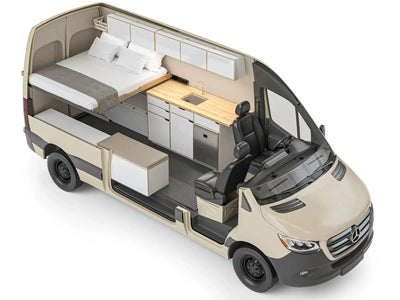
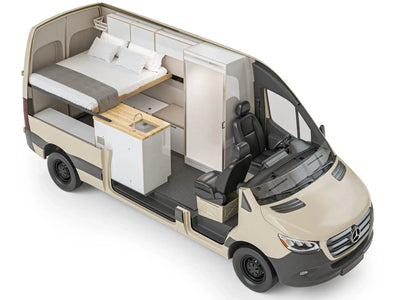
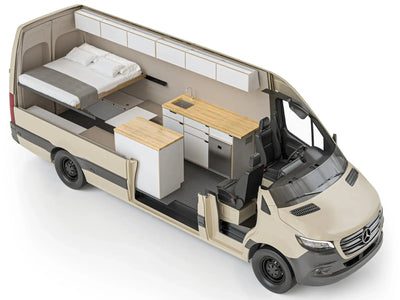
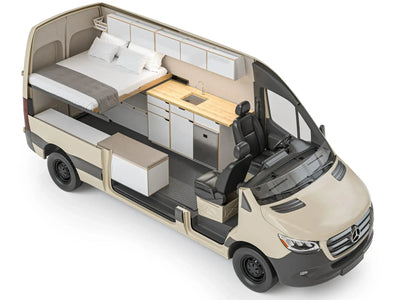
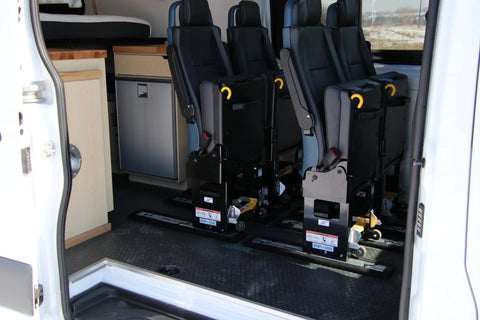
A family camper van layout works best when you start with safe belted travel seats, then choose sleeping for four, then sort out storage. Which setup fits you depends most on your child-seat stage, because rear-facing seats, boosters, and older kids all change what works in real life. For most parents, the hard part is not finding a van that sleeps four. It is finding one that travels four cleanly, handles bedtime without chaos, and still leaves room for kid gear.
Start with the number that matters most: belted seats
 Most families shop floorplans by bed count first. In practice, belted travel seating is the tighter limit. According to NHTSA's seating interpretation, a sofa seat that may be used while the van is moving is still a designated seating position, even if it converts into a bed later.
That is why “sleeps 4” and “seats 4” are not the same claim. You can see that split in the way Winnebago describes the Solis series, where sleeping capacity and three-point belted seating are called out as separate features. Parents get tripped up here all the time.
The mismatch gets even clearer in the current Westfalia brochure. It says up to 6 can sleep, but travel is limited to 4 seat belts. Big difference.
That is why the Vansmith Family layout is a useful benchmark. It is built around seating and sleeping up to 5, which is very different from trying to stretch a couple-focused layout into family duty. If you are comparing options, also look at family van conversions instead of starting in the couples category.
In our Boulder shop, parents usually ask for the seating plan first. They want to know who rides where, whether a child seat can stay in place, and whether the van still flips into camp mode without a nightly wrestling match. Finishes come later.
That line of thinking tends to narrow the layout fast. You usually end up choosing either a certified seat-to-bed system or a larger family floorplan with dedicated passenger seating, much like the options covered in this bench seat bed comparison. A fixed rear bed alone may solve sleep or storage, but it does not solve the travel-seating problem.
Why seats and sleeps are different specs
Mainstream RV brands separate these numbers because they mean different things. Winnebago's Solis page talks about sleeping up to 4 and also points to automotive-grade seating with three-point belts. That split is not marketing fluff. It reflects two different uses of the van.
Westfalia makes the same point in a more dramatic way. Its brochure says up to 6 can sleep comfortably, while only 4 seat belts are available for travel. If you only read the sleep count, you would miss the harder limit.
NHTSA's interpretation matters here too. A bench or sofa does not stop being a seat just because it folds flat at camp, so families cannot assume a bed conversion gets around travel-seat rules. That changes everything.
The Vansmith Family page is more direct than vague “family-friendly” language. It says the layout is modular and supports seating and sleeping up to 5. That gives parents a cleaner way to compare real use.
One common mistake is treating a pop-top, removable bunk, or Cabbunk as proof that the van works for four travelers. Those add sleeping spots, and they can be very useful, but they do not add belted travel seats by themselves. The same point comes up in this guide to small camper vans that sleep 4.
Parents planning school-break trips usually need the van to work like a road-trip rig and a campsite rig. So it helps to mentally separate every sleep position from every in-motion seat before you fall in love with a floorplan. Keep those counts separate.
What a family should verify before putting down a deposit
Start with the exact number of designated seating positions with belts. Do not settle for total sleeping capacity, because those numbers may differ by a lot. Ask for the travel-seat count in plain language.
Next, ask if those travel seats are three-point belted positions. That detail matters enough that Winnebago calls it out directly as a family-use feature. It is worth confirming every time.
Then ask how child restraints install in each seat. NHTSA's car seat guidance is clear that not all car seats fit all vehicles, and the allowed install method matters. You need to know if the seat works with the belt path, lower anchors, tether anchors, or some mix of those.
Daily setup friction matters more than many buyers expect. Ask if bedding has to be stripped out every morning to create passenger seating, because layouts with too much teardown tend to wear families out fast. Not always.
Storage is the next big check. The Vansmith Family layout highlights a garage area with L-track and a slide-out tray, and that is not a small detail when you have strollers, duffels, skis, kid bikes, or a dog crate. If you want to see how that kind of modular build comes together, our process and customize your van pages give useful context.
Last, ask if the layout can grow with your kids. A pop-top that feels roomy for two small children may feel tight a few years later, once those same kids are taller and carrying more gear. One thing a lot of builders overlook is time.
Car-seat-compatible seating is more specific than just seat belts
A van can have enough belts and still be a poor fit for your family. NHTSA says the right child seat must fit the child, fit the vehicle, and be used correctly every time. That is a much higher bar than “it has seat belts.”
Bench shape, buckle position, and anchor access all matter. NHTSA also notes that not all car seats fit all vehicles, even when the restraint itself is otherwise right for the child. So two vans with the same belt count may work very differently once you bring your real seat into the picture.
Lower anchors and tether anchors are separate parts of the install system. Parents need to know which positions support which method, and they need to check both the vehicle manual and the child-seat manual. This is one reason a camper van with car seats needs more planning than a simple passenger count suggests.
There is also an engineering side to this. SAE J1819 exists to improve fit between child restraints and motor-vehicle seats and belts. That tells you child-seat fit is not just a nice bonus. It is a real compatibility issue.
In our experience, the best question is not “is this van kid-friendly?” It is “which belted positions can take the exact rear-facing, forward-facing, or booster seats we already own?” That question saves people from expensive surprises after delivery.
Families with toddlers usually care less about lounge space than they expected. They care more about whether a child seat can stay installed without blocking the aisle, galley use, or bed conversion. That is what drives satisfaction on a real trip.
The anchor and installation checklist parents actually need
Ask about lower anchors and tether anchors first. NHTSA advises checking both and following both sets of instructions, because weight limits and install rules can change the approved method. Little details matter.
Then test the exact child restraint in the exact seat you plan to use. NHTSA is plain about this: not all seats fit all vehicles. A bench that looks roomy in photos may be awkward once the shell, buckle, and tether are all in place.
A three-point belt alone may work for some child restraints. Still, you need to confirm seat geometry, buckle placement, and tether support for your specific model. A broad claim about “family seats” is not enough.
SAE J1819 backs up that same idea from the engineering side. Compatibility depends on more than the presence of a belt. That is why we tell families to bring the actual car seat into the design talk.
A layout can technically seat four and still be frustrating. If one installed child seat keeps the second-row seat from folding, swiveling, or converting at night, the floorplan may look good on paper and feel bad on the road. We see that a lot.
Common family use cases: toddlers, boosters, and older kids
The youngest child usually decides the right layout. Rear-facing and forward-facing seats ask more from seat shape and access than boosters do, so the van that works for a booster-age family may not work well for a toddler family. Same seat count, different result.
As kids move into boosters or standard belts, families often gain more freedom. Aisle access gets easier, nighttime conversion gets simpler, and some compact four-sleeper layouts start to make more sense. That can open up options later.
The Vansmith Family is modular enough to shift with those changes. Families can add an extra bunk or Cabbunk instead of locking into one fixed sleep plan from day one. That flexibility matters if your kids are growing fast.
Parents often regret planning only for the current season. A setup that feels perfect for two small kids can get cramped once those kids want separate sleep zones, longer gear lists, and a bit more space from each other. In our shop, that comes up a lot by the second ski season.
Once older kids no longer need bulky restraints, many families start caring more about gear storage and easy camp setup than maximum lounge seating. At that point, a simpler rear-bed-plus-bunk plan often starts to look better than a more complex seat-to-bed system.
The three family camper van layout paths most buyers compare
 Most parents end up comparing three real layout types. The short list is a convertible belted bench-bed, a fixed rear bed with extra kid sleeping above or forward, or a pop-top-based four-sleeper. Each one solves a different mix of travel seating, sleep count, and storage.
A convertible bench-bed is the most direct answer when certified passenger seating comes first. A fixed rear bed usually protects the best garage space, but it does not add travel seating on its own. A pop-top is one of the cleanest ways to sleep four in a smaller van without filling the main floor with bunks.
The Vansmith family guide shows a practical formula for four people: lower convertible seating and bed below, upper pop-top bunk above. If you are weighing roof options, pop-top layouts can help a smaller footprint sleep more people, but high roof still tends to be the default choice for most buyers. In our builds, about 90 percent of customers choose high roof, and many mid-roof buyers later add a pop-top.
In the shop, the most common debate is simple. Do you want to give up daytime floor space for a bigger fixed bed, or give up some garage ease for a seat-to-bed system that handles more travel seating? That is the trade.
Convertible bench/bed layouts
The seat-to-bed category makes the most sense when passenger seating is part of the brief. The Vansmith bench-bed explainer frames it that way clearly, instead of trying to force a fixed-bed layout to solve a different problem. That is a useful way to think.
Bench-bed systems win back living space during the day because the bed is not always out. That can make a smaller van feel much easier for meals, rainy afternoons, and kid movement. Worth a lot.
The trade-off is daily conversion. Families move between drive mode, lounge mode, and sleep mode more often than couples do, and that extra step matters more once kids are tired, wet, or half asleep. One parent told us the real test was whether bedtime still worked after a 7 p.m. grocery stop.
For families who need extra passenger capacity, this path is often the shortest route to a van that can both carry and sleep more than two people without a trailer. It can be one of the best camper van layouts for family of 4 if legal travel seating is the top priority and you are fine with nightly setup.
Still, verify child-seat fit before you assume the conversion will stay easy. An installed restraint can change how smoothly the bench folds or slides, and that can make a good-looking layout feel clunky in daily use.
Fixed bed plus bunks, Cabbunk, or pop-top
A fixed rear platform bed is the strongest option for preserving a big garage. That is why families with outdoor gear, strollers, bins, or a dog setup keep coming back to it. The storage benefit is real.
The compromise is just as real. A fixed bed does not inherently add belted passenger seating, so you often need another plan if the van must carry more than two people while driving. Sleep solved is not seat solved.
The Vansmith Family layout offers extra kid sleep options like an added bunk or Cabbunk. That lets parents keep a more permanent lower bed while still opening up more sleeping spots for children. It is a cleaner long-term answer for some families.
A pop-top adds an upper sleep zone and is one of the most efficient ways to reach a true sleep-four setup without filling the floor with permanent bunks. If you are looking at platform choices, Transit conversions and Sprinter conversions both give room for family-focused versions of this idea.
For many parents, the best long-term mix is a lower adult bed and an upper kid bunk. It cuts down on bed-making and gives kids their own sleep zone. Older kids often like that more than one giant shared bed, even if the shared bed looks simpler in a brochure.
The real trade-off: sleeping space vs garage space
The family layout choice often comes down to one tension. The Westfalia brochure says it plainly: you balance sleeping space needs against storage needs. That is the heart of almost every family camper van layout.
The Vansmith Family model puts real emphasis on the garage area with L-track and a slide-out tray. That tells you storage is part of the floorplan, not an afterthought. Families usually need more of it than they think.
Fixed rear beds usually protect the biggest garage. Convertible seating and extra bunks can reclaim daytime interior room, but they may reduce storage simplicity or add more setup. There is no free version of this choice.
In our experience, kid gear multiplies fast. Bedding, shoes, camp chairs, food bins, layers, sports gear, and sometimes a stroller or portable crib all want space at the same time. A layout that sleeps everyone but pushes bags into the aisle can make bad-weather stops miserable.
Modularity helps here. The Vansmith Family page leans on that idea because a family may pack one way for a summer campground trip and a very different way for a ski weekend. Same van, different loadout.
The most common regret we hear is underestimating kid gear. It sounds small in the driveway. It feels huge once everyone is inside and it starts raining.
When to prioritize garage volume
If your trips involve bikes, skis, climbing gear, or a large dog crate, a fixed rear bed with a true garage under it is usually easier to live with. Turning every cubic foot into sleeping area sounds nice until you need to move wet gear twice a day.
The Family layout's L-track and slide-out tray are good signs here. They show the build is meant to secure gear and make it easy to reach, not just hide it behind doors. That is a very practical detail for active families.
Garage-first layouts tend to work especially well for older kids. They can use upper bunks, pop-tops, or other sleep spots without forcing the main floor to change every night. That keeps camp setup calmer.
Shoulder-season travel can push you toward this choice too. Wet boots, puff layers, and bulkier bedding pile up fast, and better gear organization helps a lot. If your family camps mostly in established campgrounds with less sports gear, you may be able to give up some garage for easier sleeping.
A garage-first layout also tends to age better. Kids get bigger bikes, bigger duffels, and longer packing lists. The van should have room to grow with that.
When to prioritize easier sleeping for four
If your children are still small and bedtime starts early, dedicated kid sleep zones can save your evening. You avoid the domino effect of moving bags, folding seats, and rebuilding the whole van after dark. Parents feel that fast.
The Vansmith family guide points to a lower convertible bed plus upper pop-top bunk as a practical way to sleep four in a compact Class B footprint. That setup can be a strong answer when you want a smaller van to do family duty without stepping into a much larger RV style.
Families who need nap flexibility often prefer having at least one bed stay made during the day. Then one child can rest without shutting down the whole van. That can matter more than max storage on short trips.
Extra bunks or a Cabbunk can work well for younger kids because they add sleeping spots without forcing a second full bed platform into the floorplan. The more often you move camp or do one-night stops, the more valuable quick bedtime setup becomes.
Still, judge this choice against your real packing list. A layout built for easy sleeping can feel tight on gear-heavy trips, even if it looks roomy in a showroom. Real trips tell the truth.
Cost, model options, and the best-fit layout for your family
As of 2026, The Vansmith's Transit Family starts at $117,450 and the Sprinter Family starts at $119,450. That gives parents a real cost anchor for a purpose-built family camper van layout, instead of a vague custom-build range. It also makes the Family line easier to compare against other Class B options.
The Family line is built around seating and sleeping up to 5, modular sleep choices, and a garage-focused rear zone. That makes it a family-first conversion, not a two-person van stretched to fit kids. If you want the larger version, the Family XL layout is the closest next step.
Semi-custom Vansmith builds usually take 8-10 weeks. That timing matters if you are trying to line up a van before summer travel or a school break. The lifetime cabinet warranty matters too, because drawers, latches, and high-touch surfaces take more abuse in a family van.
For a mainstream benchmark, Winnebago frames the Solis around sleeping for up to 4 and automotive-grade seating with three-point belts. That is useful context, but the best-fit rule stays simple: choose the smallest sleep system that truly works and the most robust travel seating your family needs. That rule repeats for a reason.
A simple comparison table the writer should include
| Layout type | Belted seats vs sleep count | Car-seat check | Garage impact |
|---|---|---|---|
| Convertible belted bench/bed | Strongest for travel seating, sleep count often tied to bench conversion | Verify your exact child seat works with belt path, anchors, and bench geometry | Usually moderate garage space, with daily setup effort |
| Fixed rear bed + extra bunk/Cabbunk | Strong for keeping one bed made, but extra travel seating may need a separate solution | Check which dedicated passenger seats accept your exact restraint | Strongest garage volume and easiest gear organization |
| Pop-top family layout | Strong for sleeping four in a smaller footprint, but belt count must be verified separately | Confirm lower anchors, tether anchors, and seat-belt install method by position | Usually preserves more main-floor space than permanent bunks |
| Vansmith Family | Seating and sleeping up to 5, with 2026 starts at $117,450 Transit and $119,450 Sprinter | Best checked by bringing your actual child seat into the design talk | Garage-focused rear zone with modular sleep options |
The warning behind this table is simple. Sleeping count and seat-belt count may differ, and Westfalia's sleep 6 versus 4 seat belts is a clear proof point. Always verify both numbers.
The car-seat column matters just as much. Parents should confirm lower anchors, tether anchors, and seat-belt install compatibility for the exact child restraint they already own. That is the detail that keeps a good layout good.
Who should choose the Vansmith Family layout
The Vansmith Family is the strongest fit for parents who want a purpose-built family floorplan. It starts with seating and sleeping up to 5, instead of asking a couple's van to stretch into a role it was not built for. That is a cleaner starting point.
It also makes sense for families who want modular sleep choices like an extra bunk or Cabbunk without giving up a usable garage area. That mix can be hard to find in simpler fixed plans. The layout keeps the family brief front and center.
Families shopping on a real timeline can plan around the usual 8-10 week semi-custom build window. If you are still deciding between a stripped-back base and a fuller build path, Foundation builds can help frame the lower end of the decision, and contacting the shop is the fastest way to talk through seat count and child-seat needs.
Parents who want a clear price reference can compare the 2026 starts directly: $117,450 for the Transit Family and $119,450 for the Sprinter Family. For families expecting mud, sports gear, and frequent use, the lifetime cabinet warranty is not fluff. It is a practical ownership detail.
FAQ
What is the best family camper van layout for a family of 4?
For many families of 4, the best family camper van layout starts with four safe travel seats. After that, the usual choice is either a convertible lower bed plus pop-top bunk or a fixed rear bed with an extra kid bunk. The right answer depends on whether easier bedtime setup or more garage space matters more on your trips. The Vansmith family guide points to the lower-bed-plus-pop-top approach as a practical way to sleep four in a compact Class B van.
Can you put car seats in a camper van?
Yes, but a camper van with car seats needs more than seat belts. NHTSA says the child restraint must fit the child, fit the vehicle, and be installed correctly with the approved belt, lower-anchor, and tether-anchor method for that seat. That is why parents should test the exact seat in the exact position they plan to use. It is a fit question as much as a seating question.
Do sleeping capacity and seat-belt capacity mean the same thing in a camper van?
No. They are often different numbers, and that catches many buyers off guard. Westfalia's current brochure is a clear example because it advertises sleeping for up to 6 while travel is limited to 4 seat belts. NHTSA also says a convertible sofa used while driving still counts as a seating position, even if it becomes a bed at camp.
Is a fixed bed or a convertible bench better for camper van layouts for family of 4?
A fixed bed is usually better for garage storage and keeping one bed ready all the time. A convertible bench is usually better when belted passenger seating is the top priority. The fixed bed protects cargo space, while the bench-bed solves a different problem by adding usable travel seating. Your child-seat stage often decides which compromise feels easier.
How much does a family camper van layout cost from The Vansmith?
As of 2026, The Vansmith's Transit Family starts at $117,450 and the Sprinter Family starts at $119,450. Semi-custom builds usually take 8-10 weeks. Vansmith also includes a lifetime cabinet warranty. For families who plan to use the van often, those concrete details matter more than vague price talk.
About the author

Santiago Pere
Chief Design Engineer
Santiago is Chief Design Engineer at The Vansmith. He writes on topics spanning van design, builds, and life on the road.
Read more about Santiago