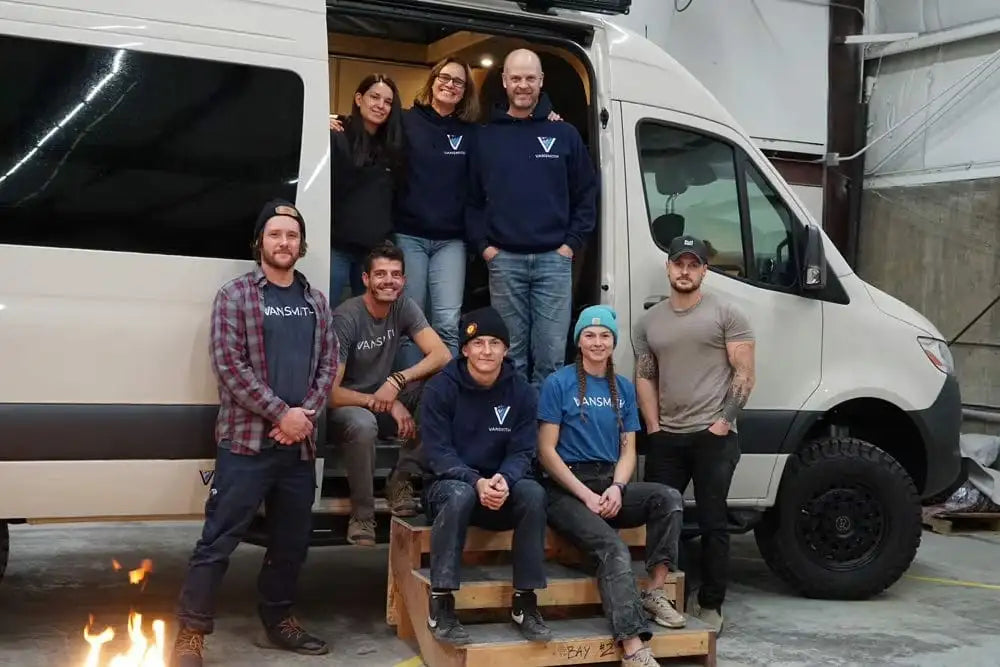
The photo at the top shows the shower stall in a Vansmith camper van, where a low-foam, fast-rinsing shampoo saves both water and tank space.
Natural shampoo for camping works best when it rinses fast, uses very little product, and stays out of lakes and streams. Which option fits you depends most on your water source, water temperature, and whether you're washing with a full shower, a small rinse container, or just a quick trailhead cleanup. In real camp use, the word natural matters less than surfactants, fragrance load, and how much residue the formula leaves behind. For van travel, that usually points people toward compact bars, low-foam formulas, and fewer hair-wash days when water is tight.
Why natural shampoo is a camping decision, not a marketing label

The photo above shows a clear creek in Berryessa Snow Mountain National Monument. Water like this is exactly what camp soap and shampoo should never go into, natural label or not. (Photo: Bureau of Land Management)
For camping, the better question is not whether a bottle says natural. The better question is whether its cleaning agents break down well, leave safer byproducts, and have lower aquatic toxicity. The EPA's Safer Choice surfactant criteria make that point pretty clear.
That matters because broad terms like plant-based or botanical can sound helpful without telling you much. The EPA looks at biodegradation, degradation products, and aquatic toxicity, which is a much stronger filter than green branding alone.
Ingredient disclosure matters too. If a product hides behind vague claims, you can't judge fragrance load, surfactant type, or extra additives that may change how it works in the field. That's one reason transparent labels tend to be easier to trust than bottles that lean on eco language.
A fragrance-free option is often the smart default for camp use. The EPA's Safer Choice FAQ treats fragrance-free as a real product distinction, not just a nice extra. For small van showers and quick outdoor rinses, less scent usually also means less stuff to rinse out.
Campers often assume biodegradable means harmless anywhere. Federal guidance says otherwise, and both the Park Service and Forest Service say soap should still be used sparingly and well away from water sources. For van travel, concentrated liquids and solid bars also tend to win because they're easier to store, less likely to leak, and simpler to ration in low-water routines.
If you're sorting gear for a Sprinter or Transit, this is the same mindset we use for compact systems: pick what works in real travel, not what sounds best on a label. That's part of why many people planning Sprinter conversions or Transit conversions end up caring a lot about easy-rinse products once they start thinking in gallons instead of bathroom shelves.
The ingredient signals that actually matter
Surfactants are the heart of shampoo. They do the cleaning, so their environmental profile matters more than words like clean, botanical, or natural on the front label. The EPA explains surfactant review in practical terms: how fast they biodegrade, what they break down into, and how toxic they are in aquatic settings.
That means a plant-derived product is not always the lower-impact choice. A formula can start with plant inputs and still be a weak pick if its full surfactant package or additives don't perform well by those standards. Not always.
Transparency is another strong signal. Ingredient disclosure is part of the Safer Choice framework, so a clear label gives you more to work with than a bottle built around broad eco claims. You can actually see whether the formula is simple, heavily scented, or packed with extras.
Fragrance deserves its own look. Since the EPA keeps a separate fragrance-free Safer Choice label, fragrance is clearly more than a cosmetic detail. For campers, that matters because fragrance can add residue, and residue is the enemy when you're rinsing with a small basin or a few cups of water.
Builders and other additives can also change how detergents act in water. So even if one cleansing ingredient looks good, the whole formula still matters. A practical screen is pretty simple: transparent ingredients, low-fragrance or fragrance-free, and claims tied to a real framework instead of loose eco wording.
If you're early in the planning stage, our DIY blog and van build blog both lean into this same idea. Small choices add up fast when you're living with them on the road.
Why “biodegradable” still has limits outdoors
The Forest Service advises washing, bathing, and cleaning at least 200 feet from water sources. The reason is simple: biodegradable soap needs soil to help break it down properly. The National Park Service says much the same thing, and recommends carrying water away from the source before you wash.
So no shampoo should go straight into a lake, river, or stream. That includes natural shampoo, biodegradable shampoo, and anything else with a green label. Product choice does not cancel field use rules.
In practice, the lowest-impact wash is often the one that uses the least product. Sometimes that means a tiny amount of soap. Sometimes it means a water-only rinse or just skipping the hair wash for a night, especially on short stops.
Van travelers often pack full-size bottles, then barely use them after the first few trips. Smaller bars and concentrated bottles usually match real road routines better, especially in compact layouts like a DUO XL layout where storage stays tight and every little leak gets annoying fast.
How to wash with camping shampoo without harming water sources

The photo above shows a muddy dog getting rinsed at the back of a Vansmith van on a gravel pad, well away from any lake or stream, which is the same rule to follow for your own hair.
Federal guidance is very consistent here: don't wash directly in a lake, river, or stream, even with biodegradable soap. The Forest Service sets a clear benchmark of at least 200 feet from water sources for washing and bathing. That's the baseline.
The Park Service also recommends carrying water away from the source before you wash. That helps keep soap and rinse water out of the aquatic system in the first place. Product choice still matters, but where you wash matters just as much.
Cold weather makes this more important. Biodegradable products still need time and the right conditions to break down, and cold water can slow that process. For van users with onboard water, the same logic applies: use a controlled rinse and manage greywater carefully instead of assuming the label solves the impact question.
This is one place where van design changes daily habits. People working through customize your van plans or reading about our process often start by thinking about tanks and shower hardware, then realize product choice affects water use just as much.
A safe field-washing routine

The photo above shows a campground spigot in Sequoia and Kings Canyon National Parks with a sign that reads "Do not wash dishes, brush teeth, or use soap at the faucets." Many campgrounds post the same rule, so carry rinse water back to your site instead. (Photo: NPS)
Start by collecting or carrying water away from the source. Don't stand in the water body with soap or shampoo. That's the first move the Park Service recommends for camping hygiene.
Next, wash at least 200 feet away. Soil helps filter and break down residues, which is why that distance keeps showing up in federal guidance. It sounds fussy until you've seen how fast rinse water spreads over hard-packed ground near a creek.
Then use only a small amount of product if you need it. The Park Service frames soap as something to use if needed, which supports a minimalist routine instead of a daily full-shampoo habit outdoors. Less product means less residue to manage.
Shoulder-season trips are where this really shows up. In cold or alpine conditions, it's often smarter to wait for a proper sink or shower because cold water slows breakdown and makes rinsing harder. For quick van-stop cleanups, a rinse container with a measured amount of product usually works better than trying to lather under an outdoor shower head. We hear versions of the same comment every fall: "I used way more water than I thought I would."
Common mistakes campers make
The biggest mistake is thinking biodegradable means creek-safe. Federal guidance directly says otherwise, yet people still treat the label like permission to wash beside moving water. It isn't.
Another common mistake is using too much product because low foam looks weak. Sea to Summit notes that some camp soaps are low-foam by design, so more suds do not always mean better cleaning.
Cold conditions trip people up too. Shampoo often rinses worse than expected in cold water, which leaves residue in hair and more product in wash water. Hard water can make this even worse, because people keep adding soap while chasing lather that mineral-heavy water suppresses.
Soap-based products used right beside a water source create the worst mix: more product, more residue, and less chance for soil-based breakdown. On the van side, bulky bottles and pump tops also lead to waste. Bars and concentrated bottles are easier to control, whether you're in a simple Foundation build or a bigger family setup.
Natural shampoo for hard water: soap-based vs soap-free

The photo above shows calcium carbonate formations at Mammoth Hot Springs in Yellowstone. Hard water carries those same dissolved minerals, which is why soap-based shampoos can leave a dull film when you rinse with it. (Photo: NPS / Diane Renkin)
Hard water is one of the main reasons a natural shampoo disappoints on the road. Desert towns, mountain campgrounds, and mineral-heavy well systems can all change how a product feels. You notice it fast.
Dr. Bronner's says castile soap can react with minerals in hard water and leave a waxy film on hair. Ethique explains that soap-based bars can also struggle in hard water because minerals reduce lather and performance.
That shifts the real comparison. It's less about liquid versus bar, and more about soap-based versus soap-free. Sea to Summit adds another wrinkle here: hard water can make you use more product just to get the same visible lather, which can trick you into overdoing camp soap.
For many campers, a soap-free bar or low-residue formula is the safer hard-water choice than classic castile soap. That's true even if castile feels more traditionally natural. If you're building for road life as a couple or family, this matters because one shampoo has to work across a lot of unknown stops, from vans for couples to family vans.
When castile soap works and when it doesn’t
Dr. Bronner's says castile soap can be used for hair, but results vary and may take some trial and error. That's fair. In soft water, a camper who wants one multi-use product may find it works well enough for a simple routine.
The main limit is hard water. Minerals can react with the soap and leave a waxy residue, which is frustrating at home and even worse on the road. You may not have enough warm water to rinse it out fully.
That issue shows up more in camping because public spigots, campground hookups, and rural water sources are often harder than filtered water at home. If you're crossing regions with unknown water quality, castile soap is the riskier all-around choice for hair. A body wash that works fine is not always the best camping shampoo.
Why soap-free bars often win for campers
Ethique draws a useful line between soap-free shampoo bars and soap-based bars. Soap-free bars are less affected by hard water, which gives them more predictable performance across changing campgrounds and trail towns.
That predictability matters when you're trying to use less water. If a bar works quickly in hard water, you're less likely to keep adding product and more likely to get a clean rinse with a small amount of water. That's the whole game.
Solid bars also fit travel well. They are compact, leak-free, and easy to stash in a van drawer, shower caddy, or backpack. Shoulder-season travelers often end up preferring bars after a few cold mornings and one bottle leak in a gear bin. If you want an environmentally friendly shampoo for mixed road conditions, a soap-free bar is often the safest place to start.
Cold rinses, low foam, and what performance to expect
Cold conditions change the whole wash routine. Olympic National Park guidance warns that even biodegradable soap may break down slowly, or not at all, in cold water. That makes low-residue formulas and small doses a lot more important.
Cold water also makes rinsing harder. Sea to Summit says its soaps are low-foam by design, so low lather should not be read as poor cleaning by itself. Hard water can stack onto that and make a decent product look weak just because the suds stay low.
For campers, the real goal is not salon-style foam. The goal is quick cleansing that rinses clean with limited water. In real van travel, people out in shoulder season are usually better off with shorter washes and fewer hair-wash days than with a full shampoo routine in near-freezing conditions.
This is also where roof height and shower setup shape habits. Standing room changes how often you actually use your shower setup, which is one reason a high roof or a pop-top is worth considering. Even then, cold rinses still push people toward faster, simpler wash routines.
How cold water changes your product choice
Because cold water slows breakdown, the safest routine is to use less product and keep all washing well away from water sources. A formula that rinses easily with low foam can be more useful than one that feels rich in a warm home shower. Different priorities.
In cold conditions, a soap-free bar can be easier to manage than a heavy soap application that needs repeated rinses. If the rinse water is very cold, many campers do better with a fast scalp-focused wash instead of trying to saturate all their hair with product.
Fragrance-free and simpler formulas can help here too. Less residue and fewer extras generally make rinsing easier. When conditions get especially cold, skipping shampoo until you have a proper wash chance is often the lower-impact and more comfortable move.
Why low foam is not a problem
Sea to Summit explains that low lather is intentional in some backcountry soaps. That means foam level is a weak test for cleaning strength. You don't need a pile of suds to get clean.
This matters because campers often waste product by adding more until they see the foam they expect from home shampoos. Hard water can suppress visible lather even more, which makes the same formula seem weaker than it really is. That changes everything.
A better test is how your scalp feels and how easily the product rinses with limited water. Low-foam formulas can be very useful in van systems where every gallon matters. For field use, low-foam plus easy rinse is often a better signal than rich suds.
Best camping shampoo choices by use case
For unknown water conditions, a soap-free shampoo bar is usually the safest all-around pick. It avoids many of the hard-water issues tied to soap-based formulas, and it stores well in small spaces. That's why it works for so many campers.
For minimalist multi-use packing, castile soap can still work. Just expect possible waxy residue in hard water and less consistent hair results. For sensitive users, fragrance-free formulas deserve extra weight because the EPA treats fragrance-free as a meaningful distinction, not just a marketing flourish.
Cold-weather trips call for a formula that uses little product and rinses fast, plus shorter wash routines away from water sources. For ultralight kits or small-space van travel, solid bars are usually easier to store and less likely to leak than bottles. The best biodegradable shampoo or environmentally friendly shampoo is the one that matches your water conditions and your real habits, then gets used with Leave No Trace logic.
That road-use lens fits how we think about van systems too. If you're planning a build, the same habits that make camp washing easier also shape how you use water, storage, and shower space over time. If you want to talk through those tradeoffs, our contact page is a simple place to start.
Best pick for each buyer profile
For most campers, the best default is a soap-free shampoo bar, especially when water hardness is unknown. For hard water, that same soap-free bar usually beats castile soap because soap-based formulas are more likely to leave residue and lose lather.
For cold rinses, look for a low-foam, easy-rinse formula and use it sparingly. For minimal packing, a compact solid bar is hard to beat because it will not leak in a drawer or gear bin. Small win.
For fragrance-sensitive users, fragrance-free products with clear ingredient disclosure make the most sense. If you want one bottle for everything, castile soap is the compromise option. It can be useful, but it is not the performance leader for hair.
What The Vansmith audience should prioritize
Van travelers usually care less about spa-style haircare and more about compact storage, fast rinsing, and low water use over several days. A soap-free bar fits that reality well because it is easy to stash, easy to ration, and less likely to create a mess in a small bathroom or exterior shower kit.
Travelers with onboard water should think in gallons, not just ingredients. An easy-rinse formula lowers total water use, which can matter more than one extra green claim on the package. For couples sharing one shower kit, one hard-water-friendly bar plus one fragrance-free backup is often a more useful setup than several liquids.
This topic also connects neatly to build choices that support efficient road routines. If you're exploring layouts and systems built around practical water use, take a look at The Vansmith's conversion options and how they fit daily travel habits, especially for couples and families who want simple systems that get used often instead of gear that just sounds good on paper.
FAQ
Is natural shampoo safe to use in a lake or stream while camping?
No. Federal guidance says you should never wash directly in lakes, rivers, or streams, even with biodegradable soap. The Forest Service recommends washing at least 200 feet from water sources because soap needs soil to help break down. The safer move is to carry water away from the source, wash there, and keep product use minimal.
What makes an environmentally friendly shampoo better for camping?
The best environmentally friendly shampoo is not just natural by label. It uses surfactants with better biodegradation and aquatic-toxicity profiles, discloses ingredients clearly, and avoids extra fragrance when possible. The EPA's Safer Choice framework is useful here because it looks at biodegradation, degradation products, and aquatic toxicity. That gives you a better filter than broad eco branding.
What is the best camping shampoo for hard water?
In most cases, a soap-free shampoo bar is the better hard-water choice. Dr. Bronner's says castile soap can leave a waxy film in hard water, while Ethique notes that soap-based bars often struggle because minerals reduce lather and performance. If you move through mixed regions and unknown campgrounds, soap-free is usually the safer default.
Does low foam mean a camping shampoo is not cleaning well?
No, not by itself. Sea to Summit says some backcountry soaps are low-foam by design, and hard water can also reduce visible lather. Suds are a poor measure of cleaning strength in the field. A better test is whether the product rinses clean with limited water and leaves less residue behind.
Is biodegradable shampoo a good choice for cold-weather camping?
It can be, but you should use very little and keep all washing away from water sources. Olympic National Park notes that even biodegradable soap may break down slowly, or not at all, in cold water. That makes cold-weather washing a place for minimal-product, quick-rinse routines. Sometimes the better call is to skip shampoo until you have a proper sink or shower.
About the author

Electra Chronis
Head of Marketing
Electra leads marketing at The Vansmith. She writes across van life, camping and travel, from planning a trip to choosing and building the van that gets you there.
Read more about Electra