John Glenn Astronomy Park is a free dark-sky site in Hocking Hills that you can visit on program nights or on your own, and that's the big reason it works so well for a weekend trip. Which option fits you comes down to one thing: do you want guided telescope viewing and constellation help, or do you want a quiet, self-paced night under a clear, moonless sky? For a program night, reserve the free parking pass as soon as passes post, then check the noon status update on the day before you head over. On a non-program night, you can simply wait for a clear evening and drive up. Since you can't camp at the park itself, it works best as an evening add-on, not your overnight stop.
The photo above shows a park ranger tracing stars with a green laser pointer while a second person looks through a telescope at a public star party in Shenandoah National Park. Public program nights at JGAP often include the same two things: laser-guided constellation tours and telescope viewing. (Photo: NPS / Luca Pfeiffer, public domain)
What John Glenn Astronomy Park is and who it’s best for
John Glenn Astronomy Park is built for stargazing, astronomy education, and astrophotography.
The official FAQ says visits and programs are free. There are no tickets to buy, but program nights do require a free parking pass (more on that below).
You also get a lot of flexibility. The FAQ says the park is generally open 24/7 except during special events, so you can come on non-program nights and do your own observing. You can drive up with your own telescope or binoculars, which makes the site useful for first-timers and hobby astronomers alike.
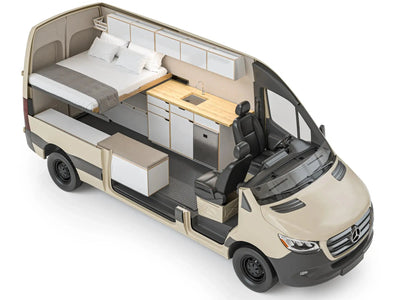
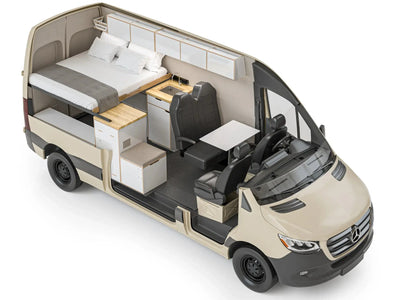
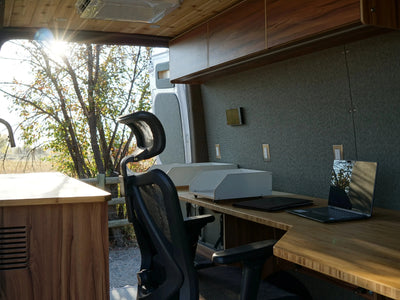
For van travelers, a typical plan is dinner at camp, a short drive to the park, then back to your own bed after the sky session. If you're building a road setup around trips like this, see our camper vans for couples and family van layouts, or start a layout in our van designer.
Why JGAP stands out in Hocking Hills

The photo above shows the waterfall and sandstone overhang at Ash Cave in Hocking Hills State Park. Daytime hikes like this one pair well with an evening at JGAP. (Photo: Ramseybuckeye, public domain)
A Hocking Hills visitor guide calls JGAP Ohio's free dark-sky destination. The appeal is not just darker skies, but darker skies without an entry fee.
It also serves more than one type of visitor. People come for self-directed stargazing, public programs, and astrophotography, so the crowd can include families, casual campers, photographers, and hobby skywatchers.
JGAP also makes more sense as part of a Hocking Hills trip than as a stand-alone city outing. The broader Hocking Hills State Park visit usually already includes hiking, camping, a cabin, or the lodge. The astronomy park slides neatly into that plan after dark.
Who should choose a public program vs. a DIY night
Beginners usually do better on a public program night. A Hocking Hills visitor guide says guided nights often include laser-guided constellation tours and telescope viewing. That lowers the learning curve fast, especially if you do not own a telescope.
If you already have gear, or you want to shoot the sky on your own timeline, a non-program night can be better. The FAQ says visitors may drive up freely and observe on their own schedule. That gives you more control, and more quiet too.
If your main goal is just to see a dark sky over Hocking Hills, a clear moonless DIY night can beat a crowded program with weak conditions. If clouds or a bright moon are forecast for a program night, a clear self-guided night later in your trip may be the better call.
Guests at the Hocking Hills Lodge and State Park Cabins get an extra perk. The FAQ notes they can walk to the astronomy park by a nearby path, which is easier than driving over.
John Glenn Astronomy Park programs: what to expect

The photo above shows visitors at a telescope lit with red light during the Grand Canyon Star Party, where volunteer amateur astronomers set up telescopes for the public. JGAP program nights are built the same way, around looking through telescopes outdoors. (Photo: NPS / Michael Quinn, U.S. government work)
ODNR lists program nights as clear Friday and Saturday nights from March through late November, and the JGAP FAQ says they start at sunset.
To attend a program, you need a free parking pass if you plan to drive in and park, and the lot fills. JGAP posts passes at registration.jgap.org in waves: a batch several weeks ahead, then more, usually by the Wednesday of program week. Only guests of the Hocking Hills Lodge and State Park Cabins may walk over (the path runs between cabins 8 and 9). The FAQ says visitors from any other part of the park may not walk over at night because of dangerous conditions, so campers should plan to drive.
Still, free does not mean guaranteed. Programs are weather dependent, so a listing on the calendar is not a promise that observing will happen.
The most useful planning habit is checking the same-day update. The JGAP programs page says the park posts a forecast and go or no-go note by noon on program days. The schedule lives there, but the day-of status goes up as a blue banner on the JGAP homepage, and also on JGAP's Facebook page. If you're driving from Columbus, Cincinnati, or farther out, check it before you commit.
JGAP is a project of the Friends of the Hocking Hills State Park, a nonprofit, and its events page sends visitors to jgap.info for current schedules. For trip planning, treat the astronomy program as weather-permitting, not the only reason for the weekend.
How program nights are structured
Program nights are built around observing outdoors. Expect to spend most of the evening outside looking up, which works well for kids and adults alike.
The content changes through the year. JGAP's program notes feature seasonal objects, so what you see in one month may be very different from what you see later in the year. That's useful to know if you're deciding whether a repeat visit is worth it.
Some events go beyond standard telescope viewing. JGAP also hosts special events, such as the September 2026 Cosmic Concert with the Hocking Valley Community Orchestra. So even if you are not deep into astronomy, there may be a themed night that feels more welcoming.
How to avoid a wasted drive
Calendar listings help, but if the weather turns, the official day-of update is what counts.
Clear skies alone are not enough. The official site notes that clear, moonless nights are when most self-directed stargazers and astrophotographers come out. A bright moon can wash out the faint stuff even when the forecast looks good.
For van travel, the safest plan is a full Hocking Hills day first. Hike, eat, settle back at camp, then check the noon status update before making the short drive. For program nights, that assumes you already reserved a parking pass. To see how our builds come together, browse the Foundation build gallery and our process page.
What you can actually see at John Glenn Astronomy Park

The photo above shows the Andromeda Galaxy, one of the seasonal targets JGAP highlights, shared by Joshua Tree National Park. To the naked eye it looks like a faint, fuzzy patch, which is why a dark, moonless night makes such a difference. (Photo: NPS / Brad Sutton, public domain)
The park's dark-sky setting pays off most on clear, moonless nights. If the sky is bright with moonlight, the faint objects get much harder to pick out.
JGAP specifically highlights seasonal targets like the Pleiades and the Andromeda Galaxy. That tells you right away that the experience can go beyond the Moon and a few bright planets. On public nights, the same visitor guide says visitors may also view planets, star clusters, nebulae, and other deep-sky objects through telescopes.
The programs page gives more examples, including Saturn and M15, a globular cluster. Your expectations should stay grounded in what the sky and season allow that night.
Beginners usually get the biggest naked-eye payoff from constellations, bright star patterns, and the Milky Way when conditions line up.
Best things to see for first-time visitors

The photo above shows the Pleiades (M45), a bright star cluster in the constellation Taurus, taken with a small telescope and camera. By eye or through binoculars you will see the cluster of blue-white stars; the soft blue haze shows up mainly in long-exposure photos. (Photo: Taavi Niittee, CC0)
The Moon and bright planets are usually the easiest wins. They are bright, easy to recognize, and rewarding through public telescopes. If someone in your group has never looked through a scope before, this is often the moment that lands.
In the right season, the Andromeda Galaxy and the Pleiades are worth looking for too. They are good targets to ask about on a public night. If you bring binoculars, these are the kinds of objects that can still make the trip feel worthwhile.
Laser-guided constellation tours help tie it all together. You learn the big sky patterns first, then move on to telescopic objects with a little more context.
What changes with season and moon phase
Moonlight can wash out fainter deep-sky targets even when the air is clear. If your goal is faint objects or photos, this matters more than just picking a Saturday.
The target list also shifts with the season. A spring visit and a fall visit will not show the same objects or constellations. That is part of the fun, but it also means you should not expect one fixed menu of sights.
Binoculars can still be enough for a good night. The FAQ says visitors may bring their own gear, and many bright clusters plus the Moon are rewarding without a telescope. If you already keep binoculars in your van, bring them.
Hocking Hills stargazing conditions: how dark is it really?
The skies here are dark because the area is rural, and the Hocking Hills visitor guide notes that the surrounding terrain shields the observation field from distant light. ODNR calls the region one of the few places left in Ohio where the night sky can be seen in a near pristine state. That does not make it desert-dark, but it does make it much better than most suburban skies in Ohio. For many visitors, that jump alone feels big.
The official JGAP site also points visitors toward weather and sky-condition tools, which is a hint in itself. Local conditions can swing enough to change whether the drive is worth it. Dark skies help, but clouds and moonlight still call the shots.
ODNR notes that JGAP is the only part of Hocking Hills State Park open at night. That is an important planning point. If you want a proper late-night sky stop, JGAP is better than a random roadside pull-off because it is a public site meant for nighttime use.
People coming from brighter cities should expect a much better naked-eye sky than they get at home, just not the ultra-remote darkness of the desert Southwest. In a van, a low-light routine helps too: dim the cabin lights, skip bright headlamps, and let your eyes adjust once you arrive.
When conditions are good enough to go
The day-of program status is your first filter, since local cloud cover can turn a listed event into a weak night fast.
After that, look at the moon. Moonless nights are best for deep-sky viewing and astrophotography. If the moon is bright and high, keep expectations focused on brighter objects.
Night access and etiquette
Because JGAP is open around the clock outside special events, you do not have to guess whether you are allowed to be there after dark.
Keep the rest of your evening simple. Go there for the sky, then drive back to camp.
Good etiquette matters on crowded nights. Keep noise low and keep white light low too, since other visitors are trying to preserve night vision. Red light is easier on everyone, and so is not slamming your van door at 10:30 p.m.
Where to camp near John Glenn Astronomy Park
JGAP is for observing, not sleeping overnight.
The FAQ sends visitors to nearby Hocking Hills State Park camping areas, cabins, and regional lodging instead. According to ODNR, the state park campground offers full-hookup, electric, and non-electric campsites. That gives van travelers a few comfort levels to choose from, depending on how self-contained their setup is.
ODNR also lists three Sherman Cabins in the main campground, small heated and air-conditioned cabins that sleep three or four. If you want to see how all of this sits together, the official Hocking Hills State Park and region map helps a lot. It shows JGAP, the campground, and the lodge on one sheet, so you can see how close they are.
For van travelers, the simplest plan is often still an official campground site nearby, then a short evening drive over and back.
Official nearby camping and lodging options
Hocking Hills State Park Campground is the main official answer if you want to stay close to JGAP. It keeps the evening easy, and it cuts down on late-night driving after stargazing.
If your van is built for simpler off-grid nights, a non-electric site may be all you need.
Best setup for van travelers
If you want the smoothest astronomy evening, camp nearby and stay put for the night. Trying to relocate after stargazing is usually the part that feels rough.
Electric or full-hookup sites can be handy if you want to charge camera gear, cool or warm the van before sleep, or start the next morning topped off. That is especially nice in shoulder seasons.
Readers planning more nights like this can look at layouts built for road-based nature travel. Our Duo XL layout is a strong fit for couples, and the Family XL layout works well for parents bringing kids along. If you are still sorting out the right setup, you can also browse our van build blog or contact us with trip plans in mind.
FAQ
Is John Glenn Astronomy Park free to visit?
Yes. The official FAQ says visits and programs at John Glenn Astronomy Park are free. Program nights require a free parking pass from registration.jgap.org if you plan to drive in.
Can you camp at John Glenn Astronomy Park?
No. The official FAQ says camping is not allowed at JGAP itself, so you need to stay at nearby Hocking Hills State Park camping areas, cabins, or other regional lodging such as bed-and-breakfasts and small resorts. ODNR lists full-hookup, electric, and non-electric sites at Hocking Hills State Park Campground, which gives van travelers a few solid options.
What can you see at John Glenn Astronomy Park on a good night?
On a good night, the official site and program materials mention targets such as the Pleiades, the Andromeda Galaxy, Saturn, M15, planets, star clusters, and nebulae. What you actually see depends on season, sky clarity, and the moon phase. The best nights are clear and moonless, especially if you want fainter deep-sky objects.
When is the best time for Hocking Hills stargazing at John Glenn Astronomy Park?
The best time is a clear, moonless night. JGAP also posts a forecast and go or no-go update by noon on program days, so reserve a parking pass early for program nights, then confirm conditions on the day of your visit.
Do you need a telescope to visit John Glenn Astronomy Park?
No. On non-program nights, you can bring your own telescope or binoculars, and public programs typically include telescope viewing plus laser-guided constellation tours. Beginners can still have a worthwhile visit with just their eyes and binoculars, especially if the sky is clear and dark.
About the author

Carin Smit
President
Carin is President of The Vansmith. She writes on a range of topics tied to the business, from vans and builds to the broader vanlife world.
Read more about Carin