What is a carabiner? It's a metal clip with a spring-loaded gate, and the big split is simple: some carabiners are built for climbing loads, while others are just for light gear. Which side of that line you fall on depends on the job, not the shape or color. If the clip will ever be part of a person-weight system, you need climbing-rated hardware. If it's only holding a towel, mug, or small bag in camp, an accessory clip is usually fine.
The photo above shows a climber leading a granite route at Joshua Tree National Park with a rack of carabiners and gear on the harness, while the belayer manages the rope from below. (Photo: NPS / Emily Hassell, public domain)
What Is a Carabiner, Really?

The photo above shows a metal carabiner clipped between a bolt hanger on the rock and a rope. That is the basic job of any carabiner: a strong metal loop with a gate that opens to connect two things. (Photo: Marcin Jahr, public domain)
A carabiner is a metal connector with a spring-loaded gate. According to Black Diamond and Petzl, that simple design can fill very different roles depending on how it's made.
That first split matters more than anything else. Before you compare shape, weight, or gate style, you need to know if you want a climbing-rated carabiner or a non-load-bearing accessory clip, as EDELRID explains.
Climbing-rated carabiners are designed and tested for specific loading directions. Accessory carabiners are not a stand-in for climbing gear, even if they look close at a glance.
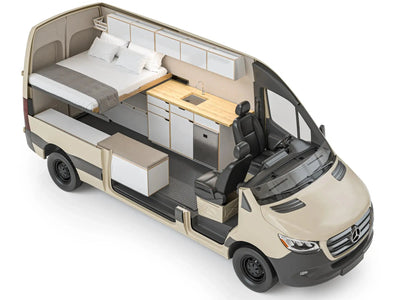
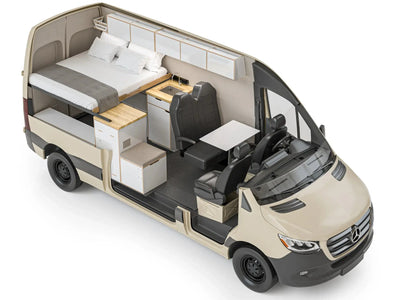
Around a camper van, carabiners are handy for hanging towels, lanterns, and small bags, but that convenience use should never be confused with a true load path.
If a connection involves belaying, rappelling, anchoring, or a person's weight, keep it simple. Use climbing-rated hardware only.
Climbing-rated vs. utility carabiners

The photo above shows two inexpensive aluminum accessory clips. The red one is stamped "NOT FOR CLIMBING PURPOSE" on the spine. Clips like these often come with water bottles and backpacks or in cheap multipacks, and they are meant for keys and light gear only. (Photo: Polyparadigm, public domain)
EDELRID breaks the field into three beginner-friendly groups: non-locking climbing carabiners, locking climbing carabiners, and non-load-bearing accessory carabiners. That's a useful framework because it clears up the biggest source of confusion right away.
Accessory clips are common for keys, water bottles, and loose gear. They're made for organization, not climbing loads. If you only need to hang a towel or grocery bag inside a van, that may be all you need.
The UIAA buying guidance pushes the same idea. Match the gear to the exact activity. Don't assume one piece of hardware works for every job just because it clips shut.
A real climbing carabiner carries a CE mark and/or the UIAA Safety Label plus kN strength ratings stamped on the spine, and the UIAA advises buying only certified gear and watching for counterfeits. It shouldn't win just because it feels solid in your hand.
Inside a camper van, light accessory clips are handy for soft goods and daily organization. For bike racks, recovery points, or anything structural, use hardware rated for that load. Black Diamond notes that climbing carabiners are designed and tested differently from industrial connectors, so they are not a stand-in there either.
The visual gap between a souvenir clip and a climbing carabiner can be small. The safety gap is not. If you're asking whether it's okay to climb on it, buy climbing-specific gear from a climbing brand.
Why intended use matters more than appearance
REI puts it simply: how you will use the carabiner determines which one you buy. Belaying, rappelling, quickdraws, anchors, and general climbing all ask different things from the same basic tool.
Black Diamond's QC Lab makes the same point about picking the right tool for the job. The best carabiner is never universal.
A large pear-shaped locking carabiner can be great for a belay device or a Munter hitch. That same carabiner may feel bulky if you're only racking gear. A non-locking model often makes more sense where fast clipping matters.
People often shop by looks at first. A bright finish or sleek shape can pull you in. Still, shape, gate style, and lock type change how the tool works in the real world, and that's what should drive the pick.
Owning a few purpose-specific carabiners is normal. In a van, you might keep cheap clips near storage bins and a separate kit for real outdoor use.
Locking vs. Non-Locking Carabiner: Which Should You Pick?
For most new buyers, this is the first real choice. Locking versus non-locking changes how much backup you get against accidental gate opening, and Black Diamond and REI both frame it as a practical decision, not a style one.
REI says locking carabiners are the only choice for use with a belay or rappel device, and they are the norm for other critical links. Non-locking models are more common where speed, frequent clipping, and lower weight matter more. Neither is better in every case.
Petzl lists several locking systems, including SCREW-LOCK, TWIST-LOCK, BALL-LOCK, and TRIACT-LOCK. Each one trades a bit of speed, feel, or simplicity for a different level of gate security.
In everyday camp use, a locking clip can also help keep an item from shaking loose on rough roads. That's handy for a light or small bag in a van. It's still a convenience use, not a climbing recommendation.
When a locking carabiner makes sense
Belay and rappel connections are high-consequence, so they always get a locking carabiner. More broadly, if the gate opening by accident would be a big problem, a lock makes sense.
Petzl markets its large pear-shaped lockers for belay stations and belaying with a Munter hitch. The larger basket gives you more room for rope and device movement.
Black Diamond frames locking carabiners as the better pick when security matters more than speed or the lightest possible setup.
Auto-locking options like TWIST-LOCK, BALL-LOCK, and TRIACT-LOCK can be useful if you'll open and close the gate a lot but still want it to relock on its own. Manual screw-locks stay popular because they're simple and familiar.
A locking sleeve does not make a carabiner foolproof. It still has to be loaded the right way and checked in use.
If you're buying just one climbing carabiner first, a locking model is usually the safer place to start.
When a non-locking carabiner makes more sense
Non-locking carabiners shine where quick clipping and unclipping are part of normal movement. That's why they're common in many quickdraw and racking setups. Speed is part of the job there.
They're also generally lighter and faster to use than locking models. That's one reason climbers don't use locking carabiners for every single connection. The tradeoff is lower security against accidental opening.
EDELRID points out gate variations like bent-gate styles, which are often picked for clipping ease in the right climbing use.
EDELRID describes non-locking carabiners as trading some security for easier clipping, which is why they belong in quickdraws or redundant systems rather than critical single connections.
For simple van organization, non-locking accessory clips are often the easiest option for hats, towels, or grocery bags. They open fast, live anywhere, and don't ask much from you, which is why many travelers keep a handful around. Keep anything that can jerk hard, like a dog leash, on hardware actually rated for it, and never slide that everyday habit into a serious load path.
Carabiner Types by Shape and Gate Style
Shape is not just a design choice. It changes how a carabiner handles load, rope, devices, pulleys, and gear. Once you know your use, shape becomes much easier to sort out.
The main climbing shapes you'll see are D, asymmetric D, pear or HMS, and oval. REI uses this set because it covers most real buying decisions. Petzl's shape guide groups them a little differently (D, oval, pear, and a few specialty shapes).
Gate build matters too. Wiregate, solid gate, bent gate, and nose design all change clipping feel and snag resistance. For a beginner, that can matter more than a small weight difference.
Keylock or snag-free nose designs are worth a close look for safety, not just convenience. Black Diamond's QC Lab says nose-hooked carabiners are surprisingly weak and that this is by far the most common scenario for carabiner failure in the field. A keylock nose is much less likely to hang up on a bolt hanger, sling, or wire.
This is usually the point where a wall of options starts to make sense. Pick the task first. Then narrow by shape, then gate style, then lock type.
D and asymmetric D carabiner types
REI describes D and asymmetric D shapes as versatile because they direct load toward the spine, where the carabiner is strongest. Petzl describes the D-shape as suited to simple loads, like connecting devices or attaching to an anchor.
Asymmetric D designs usually save some weight compared with more symmetrical shapes. They still keep strong, efficient loading traits, which is why they're so common.
These shapes are often the all-arounders. They balance strength, clipping ease, and weight better than more specialized designs. For a first climbing purchase, a locking asymmetric D is often one of the broadest-use picks.
Pear/HMS and oval carabiner types
Pear-shaped carabiners, often called HMS, have a larger basket. REI ties them to belaying, rappelling, and Munter hitch use because they give rope and devices more room to move. Petzl describes pear shapes as high capacity, for connecting multiple or bulky items.
That larger shape usually means they are less weight-efficient than an asymmetric D. Still, they solve rope-management tasks better, which is why many climbers keep at least one locking pear carabiner in the kit.
Oval carabiners are different. Petzl points to their symmetrical shape for even loading, such as pulleys and devices with large attachment holes. REI ties them to aid climbing and carabiner-brake rappels and notes they are not as strong as other shapes.
If you're comparing just one or two first purchases, a pear locking carabiner is more specialized than a D-shape. But for belay-device use, it may be the right answer. Oval is more of a niche tool. Pear is the rope-handling specialist.
What the Strength Ratings on a Carabiner Mean
The numbers stamped on a climbing carabiner can look more technical than they really are. Most beginners see one strong-looking number and assume it applies to every setup. It doesn't.
REI explains the three common ratings you'll usually see: major axis gate closed, major axis gate open, and minor axis. Petzl makes the key point clear. The major-axis, gate-closed rating is the normal intended loading direction, and it's the strongest one.
Gate-open and minor-axis strengths are lower. That is why bad orientation or accidental gate opening cuts your safety margin in a real way. A strong carabiner is still weaker when it's cross-loaded or open.
Black Diamond's QC Lab also notes that every certified climbing carabiner already meets the required standards. So the goal is not to chase the biggest number on the wall. The goal is to read the rating in context.
Major axis, gate open, and minor axis explained
Major axis means the load runs from top to bottom along the spine. That's the strongest direction for a carabiner, according to Petzl's carabiner basics.
Gate-open strength is lower because the closed gate is part of the full structure. When the gate is open, the frame can't carry load the same way. Minor-axis strength is lower too because cross-loading puts force across the width instead of along the spine.
Those lower numbers matter in practice. Black Diamond's QC Lab says open-gate and minor-axis strengths are about a third of closed-gate strength and fall in ranges that can actually be seen in the field.
It also helps answer a common bad idea. If a setup looks awkward but the carabiner feels sturdy, that doesn't make it a good setup. The UIAA pushes the same mindset. Use gear within its intended scope.
How to use ratings when shopping
Because certified climbing carabiners already meet standards, small rating differences should not be your only focus. Black Diamond's QC Lab points out that a few kN of difference rarely matters, so intended use, handling, and design deserve more weight.
REI says to balance strength with size, weight, durability, and clipping ease. That's useful advice because the strongest-looking option is not always the best tool for the job.
UIAA guidance also supports buying gear that matches the discipline and your experience level. For first-time climbers, that often means a simpler, more intuitive design wins over the most technical-looking one.
A belay carabiner should work well with the belay device and rope. It should not win just because the stamped number is a little higher.
For camping and utility readers, ratings are not interchangeable across categories. A climbing rating on one product does not make a random hardware-store clip valid for a similar use. And around a van, overbuilt climbing gear is often unnecessary for light organization, while underbuilt accessory clips are a bad swap for any serious load path.
How to Choose the Right Carabiner for Camping or Climbing
The best place to start is one question: is this for life-safety climbing use or everyday utility use? That one choice narrows the field faster than anything else.
For climbing, the simple pattern is this: locking for belay, rappel, and other critical connections, non-locking for fast clipping where that makes sense. For shape, an asymmetric D is the strong generalist, a pear or HMS is the belay-rappel specialist, and an oval is more niche for pulleys or symmetrical loading.
For lock style, screw-lock gives you a simple manual system. Auto-locking designs like TWIST-LOCK, BALL-LOCK, and TRIACT-LOCK add automatic security, with a bit more complexity in handling.
Keylock noses are also worth a look, since they are less likely to snag and end up nose-loaded. In van travel, many people end up wanting both categories anyway: cheap accessory clips for organization, and separate purpose-rated hardware for technical use.
Best simple picks for common beginner scenarios
If you want one first climbing carabiner for belay or rappel use, a locking pear/HMS or locking asymmetric D is a very solid place to start. Both are intuitive, and both cover common beginner needs well.
If your goal is broad climbing versatility, D and asymmetric D shapes are the usual go-to picks. REI points there because these shapes balance strength, weight, and ease of use.
If you need a carabiner for pulleys or other even-loading jobs, oval designs make more sense because of their symmetrical shape. That's a more specific use, so most beginners won't start there.
If your use is only keys, mugs, towels, or light camp organization, an accessory carabiner is fine. It's usually cheaper and more convenient. Just keep it clearly in the non-climbing bucket.
For camping kits, a locking accessory clip can be nice for items you don't want bouncing loose on the road.
If you're overwhelmed, shrink the choice down to one line: buy by activity first, then choose shape, then choose lock style.
Mistakes beginners should avoid
First, don't assume a metal clip with a spring gate is climbing-safe. Accessory clips can look a lot like climbing hardware, but EDELRID is very clear that they are not for climbing loads.
Second, don't shop by the highest strength number alone. Loading direction and intended use matter just as much. A stronger number does not fix a poor setup.
Third, don't use a non-locking carabiner where a critical belay, rappel, or anchor connection calls for a locking model. This is one of the clearest beginner upgrades you can make.
Fourth, don't ignore nose design. A clip that hooks on a bolt or sling can end up loaded across its nose, which Black Diamond's QC Lab calls the most common way carabiners fail in the field.
Fifth, don't assume one shape does everything equally well. Pear, oval, and D-shapes each solve different problems, and that's normal.
In van travel, people often repurpose whatever clip is nearby. That's fine for a hat or towel. It's not fine for any system where failure could damage gear or hurt someone. The broader UIAA mindset fits well here too: buy the right gear, inspect it, and use it only within its intended scope.
FAQ
What is a carabiner used for?
A carabiner is a metal connector with a spring-loaded gate used to clip gear, ropes, slings, or accessories together. In climbing, only climbing-rated carabiners should handle life-safety jobs like belaying or rappelling. Accessory clips are for light-duty tasks like keys, bottles, or camp organization.
What is the difference between a locking carabiner and a non-locking carabiner?
A locking carabiner has an added system, like a screw-lock or auto-lock sleeve, that helps keep the gate from opening by accident. Non-locking carabiners are faster and lighter, so they fit jobs where quick clipping matters. Belay and rappel devices always go on a locking carabiner, and lockers are the norm for other critical links.
What do the numbers on a climbing carabiner mean?
The stamped numbers usually show strength in three directions: major axis with the gate closed, major axis with the gate open, and minor axis or cross-loaded. The major-axis, gate-closed number is the strongest and the normal intended loading direction. Gate-open and minor-axis ratings are lower, which is why orientation matters so much.
Which carabiner types are best for beginners?
For general climbing use, D and asymmetric D carabiners are common beginner picks because they balance strength, weight, and easy handling. For belaying or rappelling, a locking pear or HMS carabiner is often a better fit because it gives more room for rope and device movement. If you only need camp organization, an accessory clip is enough.
Can you use any carabiner for climbing?
No. Non-load-bearing accessory carabiners are not for climbing, even if they look similar to climbing gear. For climbing or any human-support use, stick with certified climbing hardware (look for the CE mark or UIAA Safety Label and the kN ratings on the spine) and match it to the exact activity.
About the author

Carin Smit
President
Carin is President of The Vansmith. She writes on a range of topics tied to the business, from vans and builds to the broader vanlife world.
Read more about Carin