TL;DR
A Ford E-Series conversion is a strong fit if you want interior space and a rugged, easy-to-service platform more than you want modern comfort tech. The long-wheelbase E-Series offers up to 277.7 cubic feet of cargo room and a 7.3-liter V8 that handles heavy builds well, but plan on 12 to 15 MPG and none of the driver-assist features you would get on a newer Transit. Adding a high-top (fiberglass or aluminum) runs $3,000 to $6,000 and lets you stand upright throughout the build. Parts and aftermarket support stay solid since Ford still builds the E-Series cutaway and chassis today, and The Vansmith's DUO and Family XL layouts can both be adapted to the platform.

The Ford E-Series van conversion is a common choice thanks to its roomy interior and strong platform. Adding a high-top roof can meaningfully improve how usable the van is, giving you almost 278 cubic feet of cargo space in the long models, according to Ford's own commercial specifications. That extra room is ideal for custom layouts, which makes the E-Series a flexible option for camper enthusiasts and DIY van builders.
The Ford E-Series platform: pros and cons

The Ford E-Series, often called the Econoline, is well known for being conversion-friendly. It offers up to 277.7 cubic feet of cargo volume in its long model, according to Ford's E-Series specs, which leaves plenty of room for a camper van build. The 7.3-liter V8 gives the E-Series the strength to carry heavy loads, which makes it a reliable choice for a build meant to hold up over time.
Confirm your platform and wheelbase. Know whether you are working with an E-150, E-250, E-350, or cutaway chassis, plus your wheelbase length: this affects roof options, interior layout, and total weight capacity.
Set a realistic build weight target. The chassis can handle heavier builds, but it is still easy to overload. Add up estimated weights for cabinets, water, batteries, and gear so you stay within GVWR and keep handling predictable. NHTSA's loading guidance stresses staying under gross vehicle weight ratings for safe braking and handling.
Choose the right high-top material. Fiberglass is lighter and usually cheaper, which helps fuel economy and stability. Aluminum is tougher and better suited to harsh weather or commercial-style use, but it adds more weight.
Plan standing-height zones first. With a high-top, decide where you need full standing room, whether that is the kitchen, entry, or bathroom, and lay out those tall areas under the highest part of the roof before locking in bed or seating locations.
Design around the fuel economy reality. With many E-Series vans getting 12 to 15 MPG, prioritize efficient systems: good insulation, a quality heater, and a solar setup, so you are not idling the 7.3L V8 just to stay comfortable.
Use the long cargo space wisely. That roughly 278 cubic feet of interior volume works well for longitudinal beds, gear garages, or full kitchens. A raised bed with storage underneath keeps bikes, boards, or tools out of the living space.
Upgrade safety and drivability. Older E-Series vans lack modern safety tech. Better seats, a head unit with a backup camera, upgraded lighting, and suspension improvements all make long miles less tiring.
Take advantage of the strong aftermarket. Suspension kits, towing upgrades, electrical components, and interior hardware built specifically for the E-Series platform can simplify your build.
The fuel economy tradeoff is worth planning around: expect 12 to 15 MPG, which can matter on long trips, especially compared with newer full-size vans that reach higher combined ratings, as Edmunds notes in its Ford Transit coverage. The E-Series also lacks the screens and driver-assist features found in newer models like the Ford Transit. Even so, Ford still builds the E-Series cutaway and stripped chassis today, which is why parts remain easy to find.
Advantages of converting an E-Series
The E-Series gives you plenty of interior space, which is ideal for custom installs like full kitchens or bathrooms. Its strong chassis supports heavier builds, opening up more options for complex conversions, and its reliability makes it a favorite among people who live the van life long-term.
High-top conversion options for the Ford E-Series
Adding a high-top to your E-Series changes the interior meaningfully, letting you stand upright, which improves comfort on long trips. Fiberglass and aluminum are the two common high-top materials, each with its own tradeoffs. Fiberglass is lighter and usually more budget-friendly, while aluminum offers more strength and weather resistance. High-top installs usually run $3,000 to $6,000, depending on the parts and labor involved. The Vansmith offers expert high-top installs, which improve everyday usability and add to the van's resale value. When adding a high-top, it is worth including insulation to control temperature and cut down on condensation.
Selecting the right high-top material
Fiberglass high-tops are popular for their light weight and straightforward design, which is why you will often see them on a Ford Econoline camper conversion or an E350 conversion van, though they may need occasional upkeep to fix cracks. Aluminum high-tops are known for their durability and are common on heavier builds like an E-Series cutaway camper, though the added weight can affect fuel efficiency.
Availability of parts and accessories for E-Series conversions
Even though the Ford E-Series passenger van is no longer in production, parts remain easy to find because Ford continues building the cutaway and chassis models. Aftermarket suppliers offer a range of conversion kits, including electrical systems and interior fittings, and accessories like roof racks, custom windows, and flooring kits support a wide range of custom work. For more focused installs, The Vansmith offers window and flare installation, which can add light and space to your conversion.
Layout is where the E-Series platform really shines. The long, boxy cargo area makes it easy to run a full-length galley along one side with a fixed bed in the rear, or build a dinette that converts into a bed for more flexibility. Many builders place the kitchen on the passenger side to keep propane and water service doors away from traffic, often including a 12V fridge under the counter and upper cabinets for dry storage.
Because the E-Series can handle heavier loads, you can add a built-in shower pan, grey water tank, and a larger battery bank without pushing the chassis to its limits. Just balance weight left to right and front to back to keep handling steady, especially once you have added a high-top and roof accessories.
Electrical and climate systems matter just as much. The large roof area and strong structure make it easy to mount 200 to 400 watts of solar, often enough to support a 12V fridge, vent fan, lights, and device charging for two people living on the road. Many E-Series builds pair solar with a DC-DC charger tied into the alternator, using the van's strong engine to top off batteries while driving. For insulation, closed-cell foam or wool in the walls and ceiling, paired with a vapor barrier and insulated window covers, meaningfully improves comfort in both summer and winter. A roof vent fan is close to a requirement in a high-top build, both to control moisture and to keep air moving if you plan to cook inside often.
If you are starting from a used cargo or passenger van, a few steps make the build smoother and more dependable. Have a trusted mechanic check the cooling system, suspension parts, and brakes first: these vans are often ex-fleet vehicles that have seen hard use, and catching worn parts early saves you from breakdowns on long trips. AAA's pre-road-trip inspection checklist covers the basics. Address any rust before you insulate and build out the interior; surface rust on the floor or around door sills is common and far easier to fix when the van is empty. Finally, plan your plumbing and electrical runs before you frame walls or build cabinets. The E-Series has plenty of space in the wall gaps and under the floor for routing wires and PEX lines, and it is much easier to do this work up front than to redo it after the cabinets and finishes are in.
Choosing quality accessories
When choosing add-ons, make sure they are actually built for the E-Series chassis so fit and function hold up. Weatherproof parts are worth the extra cost, especially for anything mounted outside.
Sample layouts for Ford E-Series conversions
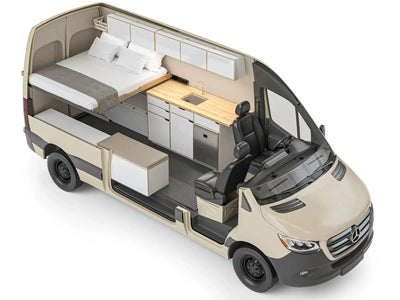
The Vansmith offers several layouts, including the DUO and Family XL series, which can be adapted to fit the E-Series platform. These layouts accommodate full kitchens, bathrooms, and sleeping areas, making full use of the E-Series' roomy interior. Weight distribution and access to water and power are worth thinking through early. Many van lifers prefer designs that let them live, work, and sleep in one space, and The Vansmith's custom layouts can include pop-tops for extra room where it makes sense.
Adapting The Vansmith layouts
The DUO layout suits couples well, giving a compact but comfortable living space. For larger groups, the Family XL layout makes the most of the E-Series' interior, adding more room and comfort.
FAQ
What are the benefits of converting a Ford E-Series van?
A Ford E-Series conversion gives you a strong platform with plenty of interior space for custom builds and steady performance from its V8 engine. It suits anyone who wants strength and space in a reliable camper van conversion.
How much does it cost to add a high-top to a Ford E-Series van?
Usually $3,000 to $6,000, depending on the parts and labor involved.
Are parts for the Ford E-Series still available?
Yes. Parts remain easy to find because Ford still builds the cutaway and chassis models today, which keeps steady support flowing for conversions.
What layout options are best for a Ford E-Series conversion?
The Vansmith offers layouts like the DUO and Family XL series, which can be custom-fit for the E-Series, covering kitchens, bathrooms, and sleeping areas for your build.
Written by Santiago Pere, Chief Design Engineer at The Vansmith.
About the author

Santiago Pere
Chief Design Engineer
Santiago is Chief Design Engineer at The Vansmith. He writes on topics spanning van design, builds, and life on the road.
Read more about Santiago