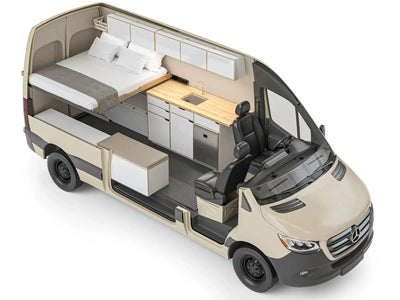
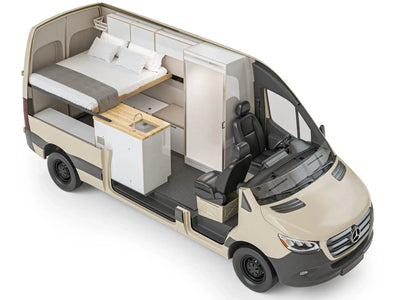
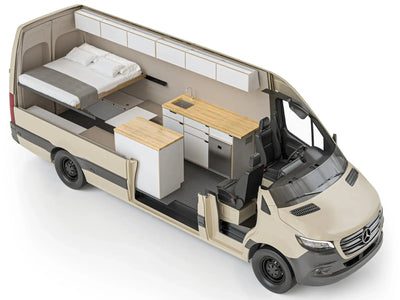
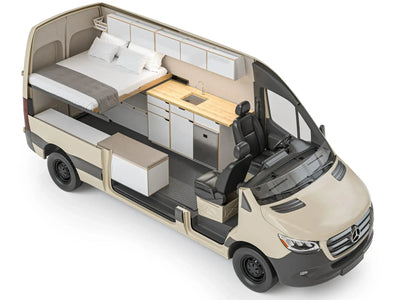
The Sprinter 3500 cargo van delivers a payload of up to 4,699 lbs and can tow up to 7,500 lbs, making it a top pick for heavy-duty van conversions and demanding commercial use. This van’s high GVWR and available dual-rear-wheel setup give it an edge for hauling big loads, supporting advanced builds, or towing trailers. If you need more than a basic shell, the Mercedes Sprinter 3500 cargo work van stands out for its strength and versatility. Choosing the right configuration can make your rig both a workhorse and a comfortable home on wheels.
Understanding Sprinter Badges: 2500 vs. 3500 vs. 3500XD
The badges on a Mercedes Sprinter—2500, 3500, and 3500XD—tell you a lot about what the van can handle. The 2500 is considered the lighter-duty version, with a Gross Vehicle Weight Rating (GVWR) of up to 9,050 lbs. This makes it a solid pick for those who need agility and efficiency but don’t plan to load up the van with extra gear or heavy installations. According to The Wayward Home, the 2500 is often chosen for lighter commercial use or simple camper builds.
Most of The Vansmith's builds are on the 2500. Its payload, around 3,300 lbs, is ample for most camper conversions. This covers a full build with cabinets, water, batteries, and gear, while keeping the van agile and easy to drive.
Step up to the 3500 badge, and you’re looking at a much heavier-duty van. The GVWR jumps to 9,900 lbs, meaning the vehicle can safely carry more weight and handle bigger jobs. This model is a favorite among those who need to haul larger cargo or want to build out a van with extra features and storage. The difference is clear when you start adding heavy items—think water tanks, batteries, or interior cabinetry. As Van Camping Life points out, commercial outfits often lean toward the 3500 for this reason.
The 3500XD takes things even further, offering a GVWR of about 11,030 lbs. This van is designed for the biggest payloads and the most demanding work. According to Mercedes-Benz of Des Moines, the XD trim is built for those who don’t want to compromise on capacity, whether it's for heavy equipment or a conversion loaded with features. These badge numbers directly reflect how much each van can carry and their best uses, so picking the right one is crucial for your project’s success.
Each model also has differences in available engines and features. The 3500 and 3500XD often come with more robust engine options and extra tech, making them even more appealing for serious builders. At The Vansmith, we’ve worked on all three, tailoring designs that fit your needs—whether you’re building a family camper or a mobile workshop.
Single-Rear-Wheel (SRW) vs. Dual-Rear-Wheel (DRW): Which is Right for You?
The choice between single-rear-wheel (SRW) and dual-rear-wheel (DRW, or “dually”) setups can shape your van’s performance more than you might expect. SRW models are lighter, easier to drive in tight spaces, and get better gas mileage. They're a solid fit for urban deliveries, simple camper builds, or anyone who wants a van that feels a bit more nimble. As Automotive Designs and Fab explains, SRW vans have the edge in maneuverability and fuel efficiency, usually hitting 20-24 mpg.
However, if you’re planning a heavy build or need to haul serious cargo, DRW is the way to go. The extra wheels in back provide better stability, especially when you’re loaded to the max or driving in crosswinds. DRW vans also bump up your payload capacity—a 144-inch wheelbase DRW Sprinter can handle up to 4,620 lbs, compared to 4,488–4,554 lbs for SRW. This matters if you’re adding a lot of weight with built-ins or need to tow extra gear. According to Van Camping Life, DRW setups shine when you’re carrying water tanks, rooftop solar, or extra batteries.
| Configuration | Best For | Key Advantages | Potential Trade-Offs |
|---|---|---|---|
| SRW Sprinter 2500 | Lighter camper builds, city driving, daily use | Better fuel economy, easier parking, lower upfront cost | Lower payload and towing capacity, less stable when heavily loaded |
| SRW Sprinter 3500 | Mid-weight camper builds, mixed city/highway use | Higher payload than 2500, still relatively nimble | More expensive than 2500, payload still limited for very heavy builds |
| DRW Sprinter 3500 | Heavy camper builds, frequent towing, long highway trips | Maximum stability, higher payload, better control in crosswinds | Slightly worse fuel economy, higher tire and maintenance costs |
| DRW Sprinter 3500XD | Commercial loads, fully loaded luxury or off-grid builds | Highest GVWR and payload, built for demanding use | Highest purchase price, less maneuverable in tight spaces |
SRW models usually cost less up front and are cheaper to maintain. DRW options add expense, but for some, the peace of mind and added capability are worth it. If you’re not sure which way to go, The Vansmith can help you weigh the pros and cons for your build, whether you’re dreaming up a lightweight adventure rig or a fully loaded family hauler. We can customize both SRW and DRW vans, making sure your design stays safe and balanced no matter what you add inside. For more inspiration on layouts, check out our DUO XL and Family XL models.
One thing to keep in mind—fuel economy drops a bit with DRW because of the extra weight and rolling resistance. Most DRW Sprinters will get slightly less than their SRW siblings, but for those who need the extra payload, it’s often a fair trade.
Payload and Towing Capacities of the Sprinter 3500
The Sprinter 3500’s real claim to fame is its strong payload and towing numbers. Depending on the exact configuration, payload ranges from 4,148 to 4,699 lbs, letting you stack in heavy gear, tools, or conversion materials without worry. If you opt for the high-output diesel or the 3500XD, payload shoots up even higher—up to 5,662 lbs, according to Mercedes-Benz of Des Moines.
Towing is just as impressive. The Sprinter 3500 can tow between 5,000 and 7,500 lbs, giving you the flexibility to pull a trailer, a small car, or heavy equipment. The Wayward Home highlights that these numbers make the 3500 a favorite among commercial users who need a van that does double duty as a hauler.
When you start building out your van, payload is more than just a number—it's the line between a safe ride and a risky one. Every cabinet, battery, or water tank adds up. The 3500’s higher capacities mean you can add those comforts (like bigger beds, more storage, or off-grid gear) without stressing the chassis. For comparison, the 2500’s max payload tops out at 4,442 lbs, which can get tight on a full build. Van Camping Life notes this difference is critical for anyone planning more than a basic conversion.
At The Vansmith, we pay close attention to how every piece in the build affects payload. Our custom build process focuses on smart weight distribution and using lightweight materials where possible. This lets you get more features without exceeding safe limits. If you’re curious about how payload affects your project, our team is always ready to talk through your options.
Choosing the Right Sprinter Model for Your Needs
Picking between the 2500, 3500, and 3500XD starts with an honest look at your needs. If you want a lighter, more agile van for simple trips or city driving, the 2500 is hard to beat. It’s efficient, nimble, and generally starts at a lower price—around $48,000, according to our guide to buying a Sprinter.
But for those planning bigger builds—maybe a full kitchen, extra sleeping space, or serious off-grid systems—the 3500 is the sweet spot. It brings the payload and durability you’ll want for years of adventure. Van Camping Life recommends the 3500 for anyone with heavier gear or more demanding travel plans. If you need to go even further, the 3500XD delivers the most muscle, thanks to its higher GVWR and the extra stability of a dually rear axle.
Think about how you’ll use the van: Are you hitting long highways, tackling backroads, or carrying lots of cargo? The 3500’s extra capacity can make a big difference in comfort and safety. Pricing for the Mercedes Sprinter 3500 cargo hauler can reach $65,000 or more, depending on features, but for many, the peace of mind is worth it. If you want to see real layouts, browse our family van conversions and couple’s vans for ideas.
The Vansmith’s team can help you sort through the options. We’re happy to talk through your travel style, must-haves, and budget to recommend the best fit. Don’t underestimate the value of expert advice—choosing the right van now can save you a lot of trouble (and money) down the road. For more advice, check out our van build blog.
The Vansmith's Expertise in Sprinter Van Conversions
At The Vansmith, we’ve converted both Sprinter 2500 and 3500 models for a wide range of clients—from solo explorers to adventure families and commercial ventures. Our focus is always on maximizing space, function, and style, no matter which van you bring us. We know the ins and outs of every model, so we can recommend the best approach for your vision.
For many, a Sprinter 3500 cargo rig is a blank canvas for adventure. Our team specializes in upgrades like solar panels, advanced electrical setups, and custom interiors that fit your exact needs. We believe in quality craftsmanship—everything we build is designed to last and look good, even after years of hard use. If you want to see what’s possible, our Sprinter conversion gallery shows off some of our latest work.
From the layout to the finishing touches, our conversions are tailored for real life—whether that means off-grid camping in the mountains or supporting a mobile business. Our foundation builds are a great place to start if you want a solid, reliable base. And if you’re looking for a van that can handle rugged roads and unpredictable weather, we’ve got years of experience making sure your build is ready for whatever you throw at it.
We don’t just talk about adventure—we live it. Every conversion gets the same attention to detail we’d want in our own vans. If you have questions or want to start dreaming up your own build, reach out to us anytime. Our team is here to help you hit the road with confidence.
FAQ
What is the primary difference between the Sprinter 2500 and 3500 models?
The biggest difference is that the Sprinter 3500 offers a higher payload and towing capacity than the 2500. The 3500 is built for heavier-duty work, making it better for big builds, commercial use, or anyone hauling more gear. The 2500, on the other hand, is more agile and fuel-efficient, which makes it great for lighter loads and easier handling. Learn more about the differences here.
Why choose a dual-rear-wheel (DRW) configuration for a Sprinter van?
Going with a DRW setup gives you more stability and lets you carry heavier loads, especially if you’re planning a complex or luxury build. The extra wheels in the back help spread out the weight, making the van safer and more stable when fully loaded. This is especially important for big conversions or when you need to haul a lot of equipment. Read more about DRW advantages.
What are the towing capacities of the Mercedes Sprinter 3500?
The Mercedes Sprinter 3500 can tow between 5,000 and 7,500 lbs, depending on the specific setup. This range means you can pull small trailers, extra gear, or even a small car, making it a flexible choice for many builders. Check out more towing specs here.
How does The Vansmith tailor Sprinter van conversions to client needs?
The Vansmith offers custom conversions for every need. We focus on making the most of your space with smart layouts, options like solar and advanced electrical systems, and designs that fit your daily life or travel dreams. Our experience means every van is built to match what matters most to you, down to the last detail.
What are the price ranges for the Sprinter 2500 and 3500 models?
Sprinter 2500 models usually range from $48,000 to $58,000, while the 3500 can cost between $55,000 and $65,000. The final price depends on the configuration, features, and any customizations you pick. For a full breakdown, visit our Sprinter buying guide.
About the author

Eugene Smit
CEO
Eugene is the CEO of The Vansmith, based in Boulder, Colorado. He writes across topics related to van builds, ownership, and the camper van industry.
Read more about Eugene