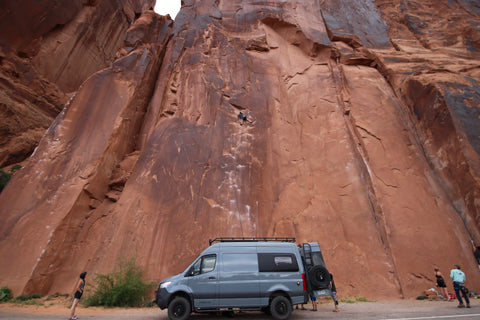
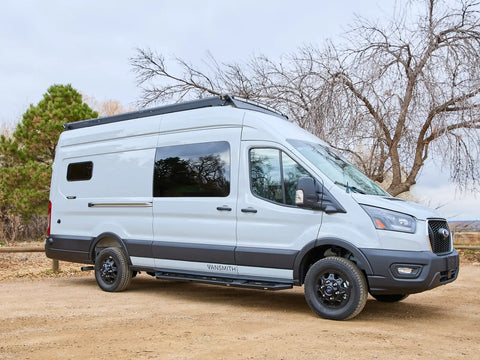
The short answer is yes—a properly equipped 4x4 camper van can cross shallow rivers and streams safely. However, the definition of "shallow" matters more than most travelers realize.
Many people assume that if a trail includes a stream crossing, a four-wheel-drive camper van can simply drive through without concern. In reality, water crossings are among the most challenging obstacles encountered during overlanding and backcountry travel.
While modern adventure vans, such as a Mercedes-Benz Sprinter 4x4, AWD Sprinter, or AWD Ford Transit, are designed to handle rough terrain, water introduces unique risks that can quickly turn an enjoyable trip into an expensive recovery operation.
Whether you're exploring remote desert routes, mountain forest roads, or dispersed camping destinations, understanding the limits of your vehicle is essential before entering any water crossing.
If you're considering an adventure-ready build, explore The Vansmith's collection of camper vans for sale designed for off-grid travel and rugged backcountry exploration.
Why Water Crossings Are Different for Camper Vans
Unlike traditional 4x4 trucks and SUVs, camper vans face several unique challenges when entering water.
The "Boat" Effect
A fully converted camper van contains insulated walls, cabinets, storage compartments, water systems, and enclosed living spaces. While these features make van life comfortable, they can also increase buoyancy.
As water rises toward the rocker panels—the lower sections beneath the doors—a strong current can begin lifting portions of the vehicle. Even a heavy camper van can lose traction if enough buoyant force is created.
This is one reason experienced overlanders avoid crossings that approach door-sill height.
Low Factory Air Intakes
One of the biggest threats during water crossings is hydro-locking.
Most factory vans place the engine air intake behind the grille or headlight assemblies. If water enters the intake system, it can be drawn directly into the engine.
Because water cannot be compressed like air, hydro-locking can cause catastrophic engine damage almost instantly.
For travelers who regularly encounter water crossings, upgrading with a snorkel system may provide additional protection, although it does not eliminate all risks.
Heavy Vehicle Weight
Adventure vans are significantly heavier than standard passenger vehicles.
A fully equipped camper van may weigh anywhere from 7,000 to over 11,000 pounds once loaded with:
-
Water tanks
-
Batteries
-
Solar systems
-
Camping gear
-
Recovery equipment
-
Passengers
While this weight improves stability on many surfaces, it can become a disadvantage on soft riverbeds.
Mud, sand, and loose gravel can cause tires to sink rapidly, increasing the likelihood of becoming stuck mid-crossing.
What Determines Whether a River Crossing Is Safe?
Before entering any stream or river, evaluate four critical factors.
1. Water Depth
Depth is the single most important consideration.
As a general rule:
-
Water below the wheel hubs is usually manageable.
-
Water approaching the center of the wheels requires caution.
-
Water near the door sills or rocker panels should generally be avoided.
Most stock 4x4 camper vans have safe wading depths between 20 and 30 inches.
However, vehicle specifications alone should never determine whether a crossing is safe.
2. Current Speed
Many drivers focus exclusively on depth while ignoring water movement.
Fast-moving water exerts tremendous force against a vehicle.
Even relatively shallow water can:
-
Push a van sideways
-
Reduce tire traction
-
Shift the vehicle off its intended path
-
Create dangerous recovery situations
If debris is moving quickly downstream, conditions may already be unsafe.
3. Riverbed Conditions
The surface underneath the water matters just as much as the water itself.
Ideal riverbeds include:
-
Packed gravel
-
Solid rock
-
Firm dirt
Higher-risk surfaces include:
-
Deep mud
-
Soft sand
-
Loose stones
-
Hidden drop-offs
A stable riverbed often makes the difference between a successful crossing and becoming stuck.
4. Vehicle Setup
Not all camper vans are equally capable.
Important factors include:
-
Four-wheel-drive capability
-
AWD systems
-
Ground clearance
-
Tire selection
-
Suspension upgrades
-
Recovery equipment
Many adventure travelers improve performance with Sprinter and Transit suspension upgrades to increase clearance and improve stability on uneven terrain.
Safe Wading Depths by Popular Camper Van Platform
While every build is different, the following estimates provide useful guidance.
Mercedes-Benz Sprinter 4x4 / AWD
Approximate factory wading depth:
24–28 inches
Advantages include:
-
Higher ground clearance
-
Strong off-road capability
-
Popular expedition platform
For those seeking an adventure-ready build, explore The Vansmith's Sprinter camper vans for sale and custom Sprinter van conversions.
Ford Transit AWD
Approximate factory wading depth:
20–24 inches
Transit-based camper vans offer excellent versatility but require awareness of air intake locations and underbody components.
Learn more about The Vansmith's Ford Transit camper vans and custom Ford Transit conversions.
Front-Wheel-Drive Vans
Front-wheel-drive platforms generally struggle in slippery water crossings because traction is concentrated at the front axle.
When river crossings are expected, a dedicated AWD or 4x4 platform is usually the better choice.
Step-by-Step Guide to Crossing a River Safely
Step 1: Stop and Inspect
Never drive directly into unknown water.
Pull over and assess the crossing first.
If safe:
-
Walk the crossing
-
Measure depth with a stick
-
Identify obstacles
-
Confirm that an exit route exists
If you cannot safely inspect the crossing, do not attempt it.
Step 2: Assess Current and Riverbed
Observe:
-
Water speed
-
Riverbed firmness
-
Depth variations
-
Hidden rocks
If conditions seem uncertain, turn around.
Experienced overlanders know that avoiding a crossing is often the smartest decision.
Step 3: Engage 4WD Before Entering
Activate:
-
Four-wheel drive
-
Low range (if equipped)
-
Appropriate drive modes
Doing this before entering the water helps maintain traction throughout the crossing.
Step 4: Maintain a Slow, Steady Pace
Enter the water at approximately:
2–4 mph
This speed creates a gentle bow wave ahead of the vehicle.
A controlled bow wave can help lower the water level around critical engine components.
Avoid:
-
Sudden acceleration
-
Wheel spin
-
Splashing
-
Stopping mid-crossing
Consistency is key.
Step 5: Exit Smoothly
Continue at a steady pace until completely clear of the water.
Do not accelerate aggressively while climbing the exit bank.
Step 6: Dry Your Brakes
After crossing:
-
Drive slowly
-
Apply light brake pressure
-
Allow friction to remove moisture
Wet brakes can dramatically reduce stopping performance.
Essential Modifications for Frequent Water Crossings
If your adventures regularly involve streams and river crossings, several upgrades can improve capability.
Snorkel Systems
A snorkel relocates the engine air intake higher on the vehicle.
Benefits include:
-
Increased intake height
-
Reduced hydro-lock risk
-
Improved performance in dusty conditions
Remember: a snorkel does not make a van waterproof.
All-Terrain Tires
Quality all-terrain tires improve traction on:
-
Wet rocks
-
Gravel
-
Mud
-
Loose riverbeds
Tires often have a greater impact on water-crossing performance than many drivers realize.
Suspension Upgrades
Increased ground clearance helps keep critical components farther from the water.
The Vansmith offers professional suspension upgrade services for adventure-focused builds.
Recovery Equipment
Always carry:
-
Recovery straps
-
Shackles
-
Air compressor
-
Traction boards
-
Recovery points
Even experienced drivers occasionally encounter unexpected conditions.
When You Should Never Attempt a Crossing
Certain situations should immediately trigger a turnaround.
Water Is Above the Vehicle's Wading Depth
Manufacturer recommendations exist for a reason.
Never assume you can exceed them safely.
You cannot see the Bottom
Unknown depths often hide:
-
Deep holes
-
Large rocks
-
Soft mud
-
Washouts
If visibility is poor, avoid the crossing.
The Current Is Strong
Moving water becomes dangerous quickly.
If you struggle to walk through safely, your van may struggle as well.
Recent Storms or Snowmelt
Water levels can change dramatically within hours.
Always check local conditions before heading into remote areas.
There Is No Recovery Plan
Ask yourself:
-
Can I self-recover?
-
Is there cell service?
-
Can another vehicle assist?
If the answer is no, reconsider the crossing.
Choosing the Right Adventure Van for Backcountry Travel
Travelers planning frequent off-road exploration should consider vehicle capabilities during the buying process.
The Vansmith builds premium camper vans designed for adventure and off-grid travel, including:
Many travelers also prioritize features such as solar installations, camper van heaters, and van conversions with showers for extended remote travel.
Frequently Asked Questions
Can a 4x4 camper van cross a river?
Yes. Most properly equipped 4x4 camper vans can safely cross shallow rivers and streams when water depth remains within the vehicle's wading limits and current speeds are low.
How deep can a Sprinter 4x4 go in water?
Many Sprinter 4x4 and AWD models can handle approximately 24–28 inches of water under ideal conditions. Always verify specifications for your exact model.
Do I need a snorkel for river crossings?
Not necessarily. A snorkel is beneficial for frequent crossings but does not replace proper route assessment and safe driving techniques.
What is the biggest risk during a water crossing?
Hydro-locking, vehicle flotation, strong currents, and getting stuck in soft riverbeds are among the most common risks.
Is AWD enough for stream crossings?
AWD can help in shallow crossings, but traction, ground clearance, tire selection, and water depth remain equally important factors.
Final Thoughts
So, can a 4x4 camper van cross rivers and streams?
Absolutely—but success depends on preparation, judgment, and understanding your vehicle's limitations.
A well-equipped 4x4 camper van can confidently handle many shallow stream crossings encountered on forest roads, overlanding routes, and remote camping adventures. However, water depth, current strength, riverbed conditions, and proper driving technique matter far more than simply having four-wheel drive.
When conditions are uncertain, the safest choice is often to turn around and find another route.
For travelers seeking a professionally built adventure van capable of exploring beyond the pavement, browse The Vansmith's collection of camper vans for sale in Colorado and camper vans for sale across the USA to begin your next journey with confidence.