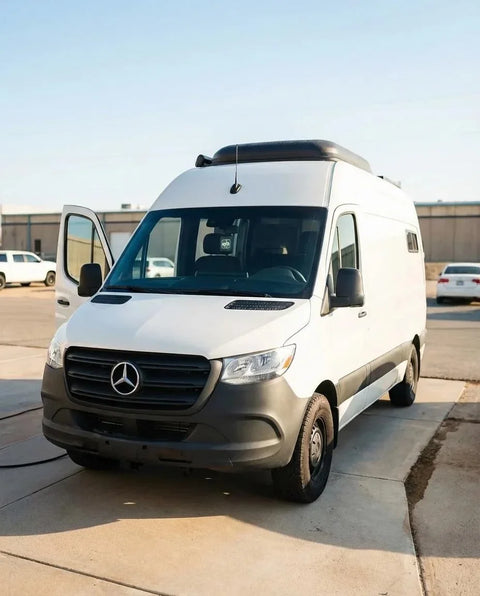
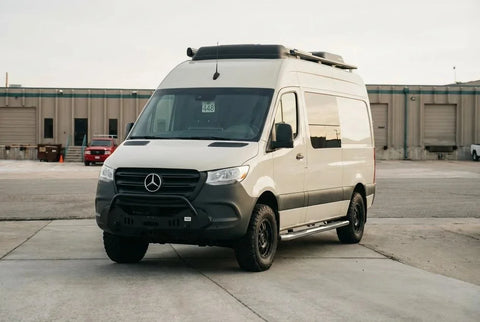
A white sprinter van usually stays cooler in direct sun than a black one because light surfaces reflect more solar energy and absorb less heat. Which side of that answer fits you comes down to how you use the van: parked in sun, driving often, chasing ski lots, or camping with dogs and people inside. In our Boulder shop, color shows up as a daily comfort choice, not just a style pick. White won't replace insulation, venting, or shades, but it gives those systems an easier job from the start. That matters on every sunny day.
Why a white Sprinter van usually wins on heat
 The basic physics is simple. The U.S. Department of Energy's cool roof guide explains that light and reflective surfaces stay cooler in sun because they reflect more sunlight and absorb less heat than dark ones.
That guide talks about buildings, but the same solar-reflectance idea still applies to a van roof and body shell. Park a white van and a black van in the same lot, under the same sun, and the dark skin will usually get hotter. More heat in the skin means more heat pushing into the cabin.
Roof color matters a lot on camper vans because the roof gets the most sun. It also sits right over your insulation, wiring, vent fan, and often your bed. In our builds, that's the first place people feel the difference.
Here in Boulder, the sun is strong and the altitude doesn't help. Customers notice heat buildup fastest on dark roofs and upper wall panels, especially if the van is parked in open sun around midday. A white exterior doesn't solve everything, but it starts you at a lower heat-gain baseline.
If you're still deciding on the van itself, our Sprinter conversions page shows the layouts we build around most often. Color seems cosmetic at first, but it affects how the van feels every time you stop for lunch, work inside, or try to nap in a trailhead lot.
What heat gain means inside a converted van
Heat at the outer shell doesn't stay at the shell. According to the same DOE guide, more absorbed solar energy means more heat that has to be managed inside. In van terms, that load gets pushed onto insulation, venting, fans, shade, and any AC you install.
A darker shell makes all of that work harder. The van starts hotter before your roof fan, cracked windows, or AC even begin pulling heat out. In our experience, parked heat is the one people remember.
That parked part matters most. While driving, you get moving air over the body and usually some help from the cab system. Once you're parked, you're often cooking, working, reading, or sleeping inside, and the van has to deal with sun on its own.
Glass is the other big heat path. XPEL's FAQ and film care guidance matter later for protection, but for comfort, window strategy is huge, and our van build blog often comes back to that same point. A white shell helps, yet big side and rear windows can still pour heat into the cabin if you leave them untreated.
That's why buyers headed for desert shoulder seasons, trailhead parking, or dog-friendly camping usually do better with white. You get a more forgiving starting point. Then you can add tint, insulated covers, or AC without first fighting the extra solar absorption of a dark body.
When black may still be worth it
Some people just love the look of a black sprinter van. Fair enough. It can feel sleek, more private, and more subdued at night, but it's best to make that call with the heat penalty fully in view.
There's also a middle path. If you like a darker look, a white base van plus window film and satin protection often gets you close without taking the full thermal hit. XPEL notes that STEALTH PPF can turn a glossy finish into a satin one, so you can cut glare and shine without repainting.
Customize your van is usually where this gets sorted out. Most buyers want black. Or they think they do, until they see what it costs them in cabin heat and wash marks. Once that trade-off is clear, a lot of them land on white plus a few smart upgrades.
Window film helps too. 3M says automotive films can provide heat rejection, which gives you another way to improve comfort without committing to dark paint. For people parking in forests, ski lots, and exposed western campsites, the daily comfort edge of white usually wins out over the style edge of black.
White vs black Sprinter care: scratches, swirls, and warranty reality
 Heat is only half the story. Finish care matters just as much once you start using the van on gravel roads, in ski parking lots, and around brush. That's where white tends to make life easier.
Mercedes-Benz's Sprinter warranty booklet says cosmetic or surface corrosion caused by stone chips or scratches in the paint is not covered. In plain terms, visible finish damage is usually your problem to manage, not a warranty fix.
Mercedes-Benz Vans warranty information also separates corrosion coverage from normal cosmetic wear. That distinction matters more on dark paint because the same light scratch that blends into white can jump out on black.
On a tall, slab-sided van, you see a lot of paint at once. Dust, light wash marring, and minor trail rash tend to hide better on white, especially on high-roof bodies. A black van can look amazing fresh out of a detail, but it usually asks for more careful washing and more frequent upkeep to stay there.
If you're weighing layouts and long-term use, our Foundation builds and Our process pages show how much thought goes into durable choices from day one. Color belongs in that same conversation because it changes how much work the exterior needs after the build leaves the shop.
Why dark paint shows more defects
Mercedes sets the ownership side of the issue, but the visual side is easy to see in real life. Dark, glossy paint reflects more sharply, so swirl marks, haze, streaks, and water spots stand out faster than they do on white.
That gets worse on a high-roof van because the upper panels are harder to inspect and wash well. People rush. They miss grit in a mitt, lean a ladder in the wrong spot, or wipe dust off a panel that should have been rinsed first.
On black, those little moments leave a mark you notice right away. On white, the same van often still looks clean enough between washes. That's a big difference if you use the van a lot and don't enjoy detailing for fun.
In our shop, owners who pick dark paint sometimes underestimate that burden at the start. They picture delivery day. They don't picture the third muddy ski weekend, or the branch scrape on a narrow forest road.
What Mercedes warranty does and does not protect
Mercedes does provide outer-body sheet-metal corrosion-perforation coverage within its stated terms. That's real coverage, but it is not the same as paying for cosmetic paint damage. Chips around the hood, road rash on the rocker area, and branch scratches on the body are different issues.
The Sprinter warranty booklet is clear that cosmetic or surface corrosion from stone chips and scratches is excluded. That hits dark finishes harder in practice because the same defect is easier to see on black than on white.
So the practical plan is pretty simple. Pick a forgiving base color, protect the high-impact zones early, and wash the van in ways that don't add avoidable marring. For owners who know dirt roads are part of the plan, that's usually the lower-stress move.
If you want help with that kind of strategy after delivery, our Contact us page is the easiest place to start. We handle service work that can improve comfort and durability without turning the whole van into a cosmetic project.
Protection options if you want the look without the full downside
 If you want a darker or more subdued look, you don't have to repaint the van. The most useful tools here are window film, paint protection film, and satin or matte-style protective film. Each solves a different problem.
Window film works on the glass. PPF works on the paint. Satin film changes the visual finish while still protecting the surface underneath. Used well, those options can take the edge off a dark-style goal while keeping the thermal edge of white.
This is the phrase we'd keep in mind: white is easier to live with. Protection products can make a dark look more manageable, but they don't erase the basic heat advantage of a white body shell. That's still the starting point.
Window film for heat and privacy
3M says automotive films can provide heat rejection, which makes window film one of the most direct ways to cut solar gain through glass. That's a big deal on camper vans with side windows, rear-door glass, or both. Glass often becomes the next heat problem after roof color.
3M also notes that some film options avoid metallic layers that can interfere with signals. For a van using phones, navigation, mobile work gear, or connectivity add-ons, that's a useful detail. You want comfort gains without creating a new annoyance.
Film also helps with privacy. A white Mercedes Sprinter can feel a lot less visually open once the side and rear glass are toned down. For many builds, that's a smarter first spend than choosing a darker body just to make the van feel less exposed.
Because film works on the glass, it keeps the resale-friendly flexibility of a white factory finish. If your build needs comfort upgrades later, we also install items like fans, AC, and coverings, and our DIY blog covers broader van-use topics that help owners think through those choices.
PPF and satin film for impact protection
XPEL's product care guidance says PPF still needs careful washing, and pressure washers need extra caution around film edges. So film is protection, not armor. That's worth saying plainly.
XPEL also says contaminants should be removed promptly, which tells you the same thing in a different way. Film lowers damage risk, but it doesn't end maintenance. If you ignore mud, sap, or grime for too long, you'll still create work for yourself.
Some XPEL films can self-heal light scratches, sometimes with warmth or warm water. That's especially useful on door cups, leading edges, and lower body sections where contact happens all the time. On vans that see gravel, ski roads, and brush, those zones usually deserve attention first.
STEALTH PPF can also give a white van a satin look. That means you can tone down glossy white without jumping all the way to a black exterior. In our shop, targeted film on high-impact areas usually gives better value than wrapping every panel just for appearance.
Cost comparison: paint protection, film care, and long-term upkeep
The manufacturer sources here don't publish installed retail prices for tint, PPF, or satin film, so it would be a mistake to invent neat national averages. The better way to think about cost is by direction. White usually reduces the need for cosmetic correction, while black often pushes owners toward more spending on protection and detailing.
That cost gap shows up after purchase, not always on the window sticker. Since Mercedes excludes cosmetic damage from stone chips and scratches, correction and repainting costs are generally owner-paid. A dark finish tends to create more demand for polishing, paint correction, and film budgeting because defects stay visible.
A white van can still benefit from PPF and tint, but you can spend with a function-first mindset. Many owners would rather put money into ventilation, window coverings, or AC than chase the appearance upkeep of a dark exterior. In our experience, that budget split makes people happier later.
As of 2026, our ready-to-drive and semi-custom pricing starts at $114,450 for the Sprinter Duo and $119,450 for the Sprinter Family. Once you're already making that level of investment, adding a finish choice that asks for more care every year is worth thinking through carefully.
| Build option | Starting price | Typical exterior strategy |
|---|---|---|
| Sprinter Duo | $114,450 | White paint, then targeted tint or PPF |
| Sprinter Family | $119,450 | White paint, then comfort-first upgrades |
| Black exterior choice | Similar upfront van price | Usually more spending on care and protection later |
Where the money usually goes after purchase
If you buy black and want to keep a high-gloss look, the money often goes to careful washes, paint correction, and film in chip-prone areas. That's before you even count the time. For some owners, that's fine. For others, it gets old fast.
If you buy white and want better comfort, the more rational spend is often heat management. Window film, insulated covers, venting, or AC change how the van feels day to day. Those upgrades do more real work than constant cosmetic correction.
PPF can cut some repainting and correction needs, but it has its own care rules. Brush car washes can scratch or dull films, and they may lift edges, which can turn a protective product into a replacement cost. Protect the vulnerable zones first, then leave the rest alone unless you have a clear reason.
Customers who choose a simple exterior plan tend to be happier long term. The van gets used more, worried over less, and still looks good after real travel. That's usually the better trade.
How this decision fits a full van build budget
Exterior color should sit next to the systems that change daily livability: insulation, venting, heater plan, window placement, and optional AC. A white van gives those systems more thermal margin before they get stressed in hot weather. Small edge, big payoff.
Semi-custom builds with us usually take 8 to 10 weeks, so it's smart to talk through protection and heat strategy early. It is easier to choose a practical base color now and add targeted protection than to start dark and try to engineer around the downsides later.
We also offer service work that can improve comfort no matter what color you choose, including AC install, window coverings, and vent fans. If you're comparing layouts, the DUO XL layout and Family XL layout are good examples of how exterior decisions support interior comfort.
For most owners, the simplest factory choice creates the best ownership experience. That's why so many buyers end up in white, then add only the protection that solves a real problem.
Stealth, visibility, and the smartest real-world choice
A lot of buyers assume black is automatically more stealthy. In practice, it isn't that simple. The available tools from XPEL and 3M show you can create more privacy and a more subdued look without going all the way to a black exterior.
A white Mercedes Sprinter can feel much less visually loud if you reduce glass transparency, cut the exterior gloss, and avoid flashy add-ons. A satin-protected finish tones things down. Dark window film helps too.
What really makes a van stand out is often the camper cues. Open awnings, roof clutter, uncovered windows, and bright lights inside at night draw more attention than paint color alone. We've seen white vans blend in better than dark ones simply because the exterior package stayed restrained.
That is why white is easier to live with. You keep the heat and care advantage, then use tint, coverings, or satin protection to get the privacy and subtle look you actually wanted in the first place.
What actually makes a van feel discreet
Window film usually does more for discretion than body color by itself. It reduces how deep people can see into the cabin, which matters a lot more than whether the paint is white or black. At night, interior light leakage through windows is often the bigger stealth problem anyway.
A satin or matte-protected finish can also cut glare compared with a glossy body. That can make the van feel less attention-grabbing in bright sun. It's a subtle shift, but a useful one.
By day, a clean white cargo-style van often blends into parking lots just fine. A dark van with obvious adventure gear on the roof can stand out more, not less. Once the windows, roofline, and accessories say camper, paint color matters a lot less.
Discretion usually comes from restraint. Keep the outside simple, manage the glass well, and control interior light at night. That's the real recipe.
The Vansmith recommendation for most buyers
For most camper van owners, we'd steer the choice toward a white Sprinter van if the goal is comfort, lower visible wear, and easier long-term ownership. That advice holds whether you're building for solo travel, a couple, or a family. The daily trade-offs stay the same.
If you love the darker look, the lower-regret path is often a white van plus privacy film, targeted PPF, and a subdued accessory package. That keeps the heat advantage of white while solving several of the reasons people are drawn to black in the first place.
It also keeps future service and cosmetic upkeep simpler than a full black exterior that shows every wash mark. If you're planning around a couple's setup, our vans for couples collection is a helpful place to compare use cases, and our family vans page shows how the same logic carries over to larger builds.
And if roof choice is still on your mind, most of our customers choose high roof. Around 90 percent do. Mid-roof buyers often come back asking about pop-tops later, which is one more reason we tend to frame comfort choices early, before the first hot summer and the first long trip.
FAQ
Does a white Sprinter van stay cooler than a black Sprinter van?
Usually, yes. The Department of Energy explains that light and reflective surfaces absorb less solar energy than dark ones, so a white Sprinter van will generally run cooler in direct sun than a black Sprinter parked in the same conditions. That doesn't replace insulation or ventilation, but it lowers the starting heat load inside the van.
Is a black Sprinter harder to keep looking clean?
Yes, in most real-world use. Mercedes says cosmetic damage from stone chips and scratches is not covered in the Sprinter warranty booklet, and dark paint makes those marks easier to see. On a tall van, black also shows dust, streaking, and swirl marks sooner than white.
Can window film help if I choose a white Mercedes Sprinter?
Yes. 3M says automotive films can provide heat rejection, which makes window film one of the most useful upgrades for reducing solar gain through glass while also improving privacy. For many camper vans, that is a smarter first move than choosing a darker body color just to make the cabin feel less exposed.
Will PPF stop scratches on a Sprinter van?
PPF helps, but it isn't maintenance-free. XPEL says light scratches in certain films can self-heal and that owners should use careful wash methods and be cautious with pressure washers near film edges. It's best viewed as impact and surface protection, not a free pass to ignore care.
Is a black van actually more stealthy than a white one?
Not always. XPEL's STEALTH PPF and modern window-film options show that privacy and a lower-gloss look can be created without committing to a full black exterior. In practice, windows, lighting, and accessories usually matter more than paint color alone.
About the author

Eugene Smit
CEO
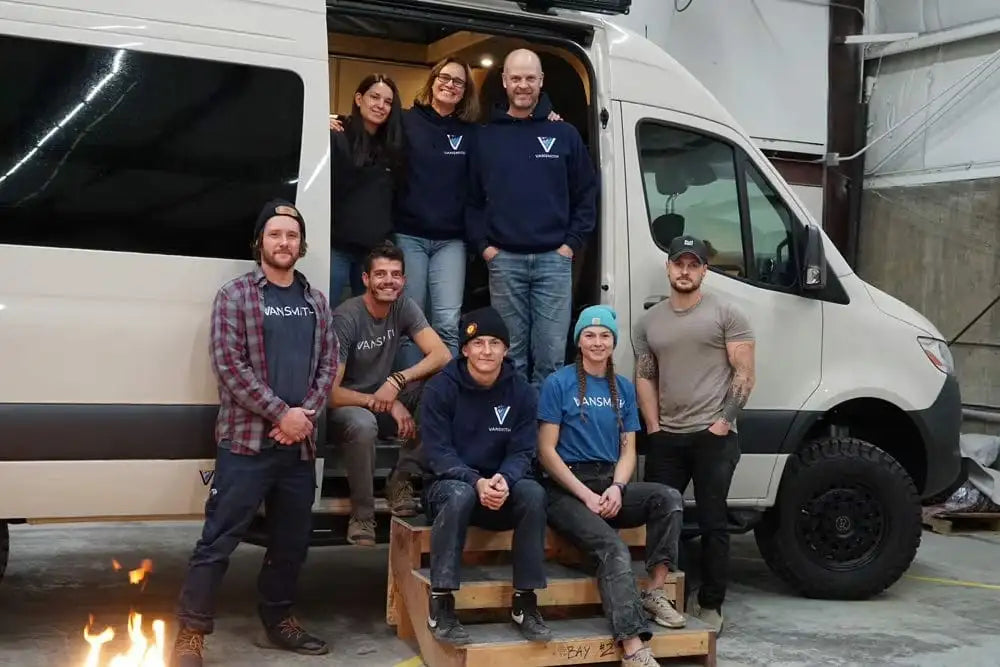
Eugene is the CEO of The Vansmith, based in Boulder, Colorado. He writes across topics related to van builds, ownership, and the camper van industry.
Read more about Eugene