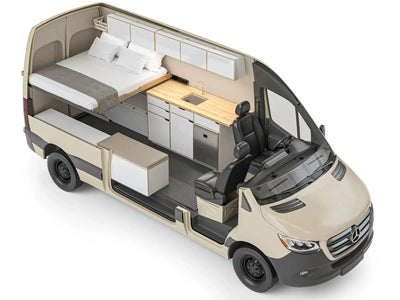
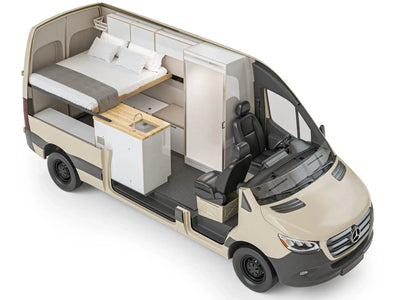
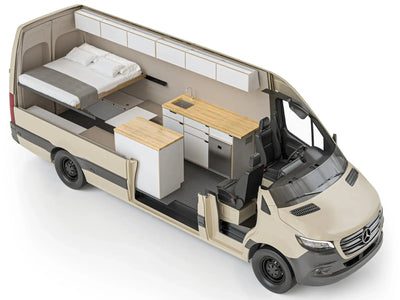
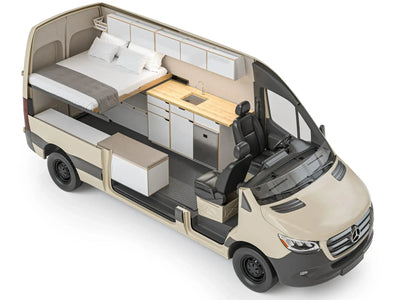
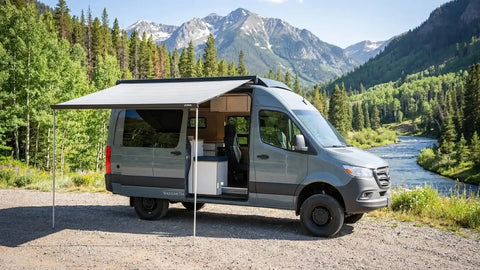
A mercedes benz sprinter box van can be an excellent base for an adventure rig, but it needs to be built like a full upfit, not a simple camper interior. The big difference is the box body itself. It changes the wall shape, the roof structure, the thermal envelope, and the way you mount gear and run wiring. If you treat it like a normal cargo van, small shortcuts can turn into big rework later, especially once insulation and finish panels cover everything up.
What a Mercedes-Benz Sprinter box van really is
Mercedes-Benz treats the Sprinter line as a platform for many vehicle types, not just one van shell. That includes panel vans, platform vehicles, and other conversion-ready setups, as shown in its official upfitting overview. So a box-body build starts from a different place than a factory cargo van interior.
That matters early. A finished panel van already gives you factory walls and a factory roof, while a box van often starts from a chassis or bodybuilder-style setup with a separate enclosure. The added box changes attachment points, service access, and how you think about heat, moisture, and wall thickness.
Mercedes-Benz also centralizes upfit resources through its Upfitter Portal. That portal gives builders access to Body and Equipment Guidelines, drawings, bulletins, and resource charts before any cutting or mounting starts. For 2026 planning, the current U.S. technical baseline on the 907 platform is the June 6, 2025 Body and Equipment Guideline.
One thing a lot of builders overlook is that layout choices in a box van are not just design choices. Mercedes-Benz says modifications must not impair driving, braking, steering, or overall safety. That means your bed platform, battery bank, roof gear, and cabinets all tie back to vehicle engineering. If you're still sorting out platform options, it helps to look at The Vansmith's Sprinter conversions and our process to see how a systems-first build comes together.
Panel van vs platform or box-body base
Mercedes-Benz describes the Sprinter range as covering multiple lengths, roof heights, gross vehicle weight classes, and bodybuilder solutions. You can confirm current configurations on the Sprinter model page before you dive into technical docs. That's the right order, because base-vehicle choice should come before insulation thickness, cabinet depth, or finish ideas.
A panel van gives you a factory body shell. A box body gives you a separate enclosure that may use different materials and different fastening methods than the cab and chassis below it. So vapor control, thermal bridging, and interior liners all need a different plan.
Mercedes-Benz points builders toward 2D drawings, handbooks, and resource charts for a reason. Those tools help you check clearances and safe attachment zones on nonstandard bodies. In our experience, that step saves a lot of guesswork once you start planning windows, heaters, roof gear, or electrical chases.
NTEA also pushes builders to define end use first. A ski rig, bike hauler, remote-work camper, and family adventure van all need different storage and wall strategies. If you're shaping that mission now, The Vansmith's vans for couples and family vans show how use case changes the whole layout.
The practical takeaway is simple. Sprinter box vans give you more design freedom, but less forgiveness. The more custom the enclosure, the more you need to lock in structure, weight, and hidden systems before the nice-looking parts go in.
Mercedes-Benz Sprinter box van constraints to respect before insulating
 The Body and Equipment Guidelines are the main authority for modification practices on the current Sprinter platform. They cover fastening, electrical and electronic impacts, chassis loading, and other issues that can affect safety and durability. So before you think about wall fabric or ceiling slats, you need to know what the OEM allows.
Mercedes-Benz is clear that modifications should preserve corrosion protection and serviceability. That affects how you choose insulation, sealants, subfloors, wall panels, and trim details. A clean finish means less if it hides a joint you may need to inspect later.
Weight distribution is another big one. Insulation, cabinets, batteries, water, recovery gear, and roof accessories all count toward axle loads and safety margins. A box body can feel roomy enough to hold everything, but the chassis still has limits.
NTEA reinforces the same point from the trade side. Upfits carry safety and certification responsibilities, so a box-van adventure build should be documented and planned like a pro upfit. If you want a strong starting point, The Vansmith's Foundation builds are built around that kind of disciplined sequence.
Structure, fastening, and corrosion protection
The BEG goes into fastening and mounting in real detail. That's why every cabinet anchor, roof bracket, wall panel, and utility mount should be treated as a structural choice. Generic van-build habits don't always translate well to a box body.
Mercedes-Benz also warns that body changes can affect corrosion protection. So drilling and cutting need an OEM-aware plan, not random holes made on the fly. This gets even more important where the Sprinter chassis meets the added enclosure, because those may call for different fastening methods.
Service access matters too. If your insulated walls or cabinets block key service points, later maintenance gets harder and more expensive. Removable panels and planned access chases usually age much better than fully sealed decorative walls.
Rough roads raise the stakes. Washboards, potholes, and off-camber travel put more strain on interior structures than a van sitting still in a shop. That's one reason secure mounting and smart backing plates matter so much in an adventure rig.
Electrical integration and hidden systems
The BEG also speaks directly to electrical and electronic impacts. That means insulation and finish walls should never go in before the wiring plan, pass-throughs, and service loops are set. If you skip that step, you tend to compress insulation later or cut extra holes you didn't need.
Mercedes-Benz built the upfitter portal to help avoid conflicts with factory systems. That's important once you add heaters, fans, batteries, lighting, Starlink, or other gear. One roof fan can affect routing, backing, sealing, and ceiling finish all at once.
NTEA's chassis guidance backs up the same systems view. A box-van build works best when electrical, structure, and thermal planning happen as one package. Hidden systems are cheapest to do right before insulation, and most expensive to fix after the walls are closed.
A clean sequence usually goes like this: base vehicle, structural plan, wiring and routing, insulation, then wall and ceiling finish. That's the logic behind many of The Vansmith's upgrade paths, from custom van builds to service work like fans, heaters, electrical upgrades, and roof systems.
Insulation strategy for a Sprinter box van adventure rig
 Insulation in a box van is part of the whole vehicle system. Mercedes-Benz and NTEA both point toward that bigger view. Insulation affects weight, moisture behavior, interior width, service access, and how easy the van is to live with in real weather.
A box body changes the thermal problem compared with a normal panel van. The walls and roof may be flatter, larger, and made from different materials than the factory shell. That sounds simple on paper, but it changes how heat moves through the enclosure and where condensation can collect.
So the first insulation choice is not really thickness. It's envelope strategy. You need to know where the conditioned space begins, where vapor may build up, and which parts of the body still need inspection or service access later.
For most adventure rigs, the goal isn't max material stuffed into every cavity. A better target is a balanced wall and roof assembly that cuts heat gain, heat loss, and condensation risk while still preserving payload and usable width. If you're comparing approaches, The Vansmith's van build blog and DIY blog are helpful places to keep learning.
Moisture, thermal bridges, and service access
Box vans often combine several materials and joints in one enclosure. Because of that, condensation control is as much about detailing and ventilation as it is about insulation itself. A wall can look great and still hide damp trouble if leaks or condensation stay trapped behind it.
Mercedes-Benz puts strong emphasis on corrosion protection, and for good reason. Moisture around fasteners, penetrations, and hidden seams can sit for a long time before you notice it. That makes transitions between the Sprinter cab or chassis and the added body especially important.
Thermal bridges matter here too. Metal framing, fasteners, and body transitions can let heat or cold bypass the insulated layer. In shoulder-season travel, that's often where clammy spots show up first.
A serviceable wall system is usually the smarter move. Removable access points let you inspect hardware, joints, and wiring over time. Roof penetrations for fans, lights, or solar should also be planned with insulation, backing, and sealing before finish panels go up.
Real-world travel makes all this obvious fast. Snowy parking lots, wet gear, and cold nights will show you whether the envelope was planned well. Big difference.
Floors, walls, and ceiling build order
The BEG is useful during floor planning because subfloors and tiedown changes can affect mounting, loading, and service access. Once finish flooring goes in, those choices are harder to revisit. That's why floor height should be planned as part of the whole system, not as a last-minute finish detail.
Every added layer changes step-in height, cabinet geometry, and the feel between the cab and living area. In a box van, that stack-up can get bulky fast. It pays to map total build height before materials are cut.
Wall thickness should only be set after wiring runs, backing plates, and storage depth are mapped. Those layers all compete for the same interior space. If you rush wall build-up, the straight-wall advantage of a box body can disappear behind oversized chases and trim.
Ceiling planning also needs to happen early, especially if you'll add roof accessories or interior wiring chases. The cleanest order for most rigs is structure first, systems second, insulation third, and finish surfaces last. That's the sequence that helps you avoid tearing out nice panels to fix hidden infrastructure later.
How to outfit the interior without wasting payload or space
A box-van interior can tempt you to overbuild. The enclosure feels big, so it's easy to think you have room for one more cabinet, one more battery, or one more rack. But Mercedes-Benz still expects loading and axle balance to be treated seriously.
NTEA's end-use-first mindset is the best filter here. Start with fixed priorities like sleeping length, gear storage, a work spot, heater placement, and daily movement through the van. Decorative choices should come after those needs are solved.
Mercedes-Benz upfitter resources support planning around the vehicle as a whole system. So furniture should work around service zones, routing paths, and structural anchoring, not just fill open wall space. That's often the difference between a van that feels calm and one that feels crowded.
Adventure use also favors durable, repairable materials. Rough roads, wet jackets, ski boots, bikes, and temperature swings are hard on interiors. The best fit-out tends to be the one you can clean, fix, and keep using for years.
Layout priorities for adventure travel
A remote-work layout may center on a bench, table, and easy power access. A family layout may need more sleeping surfaces and smoother movement through the cabin. Those are very different priorities, even if both builds start from the same box body.
NTEA's framework helps because it forces trade-offs early. Every added feature uses weight, floor area, and access to another system. That can be easy to miss when straight walls make the van look bigger than it really is.
Heavy items like batteries, water, and recovery gear should be placed on purpose. They shouldn't just land wherever room is left over. A gear-forward adventure rig also tends to work better when the lower zone stays modular, washable, and easy to clear out after a muddy trip.
Straight walls do make bed and cabinet geometry easier than in a curved cargo shell. That's a real plus. But the extra apparent volume can also lead to oversized furniture that hurts payload and hides systems behind fixed joinery.
A disciplined layout leaves room for later upgrades. That might mean heaters, more battery capacity, added comms gear, or other serviceable add-ons. If you want to explore layout direction, The Vansmith's DUO XL layout and Family XL layout are good examples of purpose-led planning.
Build sequence that avoids expensive rework
Mercedes-Benz technical docs support a planning-first workflow for a reason. It is the safest way to avoid cutting into finished walls later to add backing plates, wiring, or access panels. That's true on any van, but even more so on a custom box body.
The BEG should be reviewed before any roof, wall, or floor penetrations are made. Those decisions can affect corrosion protection, structure, and electrical systems. Once holes are cut, your options narrow fast.
NTEA also stresses that documenting modifications and component placement is part of a professional upfit. That kind of record keeping may sound boring at first, but it pays off when you need to service the van or add gear later. In our experience, fewer do-overs save more money than cheaper materials ever will.
A smart order looks like this: base-vehicle selection, technical review, layout and weight planning, structural backing, wiring and plumbing routes, insulation, wall and ceiling closure, then finish install. The more custom the body, the more mockups help. Straight walls simplify some furniture shapes, but they can also hide body-specific limits until it's too late.
When a Sprinter box van is the right platform for The Vansmith-style adventure rig
A Sprinter box van makes the most sense if you value square-wall utility, flexible gear hauling, and a purpose-built interior more than the classic look of a standard cargo shell. The extra value is not just volume. It's the chance to create cleaner cabinet lines, larger garage zones, and a more service-friendly layout.
Mercedes-Benz's official support for upfitting is a major advantage here. You are not guessing your way through structure and electrical limits. You can work from OEM documentation and build around real constraints from the start.
NTEA's guidance brings the same message back to mission clarity. The right buyer usually already knows if they need remote work space, family sleeping, four-season priorities, or bulky gear storage. If that mission is clear, a box van can be a very strong platform.
The limiting factor is rarely imagination. It's whether the build respects axle loading, attachment methods, corrosion protection, and access to hidden systems. That's where a pro builder adds real value, turning OEM rules into an interior that feels durable, quiet, and easy to live with.
For The Vansmith, this topic naturally connects to custom layouts, foundation builds, and serviceable upgrades like windows, heaters, vent fans, electrical work, and roof systems. Most of our clients choose high roof vans because standing room and daily comfort matter, and many mid-roof buyers later add pop-tops. If you want help planning a box-body adventure rig with that same systems-first mindset, you can contact The Vansmith.
Who should consider this platform
Independent outdoor explorers can benefit a lot from a box body. Straighter walls usually make bulky gear storage easier than in a curved cargo shell. If you carry skis, boards, bikes, or big bins, that geometry can be a real win.
Adventure couples should pay close attention to envelope quality and serviceable systems. A larger box does not automatically make the van quieter or more refined. Comfort usually comes from smart insulation, good routing, and durable fit-out choices.
Families need even more layout discipline. More people often means more water, more batteries, more sleeping surfaces, and more daily-use gear. Payload can disappear faster than you expect.
Buyers who plan to add heaters, vent fans, windows, solar, Starlink, or modular storage later should favor an upfit plan with clear routing and mounting access. People turning a work body into a lifestyle rig should also expect more planning around insulation and finish transitions than they would with a standard panel van. If your goal is a fast cosmetic camper, a box-body platform may feel less forgiving. If your goal is a clean, durable expedition-style interior, it can be a great fit.
FAQ
Is a Mercedes-Benz Sprinter box van a good base for an adventure rig?
Yes, it can be a great base if you treat it like a full upfit instead of a simple interior remodel. Mercedes-Benz supports the platform with official technical resources, and NTEA pushes the same end-use-first mindset. That combination makes the Sprinter box van a strong option for a serious adventure build.
What is the biggest insulation mistake on sprinter box vans?
The biggest mistake is installing insulation before wiring, mounting points, and service access are finalized. The BEG covers electrical impacts, fastening, corrosion protection, and serviceability, so insulation has to fit into that bigger plan. If you insulate first and improvise later, rework gets expensive fast.
Do I need to follow Mercedes-Benz upfitter rules for a box-van conversion?
If your build is based on a Sprinter platform, the OEM guidance is the best technical baseline you have. Mercedes-Benz says modifications must not impair driving, braking, steering, corrosion protection, or safety-related systems. That makes the BEG essential reading before you drill, mount, route, or load anything.
How is insulating a box van different from insulating a standard Sprinter cargo van?
A box body often has flatter walls, different materials, and different structural transitions than a factory cargo shell. That changes the thermal envelope, fastening plan, and moisture strategy. So the job is less about copying cargo-van habits and more about building around the actual body you have.
What should I plan before outfitting the interior of a Sprinter box van?
Start with end use, weight distribution, structural attachment, wiring routes, and service access. Those choices shape everything that comes after, including insulation and finish materials. Once those core systems are mapped, the interior tends to come together with fewer compromises and fewer do-overs.
About the author

Eugene Smit
CEO
Eugene is the CEO of The Vansmith, based in Boulder, Colorado. He writes across topics related to van builds, ownership, and the camper van industry.
Read more about Eugene