Stealth camping means parking overnight in city or suburban areas while staying completely under the radar-a skill that lets van lifers save money and enjoy flexibility by blending in with everyday traffic. The best stealth camping setups combine smart van design, subtle parking tactics, and the right gear, making it possible to sleep comfortably in places most people would never expect. With a few expert strategies, you can enjoy urban exploration, avoid campground fees, and wake up right where the action is-all without anyone knowing you spent the night in your van.
What is Stealth Camping and Why Does It Matter?
Stealth camping is the practice of overnight parking in urban or suburban areas with the main goal of going unnoticed. Many van lifers rely on it because local rules often ban overnight camping or sleeping in vehicles in certain neighborhoods. According to The Wayward Home, stealth camping lets you access city amenities, stay spontaneous, and save on pricey campground fees. It’s popular with solo explorers, couples, and families who want privacy, safety, and the freedom to plan as they go.
What makes someone successful at stealth camping? It’s a mix of the van’s appearance and how you behave once parked. OzkCustoms points out that even the best van design can be undermined by noisy or careless behavior. On the flip side, a subtle van and low-key habits make you practically invisible. Blending in, keeping quiet, and respecting local customs are all part of the art, as highlighted by OffGridSpot.com.
There’s also a legal gray area to consider. Many cities have strict rules against sleeping in vehicles, so it’s not just about comfort-it’s about staying on the right side of the law. According to The Russos, stealth camping success comes from being able to blend into the environment while leaving no trace. The most effective setups look just like parked work vans or plain vehicles, as noted by RvingKnowHow.
Legal and Ethical Considerations for Stealth Camping
Before you park for the night, it’s crucial to check local laws. As OzkCustoms explains, many cities actively enforce rules against overnight vehicle stays. Always research ordinances-sometimes it’s as simple as reading posted signs or doing a quick online check.
Stealth campers should always follow 'leave no trace' principles. That means no trash, no noise, and no visible setup left behind. It’s a matter of respect, both for the environment and the people living nearby, as described by OffGridSpot.com. Arriving late and leaving early can also help you slip by unnoticed, according to Bearfoot Theory.
If you get the classic "midnight knock"-a police officer or resident asking questions-be polite, move on, and don’t argue. This keeps things friendly and avoids drawing more attention, as suggested by The Russos. Targeting commercial, mixed-use, or industrial zones is usually safer and less likely to raise eyebrows, as Vanlifers.com advises. Never set up chairs, awnings, or grills outside-this is a sure sign you’re not just there to deliver packages. Finally, don’t park in the same spot night after night. Respect the community by moving regularly and staying invisible, as OffGridSpot.com reminds us.
Top Stealth Camping Tips for Urban Van Life
 The heart of stealth camping is knowing how to blend in. Start by parking among similar vehicles-look for streets with other cargo vans, box trucks, or work vehicles, as recommended by RvingKnowHow. Use blackout curtains or custom window covers so no one can see your lights or movement inside the van at night. Bearfoot Theory emphasizes that this small step makes a huge difference in staying undetected.
Avoid parking in front of private homes or in neighborhoods with active watch programs, as these areas are more likely to notice strangers. Keep your van’s exterior clean and plain, with no flashy decals or graphics. Sticking to neutral colors like white, gray, or silver is best-these are the colors most commercial vans use, as detailed by OzkCustoms. When you need to come or go, do it discreetly, and don’t make a scene by swinging doors wide open in public view.
Rotate your parking locations every night or two. This keeps you from forming a pattern that neighbors or local police might pick up on, says OffGridSpot.com. Minimize noise-keep vent fans low or off, and avoid running electronics that can be seen from outside. The quieter and less noticeable you are, the better your chances of a restful, interruption-free night. If you want more background on these tactics, check out our DIY van life blog for more stealth camping stories and strategies.
Blending In: Behavior and Etiquette
Stealth camping isn’t just about the van-it’s about how you act. Never set up tables, grills, or chairs outside, even for a quick meal. Everything should happen inside the van, according to The Russos. For lighting, use dim or red lights to keep visibility low from the outside. The Wayward Home suggests blackout covers stay in place whenever you’re inside at night, especially if you’re using a phone or laptop.
Limit your comings and goings-plan to stay inside until you’re ready to leave. If you need the bathroom, rely on an internal toilet or portable unit. Never step outside for this purpose in urban settings. Don’t play loud music, run a generator, or use noisy appliances. If you’re ever asked to move, do so without argument. This simple etiquette helps keep everyone happy and your van life rolling smoothly.
Stealth Camping Safety Best Practices
Safety is a huge part of stealth camping. Always scout potential spots during the day so you can see the area in good light and spot any issues. Keep a backup plan-sometimes the best-looking spot is taken or just doesn’t feel right. Lock all doors and hide valuables from view at all times, as advised by RvingKnowHow.
Trust your gut. If a spot feels off or if you attract attention, don’t hesitate to move. Before you bed down, have an emergency exit route planned. Keep your keys and phone within arm’s reach while you sleep. Avoid sketchy areas, dark alleys, or isolated lots, and use window coverings that double as privacy shields. We’ve found that a little planning and the right gear go a long way toward peace of mind. For more on safe van layouts, see our custom van design guide.
Best Stealth Camping Vehicles: What to Look For
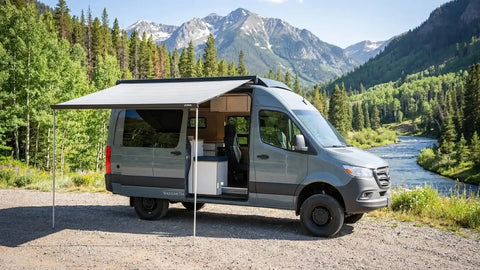
 Not all vans are created equal when it comes to stealth. The best stealth camping vehicles are high-roof cargo vans with a simple, commercial look-think the 2026 Mercedes Sprinter 144 or the Ford Transit High Roof. These vans are popular because they’re common sights in cities and look just like everyday delivery vehicles, especially in white or gray. Shorter wheelbase models (under 20 feet) are easier to park in tight city spots and don’t stand out like their longer cousins, as noted by The Wayward Home.
Factory-style windows with blackout covers are less suspicious than RV-style windows, and privacy tint can help too. Avoid adding rooftop storage boxes, ladder racks, or visible solar panels-if you need solar, go with low-profile, flexible panels that sit flush on the roof. Plain cargo vans without side windows or with deep privacy tint are the least likely to attract attention, an approach highlighted by RvingKnowHow. The Vansmith specializes in subtle, modular Sprinter conversions and Transit conversions that are built for both stealth and comfort.
Vehicle Modifications for Improved Stealth
Some simple mods can make a big difference for stealth. Use removable magnetic signs to mimic a work van if you want to really blend in, as suggested by Vanlifers.com. Tinted windows (within legal limits) and custom blackout covers keep light and prying eyes out. For power, install internal lithium batteries and use low-profile solar panels to run appliances without the noise and risk of a generator, a tip from The Wayward Home.
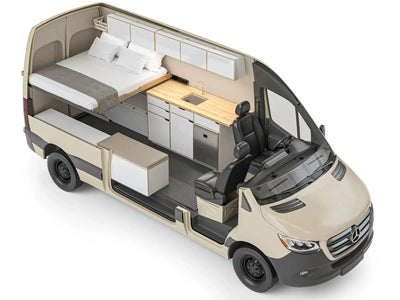
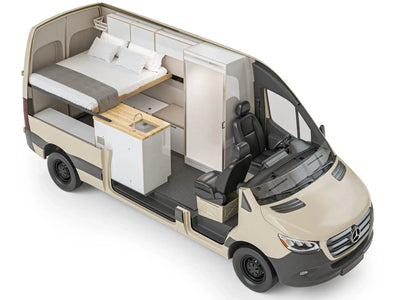
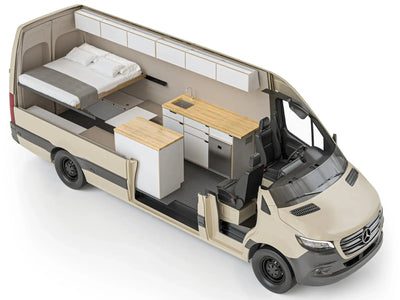
Pick vent fans that sit flush with the roofline to avoid a telltale RV look. An internal cassette or composting toilet means you’ll never need to leave the van in the middle of the night. Keep the outside of your van free from branding, stickers, or RV accessories. Inside, modular cabinetry-like The Vansmith’s systems-creates hidden storage and a clean, contained living space. If you want inspiration for stealth-friendly interiors, see our DUO XL layout and Family XL floor plan.
Popular Stealth Van Platforms: Sprinter vs. Transit
For city stealth, the 2026 Mercedes Sprinter 144 High Roof is a top pick-under 20 feet long and usually finished in factory white, it’s the classic "work van" look. The Ford Transit High Roof offers similar stealth, plus a slightly wider cargo bay for flexible layouts, as described by The Wayward Home. Both vans can be ordered with high-roof options, giving you standing height inside without needing a pop-top or high-profile exterior mods.
Sprinters come with advanced safety tech and diesel options, while Transits offer all-wheel drive and more affordable gas engines, according to OzkCustoms. Shorter vans are much easier to parallel park and draw less attention-big pluses in city stealth. The Vansmith builds stealth-ready layouts for both platforms, so you get all the comfort and utility you need without sticking out. Ram ProMaster vans are less common for stealth due to their styling and shorter roof heights, so most serious stealth campers stick to Sprinter or Transit. To see which platform might fit your style, visit our Foundation builds page.
Essential Stealth Camping Gear and Setup Strategies
The right gear can make or break your stealth camping experience. Blackout window covers (magnetic, insulated, or custom-fit) are a must-they block light and keep you private. Portable toilets, like a cassette or composting unit, let you stay inside without risking detection for late-night bathroom runs, as recommended by Bearfoot Theory.
If you need off-grid power, low-profile flexible solar panels (for example, Renogy 100W Flex) mount flush to the roof and don’t attract attention. LED puck lights or red interior lighting save power and cut down on visible light outside the van, as Vanlifers.com notes. Quiet 12V fridges and battery-powered fans keep things comfortable without the need for noisy generators, a tip from RvingKnowHow. Portable power stations or lithium house batteries provide all the energy you need for lights, fans, and electronics. Magnetic bug screens allow you to ventilate on warm nights without opening doors or windows wide. For gear recommendations and stealth van upgrades, explore our step-by-step build process.
Stealth Camping Locations: How to Choose Wisely
Location is everything when stealth camping. Commercial, industrial, or mixed-use streets are often safer and less restrictive for overnight parking than residential areas, as Vanlifers.com suggests. Hospital, 24-hour gym, and big-box store lots-where allowed-can provide low-key, legal overnight options. But always check for posted rules first.
Scout your chosen spot during the day to look for security patrols, lighting, and traffic. Avoid parking in front of schools, government buildings, or in neighborhoods with extra patrols, according to RvingKnowHow. Change your location regularly to avoid complaints. If you’re parking on public streets, pay attention to local parking rules-meter rules, alternate side parking, and so on. Always have a backup location in case your first pick doesn’t work out. A little foresight is the key to a good night’s sleep.
Packing and Organization for Stealth
Organization is key for stealth. Store your gear so that nothing is left out or visible from the cab. Modular cabinetry helps keep everything tidy and easy to hide, a philosophy we live by at The Vansmith-see more on our Family van conversions page. Keep valuables in hidden compartments or lockboxes, and always have a "go bag" ready in case you need to move quickly, as recommended by OffGridSpot.com.
Skip exterior storage boxes or roof racks-they’re a dead giveaway that someone’s living in the van. Keep the cab looking neutral with no visible bedding, kitchen gear, or personal stuff that hints at van life. The Vansmith’s modular systems are designed to keep interiors organized and easily concealed for stealth. When every detail is in its place, you’re less likely to draw attention and more likely to enjoy hassle-free city camping. Check out more tips in our van build blog.
FAQ
What is stealth camping and is it legal?
Stealth camping means parking overnight in city or suburban areas while trying to stay unnoticed, often because local rules don’t allow sleeping in vehicles. Its legality depends on where you are-many cities have laws against it, so it’s important to look up local rules before you park. For a deep dive into the legal side, read more at OzkCustoms.
What are the best stealth camping vehicles for van life?
The best vans for stealth camping are high-roof cargo models like the 2026 Mercedes Sprinter 144 or Ford Transit High Roof. These look like commercial delivery vans, especially when kept in neutral colors and free of roof racks or decals. For a closer look at stealth van choices, check out The Wayward Home and review our Transit van build options.
What gear do I need for successful stealth camping?
You’ll need blackout window covers, a portable toilet, flush-mount solar panels, LED interior lights, and a quiet battery system for off-grid power. These essentials help you stay comfortable and undetected. For gear ideas, see Bearfoot Theory and our van design guide.
How do I find safe and legal stealth camping locations?
Look for streets in commercial, mixed-use, or industrial areas where vans and trucks are common. Avoid residential neighborhoods and school zones. Scout during the day, and always have a backup spot. For more ideas, check OffGridSpot.com and Vanlifers.com.
What are the top stealth camping tips for van lifers?
Park where your van blends in, use blackout window covers, rotate your location, and avoid any outside setup. Keep noise and light low, stick to neutral van colors, and leave no trace. For more tips, explore RvingKnowHow and our DIY van life blog.
About the author

Eugene Smit
CEO
Eugene is the CEO of The Vansmith, based in Boulder, Colorado. He writes across topics related to van builds, ownership, and the camper van industry.
Read more about Eugene