Camper van maintenance cost usually starts in the several-hundred-dollar range for a preventive year, then can climb past $2,000 when chassis service and catch-up work land at once. That number makes more sense when you split it by system instead of trying to force one average. In real ownership, you are paying for both the van itself and the living systems inside it. The cheapest years usually come from steady inspections, early fixes, and not letting small issues sit until the week before a trip.
What camper van maintenance cost really means each year
 A motorized camper van has more than one service lane. According to RVTI, tech training spans major systems like propane, electrical, water, appliances, generators, chassis, and body. That alone tells you why one flat yearly number rarely fits real life.
RVIA frames the same idea from another angle. Motorized RVs bring together electrical, plumbing, heating, fire and life safety, and construction systems. For a camper van owner, that means upkeep touches both the driving platform and the coach side.
The most useful way to budget camper van annual maintenance is by subsystem. Winnebago’s maintenance guidance separates care into chassis, exterior, and annual system tasks, which lines up with how most owners actually spend money over time. We’ve found it helps to think in five buckets: chassis, batteries and electrical, water and winterization, roof and seals, and solar-adjacent roof hardware.
That matters if you’re planning a new build or shopping used. Someone looking at Sprinter conversions or Transit conversions often asks about the build price first. The better ownership question is whether you can handle annual preventive service plus the occasional catch-up repair.
In our Boulder shop, the pricey problems usually don’t come out of nowhere. They tend to start as deferred maintenance, like tired roof sealant, battery storage mistakes, or missed winterization. Small issues stay cheap only while they stay small.
Why yearly totals vary so much
Published service pricing shows how fast the total can change. At the Winnebago Factory Service Center, a basic winterization is $230, a Class B/C pre-season check is $313.50, a roof-only inspection is $70, and a full coach sealant inspection is $155. A van that gets just those coach-side checks will look very different from one that also needs chassis work.
The chassis side can swing even harder, especially on a Sprinter. Winnebago lists a general Class A/B/C oil change at $220, but a Sprinter chassis oil change at $400. Add transmission service at $480 to $555, alignment at $350, and tire rotation starting at $255, and the yearly total moves quickly.
That’s why one owner may spend only a few hundred dollars in a light year, while another goes well past $1,000 before any true repair starts. If the van lives outside year-round in Colorado, you also need tighter habits around seals, batteries, and winterization. Covered storage usually gives you a little more margin.
In our experience, the cheapest maintenance years come from pairing inspections with early fixes. Resealing one small roof penetration or replacing a weak battery before it fails is usually far less disruptive than chasing water damage or mystery electrical faults later. If you’re still planning your build path, our build process page gives a good sense of how system choices affect long-term upkeep.
A realistic camper van annual maintenance budget by system
 The cleanest way to build a yearly budget is to break it into the same five buckets: chassis, batteries and electrical, water system, roof and seals, and solar-adjacent exterior care. That approach follows the maintenance framework used in manufacturer guidance and keeps the math grounded. It also helps you see what is preventive versus what is catch-up.
For planning, the most defensible baseline is published preventive pricing plus the inspections manufacturers say should happen monthly, every few months, every six months, or once a year. The Winnebago maintenance checklist is useful here because it lays out those recurring intervals in plain terms. It gives owners a real cadence instead of vague advice.
Published Class B/C pricing supports a several-hundred-dollar baseline even before major chassis service shows up. A $313.50 pre-season check, $70 roof inspection, and $155 full coach sealant inspection already put you at $538.50. Add seasonal water-system care, and the number rises again.
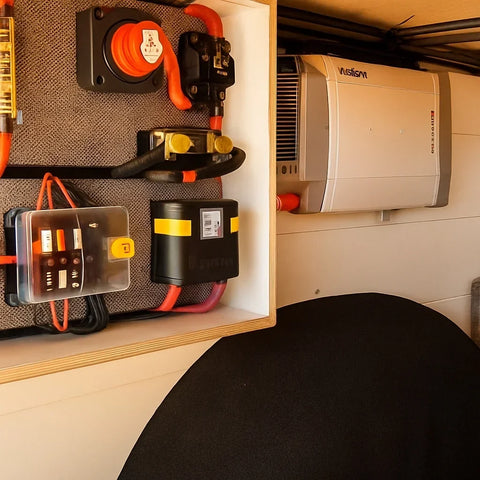
That’s also why a lot of owners come to us for targeted service instead of waiting for a failure. We regularly help with battery replacement or upgrades, solar and electrical troubleshooting, heater service, winterization, and roof-mounted accessory checks. Those are the systems most likely to affect whether your trip starts smoothly or ends early. If you’re dialing in a new build, customize your van with serviceability in mind from day one.
Baseline preventive-maintenance budget
A conservative coach-side baseline for a well-maintained van is easy to build from published pricing. A pre-season check at $313.50, roof inspection at $70, and full coach sealant inspection at $155 total $538.50. That gives you a solid starting number before winterization or any chassis work.
If your van is stored in freezing conditions and you pay for professional winterization, adding $230 brings that baseline to $768.50. For many owners in cold climates, that is the closest thing to a low-cost but realistic year. It covers routine prevention, not repairs.
| Service item | Published price | Running total |
|---|---|---|
| Class B/C pre-season check | $313.50 | $313.50 |
| Roof-only inspection | $70 | $383.50 |
| Full coach sealant inspection | $155 | $538.50 |
| Basic winterization | $230 | $768.50 |
This baseline does not include oil service, tire rotation, alignment, transmission service, battery replacement, or labor for issues found during inspection. That’s an important distinction. A preventive year is not the same as an all-in ownership year.
Manufacturer guidance supports this inspection-heavy approach. Roof cleaning every three months, exterior sealant inspection every six months, and battery condition checks before each use are all part of the cadence. Owners who stay on top of those tasks usually see the most stable year-to-year costs. If you like learning the care side of ownership, our van build blog and DIY blog are good places to keep reading.
Higher-mileage or catch-up-maintenance budget
A heavier year can look very different. Add a $400 Sprinter oil change, $255 or more for tire rotation, $350 alignment, and $480 to $555 transmission service on top of the coach-side checks. That’s before any repair is added.
Using Winnebago’s published menu, a year that includes pre-season check, roof inspection, sealant inspection, winterization, Sprinter oil change, tire rotation, alignment, and transmission service totals about $2,293.50 to $2,368.50. That number is not a universal average. It is a realistic example of several due items landing in the same season.
Winnebago’s broader guidance says oil and filter service often falls in the 5,000 to 10,000 mile range, while brake checks, tire rotations, alignments, and milestone services are separate recurring needs. That means some years stack up simply because of mileage and timing. It doesn’t always mean the van is unreliable.
Used vans often land closer to this catch-up scenario in year one. In our shop, a second-owner van may come in for battery diagnosis, seal checks, heater service, and plumbing fixes all at once because the prior owner handled maintenance one issue at a time. If you’re comparing layouts for long-term use, even choices like a DUO XL layout or a Family XL layout are easier to enjoy when the service history is clean.
Chassis service is usually the biggest line item, especially sprinter maintenance cost
 Among the published prices in this source set, chassis service is the clearest driver of annual spend. It is also the easiest category to underestimate. Owners remember oil changes, but the real total often comes from the rest of the wear items around them.
Winnebago’s published menu makes the Sprinter gap obvious. A general Class A/B/C oil change is listed at $220, while a Sprinter chassis oil change is $400. That one line item alone helps explain why sprinter maintenance cost often feels higher than general camper van upkeep.
Then come the bigger support items. Transmission service is listed at $480 to $555, alignment at $350, and tire rotation starts at $255. In a service-heavy year, chassis spend can move past $1,000 quickly.
Manufacturer guidance also treats chassis care as its own lane. THOR Industries points out a key difference between a motorized camper van and a towable setup: your house rides on a complex chassis. That means the drivetrain, tires, and braking systems need routine attention too.
Published chassis service prices to anchor the article
Here are the published anchors that matter most. Sprinter chassis oil change, $400. General Class A/B/C oil change, $220. Transmission service, $480 to $555. Alignment, $350. Tire rotation, starting at $255.
Those numbers are useful because they come from a real service menu, not a guess. They give buyers something concrete to budget against. They also show why two owners can report very different annual totals and both be telling the truth.
Of course, local labor rates, the van platform, and what a tech finds during inspection can move the final invoice higher. A simple service visit can expand once worn tires, alignment drift, or overdue fluid service shows up. That’s normal, and it’s part of why maintenance history matters so much on used vans.
What owners miss on the chassis side
Oil changes are easy to remember. Alignments and tire wear are the costs many owners skip until the van wanders, pulls, or starts chewing through expensive tires. By then, the fix feels bigger because the symptoms have been building for months.
A built-out camper van carries more steady weight than an empty cargo van. On long trips and in crosswinds, small handling issues tend to feel more obvious. In our experience, that extra fatigue is one of the first signs owners notice, even before they see unusual tire wear.
Winnebago’s framework backs that up by including brake checks, tire rotations, alignments, and milestone services under chassis care, not just oil. THOR does the same because those systems drive reliability on the road. If you’re deciding between a used Sprinter and a newer Transit, maintenance history often matters more than the headline oil-service price.
That’s a big reason many buyers start with a newer, known platform and then build around it. If you’re exploring a couple-focused rig or a family setup, our vans for couples and family vans collections show how a well-planned build can support easier ownership over time.
House batteries, water systems, seals, and solar are the van conversion upkeep costs owners feel most on trips
Trip-ending issues often start on the house side, not the chassis side. Battery trouble, water leaks, weak pumps, and roof seal failures are the problems owners feel first when they’re camped far from home. That’s why van conversion upkeep has to cover more than engine service.
Manufacturer guidance says battery condition should be checked before each use, with fluid levels and connections inspected monthly where that applies. THOR also notes that battery care changes with battery type, but proper charging and storage matter across the board. Good habits do a lot of the heavy lifting here.
Water-system upkeep includes cleaning the water pump strainer each year and sanitizing the plumbing system as needed. Exterior sealants should be checked every six months, and roofs should be cleaned every three months. Those intervals matter even more on vans with roof fans, awnings, racks, and solar penetrations.
Winnebago also calls out dried caulking and loose seals around vents, skylights, A/C units, and solar mounts. That’s a useful reminder that solar upkeep is usually less about the panel itself and more about everything attached around it. If you’re planning roof gear or a future pop-top, our pop-top options and foundation-first approach at The Foundation can help you think ahead.
Battery and electrical upkeep
Battery and electrical care follows a clear cadence. Winnebago recommends checking battery condition before each use and looking at fluid levels and cable connections monthly where needed. Its broader maintenance guidance also calls for annual battery testing.
THOR adds a useful point here. Battery care varies by chemistry, but all battery systems benefit from correct charging, proper storage, and connection checks. In plain terms, a healthy battery bank usually comes from boring habits, not heroics.
In our service bay, battery neglect often shows up as what owners call a solar problem. Low state of charge, long storage without proper charging, or a failing battery can all look like a charging fault. We regularly handle battery replacement, upgrades, and electrical troubleshooting because smart diagnosis is usually cheaper than swapping random parts.
The source set does not provide solid battery replacement pricing, so we won’t invent a number here. The better takeaway is cadence. Check the system often, store it right, and test it before a trip instead of during one.
Water, winterization, and freeze-damage prevention
Water-system care has one of the clearest published prices in the whole set. Winnebago lists basic winterization at $230. For owners in cold climates, that is one of the highest-value preventive services on the list.
Winnebago also recommends cleaning the water pump strainer each year and sanitizing plumbing as needed. THOR treats tank and water-system sanitation as standard motorized RV maintenance too. These are small tasks, but they help avoid pump issues and water-quality headaches.
Progressive warns that plumbing freeze damage can cost hundreds, if not thousands, of dollars. We see that play out in Boulder all the time. A little trapped water can damage pumps, fittings, lines, or fixtures, and the problem often shows up only after temperatures bounce back.
Owners who use their vans off and on in shoulder seasons need the most discipline here. One surprise overnight freeze can undo an otherwise careful routine. If you want help before cold weather hits, contact our Boulder shop for winterization or system checks.
Roof seals and solar-adjacent upkeep
Roof and seal care has hard published numbers, which is helpful. A roof-only inspection is $70, and a full coach sealant inspection is $155. Those are modest costs compared with the mess that follows even a small leak.
Winnebago recommends inspecting exterior sealants every six months and cleaning the roof every three months. Its broader guidance also calls for monthly seal checks and twice-yearly roof inspections, with close attention to dried caulking and loose seals around vents, skylights, A/C units, and solar mounts. Those intervals are easy to skip until you’ve had one leak.
THOR also recommends exterior inspections after trips, including roof and seals. That makes sense for vans that see washboard roads, hail, tree branches, or hard sun. Solar panels themselves are usually low-maintenance, but the roof hardware around them deserves regular attention.
In our shop, small seal failures around rooftop accessories are one of the clearest examples of a cheap inspection preventing a much larger interior repair. It’s one of those tasks that feels easy to postpone right up until it isn’t.
The most common repair bills in a service bay, and how to keep van conversion upkeep down
The most useful difference between a generic checklist and real shop advice is seeing what actually comes through the door. For us, the repeat offenders are neglected seals, battery and storage issues, winterization misses, and used vans with a cluster of small faults at once. Small issues often travel in groups.
Published pricing supports the prevention case. A $70 roof inspection or $155 sealant inspection is modest compared with leak chasing and interior damage. The same logic applies to winterization, where a $230 service looks pretty reasonable next to the risk of freeze damage costing hundreds or even thousands.
Winnebago’s recurring intervals tell the same story. Battery checks before each use, roof cleaning every three months, sealant inspections every six months, and annual plumbing and battery tasks keep ownership costs steadier. Lower upkeep bills usually come from routine cadence, not one big heroic service day.
That’s also where pro service can make sense. Owners come to us for winterization, heater service, battery replacement or upgrade, solar and electrical troubleshooting, and roof-mounted accessory checks because preventive service is often the cheapest paid maintenance they can buy.
What The Vansmith sees most often
Neglected roof and accessory sealant is a repeat offender. Leaks often start small and stay hidden until staining, soft materials, or odd electrical symptoms show up. By then, the repair is no longer just a quick reseal.
Battery complaints also tend to trace back to storage and charging habits more than failed solar panels. Vans that sit unused for stretches are especially prone to this. The owner notices it first as weak power on a trip, not while the van is parked at home.
Missed or partial winterization is another frustrating one because the damage is so preventable. Used vans make it even more interesting. They often arrive with plumbing drips, weak batteries, roof-seal concerns, and deferred heater service all at once because the prior owner handled maintenance reactively.
That’s why we frame annual maintenance as trip reliability, not just cost control. Most owners feel these failures first when they are far from home, tired, and trying to get camp set up before dark. Keeping the van sorted is part of keeping the trip fun.
When professional service makes financial sense
A published Class B/C pre-season check at $313.50 is a good benchmark if you are weighing inspection cost against the chance of missing several smaller issues. The same goes for a $70 roof inspection and a $155 sealant inspection. Those are low-cost checks with a high downside if skipped.
Professional winterization at $230 is also easy to justify in cold climates. Progressive’s warning on freeze damage puts that in perspective fast. One preventable plumbing problem can wipe out years of saved DIY effort.
Professional service makes the most sense before long trips, after buying a used van, after a season in outdoor storage, or after adding rooftop accessories that create new penetrations. Those are the moments when a second set of eyes pays off. If you’re local, our Boulder shop is set up for the systems that create the most surprise upkeep costs.
There’s one more long-term benefit too. A van with documented annual upkeep is easier to trust, easier to use, and easier to sell later. That’s true whether you’re driving a simple weekend rig or a fully built Sprinter made for long seasons on the road.
FAQ
What is a realistic camper van maintenance cost per year?
A realistic annual budget depends on whether you are paying only for preventive service or also catching up on deferred work. Using Winnebago’s published pricing, a coach-side preventive year can total about $538.50 for a pre-season check, roof inspection, and sealant inspection, or about $768.50 if you also add basic winterization. Chassis work like a $400 Sprinter oil change, $350 alignment, or $480 to $555 transmission service can push the total much higher.
Why is sprinter maintenance cost usually higher than general camper van upkeep?
The clearest published example is oil service. Winnebago lists a general Class A/B/C oil change at $220 but a Sprinter chassis oil change at $400. Sprinter owners can also face the same added chassis items as other vans, like alignment at $350, tire rotation starting at $255, and transmission service at $480 to $555, so the total climbs fast in a heavy-service year.
How often should I service the roof seals and solar mounts on a camper van?
Winnebago recommends inspecting exterior sealants every six months and cleaning the roof every three months. Its broader maintenance guidance also calls for monthly seal checks and twice-yearly roof inspections. It specifically says to watch for dried caulking and loose seals around vents, skylights, A/C units, and solar mounts, which is why roof hardware deserves regular attention even if the solar panels themselves seem fine.
Is winterization really worth paying for every year?
In cold climates, yes. Winnebago lists basic winterization at $230, and Progressive notes that plumbing freeze damage can cost hundreds, if not thousands, of dollars. In places like Boulder, one missed freeze event can damage pumps, fittings, lines, or fixtures, so the preventive service is usually the cheaper move.
What maintenance items are most often missed on a van conversion?
The most commonly missed items are usually the plain ones, not the flashy ones. Winnebago recommends checking battery condition before each use, inspecting battery fluid levels and connections monthly where applicable, cleaning the water pump strainer annually, and inspecting exterior sealants every six months. In our shop, skipped battery care, missed winterization, and overdue roof inspections are some of the most common roots of surprise repair bills.
About the author

Santiago Pere
Chief Design Engineer
Santiago is Chief Design Engineer at The Vansmith. He writes on topics spanning van design, builds, and life on the road.
Read more about Santiago