The 4x4 sprinter conversion cost question in 2026 usually starts with a clear number, Mercedes lists factory AWD at $11,510 on the Sprinter Cargo Van. That is the biggest single traction-related cost, but it is rarely the whole story. Most vans that feel good on snow, washboard, and rough forest roads also need better tires, and many benefit from suspension tuning once the camper weight goes in. If you are trying to budget honestly, think in layers, not one magic upgrade.
What 4x4 Sprinter conversion cost means in 2026
The first thing to clear up is the language. A lot of people still search for 4x4 pricing, but current Sprinters are sold with factory AWD rather than the old factory 4x4 system, as shown on the 2026 Sprinter Cargo Van configurator. So in most cases, this search is really about AWD pricing plus the upgrades that make AWD work better in the real world.
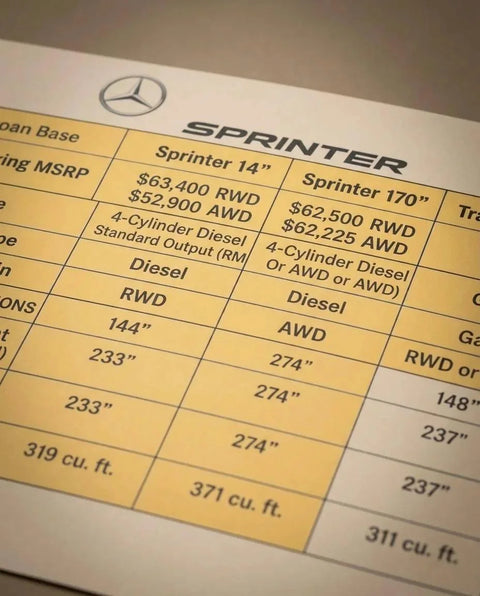
The base van matters too. The 2026 Sprinter Cargo Van starts at $48,990 MSRP before destination and options, and that is the number every off-road budget should build from. Once you add the 4-cylinder diesel High Output AWD powertrain at $11,510, the drivetrain choice becomes a major early budget call.
Mercedes also makes AWD available across the lineup, and the Sprinter brochure shows it across 2500, 3500, and 3500XD series. That matters more than it may seem at first. Payload class changes what wheel, tire, and suspension setup makes sense later.
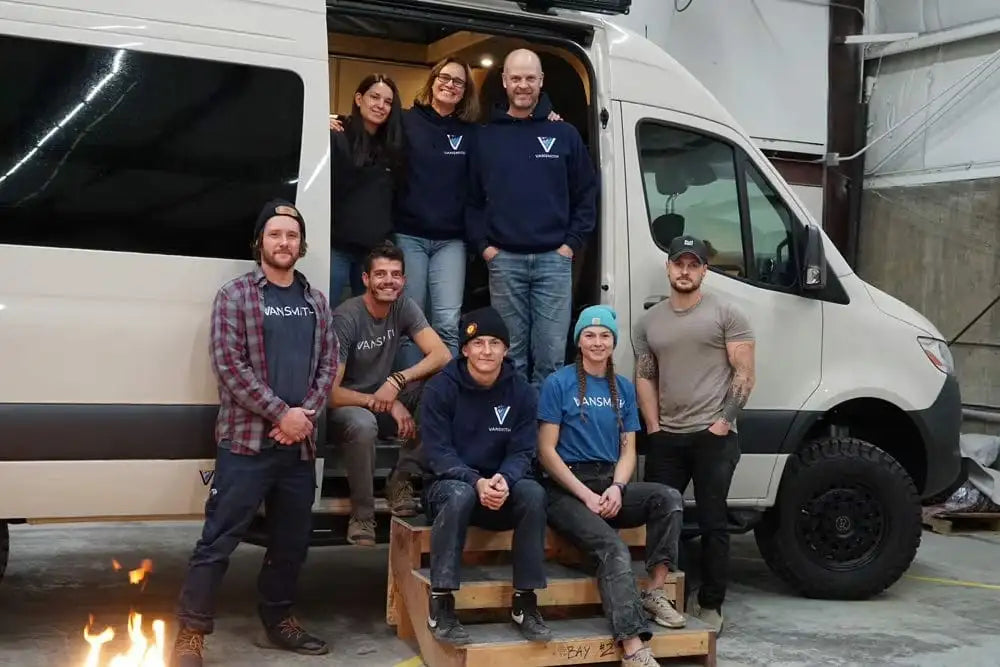
In our Boulder shop, the budget talk usually shifts fast. People come in asking about AWD, but the next part of the chat is almost always snow travel, forest roads, and washboard comfort. That is where tires and suspension start to matter just as much as the badge on the back door.
Why OEM AWD is the cleanest benchmark
If you want the cleanest current benchmark for sprinter 4x4 conversion price, use the Mercedes configurator. It gives you a real OEM delta, $11,510 for High Output AWD, instead of a guess or a half-published package price. That alone makes planning much easier.
There is also a big value in factory integration. OEM AWD comes engineered and packaged by Mercedes, and it carries the simplicity that comes with a factory setup. Pieced-together driveline work may serve a very specific use case, but it does not offer the same clean baseline.
That $11,510 premium is about 23.5% of the Sprinter Cargo Van’s $48,990 starting MSRP. Big number. It shows how much the drivetrain decision affects your budget before you even get into cabinetry, batteries, water, or the rest of a camper build.
We see this all the time on full builds and on upgrade jobs. Buyers sometimes assume AWD is part of the camper conversion cost, but it is stacked on top of the base vehicle and then stacked again with the interior build. For most Colorado travel, factory AWD plus the right tire and suspension package tends to give more predictable results than trying to chase the same feel later.
Why full aftermarket 2WD-to-4x4 pricing is hard to source cleanly
One useful thing in this research is what it did not find. There is no clean 2026 non-competitor, non-forum source here with transparent turnkey pricing for a full 2WD-to-4x4 Sprinter conversion. That gap tells you something about budgeting certainty right away.
The contrast with factory AWD is sharp. Mercedes publishes the MSRP delta in plain sight, while full aftermarket conversion pricing is far less standardized. If the price is not clear up front, the variables usually grow fast.
From a builder’s side, custom driveline work is harder to forecast than tires, wheels, or suspension. Parts sourcing can shift. Labor hours can shift. Downtime and support boundaries can shift too, which makes the final invoice harder to predict with confidence.
That is why many serious buyers frame the decision in a simpler way. They either order factory AWD now, or they keep a rear-wheel-drive van and add selective upgrades later. For trust and accuracy, we are not going to invent a neat 2026 aftermarket conversion number that the source set does not support.
The real 2026 cost stack: AWD, tires, suspension, labor
 The big line item is still factory AWD at $11,510, and that is MSRP before destination, taxes, dealer markup, or option bundles. After that, the next layer is usually tires. Then suspension. Then the labor and support items that make the installed total higher than the parts list suggests.
Current Tire Rack pricing puts common Sprinter-friendly all-terrain tires at about $660 to $1,020 for a set of four, before installation, based on the Sprinter 2500 tire search. A premium benchmark, the BFGoodrich KO3 in LT245/75R16, is listed at $254.99 each, or $1,019.96 for four.
Suspension pricing climbs quickly too. ARB shock pricing lists MT64 rear shocks at $410.95 each and a steering damper at $104.95. On the category side, Bilstein’s camper van pages make it clear that Sprinter suspension tuning is now a mainstream part of camper setup, not some fringe add-on.
In real invoices, the jump from retail parts to installed total is where many owners get surprised. Tires may also mean balancing, mounting, disposal, alignment, and sometimes a matching spare. Once you add a wheel package or suspension work, the labor side becomes a bigger part of the budget.
| Upgrade layer | Example item | Current price |
|---|---|---|
| Base van | 2026 Sprinter Cargo Van MSRP | $48,990 |
| Drivetrain | High Output AWD | $11,510 |
| Tires | Falken Rubitrek A/T01, set of 4 | About $660 |
| Tires | BFGoodrich KO3, set of 4 | $1,019.96 |
| Suspension | ARB MT64 rear shocks, pair | $821.90 |
| Suspension | ARB steering damper | $104.95 |
Tire pricing: the cheapest capability upgrade
The low end of the current researched tire range starts with the Falken Rubitrek A/T01 at $165 each, or about $660 for four. That makes tires the cheapest meaningful capability upgrade in this whole conversation. For a rear-wheel-drive van, it is often the first smart move.
At the higher end of mainstream all-terrain options, the Firestone Destination X/T is listed at $244.99 each, or $979.96 for four. That lands very close to KO3 money. So if you are shopping premium A/T tires, the price spread tightens fast.
The KO3 benchmark matters because many van owners want a full-size matching spare. At $254.99 each, a five-tire package lands at about $1,274.95 before mounting and balancing. That extra fifth tire is easy to forget on paper, but it matters a lot once you start planning remote travel.
In our experience, moving from highway-biased tires to all-terrain tires is often the best first-dollar improvement for loose surfaces. Around Boulder, tire choice can matter as much as AWD on packed snow and graded dirt, especially once the van is loaded with camping gear.
Suspension pricing: where ride quality and control improve
Suspension is usually where the van starts to feel more settled, not just more rugged. Bilstein markets camper-focused products for Sprinter platforms including 906, 907, and 910, which supports what many owners feel after a build, loaded vans need damping that matches the weight.
ARB’s listed pricing gives a good reality check. MT64 rear shocks are $410.95 each, so a pair is $821.90 before front components or labor. Add a steering damper at $104.95, and even a modest package starts to build into real money.
That said, suspension is still a very different budget category from a drivetrain change. Even if you move into the high hundreds or low thousands in parts, you are still far below the cost of adding factory AWD to a new van. That makes suspension a logical second step for many owners.
In the shop, people rarely ask for suspension because they want to rock crawl. They want less harshness on washboard, less body motion, and better control once cabinetry, water, batteries, and gear are in the van. Loaded weight changes ride behavior more than many buyers expect.
Installed invoice ranges buyers should expect
A realistic tire-only retail range from this source set is about $660 to $1,020 for four all-terrain tires. Once you add a fifth matching spare, the premium end rises above that right away. Using the KO3 benchmark, five tires total about $1,274.95 before install.
A mild suspension parts package can plausibly start around $1,000 to $2,000 in parts-only once shocks and related pieces are combined. That is not a quote, but it is a grounded way to think about current component math. Labor then pushes the installed total higher.
At The Vansmith, off-road-oriented upgrade invoices usually break into three buckets, tires only, tires plus wheels, and tires plus suspension. Each bucket has different labor and alignment needs. That is why the headline tire price is rarely the number that shows up on the final invoice.
For many owners, the most common AWD-capability spend after buying the van is not a huge lift or driveline project. It is a practical package of better tires, suspension refinement, and recovery-minded accessories. The drivetrain premium is often the biggest single number, but those support upgrades shape how confident the van actually feels.
Factory AWD vs upgrades: which path gives the best value?
 If you are ordering a new van, factory AWD at $11,510 is the clearest budget path. The cost is known up front, and it becomes part of the original build spec. That makes it the easiest traction decision to defend on paper.
If you already own a rear-wheel-drive Sprinter, the math changes. Upgraded all-terrain tires at roughly $660 to $1,020 for four often deliver the best first-dollar improvement. Suspension becomes the next logical spend if control under camper load is the real complaint.
What makes full aftermarket 2WD-to-4x4 work harder to recommend is the lack of transparent 2026 pricing in the source set. Budget certainty matters. Most buyers would rather spend against a known number than chase a moving one.
In real use, people often overestimate how often they need true driveline capability. They underestimate how often they benefit from better tires, better damping, and sane weight management. For a lot of Colorado travel, factory AWD if buying new, or a targeted tire-and-suspension package if you already own the van, tends to be the best-value path.
When factory AWD is worth the premium
Factory AWD makes the most sense for buyers starting from scratch. It avoids future uncertainty, and it becomes part of the van from day one. That simplicity has real value.
Start with the base MSRP of $48,990, then add $11,510 for AWD, and the vehicle lands at roughly $60,500 before destination and other options. That is why this decision shapes the whole project early. It affects not just traction, but the total amount left for the conversion.
AWD is easiest to justify if you know your travel includes regular snow, muddy shoulder seasons, and remote-road access. Customers who know they want it usually save themselves later compromise by ordering it up front. It is a premium, though, not a default for every highway-focused owner.
There is also a service side to this choice. Factory integration keeps future support conversations cleaner than heavily customized driveline work. For many buyers, that peace of mind is part of the value.
When tires and suspension are the smarter spend
A set of four Falken Rubitrek A/T01 tires at about $660 costs less than 6% of the factory AWD premium. Even a premium set of four KO3s at $1,019.96 is still less than 9% of that $11,510 number. That is why tires are such a strong first move.
The same logic applies to suspension in stages. A pair of ARB MT64 rear shocks totals $821.90, which means you can improve ride control without making one giant drivetrain decision. Many owners prefer that kind of step-by-step budget.
For vans that mostly see pavement, ski access roads, and maintained dirt, tires and damping often bring the biggest change per dollar. Another plus is timing. You can tune the suspension after the build weight is known, which often leads to better choices than guessing early.
The trade-off is simple. Tires and suspension improve grip feel, control, and comfort, but they do not replace the traction edge of factory AWD in truly slick or uneven conditions. So the smarter spend depends on how you actually travel.
What The Vansmith sees in Boulder shop invoices
In Boulder, the most common off-road-related work is not a full driveline transformation. It is suspension upgrades, wheel and tire packages, sidesteps, roof racks, ladder and tire carriers, front bumpers, lighting, winches, and on-board air. That pattern says a lot about what owners really use.
People often come in asking about 4x4 conversion cost, but what they actually need is a better budget for AWD, tires, suspension, and recovery-minded add-ons. One thing a lot of builders overlook is the order of operations. Appearance parts can eat budget fast before the upgrades that truly change road feel are handled.
Another common issue shows up after the build is done. Once cabinetry, batteries, water, and gear are installed, the van rides differently. Suspension priorities become much more obvious at that stage.
If you already own a Sprinter and want to improve control, our customize your van page and contact page are a good place to start the conversation. Buyers who want the broader planning view can also look at our process to see how capability upgrades fit into a full build.
Typical upgrade patterns and invoice logic
The most common invoice pattern starts with tires. Then, once the owner feels the difference between an empty cargo van and a loaded camper, the conversation expands to suspension. That sequence is common because the need becomes obvious through use.
Wheel and tire packages also bring small but real follow-on costs. Spare-tire matching, carrier fitment, and alignment all affect the installed total. So the retail tire number is only the first line in the math.
Suspension work is often phased around a specific complaint. Rear-end harshness, sway, or washboard instability usually leads the conversation. That makes the budget easier to manage and the result easier to judge.
For full builds, capability planning works best early. Tire size, weight distribution, storage, and accessory choices all support each other. Our Foundation builds and van build blog give readers a better sense of how those choices stack together, and semi-custom builds typically take 8 to 10 weeks, which gives you a real planning window.
Where Vansmith pricing fits into the bigger budget
As of 2026, The Vansmith’s Sprinter Duo starts at $115,950 and the Sprinter Family starts at $120,950. Those numbers help place awd sprinter cost in the right frame. The drivetrain premium is meaningful, but it is still just one part of a finished camper budget.
Some buyers want a staged path on a van they already own. Others would rather go turnkey so the van, build, and capability plan are handled together. If you are comparing layouts, our Sprinter conversions collection, DUO XL layout, and Family XL layout give you concrete pricing anchors.
That bigger-budget view matters because capability choices should support the final loaded van, not just the empty shell. In our shop, that leads to calmer decisions and fewer regrets. It also helps buyers avoid overspending on parts that look rugged but do less for real travel.
The Vansmith also carries a 4.8-star Google rating across 85-plus reviews, and we back our cabinetry with a lifetime cabinet warranty. If you are spending into six figures, long-term support matters just as much as the parts list.
How to budget your 4x4 camper van cost without overspending
Start with the van and drivetrain first. A 2026 Sprinter Cargo Van begins at $48,990 MSRP, and factory High Output AWD adds $11,510 before any camper work. That gives you the cleanest top-level budget split.
After that, treat tires as the first upgrade layer. Current all-terrain pricing starts around $660 for four tires and reaches about $1,020 for premium mainstream choices. If you plan remote travel, budget separately for a fifth matching spare, because the KO3 benchmark adds another $254.99 before install.
Suspension is the next meaningful cost layer. Official parts pricing already shows why, quality shocks can run $410.95 each before labor. That is still manageable compared with a drivetrain premium, but it deserves its own line in the budget.
The most cost-effective builds usually match the capability package to real travel. Ski roads, washboard, and loaded camping may justify AWD plus suspension. Mostly paved travel may justify tires first and a wait-and-see approach on the rest.
A simple decision framework for buyers
If you are ordering a new Sprinter and know you will drive in snow or loose surfaces often, start by pricing factory AWD at the full $11,510 premium. That is the cleanest known number in the whole decision. Build the rest of the project around it.
If you already own a rear-wheel-drive Sprinter, begin with tires. The researched four-tire range of roughly $660 to $1,020 is the lowest-cost capability step, and it can change confidence right away. For many owners, that alone is enough for the roads they actually use.
If the van feels unsettled when loaded, look next at suspension. ARB and Bilstein both support Sprinter-relevant upgrade paths through official manufacturer sources, which gives you a clearer starting point. If a shop cannot define driveline scope, downtime, and support clearly, that uncertainty should count as part of the cost.
Buyers usually get the best long-term value when they spend in the order of traction, control, and then accessories. For Colorado readers, getting a real quote from a shop that handles Sprinters, suspension, and full camper builds under one roof is usually the smartest next step.
What to tell readers to do next
Ask for a quote that separates drivetrain, tires, suspension, and accessory costs. That simple breakdown makes it much easier to see which line items actually improve capability. It also keeps the budget honest.
If you already own a van and want to improve control, our custom build and upgrade page is a natural next stop. If you are comparing a complete adventure van budget against piecemeal upgrades, the Sprinter conversion collection gives you a stronger reference point than generic internet estimates.
For turnkey shoppers, the 2026 Duo at $115,950 and the Family at $120,950 are useful anchors for what a finished van budget looks like before optional capability upgrades. Couples can also browse vans for couples, while bigger crews can look at family van conversions. The smartest capability budget is still the one that matches how and where you will really use the van.
FAQ
How much does a 4x4 Sprinter conversion cost in 2026?
For a new 2026 Sprinter, the clearest current number is the factory AWD premium. Mercedes lists the 4-cylinder diesel High Output AWD powertrain at $11,510 on top of the van’s $48,990 starting MSRP. Beyond that, most buyers add tires, suspension, and labor, so the real capability budget is usually higher than the drivetrain premium alone.
Is factory AWD cheaper than trying to build a 2WD Sprinter into an off-road van later?
If you are buying new, factory AWD is usually the easiest cost to justify because Mercedes publishes the price clearly at $11,510 and it comes integrated from the start. By contrast, this source set does not provide a clean 2026 published price for full 2WD-to-4x4 aftermarket conversion work. That makes later budgeting less predictable and often harder to compare fairly.
What do tires add to awd sprinter cost?
Current Tire Rack pricing shows common Sprinter-compatible all-terrain tires at roughly $660 to $1,020 for a set of four, depending on brand and model. A BFGoodrich KO3 in LT245/75R16 is listed at $254.99 per tire, so a matching five-tire package for a full-size spare comes to about $1,274.95 before installation. Once you add mounting, balancing, and alignment, the installed total rises from there.
Do suspension upgrades matter as much as AWD on a camper van?
They matter in a different way. AWD helps traction, while suspension helps control, ride quality, and stability once the van is loaded with cabinetry, batteries, water, and gear. ARB pricing shows MT64 rear shocks at $410.95 each, which is a meaningful spend, but still a much more targeted one than a drivetrain upgrade.
What is the best first upgrade if I already own a rear-wheel-drive Sprinter?
For most owners, tires are the first smart spend. They cost far less than changing the drivetrain and can improve confidence right away on snow, dirt, and loose surfaces. The researched range is about $660 to $1,020 for four all-terrain tires before mounting, balancing, and alignment.
How does 4x4 camper van cost fit into a full Vansmith build budget?
As of 2026, The Vansmith’s Sprinter Duo starts at $115,950 and the Sprinter Family starts at $120,950. That means drivetrain and off-road upgrades should be viewed as part of a complete van budget, not as isolated add-ons. Looking at the whole number helps you decide if you want a turnkey van or a staged upgrade plan on a van you already own.
About the author

Santiago Pere
Chief Design Engineer
Santiago is Chief Design Engineer at The Vansmith. He writes on topics spanning van design, builds, and life on the road.
Read more about Santiago