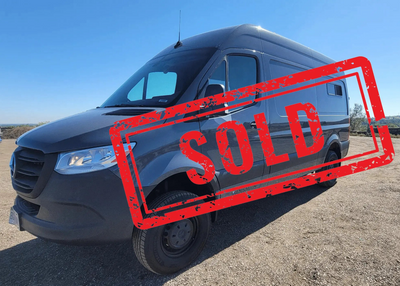
The Ram camper van, built on the ProMaster chassis, stands out for its flat, wide cargo space, and easy front-wheel-drive handling. With up to 86 inches of interior height, 520 cubic feet of cargo volume, and a best-in-class width, the ProMaster makes camper conversions accessible for solo travelers, couples, and families. The lower step-in height, advanced safety tech, and wide array of upfit options make it a flexible choice for van life—though buyers should weigh features, build costs, and long-term reliability against their travel style and goals. While this is a great platform, it does not have an AWD option, which is essential for many outdoor adventurers. As a result, at The Vansmith we don't work on the Ram ProMaster - we focus on Sprinter and Transit vans only.
The Ram ProMaster Camper Van: Overview and Key Features
The 2024 Ram ProMaster is a go-to platform for many van lifers. You get three roof heights - Standard, High, and Super High - and four cargo lengths: 136 inches, 159 inches, 159 inches Extended, and 177 inches. If you want the Super High Roof, you’ll find it on the 159-inch and 159-inch Extended models. Ram Trucks gives you options to match your camping dreams.
Inside, cargo height ranges from 66.9 inches on the Standard Roof to a huge 86 inches with the Super High Roof. That means standing room for most adults. For gear-heavy trips, the 159-inch Extended Super High Roof packs a maximum cargo volume of 520 cubic feet - a ton of space for beds, bikes, and storage. The ProMaster’s front-wheel-drive design isn’t just good for winter traction; it allows a low 21-inch step-in and a flat, smooth cargo floor. For anyone doing a build, that’s a game changer.
Under the hood, the standard 3.6L Pentastar V6 gives you 276 horsepower and 250 lb-ft of torque, paired to a 9-speed automatic. You’ll also find a long list of safety features on the 2024 model: Forward Collision Warning, Active Braking, Blind-Spot Monitoring, ParkSense, and a 360° Surround View Camera. For tech, there’s the Uconnect 5C NAV with a 10.1-inch touchscreen, wireless charging, and factory upfitter connectors for easy electrical upgrades. You can see why van builders flock to this platform.
Interior Space and Layout Advantages
What sets the ProMaster apart is its boxy, straight-walled cargo area. The wheel wells barely intrude, giving you up to 75 inches of width at floor level. Most adults can sleep sideways - something you can’t do in a Sprinter or Transit without flares. This opens up floor plans for bigger beds, more storage, or an open living area. Camping World points out that high-roof models let people up to 6'3" stand comfortably inside, which rivals other full-size vans.
Wide cargo width is a big deal. The ProMaster’s 75.6-inch width leads the class in 2024. The sliding side door spans 49 inches, so loading mountain bikes or modular kitchen pods is simple. Rear doors swing open 260°—great for outdoor kitchen setups or quick gear access. The lower 21-inch step-in height, thanks to front-wheel drive, means fewer awkward climbs in and out.
The flat, unobstructed cargo floor (no driveshaft hump) also makes life easier for DIYers. You get a clean slate for insulation, water tanks, or custom cabinetry. This is why so many pro upfitters and DIYers choose the ProMaster when they want a straightforward build process. If you’re dreaming of a van with maximum usable space, the ProMaster delivers.
Factory and Safety Features Relevant to Campers
Long road trips call for smart safety tech. The 2024 ProMaster steps up with Adaptive Cruise Control and Drowsy Driver Detection—features you’ll appreciate after hours behind the wheel. Standard ParkView and the optional 360° Surround View Camera help you maneuver a loaded camper van with confidence. Factory upfitter connectors mean wiring solar or batteries is more plug-and-play than ever.
For the build itself, you can order a spray-on factory floor liner and wall panels. This cuts down on prep time, whether you’re hiring a pro or going the DIY route. While front-wheel drive keeps the step-in low and helps on gravel or wet roads, ground clearance ranges from 6.9 to 9.4 inches. That’s enough for most forest roads, but not quite as high as some 4x4 vans.
Highway stability is crucial for tall conversions. Electronic Stability Control and Crosswind Assist are standard, keeping you steady in gusty conditions. Payload capacity ranges from 3,770 to 4,680 pounds, so you can build out your dream camper with plenty of gear and not worry about overloading. Features like these show Ram’s attention to what real travelers need. If you want more detail on the design and build process, check out our process.
Ram Camper Van Conversion Options: DIY, Kits, and Professional Builds
There are three main ways to turn a Ram ProMaster into a camper: DIY, kit-based, or professional builds. If you’re tackling it yourself, expect to spend $30,000 to $50,000 on insulation, basic cabinetry, a bed platform, and an off-grid electrical setup (not counting the van). Professional conversions with full kitchen, electrical, and plumbing usually run $55,000 to $75,000. Go all-in on luxury finishes, big solar, a bathroom, and high-end electronics, and you’re looking at $80,000 to $120,000 or more. Emery Custom Builds breaks down these costs well.
Kit conversions offer a middle ground. You get modular cabinetry, beds, and kitchens made for the ProMaster’s dimensions. Kits save money but trade off some customization. Some RV makers—Winnebago, Thor, Jayco—build ProMaster-based Class B vans with proven floorplans and ready-to-drive features. These usually cost $100,000 to $150,000 new, but you’re paying for warranty, brand, and convenience.
Popular layouts include widthwise beds, rear garages for bikes, galley kitchens, or convertible seating. For most upfitters, the 2500 High Roof 159-inch model hits the sweet spot for space and ease of driving. If you’re curious about layout ideas for couples or families, see our couples van layouts or explore family van options.
Conversion Process: What to Expect
The ProMaster’s flat, wide floor is a real time-saver. Flooring and cabinetry go in faster compared to vans with uneven floors or driveshaft tunnels. Most builds start with insulation—closed-cell foam or Thinsulate—plus a subfloor and wiring for solar or batteries. Factory upfitter connectors make adding lights, water pumps, or solar more straightforward than older models.
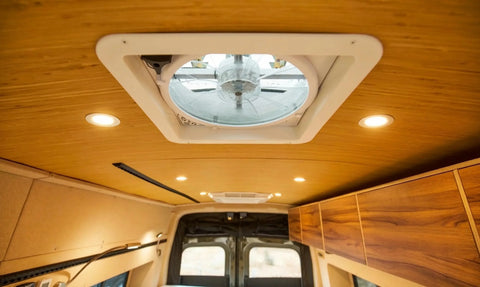
Another big perk: because there’s no driveshaft tunnel, you can tuck water tanks and plumbing under the floor. This keeps your interior roomy and lowers your center of gravity for better handling. Upgrades like roof racks, vent fans, awnings, and lithium battery banks are popular for anyone planning off-grid living. If you want to see how we integrate these systems, check out how we customize vans.
Safety upgrades—window flares, backup cameras, upgraded suspension—are common in pro builds, especially for families or full-timers. Timelines for a custom ProMaster conversion range from 2 to 6 months, depending on how complex your setup is and how busy your builder is. It’s a journey, but for many, it’s worth every week.
Conversion Costs: Budget Breakdown
If you’re on a budget, a simple DIY build ($30,000–$50,000) covers the basics: insulation, a bed, modular storage, and a portable cooking setup. These builds usually skip built-in plumbing or fancy electronics. Step up to a mid-range professional conversion ($55,000–$75,000) and you’ll get a permanent galley kitchen, 12V fridge, solar (200–400W), a diesel or gas heater, and integrated water systems. High-end builds ($80,000–$120,000+) add wet baths, premium hardwood cabinetry, big lithium batteries (400Ah+), induction cooktops, and major solar (600W+).
The van itself matters too. A new 2024 ProMaster 2500 High Roof 159" has an MSRP starting around $51,000 before upfitting or dealer markups. Factory options—navigation, upgraded seats, premium audio, wall panels—can tack on $5,000 to $10,000. If you go secondhand, a good ProMaster from 2019–2022 with under 50k miles typically runs $28,000–$42,000. All-in, a new, pro-built ProMaster camper van (2024 model) usually lands between $100,000 and $160,000, depending on how tricked out you want it. For budget tips and DIY advice, our DIY blog is a good starting point.
Ram Camper Van Reviews: Performance, Reliability, and Owner Insights
Owners and reviewers agree: the 3.6L Pentastar V6 engine is a reliable workhorse. Most see annual repair costs just over $1,000, which is cheaper than many diesel van options. Mortons on the Move reports that 2024 ProMaster reliability ratings average 3.7 out of 5. That’s solid for a van in this class.
Recent models (2022–2024) have fixed many past issues with transmissions, brakes, and seats, so owner confidence is up. The ProMaster’s front-wheel drive gives sure traction in rain or snow, but you do trade off some ground clearance compared to rear-wheel-drive vans. Some folks mention more interior noise at highway speeds compared to a Sprinter, but love how easy it is to park, especially in the city. The wide cargo area and friendly upfitter design get high marks, though resale value tends to be lower than Sprinter or Transit builds.
Maintenance is pretty simple. Parts are easy to find at Ram dealers and national chains all over North America. For more on routine service and reliability, check out Van Camping Life.
Common Issues, Recalls, and Maintenance Considerations
Older ProMasters (2014–2021) had recalls involving brake hoses, seat structure, backup cameras, and transmission software. The good news is that most of these have been fixed in 2022–2024 models. The front-wheel-drive setup means less winter maintenance than rear-wheel-drive vans, but oil changes every 6,000 miles are a must to keep things running smooth.
Replacement parts—brake pads, filters, and sensors—are affordable and widely stocked. Taking care of the 9-speed automatic transmission (regular fluid and filter changes) is key to avoiding early wear. The interior finish is basic, so many owners add sound-deadening insulation for quieter highway travel. The 2024 ProMaster warranty covers 3 years/36,000 miles bumper-to-bumper and 5 years/60,000 miles on the powertrain. There’s a strong owner/modifier community with tons of how-to guides, conversion kits, and advice online. Our van build blog dives deeper into maintenance and build tips.
Real-World Owner Experiences and Use Cases
Solo travelers and couples love the ProMaster for its compact size, easy driving, and smart use of space. The 136" and 159" models are perfect for stealth camping or squeezing into tight city spots. Families looking for more sleeping and storage tend to pick the 159" Extended or 177" versions.
Owners appreciate the ability to fit widthwise beds, freeing up living space for seating or a kitchenette. Urban vanlifers like the lower roof profile and tight turning radius - just 36.3 feet on the 136" wheelbase. For off-grid adventures, aftermarket roof racks, solar, and lithium battery upgrades are common, as highlighted by Autoevolution. Some owners do complain the factory seats aren’t comfy on long drives, but aftermarket upgrades solve that. Minimalist builds—just a bed, storage, and kitchen pod - are big among digital nomads and weekend warriors who want simplicity over luxury.
Is a Ram Camper Van Right for You? Platform Pros, Cons, and Alternatives
The ProMaster’s biggest strengths are its flat cargo floor, class-leading interior width, affordable MSRP, and proven reliability. Parts are easy to find, and maintenance is straightforward. These are major pluses for first-time van buyers and those on a tight budget. On the flip side, the ProMaster has less ground clearance than Sprinter or Transit, a more basic interior, and lower resale value. If you’re planning lots of off-road or mountain driving, you might want to look at the AWD or 4x4 options on Sprinter and Transit platforms.
Professional builders often pick the ProMaster for budget builds or when interior width is the top priority. It makes sense for solo travelers, couples, or families who care more about space and value than luxury finishes. If you’re curious about high-end builds with adventure in mind, see our Sprinter conversions or check out our Transit builds. For Ram owners, The Vansmith can handle windows, solar, electrical, heaters, and more—so you don’t have to go it alone.
Comparing Ram ProMaster to Sprinter and Transit Platforms
The ProMaster 159" High Roof gives you 420 cubic feet of cargo space—wider but shorter than the Sprinter 170" (488 cu ft) and Transit Extended (487 cu ft). It’s front-wheel drive only, while Sprinter and Transit offer RWD and AWD for more traction. Sprinter 4x4 and Transit AWD vans also have higher ground clearance (up to 10 inches), which is better for rough roads and trailheads.
Sprinter and Transit bring more advanced driver-assist features and luxury interiors, but at a higher price. The ProMaster is less expensive to buy and maintain, which appeals to first-time vanlifers. Resale values are stronger for Sprinter and Transit conversions. If you want a van engineered for comfort and adventure, see the DUO XL layout or explore the Family XL - these layouts set the standard for adventure builds.
When to Choose a Ram Camper Van—and When to Look Elsewhere
Pick a Ram ProMaster if your top needs are maximum width, a flat floor, and keeping your total build budget lower. If you need AWD, higher ground clearance, or want a premium interior finish, consider the Sprinter or Transit. Families who need bunk beds, an interior shower, or a pop-top might do better with a longer or taller Sprinter or Transit. Solo travelers and digital nomads often find the 136" or 159" ProMaster perfect for stealth and city use. For any platform, The Vansmith’s foundation builds and component installs can take your van to the next level.
As always, match your van to your travel style, terrain, and budget. If you want more tips for first-time buyers and vanlifers, the Vansmith blog is packed with real-world advice.
FAQ
What are the interior dimensions of a Ram camper van?
The 2024 Ram ProMaster Super High Roof 159" Extended model offers up to 86 inches of interior height and 520 cubic feet of cargo volume, with a best-in-class width of 75.6 inches at floor level. This roomy layout lets most adults stand up and even sleep sideways—making it a top pick for space-focused builds. Stellantis Fleet details all the specs.
How much does a Ram camper van conversion cost?
A basic DIY Ram ProMaster conversion usually costs $30,000–$50,000, not counting the van itself. Professional conversions with full kitchens, water, and power systems range from $55,000–$120,000+. Factory-built Class B ProMaster camper vans from major RV brands are typically $100,000–$150,000 new. Emery Custom Builds and Camping World have more details.
Is the Ram ProMaster camper van reliable for long-term travel?
The Ram ProMaster gets an average reliability rating of 3.7 out of 5, with annual repair costs just over $1,000. Newer models (2022–2024) have fixed most past recall issues. Maintenance is straightforward and parts are easy to find at dealerships and chain stores. Mortons on the Move and Van Camping Life offer more owner insights.
What are the main advantages of a Ram camper van compared to a Sprinter or Transit?
The ProMaster’s main draws are its flat, wide cargo floor, lower up-front price, and front-wheel drive for traction. It doesn’t offer AWD and has lower ground clearance than Sprinter or Transit. For more pros and cons, see Mortons on the Move and Camping World.
Can The Vansmith install components or upgrade my Ram camper van?
Yes, The Vansmith offers professional installation of windows, vent fans, solar panels, electrical systems, heaters, and more for Ram camper vans. While we reserve full conversions for Sprinter and Transit, we’re happy to help Ram owners upgrade their rigs with our craftsmanship and expertise. Contact us to learn more.