TL;DR
The Blue Ridge Parkway is a free, 469-mile scenic drive connecting Shenandoah National Park in Virginia to Great Smoky Mountains National Park in North Carolina, with 8 developed campgrounds run by the National Park Service, all around $30 a night, none with hookups. Peaks of Otter, Mabry Mill, the Linn Cove Viaduct, and Craggy Gardens are the must-see stops. Book campgrounds early for summer and fall, download offline maps beforehand, and budget more driving time than the mileage suggests, the winding 45 mph route takes longer than it looks on paper.
The Blue Ridge Parkway is a 469-mile scenic road connecting Shenandoah National Park in Virginia to Great Smoky Mountains National Park in North Carolina, often called America's Favorite Drive. It runs through some of the best mountain scenery on the East Coast, and the campgrounds strung along its length make it one of the more approachable long road trips for camping, whether you're in a tent, a towable, or a Class B camper van.

Quick facts about the Parkway
Length: 469 miles
Cost to drive: free
Speed limit: typically 45 mph or lower
Open year-round, weather permitting
Navigation: locations are marked by mileposts (MP)
Cell service is unreliable in a lot of the mountain stretches, so download maps before you leave and check the National Park Service's official Parkway conditions page ahead of time, especially in spring and fall when weather can close sections with little warning.
Must-see stops along the real Parkway
Peaks of Otter (MP 86, Virginia)
One of the most visited spots on the Parkway, with three peaks, Sharp Top Mountain, Flat Top Mountain, and Harkening Hill, plus lake views, hiking trails, and camping nearby.
Mabry Mill (MP 176.1, Virginia)
Likely the most photographed spot on the entire Parkway: a historic gristmill with walking trails, mountain scenery, and exhibits on the mill's history.
Linn Cove Viaduct (MP 304.4, North Carolina)
The Viaduct curves around Grandfather Mountain and is one of the most recognizable views on the Parkway, a favorite stop for photographers and road trippers alike.
Craggy Gardens (MP 364.1, North Carolina)
Near Asheville, with panoramic mountain views, high-elevation hiking, and rhododendron blooms that draw people up for sunrise and sunset.
If you're mapping out a Virginia leg of the trip, it's worth browsing camper vans for sale in Virginia before you go; the same applies to camper vans for sale in North Carolina if you're spending more time on the North Carolina half.
Campgrounds along the Parkway
The Parkway has eight developed campgrounds, all run by the National Park Service, all priced around $30 a night, and all giving you easy access to the hiking trails and overlooks nearby. None have electrical or water hookups; what you do get is flush toilets, drinking water, picnic tables, and fire rings, standard for NPS campgrounds along the route. Reservations can be made through Recreation.gov, and popular campgrounds like Julian Price and Mount Pisgah fill up fast in summer and fall, so book ahead if you have specific dates in mind.
Otter Creek Campground (MP 60.8, VA): standard sites, flush toilets, drinking water
Peaks of Otter Campground (MP 85.9, VA): a good base for hiking the surrounding peaks and lakes
Rocky Knob Campground (MP 167.1, VA): quiet, with easy access to mountain trails and scenic drives
Doughton Park Campground (MP 239.2, NC): one of the largest campgrounds on the Parkway
Julian Price Campground (MP 297.0, NC): hot showers, lake access, and family-friendly sites, one of the most popular stops
Linville Falls Campground (MP 316.4, NC): near one of North Carolina's most famous waterfalls
Crabtree Falls Campground (MP 339.5, NC): a solid base camp for waterfall hikes
Mount Pisgah Campground (MP 408.8, NC): higher elevation, hot showers, and some of the best overlooks on the route

Why a camper van fits this trip well
The Parkway stretches across two states and hundreds of miles, and the campgrounds sit far enough apart that flexibility matters more here than on a shorter trip. A camper van lets you move between campgrounds and trailheads on your own schedule, cook meals without hunting down a restaurant near the next overlook, and skip locking in hotel reservations if you decide to linger somewhere longer than planned.
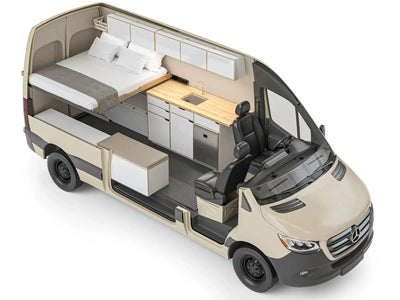
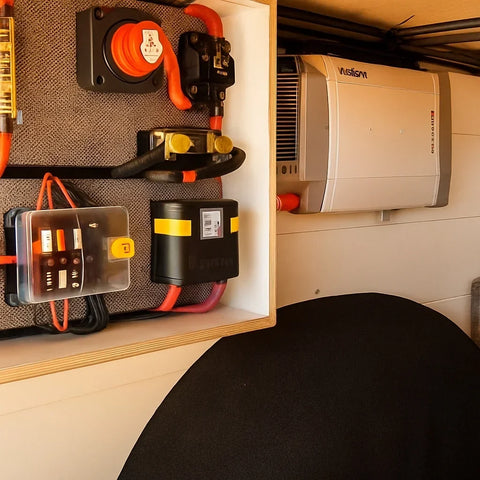
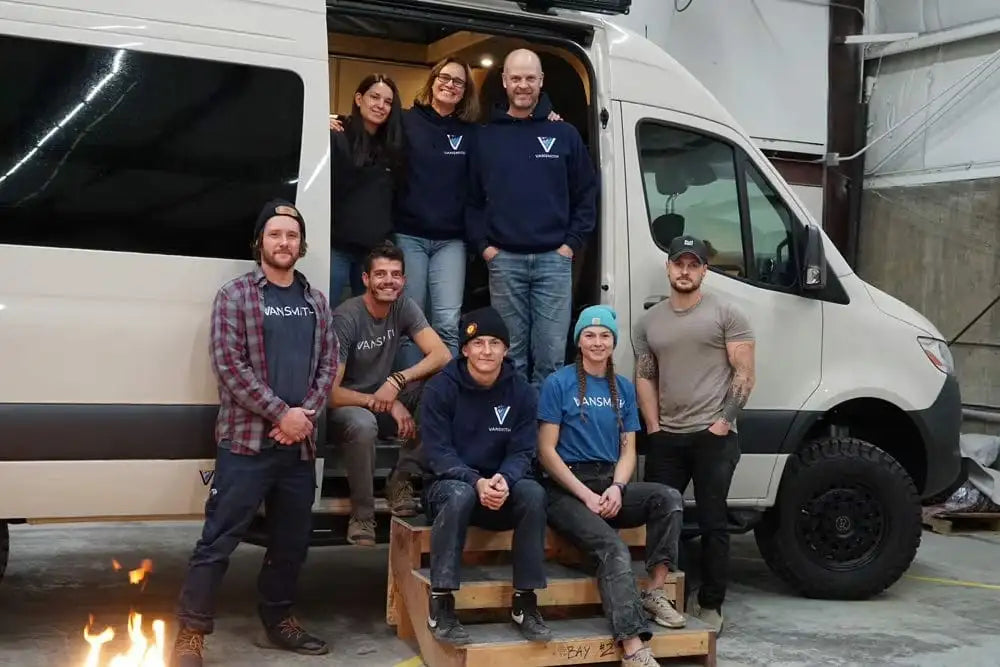
Weather changes quickly at elevation along the Parkway, so a van with real heating and a properly sealed interior makes a real difference on cooler nights, especially up near Craggy Gardens or Mount Pisgah. For mountain roads and shifting conditions, a 4x4 RV handles a wider range of terrain, and travelers wanting more comfort on a longer trip often look at luxury camper vans with upgraded power systems and four-season capability. At The Vansmith, every build is designed around how people actually travel this kind of route, not a generic factory template.
Planning the trip
Book campground reservations early for summer and fall, especially at Julian Price and Mount Pisgah
Download offline maps before you go; cell coverage drops out in a lot of the mountain sections
Budget more driving time than the mileage suggests. A 45 mph speed limit over winding roads adds up fast
Pack for temperature swings. Elevation changes across the route mean cooler nights than you might expect at the trailhead
Check seasonal road closures, particularly after winter storms, before committing to a specific stretch
Frequently asked questions
What is the best campground on the Blue Ridge Parkway?
Julian Price Campground and Mount Pisgah Campground are the most popular, thanks to their scenic settings, hiking access, and amenities like hot showers.
How much does it cost to camp on the Blue Ridge Parkway?
Most of the developed campgrounds run about $30 a night, and reservations can typically be made online through Recreation.gov in advance.
Do Blue Ridge Parkway campgrounds have hookups?
No. The National Park Service campgrounds along the Parkway provide flush toilets, drinking water, picnic tables, and fire rings, but not electrical or water hookups.
What is the best time for camping on the Blue Ridge Parkway?
Spring, summer, and fall all work well. Fall draws the most visitors for the foliage, while spring brings wildflowers and milder temperatures.
Are camper vans good for Blue Ridge Parkway camping?
Yes. A camper van gives you the flexibility to move between campgrounds, overlooks, and trailheads without depending on hookups or a fixed itinerary.
Do I need reservations for Blue Ridge Parkway campgrounds?
Yes, especially in summer and fall. The more popular campgrounds fill up quickly, so book ahead if your dates are fixed.
Written by Eugene Smit, CEO of The Vansmith.
About the author

Eugene Smit
CEO
Eugene is the CEO of The Vansmith, based in Boulder, Colorado. He writes across topics related to van builds, ownership, and the camper van industry.
Read more about Eugene