When building a 4x4 camper van, it's easy to get caught up in off-road upgrades. Lift kits, aggressive tires, suspension packages, and front-mounted winches all promise greater adventure capability. But when it comes to recovery equipment, many van owners ask the same question: Do you actually need a winch on a camper van?
The answer depends entirely on how you travel. If your adventures mostly involve forest service roads and dispersed campsites, a winch may be unnecessary. However, if you're building a serious overlanding rig, comparing 4x4 camper vans vs. 4x4 truck campers, or planning extended remote travel, a winch can provide valuable self-recovery capability.
Before investing in one, it's important to understand the benefits, drawbacks, weight penalties, and alternatives available for today's Sprinter van conversions and luxury adventure vans.
What Does a Winch Actually Do?
A winch is a motorized recovery device that uses a cable or synthetic rope to pull a vehicle out of difficult situations.
Common recovery scenarios include:
-
Deep mud
-
Soft sand
-
Snow
-
Rocky obstacles
-
Washouts
-
Steep inclines
-
Ditches
Unlike a tow strap, a winch allows for self-recovery when another vehicle isn't available.
For owners of Mercedes Sprinter camper vans traveling far from paved roads, this can be a major advantage.
The Reality: Most Camper Van Owners Don't Need One
Despite their popularity, winches are rarely used by many camper van owners.
Most travelers spend the majority of their time:
-
On maintained dirt roads
-
Exploring national parks
-
Camping on public lands
-
Driving forest service roads
-
Traveling between established campsites
A properly equipped Class B camper van with quality tires and recovery boards can handle these conditions without a winch.
For the average traveler, smart route planning often provides more value than expensive recovery equipment.
When a Winch Makes Sense
1. You Frequently Travel Solo
Solo overlanders have fewer recovery options.
If you become stuck:
-
There may be no passing traffic
-
Cell service may be unavailable
-
Recovery services could be hours away
A winch provides an independent way to recover your vehicle.
This is particularly important for owners exploring remote destinations in a luxury camper van.
2. You Explore Remote Backcountry Areas
If your adventures regularly include:
-
Desert trails
-
Mountain passes
-
Snow-covered routes
-
Remote public lands
-
Deep forest roads
A winch becomes much easier to justify.
The farther you travel from assistance, the more valuable self-recovery equipment becomes.
3. You Drive in Snow, Mud, or Sand
These are some of the most common causes of vehicle recoveries.
Heavy camper vans can quickly become immobilized when:
-
Tires sink into loose sand
-
Mud packs around the wheels
-
Snow exceeds ground clearance
Even the best 4x4 systems and suspension upgrades can't prevent every recovery situation.
4. Your Van Is Heavily Loaded
Most adventure vans carry:
-
Water tanks
-
Solar systems
-
Lithium batteries
-
Recovery equipment
-
Camping gear
-
Bikes and outdoor equipment
Many owners who invest in solar power installations and extended off-grid systems discover that the additional weight makes recovery more difficult when traction disappears.
The Biggest Drawback: Weight
Weight is where many people begin reconsidering a winch.
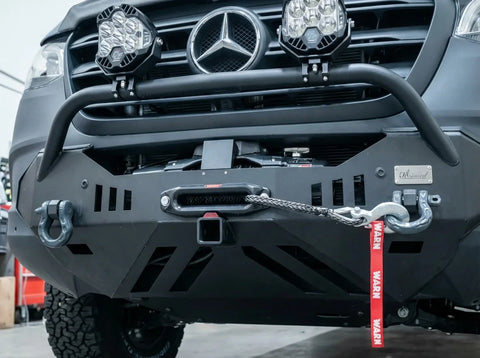
A factory bumper cannot safely support winching loads. Most installations require:
-
Steel recovery bumper
-
Winch cradle
-
Recovery points
-
Heavy-duty wiring
Typical Weight Breakdown
|
Component |
Weight |
|
Steel bumper |
50–110 lbs |
|
12,000 lb winch |
60–90 lbs |
|
Mounting hardware & wiring |
10–20 lbs |
|
Total Added Weight |
110–200+ lbs |
That extra weight hangs directly in front of the front axle.
How Added Weight Impacts Your Camper Van
Reduced Payload Capacity
Every pound added to the bumper is a pound that can't be used elsewhere.
That payload could otherwise be allocated to:
-
Fresh water
-
Food supplies
-
Additional batteries
-
Camping gear
-
Passengers
For owners focused on long-term travel, payload management matters just as much as capability.
If you're already evaluating upgrades, consider whether that weight would be better invested in the features discussed in What's Included in a Luxury Camper Van? 15 Features That Justify the Price.
Suspension Wear
Extra front-end weight can cause:
-
Suspension sag
-
Reduced ground clearance
-
Increased strut wear
-
Additional body roll
Many owners eventually upgrade their suspension after adding a winch.
Fuel Economy
Additional weight and increased aerodynamic drag can slightly reduce fuel efficiency over time.
The Cost of Installing a Winch
The winch itself is only part of the investment.
A complete setup may include:
-
Winch
-
Mounting system
-
Steel bumper
-
Recovery gear
-
Professional installation
-
Suspension upgrades
The total cost can easily reach several thousand dollars.
For some buyers, that budget might be better allocated toward upgrades such as those covered in Custom Luxury Camper Van for Couples: Layout Ideas, Features & What to Budget.
Choosing the Correct Winch Size
Camper vans are significantly heavier than most off-road vehicles.
Follow the 1.5x Rule
A winch should be rated for at least 1.5 times the fully loaded weight of your vehicle.
Example:
-
Loaded van weight: 9,000 lbs
-
Recommended winch rating: 13,500 lbs
Most adventure-ready 4x4 camper vans require a 12,000–13,500 lb winch to safely perform recoveries.
Synthetic Rope vs. Steel Cable
Synthetic Rope
Advantages:
-
Lighter weight
-
Easier handling
-
Safer if broken
-
Reduced vehicle weight
Disadvantages:
-
Higher cost
-
Requires UV protection
Steel Cable
Advantages:
-
Durable
-
Lower purchase price
Disadvantages:
-
Heavier
-
More difficult to handle
-
Stores dangerous energy under tension
Most modern overlanders prefer synthetic rope because weight savings are especially important in camper vans.
The Often-Overlooked Problem: Anchor Points
A winch is only useful if there's something to pull against.
Suitable anchors include:
-
Trees
-
Large rocks
-
Another vehicle
-
Ground anchors
In open desert environments, a winch can become useless if no anchor point exists.
This is one reason experienced travelers often carry multiple recovery tools.
Smart Alternatives to a Winch
For many travelers, these solutions solve most recovery situations.
Traction Boards
Traction boards are highly effective in:
-
Sand
-
Mud
-
Snow
Benefits include:
-
Lightweight
-
Affordable
-
Easy to store
-
No vehicle modifications required
Tire Pressure Management
Many stuck vehicles could have avoided recovery entirely by airing down tires.
Proper tire pressure:
-
Improves traction
-
Increases tire footprint
-
Enhances ride comfort
Learn more in Best Tires for a 4x4 Camper Van: What to Run on Snow, Mud & Rocky Trails.
Shovel
A simple shovel remains one of the most effective recovery tools available.
Digging around tires often solves the problem faster than setting up a winch.
Tow Straps
If you regularly travel with companions, a quality recovery strap may be sufficient.
Recovery Equipment Maintenance Matters
If you do install a winch, regular maintenance is essential.
You should inspect:
-
Electrical connections
-
Mounting hardware
-
Rope condition
-
Remote controls
-
Recovery points
The same principle applies to your van overall.
Routine inspections help prevent costly repairs, especially after off-road adventures. For a complete checklist, see 4x4 Camper Van Maintenance Checklist After Every Backcountry Trip.
Family Travel Considerations
Families often carry additional weight in:
-
Water
-
Food
-
Clothing
-
Outdoor gear
-
Bikes
If you're building a family adventure rig, carefully consider whether the added weight of a winch is worth sacrificing payload.
Families planning extended overlanding adventures should also read Is a 4x4 Camper Van Practical for Family Overlanding?.
Does a Winch Affect Resale Value?
A professionally installed recovery system may increase appeal for certain buyers.
However, resale value depends far more on:
-
Overall condition
-
Mileage
-
Service history
-
Build quality
-
Off-grid systems
You can learn more in Resale Value of Luxury Camper Vans: Do They Hold Their Worth?.
Budgeting for Recovery Upgrades
Before purchasing a winch, evaluate your overall build budget.
Many buyers prioritize:
-
Solar power
-
Lithium batteries
-
Interior upgrades
-
Suspension systems
-
Tires
before investing in recovery equipment.
If you're still planning your purchase, our guide on How to Finance a Luxury Camper Van can help you understand overall ownership costs.
Tax Considerations for Business Owners
For content creators, photographers, and business owners who use their van professionally, some equipment expenses may qualify as business-related costs.
Read Luxury Camper Van Tax Deductions: Can You Write Off Your Van? to learn more.
Final Verdict: Do You Need a Winch on a 4x4 Camper Van?
For most camper van owners, the answer is no.
If your adventures primarily involve maintained roads, national parks, and established dispersed camping areas, you'll likely benefit more from quality tires, traction boards, and proper recovery planning.
However, if you regularly travel solo, explore remote backcountry routes, encounter deep snow or sand, or spend extended time far from assistance, a properly sized winch can provide valuable peace of mind and self-recovery capability.
Ultimately, the best recovery setup is the one that matches your actual travel style. Before adding 150–200 pounds of equipment to your van, honestly evaluate how often you'll use it and whether simpler recovery tools can accomplish the same goal.