TL;DR
A camper van shower comes down to three main types: a wet bath (shower, toilet, and sink share one waterproof room, most space-efficient, $3,000 to $5,000 installed), a separate shower compartment (dry rest of the bathroom, needs a long-wheelbase van, $8,000 to $15,000), or a convertible system (part of the van becomes a shower and converts back, cheaper but more moving parts). Ventilation and waterproofing are where most builds fail, not the fixtures. A shower makes the most sense if you're planning weeks off-grid, living full-time, traveling with kids, or need to look presentable for remote work; it makes less sense for weekend trips or warm-weather travel where an external shower or gym membership covers it.

The question comes up in almost every van life conversation: does your van have a shower? For some people, that's a nice extra. For others, it's the deciding factor in whether van life is doable at all. We've built enough shower systems at The Vansmith, close to a decade of conversions here in Colorado, to know they can make or break how a van actually feels to live in. Done right, a shower buys you real freedom. Done poorly, it turns into an ongoing source of leaks and regret. This guide covers what you need to know about vans with showers, from design choices to real-world results, so you can figure out whether a shower makes sense for how you actually travel and how to put one in correctly if it does.
Why camper van showers matter more than you think

A steady shower system lets you stay off-grid longer without hunting for a campground or gym just to get clean, which is one of the bigger freedoms van life offers. When it's too cold, windy, or buggy for an outdoor rinse, having an indoor option keeps you comfortable regardless of weather. And your own shower means your own space, consistent water temperature, and your own toiletries, small things that matter more the longer you're on the road.
Longer trips also get easier when you're not cutting a day short just to find a place to clean up. For van lifers who work remotely or need to keep a professional look for video calls and client meetings, reliable shower access matters in a very practical way, and steady access to real hygiene supports both physical health and mental well-being over a long trip.
Types of van shower systems
Wet baths: maximum functionality in minimum space
A wet bath combines the shower, toilet, and sink into one compact, fully waterproof room. Everything in the room gets wet when you shower, which is where the name comes from, and it's the most space-efficient way to fit a full bathroom into a van.
Wet baths pack the most function into the least space, they're easier to waterproof than separate facilities since there's only one wet zone to seal, and RV owners already tend to be familiar with them. The tradeoffs are real too: everything gets wet during use, good ventilation is essential to prevent mold, you need to towel or squeegee the space dry between uses, and they can feel cramped for larger people.
Separate shower compartments: luxury and convenience
Larger van builds sometimes dedicate a standalone shower space that doesn't double as anything else. It's the closest you'll get to a true at-home shower feel, but it needs real space to work. In exchange, you get a more comfortable shower, dry bathroom facilities the rest of the time, an easier space to keep clean, and better long-term durability. The cost is a meaningful chunk of floor space, more complex plumbing and waterproofing, a higher price tag, and it usually only fits in a long-wheelbase van.
Convertible shower systems: smart space usage
Convertible systems turn part of the van into a shower when you need one, then convert back for other use, whether that's a curtain system, moving panels, or some other clever design that lets one space do double duty. You get real space efficiency and lower cost than a dedicated shower room, but the setup and breakdown is more involved, there's more that can fail mechanically, waterproofing is trickier, and day-to-day convenience takes a hit compared with a fixed setup.
Design considerations for van showers
Water system requirements

A shower needs steady hot water, whether that comes from an on-demand tankless heater, a storage tank heater, or a combination system. Showers also use real water, so plan for at least 20 gallons of fresh water storage, enough gray water capacity to match, a water pump that can actually deliver decent pressure, and a realistic plan for refilling and dumping. Our own vans with showers are sized so you're not constantly worrying about running out of tank capacity mid-trip.
Drainage and gray water management
A shower area has to drain completely, or you end up with standing water, mold, and odors. That means real floor pitch toward the drain, a high-capacity drain system, a properly designed trap to keep sewer gas out, and a cleanout you can actually access. Showers also produce a lot of gray water, which calls for a larger gray tank, a dump valve you can reach, a plan for legal disposal locations, and some way to monitor tank levels.
Ventilation: the critical success factor
Showering creates a lot of moisture fast, and if it isn't cleared out quickly you get mold and mildew, condensation throughout the van, odors, and real damage to interior finishes. A high-capacity exhaust fan in the shower area, a make-up air path so air actually moves, dehumidification in humid climates, and good air circulation throughout the van all matter here, and This Old House backs up how critical ventilation is for preventing mold in any wet space. Whether you go with a wet bath, an outdoor shower, or a portable setup, we plan the airflow for every shower system we build, based on years of what's actually worked.
Waterproofing: where many builds fail
Shower floors need to be fully waterproof with real drainage: marine-grade waterproof flooring, a properly sealed subfloor, sealed penetrations for drain lines, and enough floor pitch to drain completely. Walls and ceilings around the shower need moisture-resistant materials, vapor barriers where they're needed, sealed fixture penetrations, and finishes that can actually handle the exposure. The spots where the shower meets the rest of the van matter just as much: the threshold, the door or curtain seal, and the floor transition all need proper sealing and the right material transitions.
Waterproofing failures can ruin an entire build, which is why professional installation matters so much here: the right material selection and compatibility, correct installation technique, real system testing, and warranty coverage on the waterproofing itself. Our own shower installs use waterproofing methods we've tested in real-world use, refined after learning from our own early mistakes.
Van shower layout options
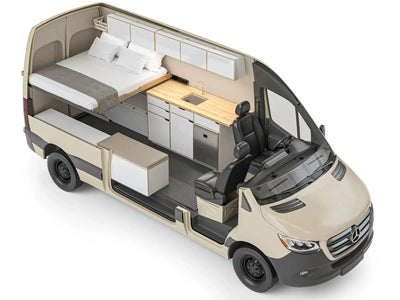
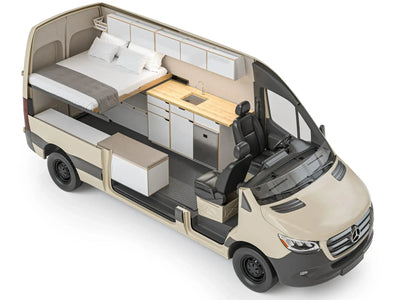
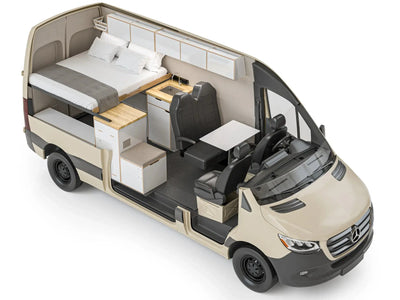
Our DUO and DUO XL layouts can fit a shower a few different ways: a wet bath for maximum efficiency, a convertible shower area for flexibility, an external shower connection for outdoor use, or some combination of these. FAMILY layouts need more robust systems overall: larger water and waste capacity, more ventilation, more durable finishes, and easier access for cleaning and maintenance.
Fitting a shower into a shorter wheelbase usually means a wet bath, a convertible design, more compact fixtures, or a multi-purpose space. Extended wheelbases open up room for a separate shower compartment, a larger shower area, and more storage and comfort around it.
Real-world performance: what actually works
The setups that consistently satisfy owners are well-ventilated wet baths in moderate climates, well-designed external showers for warm-weather use, simple and reliable plumbing with quality components, and finishes that are actually easy to maintain. The problems we've learned from tend to trace back to the same handful of causes: inadequate ventilation leading to mold, overly complex systems that fail more often, insufficient waterproofing that causes real damage, and undersized water systems that limit how usable the shower actually is day to day.
Climate matters too. Shower systems work well in dry climates, where moisture control is easier and things dry out on their own. Humid climates need stronger airflow and active drying to avoid problems, and winter use needs freeze protection, enough heat, and real moisture control in cold conditions.
Maintenance and long-term reliability
Daily care is simple: ventilate after each use, towel or squeegee the surfaces dry, check that the drain is clear, and keep an eye on water levels. Weekly, it's worth deep-cleaning the surfaces and fixtures, cleaning the ventilation fan, inspecting the waterproofing and seals, and testing the plumbing connections. Monthly, sanitize and flush the water system, clean the gray water tank, service the ventilation system, and give the waterproofing a closer inspection.
If something goes wrong, the fixes are usually straightforward: clear blocked drains promptly and check the floor pitch and gray water system if drainage is slow; clean fan filters and impellers and check for blocked air pathways if ventilation feels weak; and address any waterproofing leak immediately, re-sealing the problem area rather than letting it sit, since small leaks get expensive fast.
Cost considerations for van showers
A basic wet bath, a simple shower and toilet combination with standard fixtures, basic plumbing, and a standard ventilation system, typically runs $3,000 to $5,000 installed. A premium setup with a separate shower compartment, higher-end fixtures and finishes, stronger ventilation and heating, and nicer materials runs $8,000 to $15,000. Our own systems sit on the higher end of quality because professional installation and proven reliability save real money over years of trouble-free use.
Beyond installation, expect ongoing costs: more frequent water fills and gray water dumps, occasional dumping fees, water heating fuel, and periodic cleaning supplies, fan maintenance, waterproofing touch-ups, and eventual fixture replacement.
Alternative shower solutions
An external shower needs no interior space, no ventilation or waterproofing to worry about, costs less, and drains and dries naturally. The tradeoff is that it depends on weather and privacy, doesn't work well in cold weather, needs a suitable spot to set up, and won't cover every hygiene need on its own. Plenty of van lifers land on a hybrid approach instead: an external shower for good weather, indoor capability for tougher conditions, the occasional gym or campground shower, and a portable setup as backup.
Making the shower decision
A shower tends to make real sense if you're planning weeks off-grid at a time, living in the van full-time, traveling with kids (where hygiene stops being optional), or working remotely and needing to look presentable on calls. It makes less sense for weekend trips that don't justify the space and complexity, warm-weather travel where an external shower or natural water source covers it, van lifers who'd rather rely on a gym membership for showers and workouts, or anyone for whom the added cost and complexity just doesn't fit the budget.
The Vansmith shower advantage
Our shower designs come from years of real client feedback and actual use data, not just theory. We use marine-grade waterproofing methods and components that avoid the failures common in DIY installs, and we build the shower to work cleanly with the van's water, power, and airflow systems rather than as an afterthought bolted on separately. That includes ongoing support if something needs attention down the road.
We use components built for boat use, which are made to handle moisture and constant movement, and we choose fixtures for long-term dependability over the lowest upfront cost. Our installers take the time to get it right the first time, and every installation carries warranty coverage.
Ready to explore shower-equipped van life?
A camper van with a shower can genuinely change how you travel, giving you the freedom to stay off-grid longer and a private, familiar space wherever you end up. But a shower system is a real install, one that demands real skill in waterproofing, airflow, and plumbing. The key is being honest about the tradeoffs between space, extra maintenance, and how you'll actually use it, then building a system that matches your real travel patterns rather than an idealized one.
Whether you're set on a shower or still weighing it, our team can walk you through what actually works in practice and what to plan for. Take a look at our van builds with showers to see how careful planning and professional installation add up to a shower system that holds up in real use.
FAQ
Do you need a shower in a camper van?
It depends on your travel style. If you frequently camp off-grid or travel in cold climates, a built-in shower adds real comfort and independence. For occasional weekend trips, portable showers or public facilities like truck stops and campground showers (usually under $5) work fine.
What is the best type of shower for a camper van?
A wet bath is the most space-efficient option, combining the shower, toilet, and sink in one compact room. For vans with less space, a convertible or folding shower stows away when not in use, giving you an indoor shower without permanently giving up floor space.
How much water does a camper van shower use?
A typical van shower uses 2 to 3 gallons per session with a low-flow showerhead (1.5 to 2.0 GPM). With a quick wet-rinse-lather-rinse approach, a 20-gallon fresh water tank can provide several days of showers for one person.
How do you heat water for a van shower?
The most common methods are tankless propane water heaters for instant hot water on demand, diesel combi heaters like Webasto units that heat air and water at the same time, and 12V electric tank heaters powered by solar. Solar shower bags are the simplest budget option for warm-weather use.
Can you install a shower in a van yourself?
Yes, a basic outdoor shower setup is a straightforward DIY project. An indoor wet bath is more complex, typically requiring plumbing for fresh and gray water tanks, a water pump, a drain, and a waterproof enclosure. DIY wet bath builds generally run $2,000 to $5,000 in materials.
What is the difference between a wet bath and a dry bath in a van?
A wet bath is a single waterproof room where the shower, toilet, and sink share the same space, so everything gets wet when you shower. A dry bath separates the shower from the toilet and sink with a partition or curtain, keeping those areas dry but requiring more floor space.
Written by Eugene Smit, CEO of The Vansmith.
About the author

Eugene Smit
CEO
Eugene is the CEO of The Vansmith, based in Boulder, Colorado. He writes across topics related to van builds, ownership, and the camper van industry.
Read more about Eugene