TL;DR
Choose the Mercedes Sprinter if you want maximum interior width, the strongest long-term reliability and resale value, or a genuine 4x4 option for serious off-road access. Choose the Ford Transit if budget matters most: it typically costs $10,000 to $15,000 less than a comparably equipped Sprinter, is backed by Ford's much wider service network, and its high-roof models actually offer about 2 to 4 inches more standing height than a high-roof Sprinter (roughly 81.5 inches versus 78 to 79 inches). Sprinter diesel engines are known for exceeding 300,000 miles; most gas Transits reach 150,000 to 200,000. The Vansmith builds on both platforms, so our advice isn't tied to either one.

Choosing between a Mercedes Sprinter build and a Ford Transit build is one of the most important decisions you'll make in your van life journey. Both platforms offer strong build options, but they bring different tradeoffs that affect daily comfort and long-term dependability. The wrong choice can mean years of regret, while the right one becomes the base for countless trips.
At The Vansmith, we've built hundreds of both Sprinter and Transit vans over nearly a decade in Colorado. We've seen how each platform performs in real-world use and which details matter most to different kinds of travelers. This guide shares that experience to help you make the choice that actually fits your trip style.
Why we build both

Unlike shops that focus on a single platform, The Vansmith has built deep experience with both Mercedes Sprinter and Ford Transit vans. That dual experience lets us give advice based on your actual needs rather than steering you toward whichever platform we prefer.
Mercedes Sprinter: 144" and 170" wheelbases, both 2WD and 4x4, high-roof and super-high-roof configurations, diesel and gas engine variants.
Ford Transit: 148" and extended wheelbases, 2WD, AWD, and limited 4x4 experience, high-roof and super-high-roof configurations, EcoBoost and diesel engine variants.
The Mercedes Sprinter advantage

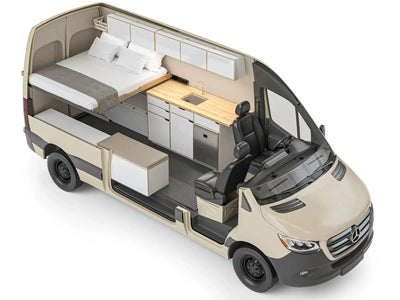
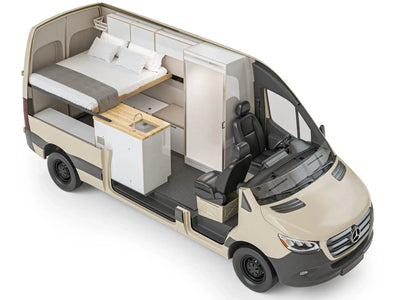
The Sprinter's real strength is width, not height. Its wider body opens up more comfortable bed layouts, especially for couples who want a true queen-size sleeping area, and it's part of why our DUO and FAMILY layouts take full advantage of Sprinter's interior. On standing height specifically, though, the high-roof Transit actually has the edge: it offers roughly 81.5 inches of interior standing height versus about 78 to 79 inches on a high-roof Sprinter, a real difference of 2.5 to 4 inches that can matter if you're well over six feet tall.
Reliability is where the Sprinter pulls ahead again. Mercedes builds the Sprinter to commercial standards, and its diesel engines are known for exceeding 300,000 miles with proper maintenance. Our Sprinter build buyers consistently report strong long-term dependability, with many vans running smoothly after years of full-time use. Mercedes service isn't as widespread as Ford's network, but it has grown considerably, and it's easier to find a qualified shop today than it was a few years ago.
Mercedes also offers a genuine factory 4x4 option with a low-range transfer case, capability that isn't available on the Transit. Mercedes-Benz's own Sprinter capability information outlines the available 4x4 and all-wheel-drive systems by model. We've built many 4x4 Sprinters for buyers who put remote access and off-road capability first, and these vans genuinely open up trips that a 2WD platform can't reach. They come at a premium price, but for serious adventure travel, that capability tends to be worth it.
Sprinter tends to make the most sense if maximum interior width is a priority, long-term reliability matters more to you than the sticker price, you're planning full-time or extended van life, off-road capability is part of your plans, resale value matters, or you're building a luxury or high-end conversion.
The Ford Transit advantage
Cost is the Transit's clearest advantage. A new Transit typically runs $10,000 to $15,000 less than a comparably equipped Sprinter, and that gap extends through ownership: Ford's dealer network means service is available almost anywhere you travel, and common Ford parts keep maintenance and repairs cheaper. Ford's own commercial Transit page highlights that dealer and service network across the country.
Ford's AWD Transit option gives solid traction for winter weather and light off-road use without the extra cost and complexity of a full 4x4 system, and the range of engine choices, gas or diesel, lets you match performance to how you actually drive. EPA fuel economy data for vans shows how those different engine and drivetrain combinations compare on MPG. For buyers who want better traction without needing full 4x4, Transit AWD is a reasonable middle ground.
Ford's decades building work vans translate into a proven platform for van life use. Our Transit build buyers report strong dependability and satisfaction, and plenty of them come back to build a Transit again. Transit tends to make sense if budget is a primary factor, you'd rather rely on Ford's extensive service network, AWD covers your traction needs without full 4x4, initial savings matter more to you than maximum space, or you're building a practical, function-first conversion.
Matching the platform to how you actually travel
Weekend warriors do fine on either platform. The choice usually comes down to budget and comfort: Transit tends to offer better value, Sprinter a smoother ride and more interior width. If you're thinking about payload capacity for hauling bikes, boards, or gear, both platforms handle weekend loads easily; it's more about how you like to travel than raw numbers.
Seasonal travelers should think about where they're headed and what support is available there. Transit's service network is a real advantage if you're covering a lot of remote ground. Full-time van lifers tend to lean Sprinter, since the extra width and long-term reliability usually justify the premium once you're living in the van full time. Adventure travelers chasing serious off-road access get real value from the 4x4 Sprinter, while Transit AWD covers most other trip styles just fine.
Budget considerations beyond the purchase price
Sprinter carries a higher initial cost but often lower long-term maintenance and better resale value. Transit costs less upfront, backed by a wider service network, but tends to depreciate faster. The money you save on a Transit can fund real conversion upgrades, while a Sprinter's premium may limit your conversion budget even as it gives you a stronger base platform to build on.
What working with us actually looks like
We start with a real conversation about your travel plans and style, budget for both the van and the conversion, space requirements and layout preferences, service and maintenance preferences, and your timeline. From there, we give you an honest read on both platforms for your specific needs, real-world performance insights from our own customer base, a look at conversion possibilities for what you're trying to build, and a long-term cost and value projection so you're not just comparing sticker prices.
Build considerations once you've picked a platform
On a Sprinter, the extra interior space supports more creative and comfortable layouts, more room for power, plumbing, and storage systems without cutting into living space, and premium touches like a full bathroom that need the space and platform capacity to support them. Our DUO XL and FAMILY layouts genuinely shine on the Sprinter platform because of that extra room.
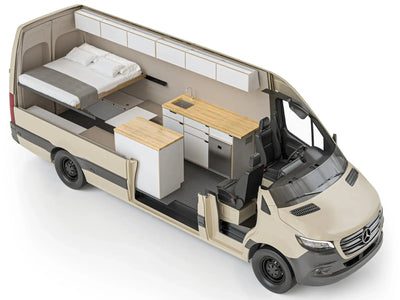
On a Transit, the lower platform cost frees up budget for build details and better materials, and the size works well for smart, use-first layouts that make the most of a smaller footprint. Ford's wide service network also means less worry about breakdowns or upkeep far from home. Our DUO and FAMILY layouts adapt well to Transit too, just with a more compact, efficiency-focused footprint.
Long-term ownership
Sprinters hold their value better than Transits, especially well-built conversions. Industry resale tools like Edmunds consistently show strong retained value for well-maintained Sprinter cargo and passenger vans, and built for commercial use, they often provide a long service life with proper care. Transit's advantage here is different: its wide service network and common parts keep long-term maintenance cheaper, and the lower platform cost makes replacement more affordable down the road if you ever need it.
Ready to choose your platform?
This choice is too important to make from ads or online forums alone. It affects everything from daily comfort to long-term satisfaction, and it deserves guidance from people who actually know both platforms well. We've helped hundreds of buyers make this call, and we've seen how the right choice makes van life better while the wrong one creates ongoing frustration. Whether you're drawn to the space and power of a Sprinter or the value and simplicity of a Transit, contact us for an honest conversation about your travel goals, or browse our Sprinter van builds to start planning.
FAQ
Is a Sprinter or Transit better for a camper van conversion?
Neither is universally better; it depends on your priorities. The Ford Transit offers a lower purchase price, cheaper maintenance, and a taller high-roof interior, while the Mercedes Sprinter delivers longer diesel engine life, higher resale value, and an available 4x4 option. The Vansmith builds on both platforms and can help you decide based on your travel style and budget.
How much cheaper is a Ford Transit than a Mercedes Sprinter?
A new Ford Transit typically costs $10,000 to $15,000 less than a comparably equipped Sprinter. That cost advantage extends to maintenance and repairs, since any Ford dealer or general mechanic can service a Transit, while Sprinters often need a specialized Mercedes service center.
Which van has more interior space for a conversion, Sprinter or Transit?
The high-roof Ford Transit actually offers about 2.5 to 4 inches more standing height than the high-roof Sprinter (roughly 81.5 inches versus 78 to 79 inches), which makes it slightly better for taller owners. The Transit also has straighter interior walls, which simplifies cabinet and furniture installation. The Sprinter counters with a wider cargo area and higher payload capacity in certain configurations.
Do Sprinter vans last longer than Transit vans?
Generally, yes. Sprinter diesel engines are known for exceeding 300,000 miles with proper maintenance, while most gas-engine Transits reach 150,000 to 200,000 miles. If you plan to put on serious mileage over many years, the Sprinter's diesel drivetrain has a real longevity advantage.
Is a Sprinter or Transit easier and cheaper to maintain?
The Ford Transit wins on maintenance cost and convenience. Parts are widely available, any Ford dealership or independent shop can handle repairs, and labor rates run lower than Mercedes specialists. Sprinter maintenance costs more and can mean longer wait times, especially in rural areas.
Can you get a 4x4 or AWD Transit van?
Ford introduced an all-wheel-drive Transit option in 2020, but it isn't a true 4x4 low-range system like what Mercedes offers on the Sprinter. For serious off-road or backcountry camping, the Sprinter 4x4 has the edge. For most van lifers sticking to paved roads and light gravel, Transit AWD is more than enough.
Which van has better resale value, Sprinter or Transit?
The Mercedes Sprinter consistently holds its value better on the resale market, thanks to its premium brand reputation and diesel reliability. You pay more upfront, but you typically recover a larger percentage at resale. The Transit depreciates faster but costs significantly less to buy, so total cost of ownership can end up similar depending on how long you keep it.
Written by Eugene Smit, CEO of The Vansmith.
About the author

Eugene Smit
CEO
Eugene is the CEO of The Vansmith, based in Boulder, Colorado. He writes across topics related to van builds, ownership, and the camper van industry.
Read more about Eugene