


If you're buying a used cargo van to convert — a Sprinter, Transit, or ProMaster — the seller almost never tells you the full story. Vans come through our shop that looked fine on paper and turned out to have smashed floors, bent walls, and a cargo history nobody mentioned.
This is the same 25-point inspection we run before we ever put a van into a build. Use it before you hand over cash.
Looking for a pre-vetted vehicle instead? Browse our used van inventory before you shop the private market.
Assume it was worked hard
Start from this assumption: the van hauled heavy loads, towed often, and saw rough driving — even if the mileage looks low. A cargo van's odometer tells you distance, not how it was treated.
One van that came through our shop had a smell we couldn't fully scrub out. We tracked down the previous owner and found out it had once hauled materials from a fracking site. The mileage looked totally normal. Nothing on the outside gave it away.
Heavy towing or overloading can quietly stress the powertrain in ways a test drive won't reveal (AAA). Drive it like you'd drive a rental — but inspect it like you're buying someone else's problem.
The 25-point checklist
Exterior (1–5)
- Walk all four sides for panel misalignment.
- Check welds and seam lines for repair evidence.
- Inspect frame rails, crossmembers, and floor pan for rust.
- Check tire tread depth and uneven wear patterns.
- Push down each corner — suspension should rebound in 1–2 cycles, no clunks or squeaks.
Mechanical (6–11)
- Check dashboard warning lights before and after startup.
- Listen for knocks, ticks, or excessive smoke on a cold start.
- Inspect engine oil level and condition.
- Check coolant level and color.
- Test A/C, heat, windows, lights, horn, and wipers.
- Take it on the highway — evaluate steering, braking, and vibration at speed.
Cargo & interior (12–17)
- Check for mildew, chemical, or unusual odors — open both side doors and check what comes out of the vents.
- Press the floor in multiple spots for soft spots.
- Inspect roof seams for leaks or water stains.
- Look for bent walls or signs of overloading.
- Check any existing fixtures for secure mounting.
- Verify the factory floor tie-down points are still intact.
History & documentation (18–22)
- Run a VIN report through Carfax or AutoCheck.
- Review maintenance records — not just a clean Carfax. Ask for actual receipts (Consumer Reports).
- Ask what kind of cargo the van carried, and whether it towed regularly.
- Confirm a clean title — no salvage or flood history (Kelley Blue Book).
- Verify registration status and lien information.
Negotiation (23–25)
- Schedule a pre-purchase inspection with an independent mechanic — ideally one with no stake in the sale.
- Compare pricing using KBB or NADA values.
- Document every defect in writing and use it during negotiation.

Additional Checklist
Transmission Fluid Check
Explain why checking the transmission fluid is one of the first mechanical inspections we recommend. Cover fluid color, smell, and level, along with signs of overheating or neglected maintenance. Note how a healthy transmission is especially important for long mountain grades and extended road trips common in Colorado and the West.
Timing Belt or Timing Chain Replacement History
Discuss why service records matter more than assumptions. Explain the difference between timing belts and timing chains, when replacement is typically required, and why missing maintenance history can become an expensive surprise after purchase. Encourage buyers to verify documented maintenance before making a decision.
Choosing the Right Van Size and Roof Height
Help readers match van dimensions to their travel style rather than simply choosing the biggest option. Compare standard versus high roof configurations, parking considerations, interior standing room, storage capacity, and how different layouts support climbing, biking, skiing, or longer trips. Share observations from helping customers select vans that suit their real travel habits.
What Does a Professional Inspection Cost?
Provide a realistic overview of pre-purchase inspection costs and what is typically included. Explain that inspection fees are often small compared to the potential cost of hidden mechanical or living system repairs. Describe what experienced inspectors evaluate, including drivetrain, suspension, brakes, electrical systems, and structural condition.
Living Systems Inspection Checklist
Cover the systems that make a camper van functional after the engine is turned off. Include:
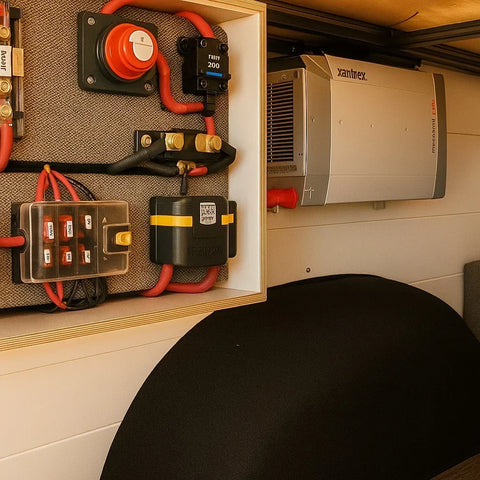
- House battery and charging system
- Solar panels and charge controller
- Inverter and shore power connection
- Fresh, gray, and plumbing systems
- Water pump and fixtures
- Heater and ventilation
- Refrigerator performance
- Interior electrical outlets and lighting
- Signs of leaks, moisture, or previous water damage
Conclude by explaining that we often remind buyers to spend as much time evaluating the living systems as the vehicle itself, since these components have the greatest impact on day-to-day comfort and long-term ownership.

5 things most buyers miss
Mileage and engine condition get all the attention. These get overlooked — and they're often the expensive ones:
- Hidden rust under the flooring and wheel wells
- Water intrusion around roof seams
- Bent wall panels from heavy commercial use
- Uneven tire wear from suspension damage
- Missing service records that hide a pattern of poor maintenance
If you're buying specifically for a conversion build
A few checks matter only because you're about to bolt cabinets to this thing:
- Floor condition where cabinets will mount
- Roof integrity for a future fan or solar install
- Factory tie-down points, in case you want to reuse them
- Panel or insulation work that might be covering old damage
- Remaining payload capacity after your build weight goes in
- A VIN that decodes cleanly for insurance and registration
Deciding between platforms first? See our Sprinter vs. Transit conversion comparison. If you've already got a Sprinter in mind, our Sprinter-specific pre-purchase checklist covers chassis and driveline details specific to that platform.
Red flags that should make you walk away
- Bent or damaged frame rails
- A check-engine light that stays on across multiple test drives
- Signs of flood or water submersion
- Strong chemical or cargo odors that don't fade
- Missing title documentation
- Rust affecting structural components
One of these alone might be negotiable. Two or three together usually means it's time to keep shopping.
The mechanic inspection is non-negotiable
Bonus points if the mechanic is a friend who'll give it a real going-over. This is the single highest-leverage step in the whole process, because they have no stake in whether you buy it. If they save you from a lemon, you'll probably be back for other work later — that's a good outcome for everyone.
A few things worth asking them to prioritize specifically:
- Suspension — press down hard on one corner. It should return quickly and smoothly. Squeaks, creaks, or a slow rebound point to worn shocks.
- Fluids — oil and transmission leaks especially. These are cheap to spot and expensive to ignore.
- Mileage cross-check — compare the odometer to old service receipts and the VIN report. If the numbers don't match, walk away.
Reading the van's past
Before you commit, try to piece together what the van's working life actually looked like:
- A low-roof city van that spent its days hopping curbs on delivery routes is a different animal than a highway-use van with steady highway miles — even at similar mileage.
- Look at the roof for old rack mounting holes, check the floor for extra holes from old shelving, and check the frame rails for impact marks from loading docks.
- Ask the seller directly: "Anything I should know?" It's a simple question, and it's surprising how often it opens up the real story.
Frequently Asked Questions
What should I look for when buying a used van for van life?
Start by assuming the van was worked hard as a commercial vehicle, even if the mileage looks low. Have a mechanic inspect it, check for suspension issues, uneven tire wear, leaks, rust, and signs of heavy towing or overloading that could have stressed the powertrain.
Why is it important to get a mechanic inspection before buying a used van?
A professional mechanic doesn’t have any emotional or financial stake in your purchase, so they’ll be honest about problems. They can spot hidden issues - like powertrain damage, worn suspension, or leaks - that you’re likely to miss on a quick test drive.
How can I tell if the suspension on a used van is in good shape?
Press down hard on one corner of the van and watch how it rebounds; it should return quickly and smoothly to its original position. Listen for squeaks or creaks and check for uneven tire wear, which can point to bad shocks or poor tracking.
What kind of exterior problems are red flags when buying a used van?
Visible rust on the body is a big warning sign, because it usually means there’s more rust hidden underneath. Dents and scratches are mostly cosmetic, but exposed bare metal can turn into future rust issues if it’s not addressed.
How do I know if a used cargo van has been abused or used for heavy work?
Look for signs like smashed or heavily worn floors, bent interior walls, warped parts, and strong or strange odors that might hint at what it used to haul. Ask about towing history and pay attention to any leaks or drivetrain issues, since hard use and heavy loads can quietly damage the powertrain.
About the author

Eugene Smit
CEO
Eugene is the CEO of The Vansmith, based in Boulder, Colorado. He writes across topics related to van builds, ownership, and the camper van industry.
Read more about Eugene


Comments
Ill be going in to do a test drive on a 2018 Ford Transit Cargo 250 3dr LWB Medium Roof Cargo Van with Sliding Passenger Side Door on Friday, the miles are quite high, I’ll be asking to see the Carfax before going any further, the price is good, and its what I’ve been wanting for the vanlife, but not if I’ll be fixing something on in more than enjoying it
We recently bought a 2012 KIA Sedona. I am mechanicly inclined and did all the necessary checks. Van was tight. Drove and ran perfectly. We asked about any kind of warranty. Dealer saod as is. When we hesitated he told us 1 week on the engine and transmission. Lucky us! Drove it the 60 miles home-no problem. A couple more places and all was good. 2 days into warranty we started it up and it made a clattering sound and smoke poured from the tailpipe. Piston rings, obviously. They did make good on the warranty. I was shocked and so seemed the dealer, as well.
We recently bought a 2012 KIA Sedona. I am mechanicly inclined and did all the necessary checks. Van was tight. Drove and ran perfectly. We asked about any kind of warranty. Dealer saod as is. When we hesitated he told us 1 week on the engine and transmission. Lucky us! Drove it the 60 miles home-no problem. A couple more places and all was good. 2 days into warranty we started it up and it made a clattering sound and smoke poured from the tailpipe. Piston rings, obviously. They did make good on the warranty. I was shocked and so seemed the dealer, as well.
I am going to look at a used diesel Promaster, tomorrow. I will take your list with me and let you know how it went.
Thank you for your guidance.
:-)
Great read! This information is so valuable, especially during these times when being online is so important. Thanks for sharing such amazing information dear. Also, I would like to add some more details I have found via the website https://commercialvansolutions.com/wp-content/uploads/2017/11/gruau-ford.pdf
Hi My partner and I are looking to purchase a used high roof medium wheel base van. Currently I am at the research stage, so am reading everything associated with purchasing this type of vehicle. We both really appreciate everything we can find, to help us with our purchase. As we are in Tier 3, time is on our side Thank You Josie.
Greetings,
Great advice above,
..I am a Business Fleet dealer in Texas and I just bought a 180 count of 2020 Mercedes Sprinter High Roof Extended vans from a large fleet order that canceled. I can offer at a significant discount. What is the best way to connect with your community that is shopping for a deal on a Sprinter?
Thanks,
David Thomas
Premier Auto Dallas Fleet
214-384-9100
Thanks for these basics. I got really lucky with the 1990 E-150 I paid $1200 for in 2012. Sure, there have been repairs, but all in all I’ve paid less than $250 a year factoring IN the buy price. It’s been cross country and back six times and another trip down east coast(got to love Asheville, NC!)
Penny(she has copper color accents) has been a loyal and reliable ole hoss; whenever she threw a shoe, it was always at a convenient point on the trail. Now I’m looking for her replacement, and being older and more tired myself, am looking to pay more, since I know damned well I won’t get THAT lucky again…
You’ve given me some tips that will help me as I look at choices for my next rig.