Winter van camping Colorado works best when you camp lower, plan for traction laws, and build your van to hold heat through real subzero nights. Which version of that advice fits you comes down to three things: your route, your campsite type, and how winter-ready your van really is. A serviced site at a lower park can turn a hard trip into an easy one. On the other hand, a high pass, wind, and weak window insulation can make a decent heater feel small fast.
Where winter van camping in Colorado actually works best
 Your best statewide planning tool is Colorado Parks and Wildlife camping. It shows reservable campsites, electric sites, and full hook-up options across state parks. Reservations open 6 months in advance, which matters more in winter than many people think.
For van travel, electric hookups lower risk. You can support battery charging and take some pressure off your off-grid systems during cold weather. That can be the difference between a calm morning and waking up to a low battery after a long heater night.
In Colorado, winter camping is usually an elevation choice first. Lower, sunnier, less exposed parks are often more comfortable than the highest scenic campgrounds. Route first, campsite second, scenery third. We say that a lot in our Boulder shop because the best photo stop is useless if the road in gets ugly after dark.
Colorado.com's winter state park guide points to Navajo State Park near Pagosa Springs as a milder winter option than many higher spots. That makes southwest Colorado a smart play for shoulder season and winter trips. The same guide also highlights State Forest State Park, but that is a much colder, snowier experience and asks more from your van.
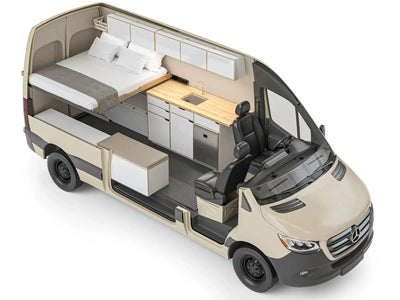
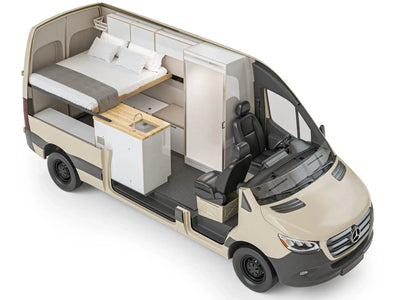
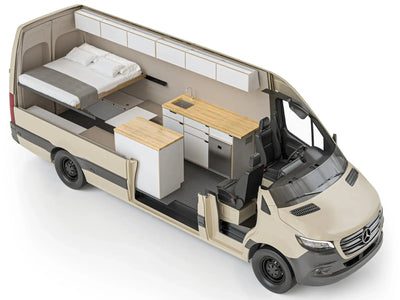
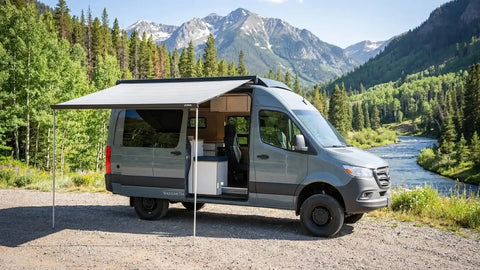
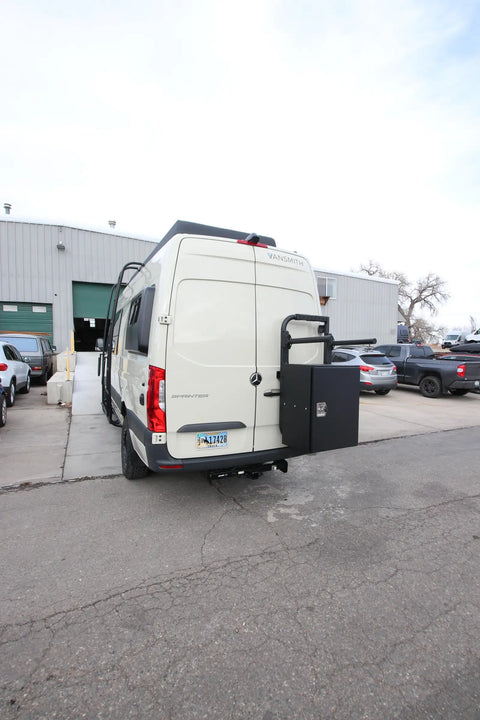
If you're still sorting out layouts and cold-weather priorities, it helps to browse how different rigs are set up. The Vansmith's Sprinter conversions and Transit conversions show the kinds of full builds people use for Colorado travel. Most of our winter customers still choose high roof, and most mid-roof buyers later add a pop-top because standing room and heat management matter more once ski season starts.
State parks vs national park winter camping
Rocky Mountain National Park is one of the clearest examples of true high-country winter van camping. According to the National Park Service campground page, Moraine Park Campground is the only campground open in winter. That makes planning simple on paper, but it also means your options are narrow.
Moraine Park winter camping is first come, first served, not fully reservable. That pushes you toward flexibility in a way most state parks do not. If your weekend has to run on a tight clock, that uncertainty can be a headache.
NPS also notes that electric sites are available in Loops B and C, and fresh water fill plus the dump station are available. That's unusually helpful winter support for vehicle camping. It can make a short winter stay possible even if your van is not set up for long off-grid use.
There is a catch. NPS says campsites are not plowed or shoveled by staff. Bring a shovel, and expect to clear your own site. For a long-wheelbase van, that matters because an open campground is not the same thing as an easy arrival or a simple turnaround.
In our Boulder shop, families and couples usually enjoy winter camping more when they start with serviced sites. The learning curve is smaller there. Heater quirks, battery drain, and condensation show up fast, but they show up in a place with backup.
If you're planning for a family trip, The Vansmith's family van conversions and Family XL layout are useful reference points. Couples often compare those with the vans for couples collection or the DUO XL layout to see how sleeping space changes winter comfort.
Dispersed camping rules in winter
Dispersed camping sounds simple until winter adds friction to every small task. The BLM Colorado camping and occupancy rules say you can camp no longer than 14 days in any 30-day period at one location. After that, you must move at least 30 air miles away.
BLM also says public lands may not be used for residential purposes. That matters for van travelers who picture settling into a lower, drier western Colorado zone for long stretches. Winter may make that tempting, but the legal stay limit still applies.
Then there are the practical gaps. Dispersed sites do not promise plowing, shore power, dump access, or nearby water fill. If your van is already marginal on heat, battery, or frozen water lines, the campsite itself becomes the smallest problem.
For people new to van camping in snow, we usually see dispersed winter camping work best as a second-step skill. Start at an official campground first. If you want help getting your van ready before that jump, The Vansmith's customize your van page and van build blog are good places to map out weak spots.
The road risks that shape winter van life Colorado
 Road risk shapes winter trips in Colorado as much as campsite choice does. The CDOT traction and chain law page makes that clear. CDOT can put traction and chain laws in place on any state highway when conditions call for it.
Under a passenger vehicle traction law, compliant vehicles include AWD or 4WD vehicles with qualifying tires and at least 3/16-inch tread, along with other compliance paths CDOT lists. Under a passenger vehicle chain law, every vehicle must have chains or an approved alternative traction device. So an AWD camper van is not automatically winter ready just because it has power to all four wheels.
This catches a lot of people off guard. They buy the van, see the AWD badge, and assume the hard part is done. In shop talks, winter trip success usually comes down less to heater size than to tire margin, route timing, and having a bailout plan if a pass goes bad.
If your van needs traction-related upgrades before ski season, that is often money better spent than chasing a more dramatic campsite. The Vansmith also handles service work that supports winter use, and you can start that conversation through contact us. For build planning, our process shows how those decisions fit into a full project.
How to think about the I-70 corridor and mountain passes
The CDOT I-70 mountain page is the live planning hub for Colorado's busiest winter corridor. Even if your destination forecast looks fine, this route deserves its own check. A sunny campsite does not help if the pass in between is the real problem.
CDOT's chain station upgrade information points to chain station areas like Idaho Springs, Copper Mountain, Frisco, and Silverthorne. Those are not abstract map dots. They line up with the real decision points many Front Range van travelers hit on the way to Summit County or farther west.
If your trip depends on crossing central mountain passes, the route itself can be the highest-risk part of winter van camping Colorado. A long-wheelbase camper van is harder to recover once traction is lost. Because of that, conservative timing matters more than it does in a lighter car.
We'll take a side here: we'd skip the pass crossing before we'd skip the campsite. If the corridor looks marginal, stay lower and camp somewhere else. That's usually the move that saves the trip.
Weather exposure: cold is only part of the problem
Air temperature is only one piece of winter comfort. The National Weather Service winter preparedness page notes that Colorado can see very strong winds, and foothill and Front Range areas including Boulder are especially prone to extreme wind episodes. That changes how a van feels at night.
Strong wind drives heat loss fast. A forecast that looks manageable on paper can feel much colder in an exposed lot or ridge-side site. Drifting snow can also turn a simple departure into a slow dig-out, especially with a rear-heavy camper van.
NWS also points users to local forecast offices for Denver/Boulder, Grand Junction, and Pueblo. That's useful because winter conditions can be wildly different across the state on the same day. In practice, western-slope and southwest spots often give you a more forgiving weather profile than high Front Range or central mountain camps.
One thing a lot of builders overlook is site shelter. A spot behind terrain or trees can improve comfort more than another blanket can. Wind exposure changes how hard every part of the van has to work.
What a 4 season camper van Colorado setup needs for -10°F nights
 A true 4 season camper van Colorado setup is a whole-system problem, not a heater-only problem. The Webasto Air Top 2000 STC is a 2 kW diesel air heater with an output range of about 0.9 to 2.0 kW. That makes it a solid compact baseline heater for vehicle cabins, but the rating alone does not promise comfort at -10°F.
Comfort at that temp depends just as much on insulation, air sealing, window loss, and wind exposure. In real vans, large glass areas are one of the biggest weak points. Good insulated window coverings can make a noticeable jump in overnight comfort even when the heater itself is working fine.
We see the shoulder-season versus winter-ready gap show up around the edges first. Slider door drafts, rear-door leakage, cold floors, and window condensation tell the story early. That's why true winter prep usually includes heater support, air sealing, battery margin, moisture control, and a freeze plan for any water system.
If you're building from scratch, it helps to start with a platform and layout that leave room for those systems. The Vansmith's Foundation builds and pop-tops show two different ways owners think about space and season use. Still, about 90% of our customers choose high roof, and that trend gets even stronger for winter travel.
Diesel heater sizing: when 2 kW works and when it feels small
The Webasto Air Top 2000 STC sits in a compact heater class. In a well-insulated, tightly sealed van, 2 kW can be reasonable for moderate winter use. But the margin gets thin as temps move toward -10°F or the van gets larger.
Interior volume matters more than many people expect. A long-wheelbase high-roof van has more air to heat and more surface area losing heat. That means a heater that feels fine in a smaller van can feel undersized in a bigger one.
At Colorado elevations and in subzero weather, runtime tends to go up. Fuel planning and service condition stop being side notes then. A heater can be technically working and still leave you cold if warm air is not reaching the right parts of the cabin or cold air keeps leaking in around doors and windows.
In our Boulder shop, we match heater sizing to van size and use case, especially for ski-season trips. That system first mindset matters. It matters because the question is not just whether the heater makes warm air, but whether the van can keep it.
Winterization beyond heat
Even when a campground offers water fill and dump access, frozen plumbing inside the van is still your problem. Moraine Park is a good example of supportive winter infrastructure, but it does not remove freeze risk in your own tanks and lines. A winter van needs a clear water strategy.
In practice, that means one of two paths. Protect the tanks and lines from freezing, or simplify the setup and run the van dry on the coldest trips. Both can work, but pretending you do not need to choose is how winter plumbing headaches start.
Moisture is the other big issue. A heated van with sleeping people inside creates condensation on glass, metal, and bedding. Ventilation still matters in cold weather, because a clammy cabin can erase a lot of the comfort your heater just created.
We've found that window coverings, insulated flooring, and air leak fixes often improve comfort more than people expect. If your current van needs help, The Vansmith can support heater install and service, window coverings, electrical troubleshooting, battery replacement or upgrade, wheel and tire upgrades, and winterization work through the Boulder shop.
The real cost of winter van camping Colorado
The cheapest site is not always the cheapest trip. A free dispersed spot can get expensive fast if it means more fuel burn, battery stress, or a weather retreat back across a mountain corridor. In winter, campground fees often act more like risk management than simple lodging cost.
Colorado state parks give you a range of winter options, including electric and full hook-up sites. Moraine Park adds another useful benchmark with electric sites, fresh water fill, and dump access. Those features can lower the burden on your van for a short trip.
A diesel heater like the Webasto 2 kW unit is often the first step into winter capability. But heater output alone does not buy a true four-season experience. If the van leaks heat through glass, seals, and floor edges, you may keep paying for the same problem in fuel, battery draw, and rough sleep.
| Model | Platform | 2026 starting price |
|---|---|---|
| Duo | Ford Transit | $112,450 |
| Duo | Mercedes Sprinter | $114,450 |
| Family | Ford Transit | $117,450 |
| Family | Mercedes Sprinter | $119,450 |
As of 2026, The Vansmith's ready-to-drive Bivy models are sold complete, while semi-custom builds take 8-10 weeks. The table gives a real benchmark for professionally built vans before winter-specific add-ons or service work. That price gap often buys you better cold-weather planning from the start, instead of fixing a shoulder-season build after the first subzero night.
When campground choice saves money
Choosing a campground with electricity can cut generator use, lower battery stress, and give you more margin if solar harvest is poor. Winter storms and short days are hard on electrical systems. Shore power takes some of that pressure off.
CPW reservations opening 6 months out reward early planners. That matters around holidays and ski season, when serviced winter sites are limited. A reservable lower-elevation site can be the smarter money move than gambling on a high-country route that may end with a same-day hotel fallback.
National park first-come winter camping can work well for flexible travelers. It is less ideal for families or tight weekend schedules, because site conditions and availability can shift with the weather. For newer winter campers, paying for an official site is often cheaper than troubleshooting a dead battery or frozen system in dispersed conditions.
If you're weighing upgrade costs against trip style, The Vansmith's DIY blog can help you think through system priorities at a high level. Then contact us if you want a shop-level look at what is worth fixing first.
When to upgrade the van instead of the itinerary
If your winter trips often run through traction-law corridors, wheel and tire upgrades may improve real capability more than booking a bolder campsite. If the van is warm enough only on calm nights, the weak links are often insulation, air sealing, glass coverage, or layout. Campsite choice can help, but it will not fix those gaps.
Heater service is another big one. A neglected diesel heater is a single point of failure in cold weather. Battery replacement or upgrade also matters more in winter, because cold temps, longer heater runtime, and shorter daylight all squeeze your electrical margin.
For owners who already love their van, service work is often the practical path. The Vansmith handles heater installs and service, electrical troubleshooting, battery upgrades, wheel and tire upgrades, and winterization-related installs in Boulder. For buyers still deciding, a full build that plans for winter from day one is often cheaper than correcting a marginal build later.
How Boulder-built vans are winterized for real Colorado use
Boulder is a good proving ground for winter vans. Front Range weather mixes cold snaps, strong wind, and fast swings instead of one steady winter pattern. That forces builders to think beyond the heater spec sheet.
In our shop, winter prep is whole-system work. Heater install and service matter, but so do insulation-minded layouts, window coverings, battery support, and traction-related upgrades. That mix is what makes a van feel usable, not just technically heated.
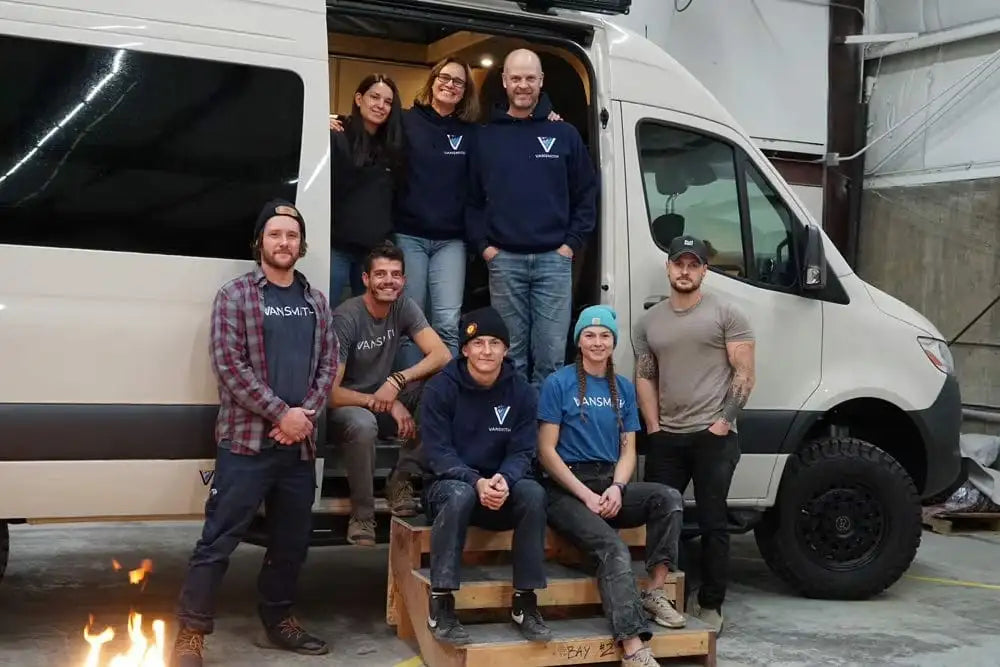
Semi-custom builds take 8-10 weeks as of 2026, which is a real planning window if you want upgrades done before ski season. The company is based in Boulder, carries a 4.8-star Google rating across 85-plus reviews, and offers a lifetime cabinet warranty. Those details matter because winter travel is hard on systems, and you want the basics sorted before the first storm weekend.
For readers ready to act, the next step is usually one of two things. Book service for the van you already own, or start a full build around repeated Colorado winter travel. Both routes start with being honest about how and where you camp.
What customers usually underestimate
Most first-time winter van owners underestimate how much comfort they lose through windows and door seals. Insulated wall cavities help, but glass and air leaks often hurt more at night. That surprise comes up all the time.
People also overestimate what AWD alone can do once traction laws, tread depth, and chain readiness enter the picture. Open campgrounds can be misleading too. Moraine Park may be open, but NPS is clear that winter sites are not plowed or shoveled by staff.
Wind is the other thing people miss. They plan around temperature, not exposure, even though the National Weather Service flags strong-wind risk around Boulder and the Front Range. In shop experience, the winter omissions people regret most are usually heater service, proper window coverings, and a realistic traction setup.
The simplest advice is still the best. Go lower, camp with a backup plan, and make the van hold heat better before asking the heater to do more.
Best-fit Vansmith tie-ins for this article
For couples planning ski-season travel, the Duo line gives a clear product benchmark. As of 2026, Duo starts at $112,450 on Transit and $114,450 on Sprinter. Families can use the Family line as the next benchmark, starting at $117,450 on Transit and $119,450 on Sprinter.
If you already own a van and are not ready to replace it, service work may make more sense than a new purchase. The Boulder shop handles heater install, heater service, suspension-related upgrades, electrical work, battery upgrades, and winterization support. That is often the fastest way to turn a shoulder-season van into something more useful in snow.
Bivy models are sold ready to drive, which is useful for people who want to skip the build timeline. If you do want a custom path, start with Customize Your Van. Winter readiness is a design choice made before the trip, not a fix you want to figure out in a dark parking lot after the forecast drops below zero.
FAQ
Where is the best place for winter van camping Colorado if I want the lowest stress trip?
Colorado State Parks are usually the easiest first move. CPW shows which campgrounds have electric or full hook-up sites, and reservations open 6 months in advance. Lower-elevation parks are often the smarter winter pick than high-country sites. Colorado.com also points to Navajo State Park as a milder option than many mountain destinations.
Can you camp in a van in Rocky Mountain National Park in winter?
Yes, but access is limited. NPS says Moraine Park Campground is the only campground open in winter, and camping is first come, first served. Electric sites are available in Loops B and C, which helps. You still need to be ready to shovel, because sites are not plowed or shoveled by staff.
Is a 2 kW diesel heater enough for winter van life Colorado?
Sometimes, yes. A 2 kW heater like the Webasto Air Top 2000 STC can work in a well-insulated van in moderate winter conditions. But the heater rating alone does not guarantee comfort at -10°F. Van size, air sealing, window coverings, and wind exposure all change the result.
Do I need chains for van camping in snow in Colorado if I already have AWD?
Sometimes yes. CDOT says traction and chain laws can be activated on any state highway. Under a traction law, AWD or 4WD vehicles still need qualifying tires with at least 3/16-inch tread. Under a passenger vehicle chain law, every vehicle must have chains or an approved alternative traction device.
Can I just dispersed camp all winter on BLM land in Colorado?
No. BLM Colorado says you may not camp longer than 14 days in any 30-day period at one location. After that, you must move at least 30 air miles away. BLM also says public lands may not be used for residential purposes. Winter does not change those occupancy rules.
What makes a true 4 season camper van Colorado build different from a shoulder-season van?
The big difference is whole-system design. Heater sizing matters, but so do air sealing, insulated window coverings, battery support, moisture control, and a freeze plan for water systems. In real Colorado winter use, those pieces work together. A heater alone rarely fixes a van that leaks heat and traps moisture.
About the author

Electra Chronis
Head of Marketing
Electra leads marketing at The Vansmith. She writes across van life, camping and travel, from planning a trip to choosing and building the van that gets you there.
Read more about Electra