Las Vegas to Zion National Park is usually a straightforward south-entrance drive via I-15 and UT-9. Which option makes sense for you depends on where you plan to sleep and how much arrival friction you want to deal with once you reach Zion. That matters because getting to Springdale is not the same as being ready for the canyon. If you camp near the south entrance, the trip often feels much easier. If you add Valley of Fire, it can turn a transfer day into a real road trip. The photo at the top of this guide shows the Zion National Park entrance sign with the Twin Brothers peaks rising behind it.
Las Vegas to Zion National Park: the main route and the best alternate

The photo above shows Utah State Route 9 on the Zion-Mount Carmel Highway inside the park. It is the same state highway this route follows from I-15 through Hurricane and Springdale to the south entrance, so once you turn onto UT-9 you are on the road into Zion.
The standard route for Las Vegas to Zion National Park is the one most people should start with. Zion’s official directions point drivers north on I-15 into Utah, then east on UT-9 through Hurricane and Springdale to the park’s south entrance.
That south entrance is the key piece. It puts you closest to Zion Canyon access, the visitor center, and the shuttle setup that shapes most first visits. If you want the classic Zion trip, this is the cleanest line to follow.
For a lot of van travelers, the route choice is less about shaving minutes and more about how the day feels. People often do better when they plan around where they’ll park and sleep, not just what the map says. Park once, sleep close. That simple choice can save a lot of hassle later.
If you’re still sorting out what kind of van setup works best for trips like this, our customize your van page shows how we build around real travel days, not just showroom features.
Standard south-entrance route from Las Vegas
The main south-entrance route is the default for a reason. The National Park Service treats the Las Vegas to I-15 to UT-9 approach as the primary way to reach Zion from the southwest, and it lines up with how most first-time visitors use the park.
Once you come into Springdale, the trip gets simpler. You’re near the visitor center, near the shuttle system, and near the part of Zion most people came to see first. That makes a big difference on day one.
Watchman Campground sits near the south entrance and is within walking distance of the visitor center, the shuttle system, and Springdale. If you’re arriving later in the day, that setup works really well because you can settle in and stop moving the van.
Springdale also works as the best staging town for an early start the next morning. You’re not waking up far from the canyon and then burning more time on another drive. For couples in one of our vans for couples layouts, or families looking at our family van conversions, this is usually the least complicated first-night plan.
Choosing a route by where you sleep
If your lodging or campsite is not near the south entrance, a slightly longer route can still be the better choice in practice. A route that looks slower on paper may cut down on backtracking, awkward check-in timing, or extra repositioning once you arrive.
This is where travelers get tripped up. They focus hard on highway minutes and forget the final 30 to 60 minutes of parking, shuttle access, and campground setup. It usually pays to take the route that lowers total trip friction, even if it adds a few miles.
If you’re planning a build around this kind of travel, our process page gives a good look at how we think through real use, storage, and camp flow.
Las Vegas to Zion drive time: what the map says vs. real arrival time

Pictured above are Zion Canyon shuttle buses at the visitor center, which the Park Service lists as shuttle stop #1, with the Watchman peak behind them. This is the handoff that stretches real arrival time: you park, get your bearings, and connect to the shuttle before the hiking part of the day begins.
The phrase Las Vegas to Zion drive time usually means more than time on the highway. What most people really want to know is how long it takes until they’re parked, checked in, and moving toward the canyon. Zion’s Plan Your Visit pages make that gap pretty clear.
The park’s planning tools lean hard on transportation, maps, shuttle details, and seasonal logistics. That tells you something right away: arrival at Zion is a process, not just a pin on your phone.
If you camp at Watchman, you can often skip a second in-and-out drive and use that time for hiking instead. If you stay farther away, like Lava Point on Kolob Terrace Road, you’re choosing a more remote feel and a slower next morning.
For many road trips, we suggest budgeting for one scenic stop, one fuel or food stop, and then a bit of buffer for Zion arrival. That plan tends to work better than pretending the drive will be one clean shot from Las Vegas to the trailhead. If you want more trip-planning ideas, our van build blog covers the kind of real-world choices that shape travel days like this.
Why arrival logistics change the day
Zion’s planning hub pushes visitors toward shuttle information, planning guides, maps, and transportation details because access inside the park is more layered than a normal roadside stop. Most Las Vegas travelers arrive from the south, and that means the visitor center area shapes the rest of the day.
You can technically arrive at Zion and still be a while away from your actual hike. You may need time to park, get your bearings, and connect to the canyon transportation system. That is why the shortest route is not always the best route.
If your goal is a same-day hike, early arrival matters more than shaving a few highway minutes. If your goal is a calm first evening, staying near the south entrance is usually the smarter move.
For van travelers, we usually treat arrival day as a setup day. Fuel up, settle camp, and start fresh the next morning. We’d skip the rushed late-afternoon hike plan. Most people enjoy Zion more when day one stays simple.
How campground location affects your schedule
The Zion camping gateway shows the key split clearly. You’ve got developed campgrounds near the south entrance, and you’ve got Lava Point farther away on Kolob Terrace Road. Those are very different stays.
Watchman is the efficient choice because it is near the south entrance and within walking distance of the visitor center, shuttle system, and Springdale. If you’re driving in from Las Vegas, that location cuts down on next-morning friction in a big way.
Lava Point offers a more remote feel, which some travelers want. But if your main goal is Zion Canyon, that distance changes your whole schedule. It is easy to overlook how tiring a “pretty remote site” can feel when the next day starts with more driving.
If you’re building a van for short national park loops, our Foundation builds are a good example of keeping camp setup fast and simple.
Is Valley of Fire worth adding to the Vegas to Zion drive?

The photo above is from Valley of Fire State Park in Nevada, where a dirt road leads toward red sandstone formations. It shows why this detour works on the drive to Zion: the road itself is a big part of the stop, not just the viewpoints at the end of it.
Yes, for most people, Valley of Fire is the detour that makes the most sense on the vegas to zion route. The park is known for scenic driving, viewpoints, short hikes, and camping, according to Nevada State Parks. If you have the time, it turns a transfer day into something you’ll remember.
That matters because the direct I-15 run is efficient, but it can feel like a pure move day. Valley of Fire adds red rock, slower pacing, and a reason to stop the van somewhere worth stopping.
Travel Nevada’s scenic byway page frames the road itself as part of the draw. For photographers, families, and couples who like short walks and big views, this is usually the clearest yes on the route.
If your trip style leans scenic and slow, a layout like the DUO XL makes this kind of half-day stop easy to enjoy without unpacking half the van.
What you get from the detour
Valley of Fire works for a lot of travel styles because it is flexible. You can stop for viewpoints and a short walk, or stay longer and let the drive through the park be part of the day. That range is what makes it such a strong add-on.
The byway angle matters too. This is not just a place to jump out for one photo and leave. The road itself carries a lot of the experience, which is rare for a detour this easy to add.
If your goal is the fastest possible arrival, skip it and stay on the main route. But if your goal is to make the drive from Las Vegas to Zion feel like a road trip, this is the detour we’d choose. Park once, sleep close.
Camping at Valley of Fire on the way
The official Valley of Fire brochure and map says the park has two campgrounds with 73 total sites, plus group camping. That makes it one of the few stops on this drive that can be more than a quick look.
The brochure is useful because it puts roads, trailheads, campgrounds, and facilities in one place. That helps a lot if you want to plan arrival before dark and avoid wandering around a desert park late in the day.
Nevada State Parks also presents Valley of Fire as a camping destination, not just a day-use stop. For self-contained camper vans, this is often the best bonus night on the route because you get scenery and a slower pace without blowing up the whole trip plan.
If you’re curious how people use vans for this kind of overnight rhythm, our DIY blog has more trip-use context and setup ideas.
Where to camp on the way or once you arrive at Zion

Photo: NPS / Sarah Stio
Shown above is the road to Lava Point in the Kolob Terrace area, photographed by the Park Service in early October with the aspens turning gold. It is a good picture of how far Lava Point sits from Zion Canyon, and why Watchman, near the south entrance, is the easier first-night pick after the drive from Las Vegas.
Zion’s official camping regulations lay out the main developed campground options: Watchman, South, and Lava Point. The big thing to understand is that these are not equal in convenience, even though they all count as developed camping.
The location split matters most for Las Vegas arrivals. Campgrounds near the south entrance support an easy handoff from driving day to park day. Lava Point is farther away on Kolob Terrace Road, so it fits a different kind of trip.
If your goal is to park once and stop driving, Watchman is usually the best first-night choice. The walkable setup near the visitor center and shuttle system makes it easy to leave the van where it is and start the park on foot the next morning.
For travelers still picking a van platform, our Sprinter conversions and Transit conversions pages compare the two main van platforms.
Best campground for convenience: Watchman
Watchman Campground sits near Zion’s south entrance. That alone makes it the easiest campground for first-time visitors who are driving in from Las Vegas.
It’s also within walking distance of the visitor center, shuttle system, and Springdale. Once you’re set up, you usually don’t need to drive again. For road-trip pacing, that’s hard to beat.
This is why Watchman works so well for later arrivals. You can pull in, get camp sorted, eat dinner, and wake up already in position for the next day. That kind of simple basecamp is what keeps Zion from feeling chaotic.
A compact, self-contained van really shines here. You’re not unpacking into a hotel, then packing back up before sunrise. You just settle in and stay put.
Remote option: Lava Point and other Zion camping logistics
Lava Point is farther away, and it should be treated that way in your plan. It is better for travelers who want a quieter, more remote camp feel than for people chasing the quickest canyon access.
Zion groups Watchman, South, and Lava Point under developed campground options, but they support very different trip styles. That’s worth remembering before you lock in a reservation just because a campsite looks scenic.
It also helps to check campground rules and operating details before you leave. If you’re trying to fit Zion into a tight road-trip window, small timing details can shape the whole next morning.
Our view is pretty simple: if hiking Zion Canyon is the goal, stay as close to the south entrance as you can. Save the remote campsite for the trip where the campsite itself is part of the plan.
How to plan fuel, food, and a low-stress Zion arrival in a camper van

The photo above shows visitors on the paths outside the Zion visitor center near the south entrance. If fuel and food are handled before Springdale, this is where the day can slow down: park once, walk to the shuttle, and start the park on foot.
The official sources for this route are strong on roads, park access, and camping. They are less useful for ranking gas stations or lunch spots, so the smarter move is to build a stop strategy instead of chasing a perfect list.
For the drive from Las Vegas to Zion, we’d handle fuel and supplies before the final Springdale approach. Once you’re on that last stretch, it helps to think of it as an arrival corridor. You want to be done making decisions by then.
If you’re adding Valley of Fire, the brochure’s notes on roads, facilities, and nearest gas context matter more. Services are not the point of that stop, so going in prepared keeps the day smooth.
The easiest rhythm is usually one scenic stop and one practical stop. Fewer pull-offs often means a much better first evening in Zion. If you want to talk through a van setup that makes these quick-turn travel days easier, our contact page is the right place to start.
Best stop strategy for this route
Because Zion arrival has its own parking and transportation layer, your main non-scenic stop should usually happen before Springdale. That keeps the last part of the drive focused and calm.
If Valley of Fire is your scenic stop, let it be the day’s main detour. Adding several more side trips can push your Zion arrival into the busiest part of the day, which is rarely worth it.
Watchman’s walkable location near the visitor center and shuttle system is what makes a later arrival workable, as long as your campsite is already reserved. A practical day often looks like this: leave Las Vegas early, stop at Valley of Fire if you want it, then make a direct push to Zion before evening.
For families or couples, fewer stops usually means less fatigue and a better first full day in the park. Simple wins here.
Why this route pairs well with a well-set-up van
This trip rewards self-contained travel. Zion works better when you can park once, keep gear organized, and avoid repacking every time the plan shifts.
A camper van also opens up both overnight styles on this route. You can spend a night at Valley of Fire, or arrive at Zion ready to camp right away instead of checking into a hotel on a fixed clock.
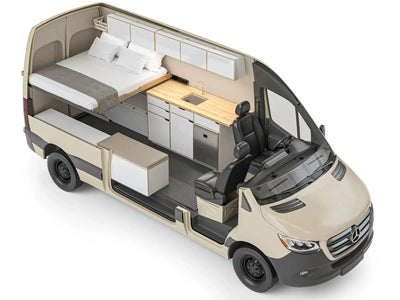
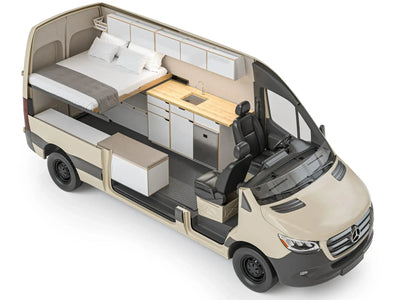
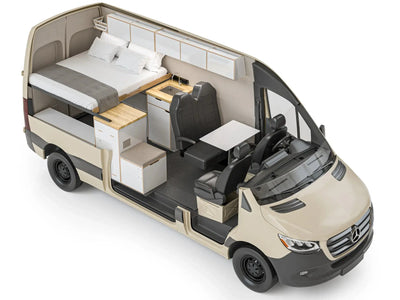
Ready-built Bivy models take about 8 to 10 weeks, and tailored builds about 12 to 16 weeks. As of 2026, the Transit Duo starts at $113,950 and the Sprinter Duo starts at $115,950.
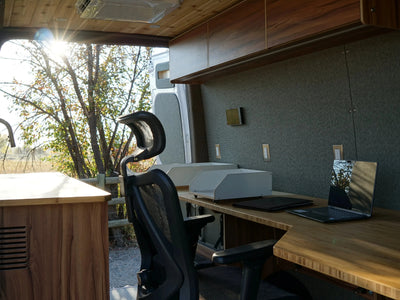
The main takeaway is pretty grounded. You do not need a huge rig for Zion. You need a van that makes short overnight stops, organized storage, fridge use, and fast camp setup feel easy.
FAQ
How long is the drive from Las Vegas to Zion National Park?
The official route uses I-15 north and UT-9 into Springdale and the south entrance. But your true trip time is more than highway miles because Zion’s planning pages put a lot of weight on parking, transportation, maps, and shuttle logistics. If you arrive midday, the time from Springdale to your actual park start can feel longer than expected.
What is the best route from Las Vegas to Zion for first-time visitors?
For most first-time visitors, the best route is the standard south-entrance approach via I-15 and UT-9. It brings you straight to Springdale, the visitor center, and Zion Canyon access. It is also the simplest first trip plan.
Is Valley of Fire worth adding to the Vegas to Zion drive?
Yes, if you have extra time and want scenery. Valley of Fire stands out because it offers scenic driving, viewpoints, hiking, and camping, and the official brochure lists two campgrounds with 73 total sites plus group camping. If your goal is a memorable road-trip day, it is the best detour on this route.
Where should I camp when driving from Las Vegas to Zion?
If convenience is the top priority, Watchman Campground is the best choice. It is near the south entrance and within walking distance of the visitor center, shuttle system, and Springdale. If you want a more remote stay, Lava Point is the better fit, but it is farther from Zion Canyon and changes your next morning.
Can you camp inside Zion National Park after driving in from Las Vegas?
Yes. Zion’s developed campground options include Watchman, South, and Lava Point, and Recreation.gov is the booking hub for those stays. For most Las Vegas arrivals, Watchman is the most practical because it keeps you close to the south entrance and the park’s main transportation setup.
About the author

Electra Chronis
Head of Marketing
Electra leads marketing at The Vansmith. She writes across van life, camping and travel, from planning a trip to choosing and building the van that gets you there.
Read more about Electra