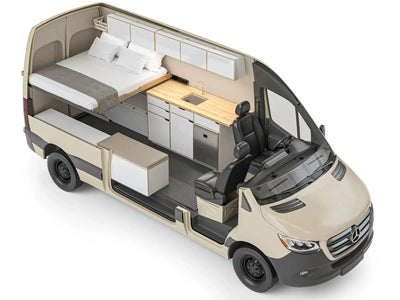
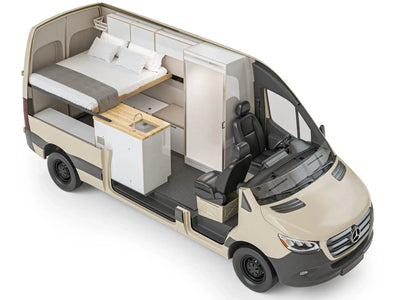
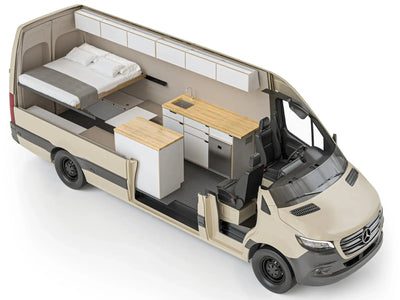
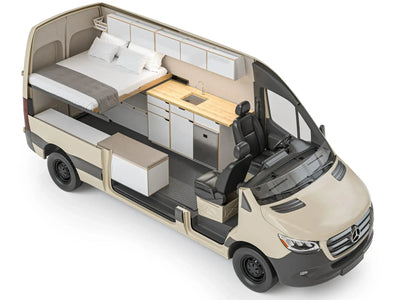
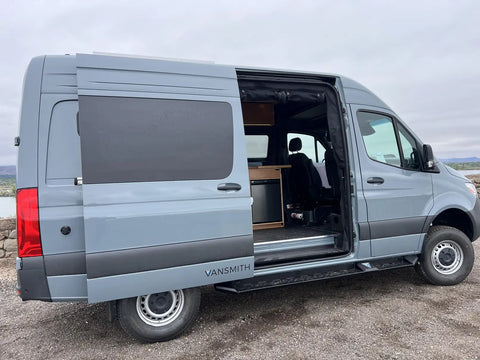
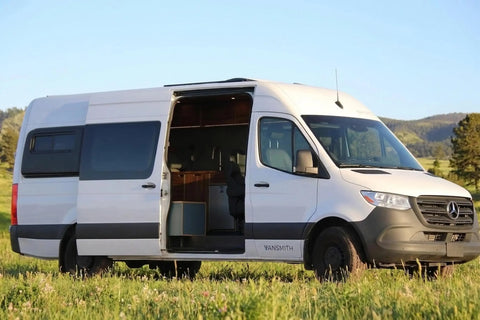
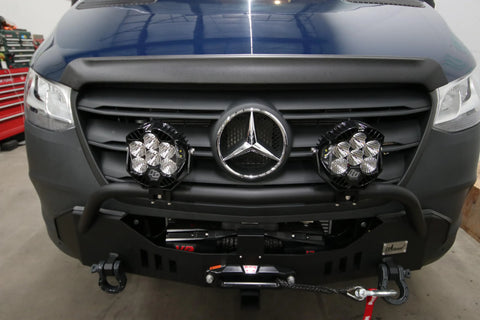
A Mercedes build starts with picking the right Sprinter chassis-144-inch, 170-inch, or 170-inch Extended-and ends with a custom space that fits your travels, whether that's a cozy camper or a full-featured mobile office. Each platform brings its own mix of size, standing height, and payload, so your decisions here shape everything from layout to long-term comfort. For most van lifers, the high roof Sprinter delivers true stand-up interiors and flexible storage, while factory options like roof rails and auxiliary alternators make off-grid upgrades simple. By matching your plans to the right Mercedes build specs, you set yourself up for a safe, reliable adventure van that holds its value for years to come.
Understanding Mercedes Build Options: 2025-2026 Sprinter Platforms
The 2025 Mercedes-Benz Sprinter lineup gives you three main wheelbase options: the 144-inch (just under 19 feet), the 170-inch (about 23 feet), and the 170-inch Extended (almost 24 feet). Each size changes how much room you’ll have for living, storage, and gear, so choosing the right base is crucial for your Mercedes build. In our experience, most single travelers or couples love the 144-inch for its easy maneuvering and city-friendly size, while families and folks needing more space for work or adventure gear lean toward the larger 170-inch or 170-inch Extended.
Roof height is another big decision. You can pick a Standard, High, or Super High Roof. The High Roof Sprinter means you get about 79 inches of interior standing height-enough for most adults to move around comfortably. Go Super High Roof and you’ll have almost 90 inches. High roof models have become the go-to for nearly all of our clients; standing room makes a world of difference for daily life and build options. These taller models also give you space for overhead cabinetry, which is a must for most serious van builds.
When it comes to drive systems, Mercedes now offers rear-wheel drive and a selectable All-Wheel Drive (AWD) system for 2025. The AWD replaces the old 4x4 and gives you more traction and stability on slippery or uneven roads, perfect for mountain adventures or off-grid camping. Payload is another factor that shapes your build. Depending on your choice, the 2025 Sprinter’s payload ranges from about 3,920 pounds for a basic 144-inch Cargo van, all the way to 6,812 pounds if you spec the beefy 3500XD 170-inch Extended. Bigger payload means you can add more cabinetry, systems, and gear without overloading your van.
Factory options make a real difference for custom builds. Features like the auxiliary alternator (280A or 400A), roof rails, and reinforced floor simplify the install of things like solar panels, batteries, and heavy cabinetry. The Mercedes Cargo model (no factory rear seats or extra windows) gives you maximum freedom for insulation, wall paneling, and layout design. If you’re starting from scratch, always spec your van with the right weight rating, suspension, window deletes, and alternator at the dealership. This saves you headaches and ensures your van stays safe and in-warranty as you add upgrades. For more details on selecting the perfect Mercedes platform, check out our Sprinter conversions collection and custom design services.
Selecting the Right Sprinter Platform for Your Needs
The short wheelbase 144-inch Sprinter is a favorite for those who value agility-think tight city corners, trailhead parking, or squeezing into a grocery lot. It’s the most nimble of the bunch and still packs plenty of space for a couple or solo traveler. If you crave more room for a fixed bed, larger kitchen, or even a bathroom, the 170-inch and 170-inch Extended open up those possibilities. Families tend to gravitate toward these longer models because you can fit dedicated sleeping, kitchen, and even shower zones. It’s not just about size; it’s about how you want to live and travel in your van.
High roof Sprinters are the clear choice for anyone serious about comfort. That ability to stand up straight changes how you use your space-cooking, working, or just stretching out after a long hike. In our shop, nearly 90% of clients choose high roof Sprinters, and the rest usually circle back for a pop-top later. If you see yourself spending serious time in your van, don’t skimp on height. Explore more layout tips in our van build blog and family van collection.
Factory Options That Simplify Custom Builds
Ordering your Sprinter with the auxiliary alternator (280A or 400A) is a game-changer for off-grid power setups. This factory add-on lets you charge big lithium battery banks without complicated aftermarket installs. Roof rails and reinforced roof panels also make it easier-and safer-to mount solar panels, roof racks, or even AC units. Planning ahead for these options saves money and stress during your build.
Another smart move is opting for window delete and reinforced flooring. This gives you a blank slate for insulation, cabinetry, and interior design, and you won’t have to waste time ripping out factory parts you never wanted. These small choices at the dealership can mean big savings and smoother installs down the road. For a deeper dive on smart spec choices, see this guide to Sprinter chassis options.
The Anatomy of a Custom Mercedes Build: Essential Features & Systems
Most full-featured Mercedes builds include a galley kitchen, fixed or convertible bed, storage cabinetry, a beefy power system (lithium batteries, inverter, solar), plumbing with fresh and gray water tanks, and climate control-think diesel heater, vent fans, maybe even rooftop AC. Building out a Sprinter means planning for year-round comfort, which starts with solid insulation and soundproofing. The gold standards are Thinsulate, Havelock wool, or closed-cell foam, pushing R-values from R-4 up to R-7. This keeps your van quiet and cozy from winter to summer.
Electrical power is the backbone for off-grid builds. Most systems start with 200-400 amp-hours of lithium batteries and 200-400 watts of solar. If you’re planning to run big appliances-like an induction cooktop, fridge, or lots of electronics-you might need 800Ah or more in batteries and matching solar capacity. Water systems can be simple (10-20 gallon tanks with a sink and pump) or more advanced (up to 40 gallons, with hot water and a shower). Ventilation is key too-roof-mounted Maxxair or Dometic fans keep air moving, while window flares let you sleep sideways and free up floor space. For more on essentials, our Foundation builds hit all the basics with room to upgrade.
Heaters like Espar or Webasto tap into the van’s diesel tank for reliable, efficient warmth. Smart layout planning ties it all together-balancing sleep, cooking, and storage zones with the way you’ll actually use your van. Thinking ahead about how you’ll cook, work, or travel with pets makes all the difference.
Integrating Power, Water, and Climate Systems
The 2025 Sprinter is built for serious off-grid capability. With the right auxiliary alternator, you can charge lithium batteries while driving-no need for a generator or always chasing the sun. Installing a 200-400Ah lithium system costs between $3,500 and $7,000, not counting solar panels. But the payoff is huge: silent power, no fumes, and enough juice to work or play anywhere.
Diesel heaters are another favorite among van lifers. For $1,200 to $2,000 installed, you get a system that sips just 0.1 to 0.2 gallons of fuel per hour-efficient and easy to use, even in the dead of winter. All these systems need to be planned alongside your layout to avoid messy retrofits. For technical details, see Mercedes’ official upfitting guidelines and our collaborative design process.
Cabinetry, Sleeping, and Storage Strategies
Cabinetry is more than just storage-it’s about maximizing every inch while keeping things secure for rough roads. At The Vansmith, we use modular, water-resistant materials cut to fit the unique curves of the Sprinter. Fixed beds with a big "garage" underneath are perfect for bikes and bulky gear, while convertible dinette beds open up daytime space. Window flares are a clever way to extend bed length so you can sleep sideways-a real space saver on 144-inch builds.
Smart storage means thinking about your gear, pets, and daily needs. Custom cabinets, hidden drawers, and flexible layouts keep everything organized, even with kids or a full adventure kit. For creative layout inspiration, peek at our DUO XL layout and the Vans for couples collection.
Build Quality and Safety: What Sets a Mercedes Build Apart
Mercedes Sprinter vans are designed for commercial-grade toughness. Their frames are reinforced, and the 2025 models come standard with advanced safety features like Crosswind Assist, Blind Spot Assist, and Active Brake Assist. These aren’t just fancy extras-they make long drives safer and protect you and your family. The Sprinter chassis can tow up to 5,000 pounds (2500) or 7,500 pounds (3500XD), letting you haul bikes, trailers, or even a small boat on your adventures.
Upfitting a Sprinter isn’t just about adding parts. You have to follow Mercedes’ guidelines for weight distribution, mounting points, and electronic system protection to keep your warranty and safety certifications intact. Skipping steps here can mean future headaches-or even voiding your factory warranty. Quality insulation and vapor barriers prevent condensation and corrosion, extending your van’s lifespan. All electrical work should be up to both Mercedes and RVIA standards-think proper fuse ratings, load balancing, and safe cable routing. That’s why we lean on pro tools like CNC-cut cabinetry and secure mounting to keep everything tight and safe for the road. More on these requirements can be found in Mercedes’ Body and Equipment Guideline (BEG).
At The Vansmith, we fuse Colorado-made quality with Mercedes engineering. That means builds that hold up in rugged weather, beautiful materials, and systems you can trust for years. See our build process for an inside look at our safety and quality checks.
Safety and Warranty Considerations
Every upfit has to work within Mercedes’ axle weight ratings and crash zones. Exceed those, or hack into the van’s frame, and you risk losing your warranty or compromising safety. Always bolt seats to factory anchor points and make sure they meet FMVSS standards. Electrical gear-like inverters, alternators, and batteries-has to be wired without interfering with the van’s CAN-Bus system or factory harnesses. These steps can be daunting for DIYers, but they’re critical for a safe, reliable build. For more, see the official upfitting guidelines.
Build Quality: Mercedes vs. Other Van Platforms
Sprinters stand apart thanks to their corrosion-resistant bodies and strong steel construction. In our shop, we see these vans outlast their rivals-especially in Colorado’s wild weather. Mercedes’ tight factory tolerances make cabinetry installs smoother and reduce the need for constant tweaks. You’ll also find more advanced safety tech than on most Ram ProMaster or Ford Transit models. For those who want the best foundation for a custom build, Mercedes delivers in longevity, reliability, and peace of mind. Curious about the differences? Compare platforms on our Transit conversions page or browse our DIY blog for deep dives.
Understanding Costs: Budgeting for Your Mercedes Build
Budgeting for a Mercedes build starts with the base van. The 2025 Sprinter MSRP ranges from $52,900 for a 144-inch Cargo model to over $74,800 for a fully loaded 3500XD 170-inch Extended AWD. A basic DIY build with insulation, a bed, some cabinets, and a small power system can run $25,000 to $40,000 in parts-plus your time and tools. For a professional build, expect $70,000 to $90,000 for a full-featured conversion, not counting the van. Premium builds with luxury finishes or serious off-grid systems can hit $130,000 and up.
Conversion kits can save money (usually $15,000 to $35,000 plus install), but they’re less flexible and don’t offer the seamless integration you get from a true custom build. The biggest cost drivers are the size of your power system, how complex you make your cabinets and storage, and the quality of finishes and upholstery. Financing is possible through specialty RV lenders, making high-end builds more accessible for many van lifers. High-quality Mercedes builds also tend to hold value better than other platforms, so you’re investing in something that lasts. For a detailed breakdown, read this comprehensive Sprinter van cost guide.
Custom Build vs. Conversion Kit: Pros, Cons, and Trade-offs
Conversion kits are quick to install and cost less up front, but they’re not always the best fit for your lifestyle or travel needs. Layouts are less personalized, and storage might not be maximized for your gear. Full custom builds, like those from The Vansmith, deliver tailored design, top materials, and system integration-at the cost of a longer timeline and higher budget. The upside is a van that feels like home and works exactly as you need.
Pro builders also offer warranty on their workmanship and help with service after the build-something most kit suppliers skip. For many, that support is worth the extra cost. You can explore both paths in our customization guide.
Cost-Saving Tips for a Mercedes Build
One of the best ways to save money is to plan your build around the van’s factory specs. Ordering roof rails, auxiliary alternator, and reinforced floors from the start means less time and money retrofitting later. Modular and semi-custom solutions can give you room to upgrade down the road without starting from scratch. And always work with a builder who knows Mercedes vans inside and out-cutting corners here can lead to expensive mistakes. For more practical advice, check out our DIY blog and contact us for a consult.
Planning Your Mercedes Build with The Vansmith
The Vansmith specializes in curated layouts for Sprinter 144-inch and 170-inch models. Our DUO, DUO XL, Family, and Foundation builds are each tuned for adventure, family life, or remote work. We offer expert installs on everything from solar and electrical to heaters, flares, custom cabinetry, and more. Clients choose from eco-friendly materials and Colorado-crafted cabinetry, blending style with durability for the road ahead.
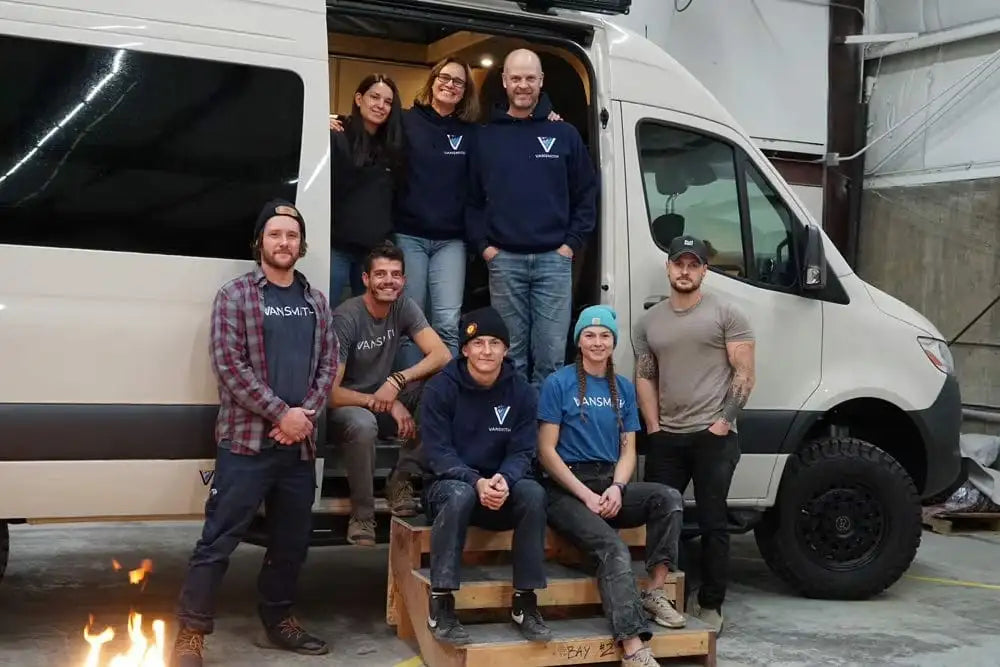
The Vansmith’s process is collaborative and transparent. We start with a design consult to map out your goals, recommend the right factory specs for your Sprinter, and walk you through every step-from layout and materials to scheduling. Our Boulder, CO shop also handles upgrades, repairs, and installs for new and existing Mercedes builds. If you want to see what’s possible, our process page and customization portal offer a closer look at how we work.
How to Start Your Custom Mercedes Build Journey
Kick things off with an initial consultation. Here, we’ll help you define the best platform, features, and budget for your lifestyle. We can advise on factory specs so your Sprinter shows up ready for a seamless upfit. From there, our team guides you through every design choice, material selection, and build schedule. It’s a streamlined process, built from years of turning van dreams into reality. Curious what’s right for you? Reach out to our team today.
Showcasing The Vansmith’s Mercedes Build Portfolio
Over the years, we’ve built everything from cozy adventure rigs for couples to spacious family haulers and solo explorers’ dream vans. Our gallery of finished builds shows off different storage options, system integrations, and interior finishes. Client testimonials highlight the value of working with a dedicated, experienced team-and the peace of mind that comes with knowing your van is built for the long haul. To see real-world examples and get inspired, visit our past builds page.
FAQ
What are the main steps in a custom Mercedes Sprinter build?
The main steps are picking the right Sprinter chassis and factory options, planning out your layout and core systems (like electrical, water, insulation, and cabinetry), and then carrying out the upfit following Mercedes’ Body and Equipment Guidelines. This approach keeps your build safe and your warranty intact. Smart planning at the start saves you time and money down the road.
How much does a professional Mercedes Sprinter build cost in 2026?
In 2026, a professional custom build usually starts at $70,000 to $90,000, not counting the van itself. Top-of-the-line, off-grid, or luxury builds can go beyond $130,000. The 2025 Sprinter van itself typically ranges from $52,900 to more than $74,800, depending on trim and options. Careful budgeting for features and finishes is key.
What are the best Mercedes build options for off-grid adventure?
If you’re chasing remote trails, look for an AWD chassis, factory auxiliary alternator, reinforced roof rails, a big lithium battery bank (400Ah or more), at least 400W of solar, a diesel heater, and modular cabinetry for all your gear. Together, these features make your van ready for power independence, all-weather comfort, and serious adventure.
Can I convert a Mercedes Sprinter Crew or Passenger van, or should I start with a Cargo model?
You can convert Crew or Passenger models, but the Cargo version gives you the most flexibility. With fewer factory seats and windows, you get more space for insulation, cabinetry, and a layout that fits your unique needs. It’s the top pick for most custom conversions.
What sets Mercedes build quality apart from other van platforms?
Mercedes Sprinters stand out for their solid frames, corrosion-resistant bodies, and advanced safety features. This high build quality means they’re the gold standard for custom van builds-a foundation that lasts and keeps you safe on the road.