If you are putting money into a van, you have likely asked yourself, what red flags should I look for in a build shop?
It is the right question.
After more than a decade working with camper vans in Colorado, I have seen the results of rushed work, vague contracts, and poor install work. Most problems are easy to avoid if you know what to look for early.
Below are the warning signs that deserve attention in any van build or camper conversion project.
Top Red Flags to Watch For

Financial Scams
Standard approach: A clear payment schedule tied to key steps. Deposits are fair and written down.
Red flag:
Large upfront payments with no defined scope, no schedule, and no written terms.
If someone asks for most of the money before parts are bought or work begins, pause. Real builders structure payments around progress.
Vague Contracts and Hidden Fees
A professional agreement should outline:
-
Scope of work
-
Payment schedule
-
Estimated timeline
-
Warranty terms
Watch out for:
-
Verbal promises not reflected in writing
-
Broad language like “upgrades as needed.”
-
Undefined material allowances
Ambiguity almost always leads to extra invoices later.
Poor Communication and Transparency
If emails go unanswered before the project starts, communication will not improve later.
Clear companies provide:
-
Realistic timelines
-
Honest updates
-
Direct points of contact
In our work at The Vansmith, strong communication prevents more issues than any single tech choice. Whether a client is planning a full layout through our Design, Build, and Custom Camper Van process or setting up service through our Repairs, Installations, and Services team, clear info up front shapes the whole build.
Lack of Proper Licensing or Insurance
A professional company should carry:
-
Active business registration
-
General liability insurance
-
Workers compensation coverage
If they hesitate to provide proof, that is a red flag.
Coverage protects both the client and the shop. Without it, you assume risk you may not see coming. For example, NHTSA guidance on vehicle modifications stresses the importance of working with qualified, insured professionals when altering vehicles.
No Experience or Portfolio
Experience matters, especially with integrated systems.
Red flag:
-
No documented past work
-
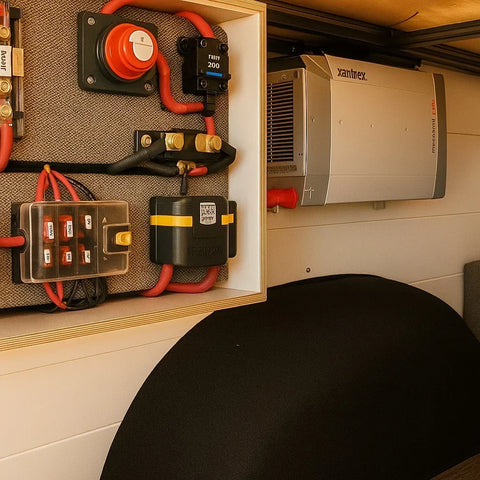
No detailed photos of wiring or plumbing
-
No long-term project examples
Anyone can photograph a finished interior. Few show what is behind the panels.
Why it matters:
Electrical and plumbing problems often appear months later. They’re some of the most common van build warning signs to watch for, no matter which platform you choose in the Sprinter vs Ford Transit debate. Poorly braced cupboards loosen on rough roads. Weak wall and floor padding shows up during winter nights.
Left unchecked, small water leaks can turn into serious van conversion leaks and rot. These issues matter even more when you’re comparing Sprinter high roof vs Transit high roof builds for real-world, long-term use. According to Mercedes-Benz Sprinter specifications and Ford Transit cargo van specs, both platforms offer high roof options with significant interior height, but the way a builder insulates, seals, and finishes that space will determine how they perform over years of use.
Green flag instead:
-
In-progress photos
-
Detailed system explanations
-
Long-term client relationships
Transparency reflects confidence.
Unrealistic Promises
If a shop promises a high-end interior at a price far below market norms, something is missing.
Common cost-cutting tricks include:
-
Undersized wiring
-
Generic electrical components
-
Minimal fuse protection
-
Inadequate insulation
-
Low-grade fasteners
These choices are not visible at delivery. They show up during hard use.
Over the years, I have learned that long builds that hold up need solid system planning and close focus on detail.
No Electrical or Safety Standards
At the very least, power systems should follow known standards for AC wiring and fuse protection. (RVIA)
If a company cannot explain:
-
How shore power is protected (Victron Energy)
-
How circuits are fused
-
How propane systems are vented
That is a serious concern.
Safety is not optional. The NFPA 1192 standard for RVs, which RVIA references in its certification programs, highlights how critical proper wiring, overcurrent protection, and gas system design are for fire and shock prevention.
No Past Customer References
Reputable companies can provide references from past clients.
If no one is willing to speak about their experience, ask why.
Word of mouth remains one of the strongest indicators of quality.
No Warranty or Post-Project Support
If something fails under normal use, what happens?
A strong shop offers written work quality coverage and clear support channels. Long-term service matters just as much as first drop-off.
This is extra key when systems change. Many of our clients return for new gear or small tweaks years later through our Repairs, Installations, and Services team. Ongoing support is part of solid, honest craft.
If the answer to post-project support feels vague or defensive, proceed carefully.
No Insurance Coverage
This deserves repetition.
If a van is harmed during work and there is no insurance, who is at fault is unclear. Always check coverage before signing a contract.
How to Avoid Scams

Verify Credentials
Ask for:
-
Business registration
-
Insurance certificates
-
Written warranty terms
Professional operations provide documentation without hesitation.
Research Reputation
Read reviews carefully.
Look for patterns, not single comments. Steady complaints about delays or hidden costs are a clear sign.
Review Contracts Carefully
Take time to read every clause.
If language feels unclear, request a clear answer in writing. Do not rely on verbal answers alone.
Avoid Long-Term Lock-Ins
Be cautious with contracts that prevent cancellation under any circumstance.
Reasonable agreements protect both parties. Extreme lock-in terms favor only one side.
Smart Questions You Should Ask
Clear answers reveal competence.
-
What battery system do you install and why?
-
What insulation type do you use?
-
Do you pressure test plumbing systems?
-
How do you wire fuse protection?
-
Can I see a van mid-project?
These questions move beyond appearance and into systems thinking.
A knowledgeable team will answer confidently and clearly. As a reference point, AAA’s guidance on choosing an auto repair shop emphasizes asking about certifications, warranties, and the ability to explain repairs in plain language—the same mindset you should bring to a van conversion shop.
Red Flag Checklist
Feature |
Green Flag |
Red Flag |
|
Initial Quote |
Detailed scope and itemized pricing |
Lump sum with vague language |
|
References |
Willing to share past clients |
No references available |
|
Timeline |
Realistic with buffers |
Promises that seem rushed |
|
Expertise |
Clear explanation of systems |
Avoids technical questions |
Final Thoughts
So, what red flags should I look for in a conversion company?
Look for clarity, documentation, and process discipline.
After years of working with vans that climb mountain passes, endure snow, and carry real gear, I have learned that good work is rarely loud. It is well planned.
It is documented. And it is consistent.
The right shop does not pressure you. They answer questions, show their work, and stand behind it.
That is where confidence begins.
Frequently Asked Questions
What are the biggest red flags when choosing a van conversion company?
Watch for large upfront payments with no written scope, vague contracts, poor talk, lack of license or insurance, and no real list of past work. These are the patterns that often lead to rushed work, surprise costs, and long-term problems in your build.
How does the sprinter vs transit choice relate to picking a conversion shop?
No matter where you land in the Sprinter vs Transit debate, the same camper build red flags apply: unclear contracts, weak power and plumbing work, and poor wall or cabinet bracing. A good shop can explain how they build for each platform and show long-term samples of both. According to EPA fuel economy estimates for vans, different model years and drivetrains of Sprinters and Transits can vary widely in MPG, so a thoughtful builder should also be able to talk about weight, aerodynamics, and how their design choices affect real-world efficiency.
What should be included in a professional van conversion contract?
A solid contract clearly lays out the scope of work, payment schedule, rough timing, and warranty terms. Be cautious of verbal promises that don’t appear in writing and broad language like “upgrades as needed,” which often turn into extra bills later. Treat missing details as potential camper van build warning signs.
Why is licensing and insurance so important for a van conversion company?
Active business sign-up, basic liability insurance, and workers pay coverage protect both you and the shop if something goes wrong. If a company hesitates to provide proof, you’re taking on risks you may not see until there’s an accident or damage.
How can I tell if a conversion company has real experience?
Look for written past work, close-up photos of wiring and plumbing, and samples of long-term projects that have been on the road for a while. In-progress photos, clear system notes, and ongoing client ties are strong signs they know what they’re doing behind the panels, not just in the final photos. When those pieces are missing, consider them serious conversion scam red flags for your rig.