By Santiago Pere, February 16, 2026 Camper vans for couples require layouts that balance sleep comfort and daytime living. The right floorplan balances sleep quality, storage for two, and a living area that invites conversation and shared tasks like cooking or working on the road. From our experience working with dozens of couple builds, small layout choices often make the biggest difference in day-to-day comfort.
Why layout matters for couples

When two people share a van, layout choices affect nightly comfort, daily living, and the kinds of trips you can take as a pair. Simple choices made early, bed type, kitchen spot, bathroom style, and storage zoning show whether the van feels like a short camp or a true home on wheels. Take a few moments to think through habits - mornings, cooking, and gear access - and the floorplan will serve you better.
How couples' needs differ from solo travelers
Couples need more storage, more tough systems, and layouts that fit two routines. Expect to plan for roughly 30-40% more private storage than a solo build (RVIA), and size power and solar to support two people’s device and kitchen use (Renogy). For couples who plan to travel in many regions and seasons, organizations like AAA also recommend planning for extra safety gear and emergency supplies, which adds to storage needs.
Living areas should support shared tasks—dining, working, and relaxing—without feeling cramped. The best camper van for couple travel is one where design choices favor comfort and dual use over solo-style needs like top movement and small storage.
Trade-offs couples s
Every choice comes with a trade. Fixed beds give steady nightly comfort and storage under the bed but reduce daytime floor space. Folding dinettes free up living area but add setup time and may hurt mattress feel.
Mid-roof and high-roof options influence standing room and storage. (Mercedes-Benz) Many Vansmith buyers choose high roof for the added headroom and storage space; mid-roof buyers often add a pop-top later to get the same perks. The best camper van for couple travel balances these choices with budget, resale, and off-grid strength in mind.
do most days.
Top couple camper van layouts

Fixed rear bed (transverse), pros and cons
Pros: Transverse fixed beds are a smart use of space in short-wheelbase vans, creating a wide sleeping surface and big storage under the bed for two people’s gear. They leave mid-van space open for a kitchen or seating area.
Cons: Access can be less easy if the bed sits against the van’s side walls, and a shorter rear overhang may limit mattress length. Think about mattress choice with care to make sure both partners sleep well.
Fixed rear bed (longitudinal), pros and cons
Pros: Lengthwise beds running along the van’s length make it easier to enter and exit without climbing over one another. This layout often pairs well with a side galley kitchen and creates a clear walkway.
Cons: It can limit rear door access and reduce main storage under the bed unless the van wheelbase or overhang is large.
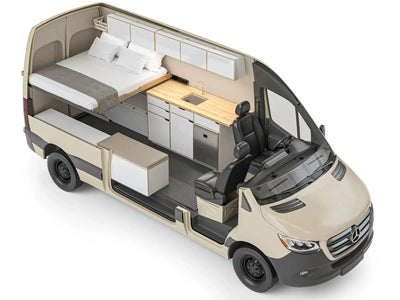
Vansmith VersaBed (north-south fixed) — pros and cons
Pros: The Vansmith bed system gives couples the comfort of a fixed mattress while turning the bed north-south so each partner can exit on their own without climbing over the other. That setup gets back useful daytime floor space because the foot area can be used as a walkway or storage access, and it avoids costly outside bump-outs that add complexity and weight.
Cons: Like other fixed options, the bed system needs planning for storage under the bed. It may be better suited to vans with a bit more inside length or smart storage ideas to make the most of the gained daytime space.
Convertible bed/dinette, maximizing daytime space
Pros: Bench-to-bed setups make the most of daytime living area, giving a roomy social and dining space for two. For couples who value living space over a fixed mattress, these setups offer choice and open floor plans.
Cons: Sleep comfort depends on table-to-bed hardware and cushion quality. For couples who often camp overnight, long-term comfort may favor a fixed bed.
Drop-down/roof bed, sleeping without sacrificing floor space
Pros: A drop-down or roof bed keeps full daytime floor area while giving a soft, set mattress at night. This is a great option for couples who want both a roomy living area and a top-quality bed.
Cons: Moving parts add extra work and a small weight cost. Headroom and insulation needs come into play. Most Vansmith high-roof builds allow wide clearance for drop-down beds and strong airflow, which is especially important in a couples van conversion or any mercedes sprinter camper for two.
Island bed configurations for comfort and access
Pros: Island beds offer walk-around access and can provide large storage bays beneath the mattress, ideal for couples who travel full-time and need easy access to clothing and gear.
Cons: They require more inside length and can reduce living-area square footage, which may push couples toward a long-wheelbase or larger base rig.
Bathroom solutions for two-person vans

Wet bath vs. separate shower and toilet
Wet baths remain a space-saving way to include onboard showering, but they do take up a clear chunk of inside volume. For that reason, wet baths work best in longer vans or long-wheelbase builds where the trade in living space is less tight. Separate shower and toilet areas improve comfort and privacy but require even more square footage and typically push the layout toward a larger chassis.
Cassette toilets and portable options
Cassette toilets and good portable options are low-cost and lightweight. They are low upkeep if sized and vented right, and they free up plumbing work for couples who prefer simpler systems.
Kitchens and food prep for couples
Two-burner vs. single-burner setups
For two people, a two-burner stove is often worth the space for faster meal prep and same-time cooking tasks. Single burners save counter space but lengthen cooking time for shared meals.
Counter space hacks and foldouts
Fold-down counters, pull-out prep surfaces, and removable cutting boards increase usable workspace when you need it and stow away when you don’t. These simple ideas make two-person meal prep easy in smaller vans.
Storage strategies for two people
Shared vs. individual storage zones
Set both shared and solo storage zones: one section for shared gear and food, another for each person’s clothing and personal items. This cuts friction and keeps daily life tidy on the road.
Overhead, under-bed, and vertical storage ideas
Use upper cabinets, drawers under the bed, and tall wall storage to make the most of space. Locking drawers and bungee systems help secure items during travel. Put drawers and easy-to-reach compartments first for often-used items so both partners can reach them without unpacking the van.
Living and dining arrangements that support couple life
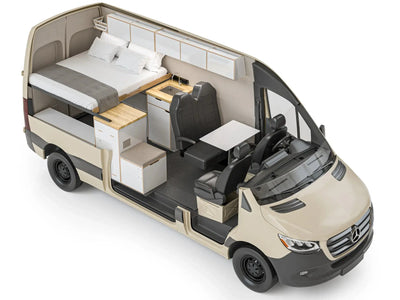
Facing seats and swivel driver/passenger seats
Swivels for the driver and passenger seats plus facing dinette seating create a social layout that’s great for shared meals and evenings. This setup builds connection and turns the cabin into a living room for two.
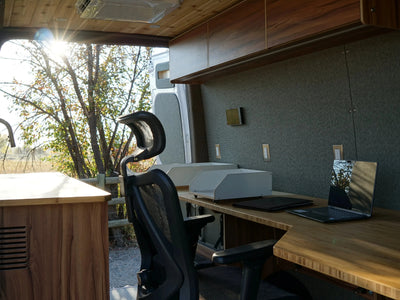
Modular furniture for lounging and working
Modular benches and tables that change into desks, lounging platforms, or extra sleeping surfaces support many uses, remote work, reading, or lounging, without lasting trade-offs.
Systems and utilities: making a couple’s van comfortable
Power and battery sizing for two people
Couples should size power systems for two occupants, plan for higher daily draw from cooking, lighting, and devices. Expect a 20-50% increase in energy use over a single person depending on habits; factor this into battery and solar sizing for real off-grid capability. According to U.S. Department of Energy guidance on electric vehicle energy use, real-world consumption can vary widely with climate control, driving style, and accessory loads, so it pays to build in a buffer.
Heating, insulation, and ventilation considerations
Insulation, a strong heater, and good airflow keep the van cozy year-round. Couples who travel in many climates should put fast heating and air-friendly materials first to avoid condensation issues. Good airflow and ventilation also support safety; for example, NHTSA vehicle safety check recommendations highlight the importance of regularly inspecting ventilation and exhaust systems when you modify a vehicle interior.
Choosing the right base vehicle and layout for your travel style
Short wheelbase vs. long wheelbase considerations
Short-wheelbase vans are nimble and easy to park but limit inside length, good for weekend and city-focused couples. Long-wheelbase vans allow island beds and larger wet baths, better suited to full-time travel. Choose based on the size of the bed and bathroom you want. Popular platforms like the Ford Transit and Ram ProMaster offer multiple wheelbase and roof-height options; Ford’s Transit cargo van specs and Ram ProMaster cargo van dimensions are useful references when you’re matching a couple-focused layout to a specific chassis.
Ready to design the best camper van for couple travel? Explore our custom camper van design and build services or contact us to start planning a layout that fits both of your habits.
Pros and cons of Class B vs. DIY conversions
Professional Class B builds offer ready-to-go systems and polish with warranty-backed work. DIY conversions can save money and allow custom touches but demand more time, skill, and research. At The Vansmith we stress crafted answers that balance toughness and design for couples who value both form and function. You can also browse our turnkey camper van collection for inspiration on proven couple-friendly layouts and some of the best camper vans for couples who want to hit the road sooner.
Layout case studies and sample floorplans
Weekend getaway two-person van
Compact layouts with a transverse fixed bed or folding dinette keep the van light and easy to handle. Put quick setup and ease of use over big systems. Many weekend-focused couples start with our DUO camper van layouts to get a dialed two-person floorplan without overbuilding.
Full-time couple conversion with off-grid systems
Long-wheelbase builds with island beds, a roomy wet bath, larger batteries, and more solar offer the comfort and storage needed for long travel. These builds favor long-term living and freedom. If you want to see how these choices look in real vans, explore our camper van build gallery for full-time couple conversions and examples of top-rated couple camper vans.
Minimalist urban camper for two
Smaller vans with smart storage, a compact galley, and a folding sleeping area make daily driving and city parking easier while still backing weekend trips. Our camper van conversion packages can be tailored to minimalist, city-first couple builds.
Practical checklist for couples when evaluating layouts
Sleep comfort and privacy checklist
- Test mattress firmness and size for both partners
- Confirm walk-around access or easy exit without disturbing the other person
- Plan privacy options if one partner works odd hours
Storage and daily living checklist
- Designate individual clothing zones
- Ensure accessible kitchen storage for two sets of cookware
- Confirm water and waste capacity for typical trip lengths
Cost and resale considerations for couple-focused layouts
Which upgrades add resale value for two-person buyers
Durable systems, good insulation, a cozy fixed mattress option, a useful wet bath, and pro power installs are high-value upgrades. Buyers looking for a couple-ready van often prioritize reliability and comfort over gimmicks. If you’re thinking ahead to resale, consider starting with one of our turnkey couple-ready vans, which are designed with future buyers in mind and appeal to shoppers searching for the best camper vans for couples and small RVs for two.
Final recommendations, matching layout to couple type
Match your layout to how you plan to use the van. Weekend-focused couples can put easy driving and a folding living area first; full-time couples should invest in a fixed or drop-down bed, larger water and power systems, and more storage. Throughout the choice process keep The Vansmith’s main goals in mind: thoughtful design, tough build quality, and systems sized for real-world use in couple-friendly camper rigs.
Ready to plan your build? Schedule a free layout consult with The Vansmith.
FAQ
What is the best camper van layout for couples who want maximum daytime space?
Layouts with folding dinettes or drop-down roof beds make the most of daytime living area because the bed can be stowed or is overhead, freeing floor space for seating and movement.
Should couples choose a fixed bed or a convertible bed?
Choose a fixed bed for nightly comfort and storage under it; choose a folding bed if daytime living space and easy seating changes are higher priorities. Think about how often you’ll camp vs. live full-time.
How much storage do two people typically need in a camper van?
Plan for roughly 30-40% more private storage than for a solo traveler: dual clothing zones, set cooking supplies for two, and space for shared gear. Use storage under the bed, upper storage, and tall storage to make the most of space.
What bathroom option is best for couples?
A compact wet bath is a space-saving choice for couples who want onboard showering; cassette or composting toilets work well if weight and upkeep are priorities. Separate shower and toilet areas offer more comfort but require more space.
How should couples size electrical systems differently from solo travelers?
Size batteries and solar to handle two people’s needs: more frequent cooking, devices, and possible laptop/work-from-van use. Expect a 20-50% increase in daily energy use versus a single person depending on gear and habits.
About the author

Santiago Pere
Chief Design Engineer
Santiago is Chief Design Engineer at The Vansmith. He writes on topics spanning van design, builds, and life on the road.
Read more about Santiago