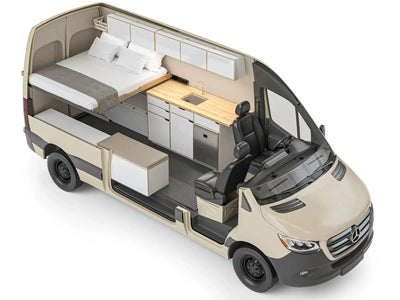
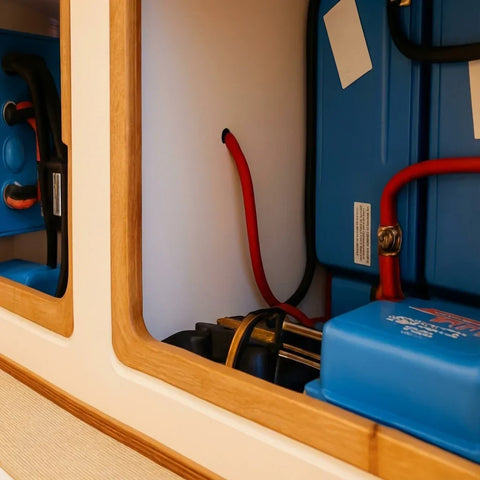
One of the questions we hear most from new van owners is simple: how does an RV fridge work when you are miles from shore power? After years of working on adventure vans in Colorado, we have seen how much refrigerator choice affects daily travel comfort, battery use, and long-term reliability.
A good refrigerator in van travel should stay cold through heat, altitude changes, rough roads, and long stretches off-grid. The right setup depends on how you travel and how often you rely on battery or solar power.
What Is an RV Refrigerator?
An RV refrigerator is a compact cooling system designed for mobile travel. Unlike home units, RV fridges are made to handle vibration, uneven terrain, limited power supply, and changing outdoor temperatures.
Most camper vans use either:
-
Compressor refrigerators
-
Absorption refrigerators
-
Two-way RV refrigerators
-
Three-way RV refrigerators
Each type works differently and fits a different style of travel.
How RV Refrigerators Are Different From Home Refrigerators
A residential refrigerator depends on stable AC power and a fixed location. An RV fridge needs to operate efficiently while driving, parked off-grid, or connected to shore power.
Over the years, we have found that camper van owners care most about three things:
-
Reliable cooling in hot weather
-
Low battery draw
-
Minimal maintenance
That is why refrigerator selection matters early in the planning process.
For many travelers looking at a reliable fridge for a camper setup, compressor systems have become the standard because they cool quickly and handle temperature swings well.
Why Camper Van Refrigerators Are Built for Travel
A refrigerator in van travel sees conditions most household appliances never face. Colorado mountain roads, desert heat, ski parking lots, and constant movement all create stress on cooling systems.
That is why RV refrigerators are designed with:
-
Compact layouts
-
Secure mounting
-
Low-power operation
-
Ventilation systems
-
Travel-ready components
Purpose-driven design matters here. A poorly ventilated fridge can struggle even if the unit itself is high quality.
Types of Refrigerators Used in RVs and Camper Vans
Compressor RV Refrigerators
These work similarly to home refrigerators but use low-voltage DC power. Most modern camper vans use 12V compressor fridges.
Absorption RV Refrigerators
These use heat instead of a compressor to create cooling. They can run on propane or electricity.
Two-Way RV Refrigerators
Two-way systems usually operate on propane and AC power.
Three-Way RV Refrigerators
Three-way refrigerators can run on:
-
Propane
-
AC power
-
12V DC power
These systems offer flexibility for older RV setups and extended camping.
How Does an RV Fridge Work?
The answer depends on the refrigerator type, but every RV fridge works by removing heat from inside the cooling compartment.
Many people assume refrigerators create cold air. In reality, they move heat away from food storage areas.
The Basic Cooling Principle Explained
All refrigerators rely on heat transfer. The system absorbs heat from inside the fridge and releases it outside.
That process keeps food cold.
How RV Refrigerators Remove Heat Instead of Creating Cold
Whether you are asking how does a RV refrigerator work or how do RV refrigerators work in general, the core idea stays the same:
-
Heat is collected from inside the fridge
-
That heat moves through coils or cooling systems
-
The heat releases outside the fridge cabinet
Efficient airflow is critical. We regularly troubleshoot cooling problems caused by blocked vents or poor installation spacing.
Main Components Inside an RV Refrigerator
Most RV refrigerators include:
-
Evaporator coils
-
Condenser coils
-
Compressor or absorption chamber
-
Thermostat
-
Ventilation fans
-
Insulation
The layout varies depending on the cooling technology.
Power Sources Used in RV Refrigerators
An electric fridge in RV travel may run on:
-
12V battery power
-
Shore power
-
Propane
-
Solar-supported battery systems
The best setup depends on how long you stay off-grid and how much power your van system stores.
How Does a Compressor RV Refrigerator Work?
The Compressor Cooling Cycle
Compressor refrigerators use refrigerant and pressure changes to move heat outside the fridge.
The cycle works like this:
-
Refrigerant compresses into a hot gas
-
Heat releases through condenser coils
-
Refrigerant cools into liquid form
-
The liquid expands and absorbs heat inside the fridge
This cycle repeats continuously.
Why 12V Compressor Fridges Are Popular in Camper Vans
In our experience, compressor fridges handle real van travel better than most absorption systems.
They cool faster and maintain temperature more consistently during:
-
Hot summers
-
High elevations
-
Constant driving
-
Uneven parking
That consistency matters during long road trips.
Advantages of Compressor RV Fridges
-
Excellent cooling performance
-
Better efficiency in hot weather
-
Faster temperature recovery
-
Strong solar compatibility
-
Reliable operation while driving
Disadvantages of Compressor Refrigerators
-
Higher upfront cost
-
Dependence on battery systems
-
Audible compressor cycling
Most travelers accept those tradeoffs because daily usability improves significantly.
How Does an Absorption RV Refrigerator Work?
The Ammonia, Water, and Hydrogen Cooling Process
Absorption systems use heat and chemical circulation instead of mechanical compression.
The cooling cycle involves:
-
Ammonia
-
Water
-
Hydrogen gas
Heat separates and circulates these chemicals to create cooling.
How Heat Creates Cooling in an RV Fridge
This often surprises people learning how do camper fridges work.
An absorption fridge uses propane flame or electric heating to drive the cooling cycle. That heat creates evaporation and chemical movement that removes heat from the refrigerator interior.
Propane vs Electric Operation
Absorption refrigerators may run on:
-
Propane
-
AC electric power
-
Sometimes 12V DC
Propane operation remains useful for long stays without solar capacity.
Advantages of Absorption Refrigerators
-
Quiet operation
-
Long propane runtime
-
No compressor noise
Common Limitations of Absorption Fridges
After years of servicing vans, we consistently see a few common issues:
-
Reduced cooling in high heat
-
Slower temperature recovery
-
Sensitivity to leveling
-
Higher maintenance needs
Compressor vs Absorption RV Refrigerators
Cooling Performance Comparison
Compressor fridges cool more effectively in hot environments.
Absorption fridges can struggle above 90°F, especially with poor ventilation.
Energy Efficiency and Power Consumption
Compressor systems are usually more energy efficient when paired with lithium batteries and solar.
Performance in Hot Weather
This is one of the biggest deciding factors for van owners traveling through the Southwest or mountain summers.
Compressor refrigerators generally outperform absorption systems in extreme heat.
Noise Levels and Maintenance
Absorption systems run quietly but often require more monitoring.
Compressor systems make some noise but tend to need less maintenance long term.
What Is a Two-Way or Three-Way RV Refrigerator?
How Two-Way RV Fridges Work
Two-way refrigerators typically switch between:
-
Propane
-
AC power
They are common in older RV layouts.
How Three-Way RV Fridges Work
Three-way refrigerators add 12V DC operation for driving periods.
Best Use Cases for Each Type
Two-way and three-way systems work best for:
-
Traditional RV camping
-
Long propane-supported trips
-
Travelers without large battery systems
Which Option Is Better for Off-Grid Camping?
For modern van life, compressor systems paired with solar are usually the simpler long-term solution.
How Does a Refrigerator Work in an RV While Driving?
Running an RV Fridge on 12V Battery Power
Most modern camper vans keep refrigerators running directly from the house battery while driving.
Using Propane While Driving
Some RV owners use propane while driving, though many travelers now prefer battery-powered compressor systems for simplicity and safety.
Alternator Charging and Solar Support
Alternator charging helps replenish battery power while driving. Solar keeps systems topped off during longer stays.
Preventing Battery Drain During Travel
Battery drain issues usually come from:
-
Poor wiring
-
Inadequate battery capacity
-
Weak solar input
-
Old refrigerator systems
Careful system sizing matters more than most first-time owners expect.
Best Refrigerator Options for Camper Vans
Upright Refrigerators for Camper Vans
Upright fridges feel familiar and work well for longer trips.
Drawer Fridges for Small Vans
Drawer layouts save space and improve access in compact interiors.
Portable Chest Fridges for Off-Grid Travel
Chest-style fridges hold cold temperatures efficiently and work well for rugged travel.
Choosing the Right Fridge Size for Your Van
We usually recommend choosing based on:
-
Trip length
-
Number of travelers
-
Battery capacity
-
Available storage space
Bigger is not always better in a van.
If you are comparing layouts and cooling systems, our Camper Van Refrigerators resources can help narrow down practical options.
Common RV Refrigerator Problems
RV Fridge Not Cooling Properly
Common causes include:
-
Poor ventilation
-
Dirty coils
-
Overpacked interiors
-
Leveling issues
Refrigerator Working on Electric but Not Propane
This often points to burner or ignition problems.
Frost Buildup Inside the Fridge
Frequent opening and humid weather increase frost buildup.
RV Fridge Draining the Battery
Battery drain usually comes from undersized electrical systems or aging batteries.
Ventilation and Airflow Problems
Good airflow behind the refrigerator is critical for stable cooling performance.
How to Make an RV Refrigerator More Efficient
Pre-Cooling Before a Trip
Cool the fridge before loading food. This reduces startup power demand.
Improving RV Refrigerator Ventilation
Proper vent spacing helps refrigerators release heat efficiently.
Keeping an Absorption Fridge Level
Absorption refrigerators operate best on level ground.
Using Solar Power Efficiently
Efficient solar setups help maintain battery health during extended trips.
Best Temperature Settings for RV Fridges
Most RV refrigerators perform best around 37°F for fresh food storage.
Are 12V Compressor RV Refrigerators Worth It?
For most modern van travel, yes.
We have watched compressor refrigerators become the preferred option because they fit how people actually travel today. Better lithium batteries, stronger solar systems, and efficient compressors have made off-grid cooling simpler and more reliable.
Absorption fridges still work well in some traditional RV setups, especially where propane use is already central to the system.
For full-time travel, though, compressor systems are usually easier to live with day after day.
If you are exploring layouts or looking for a camper van for sale, refrigerator design is one of the details worth paying attention to early.
Owners who already have a van often benefit from targeted Service & Upgrades to improve cooling efficiency, battery performance, and storage usability over time.
Final Thoughts
Understanding how does an RV fridge work helps you choose the right system for your travel style. The best refrigerator setup balances cooling performance, energy efficiency, storage needs, and long-term reliability.
After years of seeing vans used through Colorado winters, desert summers, and long mountain road trips, we have found that thoughtful system design matters more than trends.
A refrigerator should quietly support the trip, not become the center of it.
If you are planning a future van layout, exploring a refrigerator in van setup, or refining your current system, taking time to understand the tradeoffs now can prevent frustration later.
You can also explore layout ideas through Camper van for sale pages or learn more about interior planning through Customize Your Van.
Frequently Asked Questions
How do RV refrigerators work?
RV refrigerators remove heat from inside the fridge compartment using either compressor or absorption cooling systems.
How does a camper fridge work?
A camper fridge works by transferring heat outside the cooling chamber while using battery power, propane, or shore power.
Can an RV refrigerator run only on battery power?
Yes. Most modern 12V compressor refrigerators are designed to run entirely from battery systems.
Do RV refrigerators use propane?
Absorption refrigerators commonly use propane. Compressor refrigerators typically do not.
What is the best fridge for a camper van?
For most modern vans, compressor refrigerators offer the best balance of cooling performance and energy efficiency.
How long can an RV fridge run on 12V power?
Runtime depends on battery size, outside temperature, insulation, and solar support.
Are compressor RV refrigerators better than absorption fridges?
For many van travelers, yes. Compressor systems cool more consistently and perform better in hot weather.
Why do absorption refrigerators need to stay level?
Absorption systems rely on gravity-assisted chemical circulation. Poor leveling can interrupt cooling performance.
Can you use a residential refrigerator in a camper van?
It is possible, but most residential refrigerators are not designed for vibration, low-voltage systems, or off-grid travel.
About the author

Eugene Smit
CEO
Eugene is the CEO of The Vansmith, based in Boulder, Colorado. He writes across topics related to van builds, ownership, and the camper van industry.
Read more about Eugene