TL;DR
SUVs, trucks, and minivans can all work for camping, but a van is the only option that gives you standing headroom, a real kitchen, and enough space to actually live in for more than a weekend. Sprinter, Transit, and ProMaster chassis dominate camping van builds for exactly that reason: tall roofs and straight walls. Whatever you drive, flat-folding seats, ventilation, and enough interior length to stretch out matter more than horsepower or styling. The right vehicle is the one that matches your budget, your skills, and how you actually plan to travel.
Choosing the right vehicle shapes every camping trip that follows. Plenty of vehicles can get you outdoors, but if comfort, storage, and being able to actually stand up inside matter to you, a van is hard to beat. At The Vansmith, we've seen how the right setup turns vehicle camping into a lifestyle worth embracing.

Where vans win over other options
Car camping gives you freedom without the bulk of a traditional RV: mobility to change plans easily, affordability compared to hotels, and the flexibility to set up almost anywhere from a campground to a trailhead. Folding SUV seats flat, or setting up a truck bed with a canopy, gets you a place to sleep for a weekend. But none of them give you standing headroom, a real kitchen, or enough space to spread out on a longer trip without living out of bins. That's the gap a van closes: enough interior volume and height to build a layout that feels like a small cabin instead of a car you're sleeping in.
Vehicles people actually sleep in
SUVs and crossovers
Larger SUVs provide a flat cargo area once the rear seats fold down, enough for a mattress or a modular sleeping platform. The Subaru Outback is affordable and versatile; the Toyota 4Runner is roomier and one of the most common choices for sleeping in an SUV; the Ford Explorer and Honda CR-V both work too, with the CR-V surprisingly spacious for its size. Ground clearance helps SUVs reach trailheads and remote campsites that lower vehicles can't.
Off-road icons
The Jeep Wrangler and Ford Bronco are built for trail performance first, sleeping second, and both work with a rooftop tent or a simple platform setup. The Land Rover Defender remains a classic choice for the same reason: real off-road capability with enough room to camp out of.
Pickup trucks
A covered truck bed, with a canopy or a bed tent, gives you a long sleeping space, separation from your gear, and better weather protection than an open bed. The Toyota Tacoma is a common choice for rooftop tents, the Ford F-150 works well for overlanding setups, and the Honda Ridgeline's durable bed and built-in storage support a sleeping platform directly in the bed. The trade-off across all of them is setup time: a canopy or tent system and some weather planning are part of the deal.
Minivans and compact cars
Minivans are often overlooked but genuinely practical: fold or remove the rear seats and the Toyota Sienna, Honda Odyssey, or Chrysler Pacifica all offer a long, flat interior floor that fits a sleeping platform easily. Compact cars and small crossovers like the Honda Fit, Subaru Crosstrek, or Toyota Prius can support a short overnight trip with creative packing and a thin sleeping pad, though they're a stretch for anything longer.
Vans, the real upgrade
Smaller, stealth-friendly options like the Toyota Sienna or Ford Transit Connect work for weekend trips. The Mercedes Sprinter is the top pick if space and comfort matter most, and the Ram ProMaster's boxy interior makes building a sleeping setup straightforward.
Two specific models are worth a closer look if you're on the fence between an SUV and a real conversion:
Honda Passport / TrailSport sits in a useful middle ground between daily driver and camping vehicle. With the rear seats folded, it offers enough cargo space for a flat sleeping platform with some planning, and the wide interior and boxy shape help more than people expect. It works well for weekend trips, simple mattress setups, and light off-road access, but headroom for sitting up is low and storage competes with sleeping space. Treat it as a short-term solution rather than a full-time setup.
Toyota RAV4 Hybrid is one of the most common compact SUVs used for camping, with strong fuel efficiency and decent cargo space that's viable for sleeping but tighter than a midsize SUV. It suits solo travelers, budget-conscious trips, and long-distance driving with fewer fuel stops, but sleeping space is short and staying organized gets harder after a few days. Its hybrid drivetrain lets the climate system run quietly on battery power overnight, a real comfort advantage; the EPA's fuel economy data shows why hybrids are worth a look for exactly this kind of use.
Why vans hold up better for real living
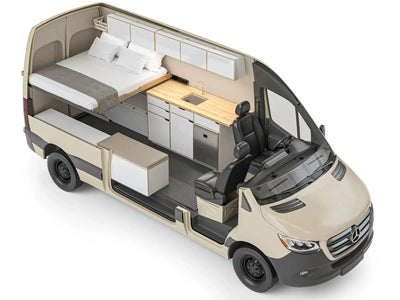
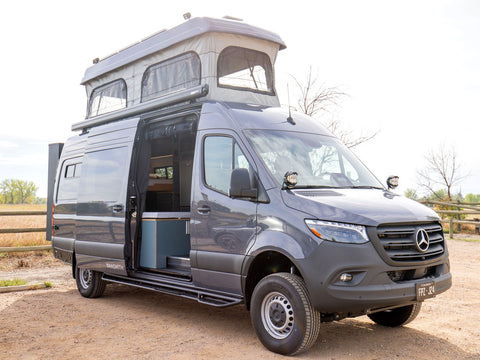
Models like the Mercedes Sprinter, Ram ProMaster, and Ford Transit are popular for camping conversions because their tall roofs and straight walls make it easy to stand up, install real cabinets, and build a layout that actually feels lived-in rather than cramped.
Roof height, wheelbase length, and drivetrain all change how a van feels on the road and at camp. A long-wheelbase Sprinter with a high roof gives you room for a fixed bed, a gear garage, and a full galley, but it can be harder to park in a tight trailhead lot. A shorter ProMaster or Transit feels more nimble in cities while still leaving enough room for two people and a dog. Maintenance and parts availability matter too: choosing a platform local mechanics already know well can save real time and money when you're far from home.
Built yourself, or built by someone else
Some people start with a bare cargo van and add insulation, flooring, and cabinets themselves as they figure out what they actually need. Others want a professionally built interior with a tested layout, a safe electrical system, and clean finishes from day one. Neither approach is wrong. The best camping van is the one that actually matches your skills, your budget, and how you plan to travel, whether that's a simple, minimalist build or a fully outfitted rig. If you want to start simple, our beginner's guide to a weekend van build is a reasonable place to begin.
What to actually look for
Budget: older or lower-trim vans can be a lot more affordable without giving up much
Size: think about whether you're building for one person, a couple, or a family before you settle on a chassis
Off-road ability: 4WD or AWD matters if you're planning to reach rough or remote trailheads
Fuel type: gas, diesel, and hybrid drivetrains all trade off differently on range, maintenance, and cost
Lifestyle fit: an occasional weekend trip and full-time van life call for very different builds
Key features for comfortable sleeping, in any vehicle
Flat-folding seats: essential for placing a mattress or pad across the cargo area without gaps
Interior length: at least six feet of usable space is the rough threshold for actually stretching out
Cargo space: enough room to store gear without it crowding the sleeping area
Climate control and ventilation: temperatures swing fast overnight, and airflow matters more than people expect
Ground clearance: higher clearance gets you to more trailheads and remote sites
A removable sleeping platform, sitting above the cargo floor with storage underneath, is a common upgrade across SUVs and minivans alike, and it keeps the vehicle usable for daily driving when you're not camping.
Gear that actually improves the experience
A handful of add-ons make a real difference no matter what you're driving or building: roof racks and cargo boxes for gear that doesn't fit inside, a portable stove or fridge, a good sleeping pad or inflatable mattress if you haven't built a fixed bed yet, and a ventilation fan, which matters more than people expect once you're sleeping inside a closed-up vehicle overnight. SUV tent attachments are worth a look too; brands like Napier and Rightline Gear make accessory tents that attach directly to the rear hatch on several SUV models.
Ready to start planning your own camping van build? Explore our services to see how we can turn the right vehicle into your home on wheels.
A few honest tips before you go
Check permits before you plan a route; some campgrounds and dispersed sites have rules that catch first-timers off guard
Storage bins keep gear findable, which matters more the longer the trip gets
Pack for weather you don't expect, not just the forecast you're hoping for
Test your sleep setup before a long trip, not on the first night of one
Leave no trace: pack out everything you bring in
Which vehicle is best, by category
Best for everyday versatility: Subaru Outback
Best off-road adventure vehicle: Jeep Wrangler
Best for comfort and space: Mercedes Sprinter
Best classic choice: Land Rover Defender
From cars to adventure vans
For a lot of people, sleeping in a car or an SUV is the first step toward a larger adventure vehicle. Eventually, some travelers start wanting more interior space, standing room, and a dedicated sleeping area, and that's usually when a van enters the conversation. At The Vansmith, we meet plenty of customers who spent years traveling in SUVs or minivans before stepping into a van for the first time, and the experience they gained on those early trips usually shapes exactly how they want their next vehicle to function. Whether the vehicle is a small hatchback or a fully equipped adventure van, the goal is the same: a reliable space that supports the freedom of the road.

Frequently asked questions
What's the best vehicle for camping if comfort matters most?
A van, specifically one built on a Sprinter, Transit, or ProMaster chassis, gives you the standing room and layout options that SUVs and trucks can't match on longer trips.
What car is best for sleeping in if I'm not ready for a van?
The Toyota 4Runner and Subaru Outback are both solid choices, with enough flat cargo space once the rear seats fold down.
Will campgrounds let you sleep in your car?
Most will, but check the specific rules first; some campgrounds require a tent or an RV rather than just a vehicle.
Do I need a fully custom build to camp comfortably in a van?
No. A simple platform bed, basic lighting, and a portable power station can be enough for weekend trips. Longer travel is where insulation, a built-in electrical system, and a small kitchenette start to matter.
Is it worth building the van myself instead of buying a finished one?
It depends on your skills, your budget, and how much you want to learn the systems yourself. Both approaches work well when they match how you actually plan to use the van.
Written by Eugene Smit, CEO of The Vansmith.
About the author

Eugene Smit
CEO
Eugene is the CEO of The Vansmith, based in Boulder, Colorado. He writes across topics related to van builds, ownership, and the camper van industry.
Read more about Eugene