The photo at the top shows a catamaran sailing on Lake McConaughy, the largest lake in Nebraska. (Photo: Geoff Robinson, public domain)
Lake McConaughy is one of the few places in the region where you can camp right on the sand, with about 1,000 beach campsites spread across 17 designated areas when water levels allow. Which setup works best for you comes down to rig type, how much comfort you want, and whether you want a summer beach scene or a quieter shoulder-season stay. For self-contained vans, that's a big draw. For larger RVs or low-clearance rigs, the same beach can feel a lot less simple once the sand gets soft or the shoreline shrinks.
How Lake McConaughy camping works

The aerial photo above shows how wide the white sand beach gets where Lake McConaughy meets the Sandhills. How much of that sand is open for camping depends on the lake level each year. (Photo: J Sidle, 2005 aerial survey, public domain)
The signature move at Lake McConaughy is primitive beach camping on white sand. A lot of campers don't back into a numbered pad at all. They park near the water in a designated beach area and set up there.
The main beach system is split between Shoreline Road and Cedar View, not one giant open shoreline. Shoreline Road is the bigger side, with 16 designated beach camping areas entered from Martin Bay, Arthur Bay, and Sandy Beach. Nebraska Game & Parks says that adds up to more than 950 campsites, though the real number changes with lake levels.
Cedar View works as its own beach camping area. It adds about 40 more campsites, again depending on water levels. Across the broader park guidance, the state describes roughly 1,000 non-designated beach campsites across 17 beach areas. That's the big picture.
Lake McConaughy is open year-round, so the real choice isn't whether you can camp. It's how you want to camp. During peak season, you reserve a beach zone or area, not a numbered beachfront spot, and the park limits how many campsites fit in that zone. If you like trips that stay flexible, it helps to understand that system before you go.
That same self-contained style is why a lot of van travelers lean toward simple, off-grid-ready layouts. If you're thinking about that kind of setup, our Foundation builds and custom camper van page show the kinds of systems that make primitive camping easier.
Beach zones vs. developed campgrounds
Beach camping and developed camping are two very different experiences here. Beach camping is primitive and spread across sand zones. Developed camping is grouped into named campgrounds like Martin Bay and Little Thunder, with a more normal campground feel.
Visit Nebraska sums up the developed side as Full Service, Electric Plus, and Basic sites across seven campgrounds. Nebraska Game & Parks also calls out Martin Bay and Little Thunder for amenities like water, restrooms, showers, picnic tables, grills, and improved roads or pads.
A self-contained camper van has more freedom on the beach than a low-clearance rig or a setup that needs hookups each night. Sand isn't a campground road. If your goal is the classic wake-up-by-the-waterline feel, the beach zones are the draw. If your crew wants easy bathroom access and less setup stress, developed campgrounds are often the easier call.
That choice isn't really camping or not camping. It's primitive sand access versus developed campground convenience. Families looking at roomier floorplans often compare layouts like the Family XL, while couples usually care more about compact comfort and storage, which is why pages like vans for couples tend to line up well with this kind of trip.
Peak season vs. off-season operations
The 2026 State Parks Guide says reservations are required from May 20 through September 10. From September 11 through May 19, camping shifts to first-come, first-served. That one date split shapes almost every planning choice.
Nebraska Game & Parks reservations says beach camping can be reserved 30 days in advance. Each advance booking also adds a nonrefundable $8.50 plus tax fee per unit. That's easy to miss when you're doing quick trip math.
During peak season, beach camping is managed by area capacity, not by a specific site number. So reserving early matters more than expecting to claim one exact patch of shoreline. If you hate crowded weekends, the period after September 10 changes the whole feel of the place. Less structure. More room.
For van owners with flexible schedules, weekday arrivals outside the summer peak are often the easiest play. You still get the same lake and the same white sand. You just skip a lot of the busiest demand. If you're still sorting out what systems matter for this style of travel, our van build blog and our process page are good places to start.
Where you can drive and camp on the sand

The aerial photo above shows vehicles lined up along one of the beach camping areas, with sand tracks leading down from the road. There are no maintained roads on the beach itself, which is why soft sand is the main thing to plan around. (Photo: J Sidle, 2005 aerial survey, public domain)
Yes, vehicles are allowed in designated beach camping areas at Lake McConaughy, but not on every beach around the lake. That's one of the easiest first-timer mistakes here. A sandy shoreline on the map does not always mean you can drive onto it and stay overnight.
The state is clear in its Know Before You Go guidance: there are no maintained roads on the beaches. You should expect soft, changing sand, not a hard-packed route. The same guidance recommends 4x4 capability because vehicles can get stuck.
Water levels also change the whole setup. One year a beach area may feel broad and easy to spread out on. Another year the same zone can feel tight, with far less drivable and campable sand.
Ground clearance matters, but traction and tire management matter more than people think. A capable 4x4 van still needs a calm, conservative approach on loose sand. If your build is meant for this kind of travel, our Sprinter conversions and Transit conversions show the two platforms we see most often for self-contained beach trips.
Designated vehicle-access beach areas
Shoreline Road beach camping is accessed from Martin Bay, Arthur Bay, and Sandy Beach. Those access points lead into 16 designated beach camping areas. It isn't one continuous, unrestricted driving zone.
Cedar View has one large designated beach camping area that works separately from the Shoreline Road system. Because campsite counts depend on water levels, the usable space inside each area can change a lot over time. That's why two trip reports from different years can sound like they describe different places.
The park FAQ says beach camping starts to face limits at about 85% lake capacity. Above about 92% capacity, beach camping becomes unavailable. If you're driving a long way for Lake McConaughy beach camping, that's the planning variable that matters most.
A prudent van traveler should check current access conditions before leaving home, especially if the whole point of the trip is parking on sand by the water. It is easy to overlook that off-grid comfort matters only if you can actually reach the spot you had in mind. Our DIY blog covers more of that real-world trip prep mindset.
Areas where vehicles or overnight camping are not allowed
Nebraska Game & Parks also identifies walk-in day-use beach areas where both vehicles and overnight camping are prohibited. Those areas are tied to Martin Bay, Arthur Bay, Sandy Beach, and Cedar View. So you can have one shoreline section that allows vehicle camping and a nearby section that does not.
First-time visitors often assume every sandy beach at Lake McConaughy works the same way, but the lake is managed by designated use area.
If your goal is quiet beach time without nearby vehicles, those walk-in day-use beaches may be the better daytime choice. If your goal is waking up at the waterline, you need the designated beach camping areas instead.
This is one of the cleanest decision points at Lake McConaughy, Nebraska: choose walk-in beach access for day use, or choose designated beach zones for vehicle-based camping. If you're mapping out a longer road trip and want help building a van around that kind of use, our contact page is the easiest next step.
Lake McConaughy camping costs, permits, and reservations
Every vehicle needs a Nebraska park entry permit before using the recreation area. That's separate from your camping fee. You need both pieces, which is worth saying plainly because visitors often lump them together.
Lake McConaughy also uses its own camping rate structure rather than the standard Nebraska state park camping pricing. According to Nebraska Game & Parks park pricing, primitive beach camping costs $25 on peak-season Thursday through Saturday nights, $20 on peak-season Sunday through Wednesday nights, and $15 in the off-season.
ReserveAmerica's Lake McConaughy fee schedule confirms that primitive range and shows the developed campground rates too. Basic sites run $10 off-season and $15 to $20 in peak season. Electric Plus runs $25 off-season and $30 to $35 peak. Full Hookup runs $30 off-season and $35 to $40 peak.
Beach camping can be reserved 30 days in advance, and each reservation adds a nonrefundable $8.50 plus tax fee per unit. For a short stay, that booking fee can make the total feel higher than the nightly rate first suggests.
What beach camping really costs vs. developed sites
A peak-season weekend beach stay is the priciest primitive option at $25 per night on Thursday, Friday, and Saturday. Midweek in peak season drops to $20 on Sunday through Wednesday. Off-season beach camping falls to $15, which is the lowest-cost way to stay at the lake if beach access is still open.
| Camping type | Off-season nightly rate | Peak-season nightly rate |
|---|---|---|
| Primitive beach | $15 | $20 to $25 |
| Basic developed site | $10 | $15 to $20 |
| Electric Plus | $25 | $30 to $35 |
| Full Hookup | $30 | $35 to $40 |
That table shows the trade-off pretty well. Basic developed sites can actually be cheaper than beach camping in the off-season, but you give up the direct-on-sand experience. Electric Plus and Full Hookup cost much more, especially at the top end of peak season.
For self-contained camper vans, primitive beach camping often gives the best value because your onboard power, water, and toilet cut down the need for hookups. Larger RVs may feel the opposite. If you need easy leveling, shore power, or simple road-like access, paying more for a developed site can save a lot of hassle.
That is why layout and systems matter so much on trips like this. A compact off-grid setup like the DUO XL makes more sense here than a build that depends on campground utilities every night.
Permit and booking details to mention clearly
Keep the permit and campsite costs separate in your planning. The park entry permit gets your vehicle into the recreation area. The camping fee covers where you stay, whether that's a primitive beach zone or a developed site.
The reservation window for Lake McConaughy camping is only 30 days, which is shorter than many travelers expect. The reservation fee is nonrefundable and charged per unit at $8.50 plus tax. During the May 20 to September 10 reservation season, that matters more because beach zones are capped by area capacity.
From September 11 to May 19, first-come, first-served camping gives flexible travelers more room to improvise. For van travelers passing through on a road trip, shoulder-season timing can mean lower nightly rates and no need to book a month ahead. If the whole route depends on beach camping, though, confirm both your reservation details and current shoreline access before you commit.
Facilities: what you get on the beach vs. in campgrounds

The aerial photo above shows the east end of the lake near Kingsley Dam, with Lake Ogallala on the right. Developed campgrounds, roads, and other facilities are concentrated around the edges of the lake rather than out on the beach zones. (Photo: J Sidle, 2005 aerial survey, public domain)
The broader Lake McConaughy recreation area has a solid facility mix. The 2026 State Parks Guide lists concrete boat ramps, modern and primitive restrooms, coin-operated showers, dump-and-fill stations, drinking water, picnic tables, shelters, and fish-cleaning stations. So the area is well supported overall.
Still, beach camping itself is much more primitive than a developed campground loop. That practical split is simple: beach campers get location and space, while developed campers get easier access to utilities and infrastructure. If your van has onboard water storage, battery power, and a simple toilet setup, you'll feel that gap a lot less.
Nebraska Game & Parks lists developed campground amenities at Martin Bay and Little Thunder, including water, restrooms, showers, picnic tables, grills, and improved roads or pads. Visit Nebraska also confirms Basic, Electric Plus, and Full Hookup options across seven campgrounds. So the facilities are there. Just not right on every patch of sand.
This is usually where you realize what kind of trip they actually want. Some people want a beach. Others want a campground with a beach nearby. Those are different trips, and your onboard systems decide which one feels easy.
Facilities available around the lake
Concrete boat ramps matter if you're bringing a fishing boat or another towable watercraft. Modern and primitive restrooms are both available around the recreation area, which gives you some flexibility depending on where you camp and what kind of stop you need.
Coin-operated showers are part of the official facility list. Dump-and-fill stations and drinking water are also available, which matters a lot for RVs and camper vans managing fresh and gray water over several days. For anglers, fish-cleaning stations add another useful layer that goes beyond basic beach use.
Picnic tables and shelters help with day use too, not just overnight stays. All of that makes the area workable for longer visits. But beach campers should still plan as if they'll need to be more self-sufficient than the facility list alone might suggest.
What beach campers should bring or expect
Because there are no maintained roads on the beaches, treat a beach-camping arrival more like an off-pavement setup than a normal campground pull-in. Conditions can vary from trip to trip because spacing and access depend on water levels. A spot that felt simple last year may feel very different this year.
Primitive beach camping also doesn't give you the same utility certainty as Electric Plus or Full Hookup sites. A van with solar, a vent fan, and onboard water is a much better fit than a setup that needs shore power every night. This is where self-contained design pays off twice. Once in comfort, and once in flexibility.
Soft sand can make heavy trailers, leveling blocks, and repeated repositioning more annoying than they would be in a developed loop. For couples or families trying it for the first time, one smart compromise is splitting the trip between a developed campground and the sand. That lets you test the beach experience without making the whole stay depend on it.
Best months to go for Lake McConaughy beach camping
If you want the full classic Lake McConaughy beach camping feel, late May through early September is the main window. That's also the reservation season, running from May 20 to September 10, and it's the clearest marker for the busiest stretch of the year. You'll get the most summer energy then, but you'll also need more planning.
From September 11 through May 19, camping shifts to first-come, first-served. That tends to work better for travelers who care more about flexibility than peak summer atmosphere. Shoulder season is often the sweet spot for van travel because rates are lower, the shoreline is quieter, and cooler nights make primitive camping more comfortable.
September is often the best balance month. It can still feel like a beach trip, but with fewer crowds than midsummer. Early October can also be appealing if conditions cooperate, though beach access still depends on water levels and current shoreline conditions.
The worst mistake is planning by calendar alone. The park FAQ says beach camping begins to face limits around 85% lake capacity and becomes unavailable above about 92%. Check the current situation before you build a whole route around sand camping.
Best time for summer-style beach camping
If you want the iconic version of Lake McConaughy, think late May through early September. That's the season for white sand, warm-weather beach time, and lots of campers lined up along the shoreline. It feels lively, which many people love.
Because reservations are required from May 20 to September 10, summer travelers should plan ahead. Beach camping can be reserved only 30 days in advance, so the booking window is shorter than many destination campers expect. Peak-season pricing is also highest on Thursday through Saturday nights at $25 for primitive beach camping.
Sunday through Wednesday nights in peak season drop to $20, so a midweek summer stay can save a little money and usually cut down on congestion. For couples or solo van travelers, that's often the best play. Same weather. Fewer neighbors.
If swimming, beach time, and a social shoreline matter most, summer is still the right target. Just go in knowing the trade-off is more crowding and more planning.
Best time for fewer crowds and easier logistics
From September 11 onward, all camping becomes first-come, first-served. That removes the need for peak-season reservations and makes last-minute trips much easier. Off-season primitive beach camping also drops to $15 per night.
September stands out because the official guide supports it as a strong shoulder-season choice with fewer crowds while many facilities are still operating. Early October can still work if you care more about space and lower demand than guaranteed summer conditions. For self-contained vans, that can be a very good trade.
The trade-off is that shoulder-season trips depend more on weather swings and current shoreline conditions than a midsummer visit. So your best month really comes down to priorities: summer energy, lower cost, easier booking, or maximum solitude. That's the real choice.
FAQ
Can you drive on the beach at Lake McConaughy?
Yes, but only in designated beach camping areas. Nebraska Game & Parks says vehicles are allowed in those zones, while other beach sections are walk-in only and do not allow overnight camping. The state also warns that there are no maintained roads on the beaches and recommends 4x4 capability because soft sand can trap vehicles.
How much does Lake McConaughy beach camping cost?
Primitive beach camping costs $25 on peak-season Thursday through Saturday nights, $20 on peak-season Sunday through Wednesday nights, and $15 in the off-season. If you reserve, there's also a nonrefundable $8.50 plus tax reservation fee per unit. You'll also need a separate Nebraska park entry permit for your vehicle.
Do you need a reservation for Lake McConaughy camping?
Yes during the main season. The 2026 State Parks Guide says reservations are required from May 20 through September 10, and beach camping can be reserved 30 days in advance. From September 11 through May 19, all camping becomes first-come, first-served, which is much easier for flexible road trips.
What facilities are available if you camp at Lake McConaughy Nebraska?
Around the recreation area, you'll find modern and primitive restrooms, coin-operated showers, dump-and-fill stations, drinking water, concrete boat ramps, picnic tables, shelters, and fish-cleaning stations. Developed campgrounds also include Basic, Electric Plus, and Full Hookup site types across seven campgrounds. Beach camping itself is much more primitive, so don't expect full campground infrastructure right at your sand spot.
What is the best month for Lake McConaughy beach camping?
September is often the best balance month for many travelers. You can still get a beach-camping feel, but with fewer crowds and first-come, first-served flexibility after September 10. If you want the full summer scene instead, aim for late May through early September and plan ahead.
About the author

Carin Smit
President
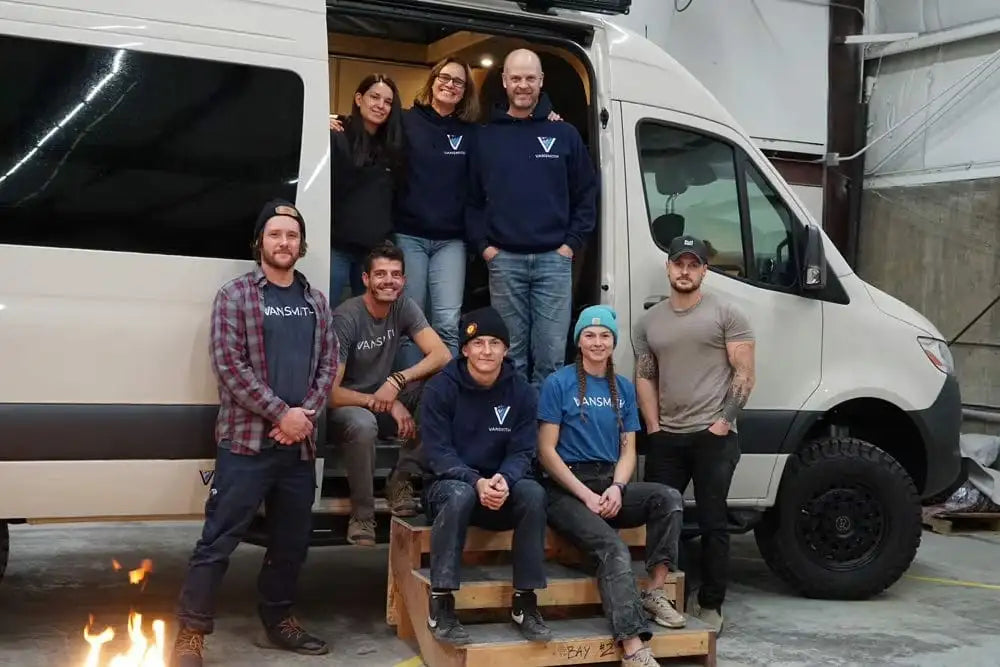
Carin is President of The Vansmith. She writes on a range of topics tied to the business, from vans and builds to the broader vanlife world.
Read more about Carin